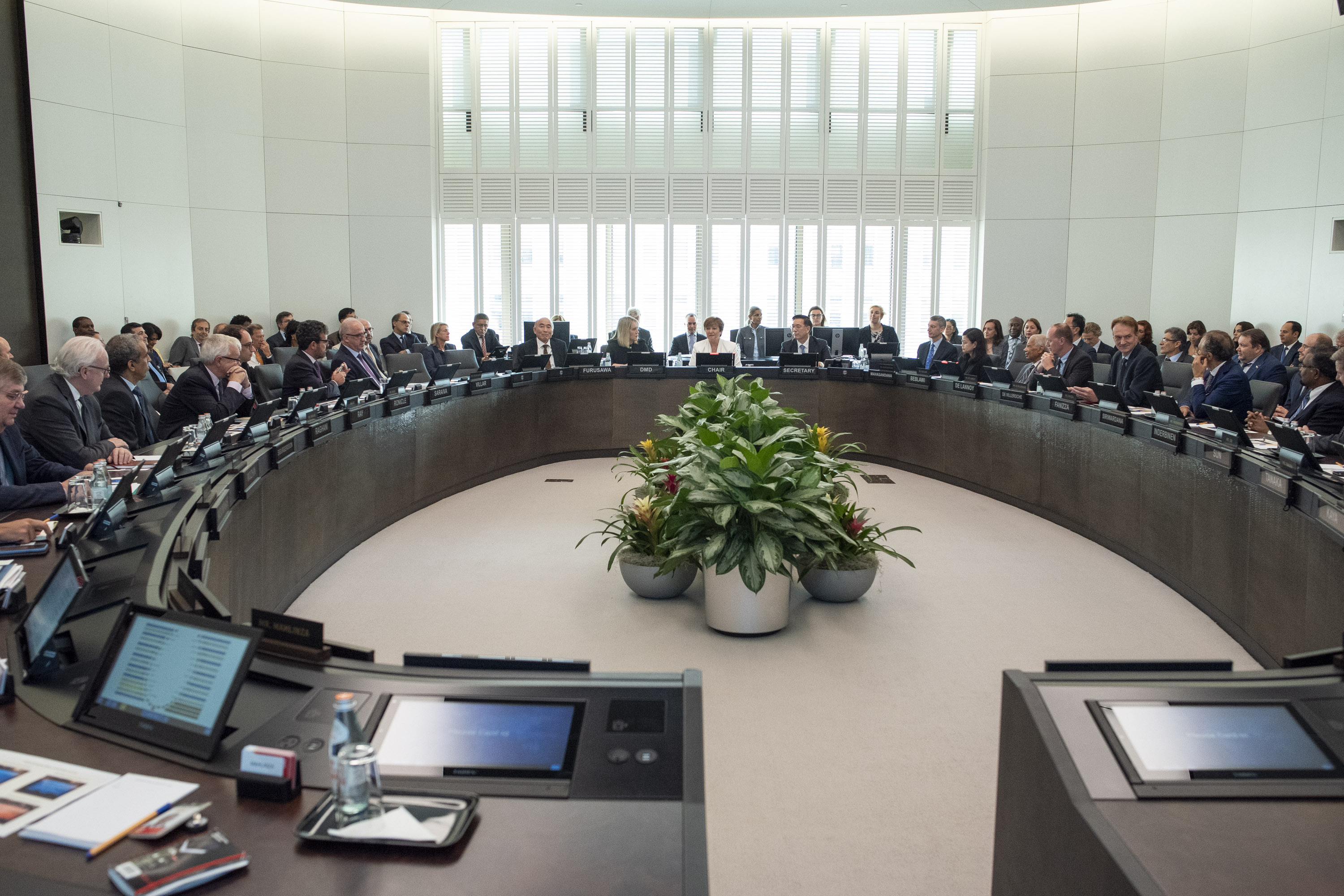
IMF Executive Board Concludes 2023 Article IV Consultation with Brazil
IMF News, July 31, 2023
Source details
- Canonical URL
- IMF Executive Board Concludes 2023 Article IV Consultation with Brazil
Other formats
Bibliographic details
- Published: July 31, 2023
Overview
- In the first months of 2023, growth was supported by very strong agricultural output, while manufacturing and services were subdued.
- Slowing private consumption and falling investment point towards further growth moderation in the remainder of the year.
- Headline inflation has rapidly declined from last year’s peak, but core inflation remains elevated, and inflation expectations are above target.
- Tightening financial conditions have been partially offset by a structural broadening of credit in some sectors.
Growth and inflation outlook
- Growth is projected to moderate from 2.9 percent in 2022 to 2.1 percent in 2023, and then reach staff’s estimated potential rate over the medium term.
- Headline inflation is expected to reach 5.4 percent by end-2023 and converge to target by mid-2025.
- Core inflation is projected to come down more gradually.
- Current account is expected to narrow to about 2.3 percent of GDP this year and remain broadly stable over the medium term.
Risks, buffers, and scenarios
- External downside risks:
- An abrupt global slowdown.
- A sharp tightening of global financial conditions.
- Commodity price volatility.
- Domestic risks:
- Renewed fiscal uncertainty.
- More persistent inflation.
- Upside factors:
- More ambitious fiscal consolidation.
- Approval and implementation of the indirect tax reform.
- Green growth opportunities.
- Resilience factors:
- A sound financial system.
- Adequate FX reserves.
- Large public sector cash buffers.
- A flexible exchange rate regime.
Executive Board assessment and policy recommendations
- Directors noted that economic activity is converging towards potential levels after a rapid recovery from the pandemic.
- Fiscal policy:
- Directors welcomed the authorities' commitment to improve the fiscal position to maintain debt sustainability and support monetary policy’s disinflation effort.
- They encouraged the authorities to aim for an ambitious fiscal effort to put debt on a clear declining path, supported by an enhanced fiscal framework, a broader tax base, and spending reforms.
- Directors welcomed the proposed indirect tax reform and plans to reform direct taxes and streamline tax expenditures, noting that additional revenue mobilization will help secure fiscal sustainability and create space for priority spending.
- Monetary and exchange rate policy:
- Directors commended the central bank’s proactive monetary policy response consistent with the inflation targeting framework.
- Given the slow decline in core inflation and still above target inflation expectations, Directors considered the current monetary stance appropriate and called for continued forward looking and data-dependent monetary policy.
- They welcomed the recent decision to adopt a continuous inflation target and commended improvements to BCB autonomy.
- They emphasized that a flexible exchange rate regime and adequate FX reserves remain important shock absorbers.
- Financial sector and digitalization:
- Directors noted the financial sector remains resilient, with adequately capitalized, profitable, and liquid banks.
- They welcomed steps to address household debt vulnerabilities and promote financial literacy.
- Directors commended initiatives on the instant payment system Pix and Open Finance environment, and plans for the Digital Real, while underscoring the importance of being mindful of potential financial stability risks related to digitalization.
- They emphasized the need for carefully managing a bigger role for public banks to mitigate risks for fiscal sustainability and monetary policy transmission.
- Structural reforms and social policies:
- Directors commended structural reform priorities focused on raising productivity, reducing informality, and promoting green growth.
- They emphasized the need to foster innovation, trade integration, competitiveness, upgrade investment and skills, and promote greater female labor force participation.
- Continuing efforts to strengthen the effectiveness of the anti-corruption and AML/CFT frameworks was highlighted.
- Directors welcomed plans to strengthen climate resilience, halt illegal deforestation, and decarbonize the economy.
Key statistics and selected indicators (as reported)
- Social and demographic:
- Area (thousands of sq. km.): 8,510
- Agricultural land (percent of land area): 30.2
- Physicians per 1000 people (2022): 2.6
- Hospital beds per 1000 people (2022): 2.0
- Access to safe water (2021): 84.2
- Total population (million) (2022): 203.1
- Annual rate of growth (percent, 2022): 0.7
- Density (per sq. km. est., 2022): 23.9
- Adult illiteracy rate (2019): 6.4
- Unemployment rate (2022): 7.9
- Net enrollment rates, percent in Primary education (2019): 98
- Net enrollment rates, percent in Secondary education (2019): 85
- Life expectancy at birth (years): 77
- Infant mortality (per thousand live births): 11
- Poverty rate (in percent, 2021) 1/: 29.4
- Ratio between average income of top 10 percent of earners over bottom 40 percent (2017): 12.4
- GDP and income (2022):
- GDP, local currency (2022): R$9,915 billion
- GDP, dollars (2022): US$1,920 billion
- Gini coefficient (2020): 48.9
- GDP per capita (2022): US$9,455
- National accounts and prices (percentage change, selected years):
- GDP at constant prices: 5.0 (2021); 2.9 (2022); 2.1 (2023); 1.2 (2024); 1.7 (2025); 1.9 (2026); 2.0 (2027); 2.1 (2028)
- Consumption: 3.6 (2021); 3.7 (2022); 0.8 (2023); 0.4 (2024); 1.1 (2025); 1.5 (2026)
- Investment (GFCF): 16.5 (2021); 0.9 (2022); 0.5 (2023); 0.6 (2024); 1.4 (2025)
- Consumer prices (IPCA, average): 8.3 (2021); 9.3 (2022); 5.1 (2023); 4.6 (2024); 3.0 (2025)
- Consumer prices (IPCA, end of period): 10.1 (2021); 5.8 (2022); 3.9 (2023)
- Public sector finances and debt:
- Central government primary balance 2/: -0.4 (2021); -1.3 (2022); -0.8 (2023); -0.3 (2024); 0.3 (2025)
- NFPS primary balance: 1.3 (2021)
- NFPS overall balance: -4.3 (2021); -4.6 (2022); -7.9 (2023); -7.4 (2024); -6.2 (2025); -5.4 (2026); -4.8 (2027)
- Net public sector debt: 55.8 (2021); 57.1 (2022); 60.1 (2023); 63.5 (2024); 66.2 (2025); 68.3 (2026); 69.3 (2027)
- General Government gross debt, Authorities’ definition: 78.3 (2021); 72.9 (2022); 77.1 (2023); 79.3 (2024); 81.3 (2025); 82.7 (2026); 83.4 (2027)
- NFPS gross debt: 90.7 (2021); 85.9 (2022); 89.2 (2023); 91.2 (2024); 93.3 (2025); 94.8 (2026); 95.6 (2027)
- Money, credit, and reserves:
- Bank loans to the private sector: 17.6 (2021); 14.6 (2022); 8.0 (2023)
- Gross official reserves: 362 (2021); 325 (2022); 346 (2023)
- Balance of payments (Billions of U.S. dollars, selected):
- Trade balance: 36.4 (2021); 44.2 (2022); 50.1 (2023); 47.0 (2024)
- Exports: 284.0 (2021); 340.3 (2022); 338.5 (2023); 343.3 (2024); 349.4 (2025); 357.4 (2026); 366.5 (2027); 379.0 (2028)
- Imports: 247.6 (2021); 296.2 (2022); 288.4 (2023); 296.3 (2024); 301.6 (2025); 308.4 (2026); 316.4 (2027); 328.8 (2028)
- Current account: -46.4 (2021); -56.9 (2022); -48.0 (2023); -56.1 (2024); -58.6 (2025); -60.0 (2026); -61.4 (2027); -64.2 (2028)
- Foreign direct investment (net inflows): 60.8 (2021); 54.2 (2022); 53.2 (2023); 52.4 (2024); 53.3 (2025); 54.3 (2026); 55.3 (2027)
- Total external debt (in percent of GDP): 40.6 (2021); 35.5 (2022); 34.1 (2023); 33.1 (2024); 32.9 (2025); 32.6 (2026); 32.0 (2027); 31.1 (2028)
- Memorandum items:
- Output Gap: -0.2 (2021); 0.2 (2022); 0.0 (2023)
- Current account (in percent of GDP): -2.8 (2021); -3.0 (2022); -2.3 (2023); -2.5 (2024); -2.4 (2025)
- Unemployment rate 5/: 13.2 (2021); 9.5 (2022); 9.4 (2023)
- Terms of trade (percentage change): -7.1 (2021); -6.1 (2022); -3.5 (2023); -1.9 (2024); -0.6 (2025); -1.1 (2026)
- Merchandise exports (in US$, annual percentage change): 34.8 (2021); 19.8 (2022); -0.5 (2023); 1.8 (2024); 2.3 (2025); 3.4 (2026)
- Merchandise imports (in US$, annual percentage change): 38.9 (2021); 19.6 (2022); -2.6 (2023); 2.2 (2024)
Source: IMF Executive Board Concluding Statement on the 2023 Article IV Consultation with Brazil (Press Release No. 23/280).