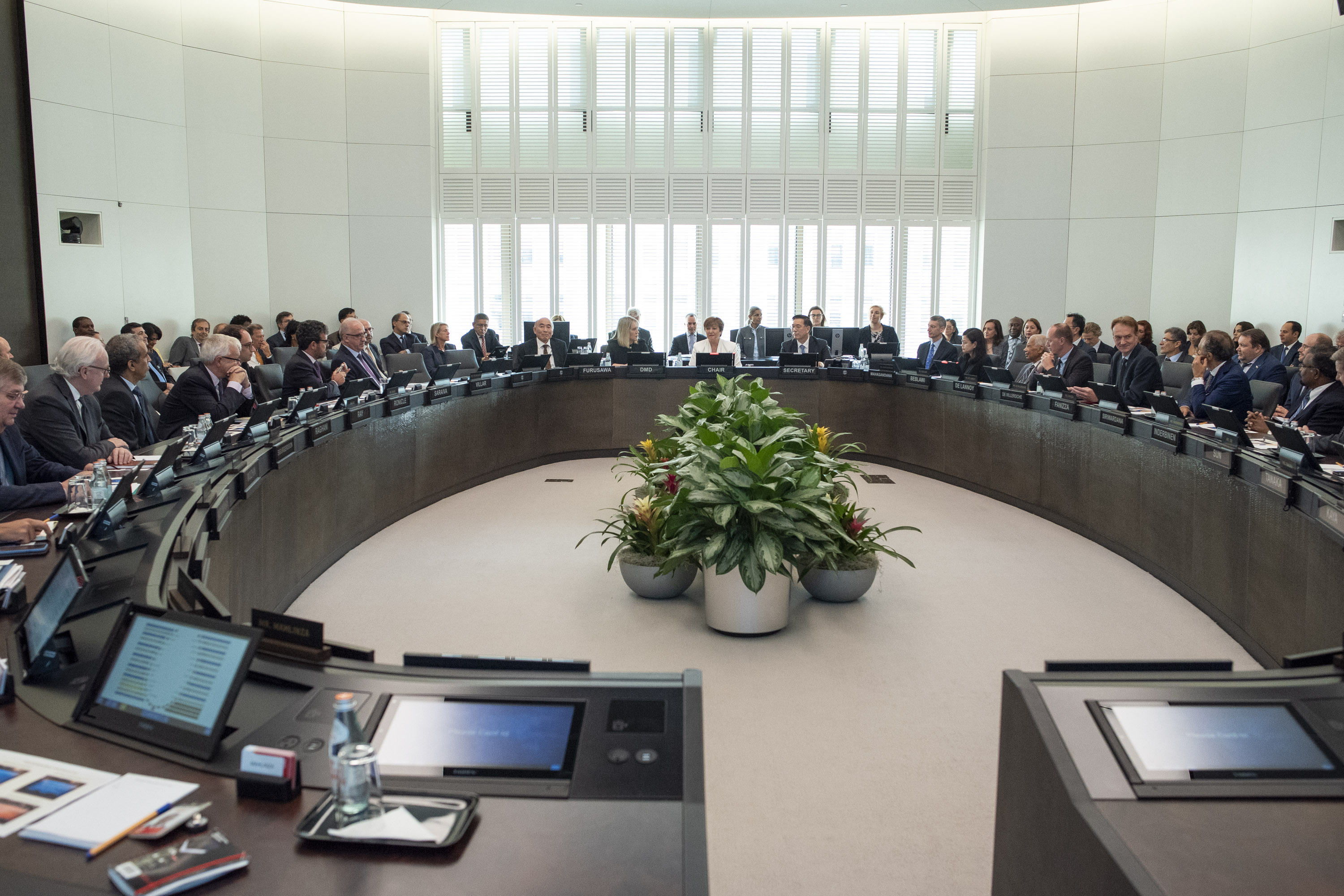
Washington, DC: The Executive Board of
the International Monetary Fund (IMF) completed today the 2023 Article IV
Consultation and the Fifth Reviews
of Cameroon’s Fund-supported program. The US$ 689.5 million, three-year
blended arrangements under the
Extended
Credit Facility(ECF) and the
Extended Fund Facility
(EFF) approved on July 29, 2021 seek to support the country’s economic and
financial reform program (see
press release
21/237). The completion of the reviews allows for the immediate disbursement
of SDR 55.2 million (about US$ 73.8 million) bringing total disbursements
under the arrangements to SDR 427.8 million (around US$ 571.9 million).
The ECF and EFF arrangements continue to provide a strong anchor for the
authorities’ economic and fiscal program, and their implementation has been
broadly on track. In completing the reviews, the Executive Board approved
the waiver of nonobservance of the performance criterion on the
non-accumulation of new external payments arrears on grounds that the
breach was temporary and minor. The extension of the ECF and EFF
arrangements by another 12 months (from July 28, 2024, to July 28, 2025)
will allow for more time to implement the policies and reforms foreseen
under the arrangements given the additional external shocks since the start
of the program in 2021. The augmentation of access by SDR 110.4 million
(about US$ 147.6 million) over the extension will help respond to the
additional balance of payments needs created by these external shocks.
Cameroon’s economic recovery continued in 2023 despite strong external
headwinds. Growth is estimated at 3.6 percent in 2022, on the back of
buoyant agroindustry and service sectors and is expected to reach 4 percent
in 2023. Inflation is projected to decelerate to around 6.2 percent by
end-2023 from 7.3 percent at end-2022. The overall fiscal deficit is
expected to improve from 1.1 percent of GDP in 2022 to 0.7 percent in 2023
reflecting efforts in non-oil revenue mobilization and ongoing recovery.
The non-oil primary deficit is projected to improve to 2.5 percent of GDP
from 3.9 percent of GDP in 2022 owing to both stronger revenues and lower
fuel subsidies. The medium-term outlook remains positive, provided reforms
progress, and the external environment becomes more supportive.
Article IV discussions focused on policies to enhance growth potential,
achieve structural transformation, and export diversification as well as
measures to address macro-critical climate challenges. The policy focus
will need to be on enhancing efforts to invest in human capital and
infrastructure, strengthening institutions, including governance, and
enhancing product and labor markets by removing regulations that hinder
competition to allow more market flexibility and encourage more
formalization of existing firms. Achieving more inclusive growth and
resilience will require mainstreaming climate agenda in the national
institutional, regulatory, and budget frameworks, and advancing climate
change mitigation and adaptation measures in line with Cameroon’s
commitments under the Paris Agreement.
At the conclusion of the Executive Board’s discussion, Mr. Kenji Okamura,
Deputy Managing Director and Acting Chair, made the following statement:
“Cameroon has remained resilient in the face of increasing external and
domestic challenges. The ECF-EFF arrangements have supported the
authorities’ efforts to sustain macroeconomic stability, promote growth,
and advance longstanding reforms. While the medium-term outlook remains
positive, the 12-month extension of the arrangements will allow more time to
implement policies and reforms foreseen under the program, given additional
external shocks.
“Cameroon’s performance under the program has been mixed, with the QPC
on the non-accumulation of external payment arrears being breached due
to minor and temporary delays on two debt service payments. The
authorities have however made welcome progress in some key areas,
including governance, public financial management, and revenue
administration. Continued implementation of corrective measures to
address missed targets and accelerate reforms will be important.
“The authorities are committed to
maintaining a fiscal consolidation path consistent with program
objectives. Additional room for productive investment and social
spending needs to be created through greater non-oil revenue
mobilization, enhanced investment efficiency, improved public financial
management, and gradually phasing out fuel subsidies, while mitigating
the impact on the vulnerable. Improving cash management and limiting
spending through exceptional procedures will also be crucial.
“Fragilities in the banking system have increased with the banks' increased
exposure to the Cameroonian government. The authorities are urged to work
with COBAC to ensure that banks reduce and account adequately for sovereign
risk.
“To unlock Cameroon’s abundant growth potential, structural reforms
need to be accelerated. Further steps are needed to improve the
business climate, including by strengthening financial sector stability
and inclusion.
“These efforts should be accompanied by strong actions to strengthen
governance, transparency, and the anti-corruption framework, including the
AML/CFT framework. The publication of the governance diagnostic report is
an important step forward.”
Executive Board Assessment[1]
Executive Directors agreed with the thrust of the staff appraisal. They
commended the authorities for maintaining stability amid strong external
headwinds and internal fragilities. Directors noted however that program
performance has been mixed, and while welcoming the authorities’ commitment
to program objectives and the corrective actions taken, they called for
strengthened program implementation going forward.
Directors emphasized the importance of maintaining a fiscal consolidation
path consistent with program objectives, which will require further deep
public financial reforms. In this regard, they stressed the need to
continue to gradually phase out fuel subsidies accompanied by mitigation
measures for the most vulnerable. Directors urged the authorities to
strengthen domestic non‑oil revenue mobilization and to enhance public
expenditure efficiency and prioritization. They also called for strictly
limiting recourse to direct interventions and exceptional spending
procedures, improving cash management, strengthening fiscal transparency
and budget credibility, and limiting non‑concessional borrowing. Noting the
high risk of debt distress and continued debt vulnerabilities, Directors
reiterated that the delayed restructuring of the public oil refining
company (SONARA) should be implemented in a timely manner.
Directors expressed concern that fragilities in the banking system have
increased with the banks' increased exposure to the Cameroonian government.
They urged the authorities to work with the Banking Commission of Central
Africa (COBAC) to ensure that banks reduce and account adequately for
sovereign risk.
Directors welcomed the authorities’ plans to foster structural
transformation and export diversification. They stressed the importance of
horizontal policies as a necessary condition to ensure the success of any
industrial policy, especially efforts to increase investment in human
capital and infrastructure, strengthen institutions, and enhance product
and labor markets.
Directors noted Cameroon’s increasing vulnerability to climate change
impacts and welcomed the authorities’ efforts to integrate climate
considerations into Cameroon’s institutional, regulatory, and budget
frameworks, to support progress toward the national adaptation and
mitigation objectives.
Directors commended the authorities’ efforts to promote good governance and
reduce corruption. They welcomed the publication of the governance
diagnostic as a critical step forward as well as the authorities’
commitment to strengthen the effectiveness of its AML/CFT regime, following
the country’s addition to the FATF grey list.
Directors noted that Cameroon’s program is supported by the implementation
of policies and reforms by the CEMAC regional institutions, which are
critical to the program’s success. Completion of the sixth review will be
conditional on the implementation of critical policy assurances at the
Union level, as established in the December 2023 Union‑wide background
paper.
It is expected that the next Article IV Consultation with Cameroon will be
held in accordance with the Executive Board decision on consultation cycles
for members with Fund arrangements.
|
Table 1. Cameroon: Selected Economic and`
Financial Indicators, 2022-28
|
|
(CFAF billion, unless otherwise indicated)
|
|
|
|
2022
|
|
2023
|
|
2024
|
|
2025
|
2026
|
2027
|
2028
|
|
|
|
|
Est.
|
|
4th Rev.
|
Proj.
|
|
4th Rev.
|
Proj.
|
|
Proj.
|
Proj.
|
Proj.
|
Proj.
|
|
|
|
(Annual percentage change, unless otherwise
indicated)
|
|
National account and prices
|
|
|
|
|
|
|
|
|
|
|
|
|
|
|
|
GDP at constant prices
|
|
3.6
|
|
4.0
|
4.0
|
|
4.2
|
4.3
|
|
4.5
|
4.5
|
4.5
|
4.6
|
|
|
Oil GDP at constant prices
|
|
2.1
|
|
-1.8
|
0.5
|
|
-1.3
|
2.7
|
|
1.3
|
0.2
|
0.2
|
0.2
|
|
|
Non-Oil GDP at constant prices
|
|
3.6
|
|
4.1
|
4.1
|
|
4.3
|
4.3
|
|
4.5
|
4.6
|
4.6
|
4.7
|
|
|
GDP deflator
|
|
6.3
|
|
2.7
|
3.1
|
|
2.7
|
3.5
|
|
4.0
|
3.1
|
2.6
|
1.7
|
|
|
Nominal GDP (at market prices,
CFAF billions)
|
|
27,702
|
|
29,457
|
29,704
|
|
31,521
|
32,063
|
|
34,822
|
37,515
|
40,216
|
42,770
|
|
|
Oil
|
|
1,155
|
|
872
|
957
|
|
797
|
976
|
|
939
|
900
|
866
|
837
|
|
|
Non-Oil
|
|
26,548
|
|
28,585
|
28,747
|
|
30,724
|
31,088
|
|
33,884
|
36,615
|
39,349
|
41,933
|
|
|
Consumer prices (average)
|
|
6.3
|
|
6.2
|
7.2
|
|
4.8
|
5.9
|
|
5.5
|
4.9
|
3.4
|
2.5
|
|
|
Consumer prices (eop)
|
|
7.3
|
|
5.9
|
6.2
|
|
3.7
|
5.5
|
|
5.2
|
3.6
|
2.0
|
2.0
|
|
|
|
|
|
|
|
|
|
|
|
|
|
|
|
|
|
|
Money and credit
|
|
|
|
|
|
|
|
|
|
|
|
|
|
|
|
Broad money (M2)
|
|
11.4
|
|
9.0
|
9.0
|
|
8.0
|
8.4
|
|
7.6
|
7.4
|
7.2
|
7.1
|
|
|
Net foreign assets 1/
|
|
7.7
|
|
2.9
|
1.6
|
|
0.7
|
3.2
|
|
2.7
|
2.2
|
2.5
|
3.2
|
|
|
Net domestic assets 1/
|
|
3.6
|
|
6.1
|
7.4
|
|
7.3
|
5.3
|
|
5.0
|
5.2
|
4.7
|
3.8
|
|
|
Domestic credit to the private sector
|
|
13.6
|
|
10.4
|
11.2
|
|
9.2
|
9.5
|
|
7.7
|
7.4
|
7.2
|
7.2
|
|
|
|
(Percent of GDP, unless otherwise indicated)
|
|
Savings and investments
|
|
|
|
|
|
|
|
|
|
|
|
|
|
|
|
Gross national savings
|
|
15.3
|
|
15.6
|
15.6
|
|
16.1
|
16.2
|
|
17.0
|
17.3
|
18.3
|
19.1
|
|
|
Gross domestic investment
|
|
18.7
|
|
18.5
|
18.6
|
|
19.2
|
19.0
|
|
19.4
|
20.1
|
20.9
|
21.8
|
|
|
Public investment
|
|
4.6
|
|
5.0
|
4.6
|
|
5.4
|
5.3
|
|
5.9
|
6.6
|
7.2
|
7.5
|
|
|
Private investment
|
|
14.1
|
|
13.5
|
13.9
|
|
13.7
|
13.7
|
|
13.6
|
13.5
|
13.8
|
14.4
|
|
|
|
|
|
|
|
|
|
|
|
|
|
|
|
|
|
|
Central government operations
|
|
|
|
|
|
|
|
|
|
|
|
|
|
|
|
Total revenue (including grants)
|
|
15.9
|
|
15.9
|
16.0
|
|
15.5
|
15.9
|
|
15.5
|
15.6
|
15.7
|
15.8
|
|
|
Oil revenue
|
|
3.5
|
|
2.9
|
2.9
|
|
2.1
|
2.5
|
|
2.0
|
1.9
|
1.8
|
1.7
|
|
|
Non-oil revenue
|
|
12.1
|
|
12.7
|
12.7
|
|
13.1
|
13.1
|
|
13.3
|
13.6
|
13.8
|
14.0
|
|
|
Non-oil revenue
(percent of non-oil GDP)
|
|
12.6
|
|
13.1
|
13.1
|
|
13.4
|
13.5
|
|
13.7
|
13.9
|
14.1
|
14.3
|
|
|
Total expenditure
|
|
17.1
|
|
16.7
|
16.6
|
|
16.1
|
16.3
|
|
15.9
|
16.4
|
16.6
|
16.7
|
|
|
Overall fiscal balance
(payment order basis)
|
|
|
|
|
|
|
|
|
|
|
|
|
|
|
|
Excluding grants
|
|
-1.5
|
|
-1.1
|
-1.0
|
|
-1.0
|
-0.7
|
|
-0.6
|
-0.9
|
-1.0
|
-0.9
|
|
|
Including grants
|
|
-1.1
|
|
-0.8
|
-0.7
|
|
-0.6
|
-0.4
|
|
-0.4
|
-0.8
|
-0.9
|
-0.9
|
|
|
Overall fiscal balance (cash basis)
|
|
|
|
|
|
|
|
|
|
|
|
|
|
|
|
Excluding grants
|
|
-1.6
|
|
-2.4
|
-2.3
|
|
-1.8
|
-1.4
|
|
-1.1
|
-1.3
|
-1.0
|
-0.9
|
|
|
Including grants
|
|
-1.2
|
|
-2.0
|
-1.9
|
|
-1.5
|
-1.1
|
|
-0.9
|
-1.2
|
-0.9
|
-0.9
|
|
|
Non-oil primary balance
(payment order basis)
|
|
-3.9
|
|
-2.5
|
-2.5
|
|
-1.7
|
-1.9
|
|
-1.3
|
-1.6
|
-1.6
|
-1.6
|
|
|
Non-oil primary balance
(payment order basis,
percent
of non-oil GDP)
|
|
-4.0
|
|
-2.6
|
-2.6
|
|
-1.7
|
-2.0
|
|
-1.4
|
-1.7
|
-1.7
|
-1.6
|
|
|
|
|
|
|
|
|
|
|
|
|
|
|
|
|
|
|
External sector
|
|
|
|
|
|
|
|
|
|
|
|
|
|
|
|
Trade balance
|
|
-0.7
|
|
-1.4
|
-1.7
|
|
-1.6
|
-1.5
|
|
-1.3
|
-1.6
|
-1.7
|
-1.7
|
|
|
Oil exports
|
|
7.8
|
|
5.2
|
5.5
|
|
4.5
|
5.1
|
|
4.9
|
4.2
|
3.5
|
3.0
|
|
|
Non-oil exports
|
|
7.8
|
|
8.2
|
8.4
|
|
8.0
|
8.5
|
|
8.3
|
8.2
|
8.2
|
8.3
|
|
|
Imports
|
|
16.3
|
|
14.8
|
15.6
|
|
14.1
|
15.1
|
|
14.6
|
14.0
|
13.4
|
13.0
|
|
|
Current account balance
|
|
|
|
|
|
|
|
|
|
|
|
|
|
|
|
Excluding official grants
|
|
-3.7
|
|
-3.3
|
-3.3
|
|
-3.1
|
-2.9
|
|
-2.7
|
-2.8
|
-2.7
|
-2.8
|
|
|
Including official grants
|
|
-3.4
|
|
-2.9
|
-3.0
|
|
-3.0
|
-2.8
|
|
-2.5
|
-2.8
|
-2.7
|
-2.7
|
|
|
Terms of trade
|
|
-10.6
|
|
-7.6
|
-2.2
|
|
-1.6
|
1.6
|
|
0.5
|
-4.4
|
-5.5
|
-4.5
|
|
|
|
|
|
|
|
|
|
|
|
|
|
|
|
|
|
|
Public debt
|
|
|
|
|
|
|
|
|
|
|
|
|
|
|
|
Stock of public debt
|
|
45.3
|
|
43.2
|
41.8
|
|
41.1
|
39.0
|
|
36.1
|
34.1
|
32.6
|
31.4
|
|
|
Of which: external debt
|
|
30.8
|
|
30.7
|
29.2
|
|
29.7
|
28.5
|
|
27.0
|
26.0
|
25.5
|
25.4
|
|
|
Sources: Country authorities; and IMF staff estimates
and projections.
|
|
|
|
1/ Percent of broad money at the beginning of the
period.
|
|
|
|
|
|
|
|
|
|
|
|
|
|
|
|
|
|
|
|
[1]
At the conclusion of the discussion, the Managing Director, as
Chairman of the Board, summarizes the views of Executive Directors,
and this summary is transmitted to the country's authorities. An
explanation of any qualifiers used in summings up can be found
here:
http://www.imf.org/external/np/sec/misc/qualifiers.htm
.