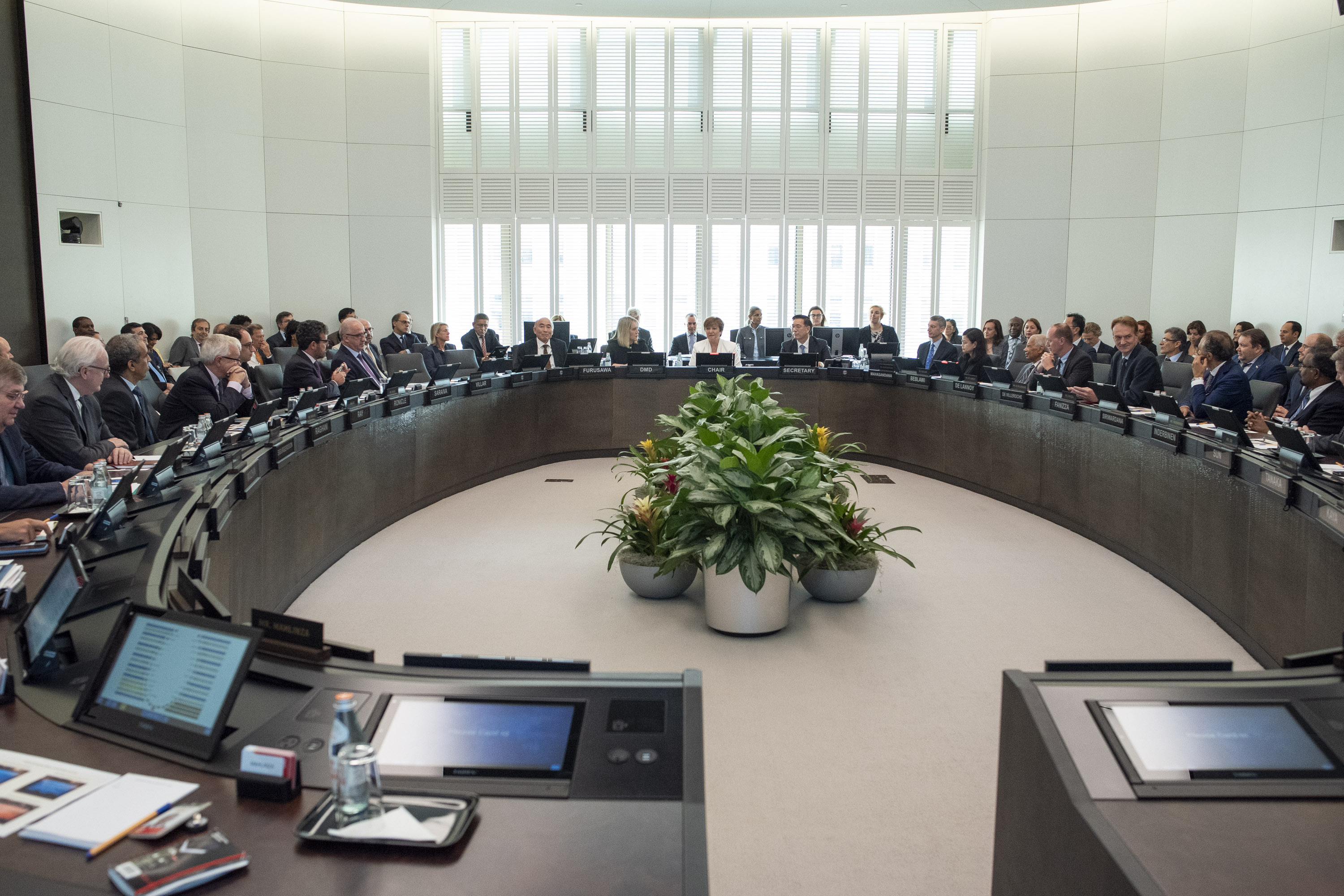
IMF Executive Board Completes the Third Review under the Extended Credit Facility Arrangement for the Republic of Mozambique
IMF News, January 8, 2024
Source details
- Canonical URL
- IMF Executive Board Completes the Third Review under the Extended Credit Facility Arrangement for the Republic of Mozambique
Other formats
Bibliographic details
- Published: January 8, 2024
Third review outcome and financing
- The Executive Board completed the Third Review under Mozambique’s three-year Extended Credit Facility (ECF) arrangement.
- Immediate disbursement: SDR 45.44 million (about US$60.7 million).
- Total disbursements under the ECF arrangement to date: SDR 204.48 million (about US$273 million).
- Purpose: funds usable for budget support to help the country’s economic recovery and to reduce public debt and financing vulnerabilities while fostering higher and more inclusive growth through structural reforms.
Program performance and conditionality
- Overall assessment: Program performance has been satisfactory.
- Structural benchmarks (SBs): Five of eight SBs were met as of end-December 2023.
- Quantitative performance criteria (QPCs): Three of four QPCs were observed.
- Waiver and remedial actions:
- A waiver of nonobservance was approved for the continuous performance criterion on non-accumulation of new public and publicly guaranteed external payment arrears, missed due to delays in debt service repayment.
- Monetary Policy Consultation Clause (MPCC):
- The MPCC band was breached at the lower bound as inflation decelerated faster than expected; consultation with the Executive Board was completed.
- The Executive Board completed the financing assurances review and approved the authorities’ request for modification of the MPCC.
Key policy messages and recommendations (from Deputy Managing Director acting Chair statement)
- Economic outlook:
- Economic recovery is accelerating, supported by liquified natural gas (LNG) projects amid modest non-mining growth.
- Significant risks remain, mainly due to adverse climate events and the fragile security situation.
- Fiscal policy:
- Continued fiscal consolidation efforts are warranted given Mozambique’s high debt and tight financing conditions.
- Revenue-side recommendation: broadening the VAT base to mobilize revenues in an efficient way.
- Expenditure-side recommendation: continued wage bill reform to create fiscal space for high-priority spending, including social spending.
- Monetary and financial sector policy:
- Monetary policy stance helped contain inflationary pressures and rebuild FX reserves.
- With inflation expectations well anchored, a gradual easing of the tight stance is warranted.
- Importance of an appropriate and carefully calibrated policy mix between fiscal and monetary policy to preserve macroeconomic stability.
- Need to improve transmission of the policy rate by deepening the interbank, money, and foreign exchange markets over the medium term to allow greater exchange rate flexibility to cope with external shocks.
- Governance and structural reforms:
- Progress noted on: (i) approval of the Sovereign Wealth Fund Law; (ii) submission to Parliament of amendments to the Public Probity law; (iii) progress on the recommended actions of the 2021 Eastern and Southern Africa Anti-Money Laundering Group (ESAAMLG) Mutual Evaluation Report; and (iv) publication of the external audit reports for 2020 and 2021 COVID spending.
- Priority reform areas: revenue administration, public financial management, wage bill spending, State Owned Enterprises, and debt management.
- Continued capacity development remains essential to strengthen institutional capacity and achieve development objectives.
Republic of Mozambique: Selected Economic Indicators, 2020–24
- National income and prices
- Nominal GDP (MT billion): 2020: 989; 2021: 1,058; 2022: 1,175; 2023: 1,364; 2024 Proj.: 1,475
- Real GDP growth (percentage change): 2020: -1.2; 2021: 2.4; 2022: 4.4; 2023: 6.0; 2024 Proj.: 5.0
- Consumer price index (percentage change, end of period): 2020: 3.5; 2021: 6.7; 2022: 10.3; 2023: 3.9
- Government Operations (percent of GDP)
- Total revenue: 2020: 23.8; 2021: 25.1; 2022: 24.3; 2023: 24.0; 2024 Proj.: 25.0
- Total expenditure and net lending: 2020: 32.2; 2021: 30.8; 2022: 33.6; 2023: 30.7; 2024 Proj.: 29.8
- Overall balance, after grants: 2020: -4.9; 2021: -5.0; 2022: -5.2; 2023: -2.7; 2024 Proj.: -3.3
- Primary Balance after grants: 2020: -2.0; 2021: -2.3; 2022: -2.2; 2023: 0.7; 2024 Proj.: 0.9
- Public sector debt: 2020: 120.0; 2021: 104.3; 2022: 99.3; 2023: 91.9; 2024 Proj.: 96.2
- of which: external: 2020: 97.3; 2021: 80.8; 2022: 74.0; 2023: 65.9; 2024 Proj.: 69.1
- Money and Credit
- Reserve money (percentage change): 2020: 9.0; 2021: -14.3; 2022: 0.6; 2023: 9.3
- M3 (Broad Money) (percentage change): 2020: 23.3; 2021: 1.9; 2022: 8.7; 2023: 5.2; 2024 Proj.: 8.1
- Credit to the economy (percentage change): 2020: 13.1; 2021: 4.0; 2022: 8.0; 2023: (not specified)
- Credit to the economy (percent of GDP): 2020: 26.2; 2021: 25.8; 2022: 24.1; 2023: 21.5
- External sector (percent of GDP)
- Merchandise exports: 2020: 25.2; 2021: 35.3; 2022: 45.0; 2023: 37.6; 2024 Proj.: 35.2
- excluding megaprojects: 2020: 7.6; 2021: 11.5; 2022: 8.5; 2023: (not specified)
- Merchandise imports: 2020: 41.3; 2021: 49.2; 2022: 72.5; 2023: 42.2; 2024 Proj.: 48.9
- External current account, after grants: 2020: -27.4; 2021: -22.6; 2022: -34.7; 2023: -11.0; 2024 Proj.: -37.6
- Net international reserves (millions of U.S. dollars, end of period): 2020: 3,493; 2021: 2,927; 2022: 2,333; 2023: 2,562; 2024 Proj.: 2,590
- Gross international reserves (millions of U.S. dollars, end of period): 2020: 4,070; 2021: 3,470; 2022: 2,888; 2023: 3,132; 2024 Proj.: 3,269
Sources: Mozambican authorities; and IMF staff estimates and projections.