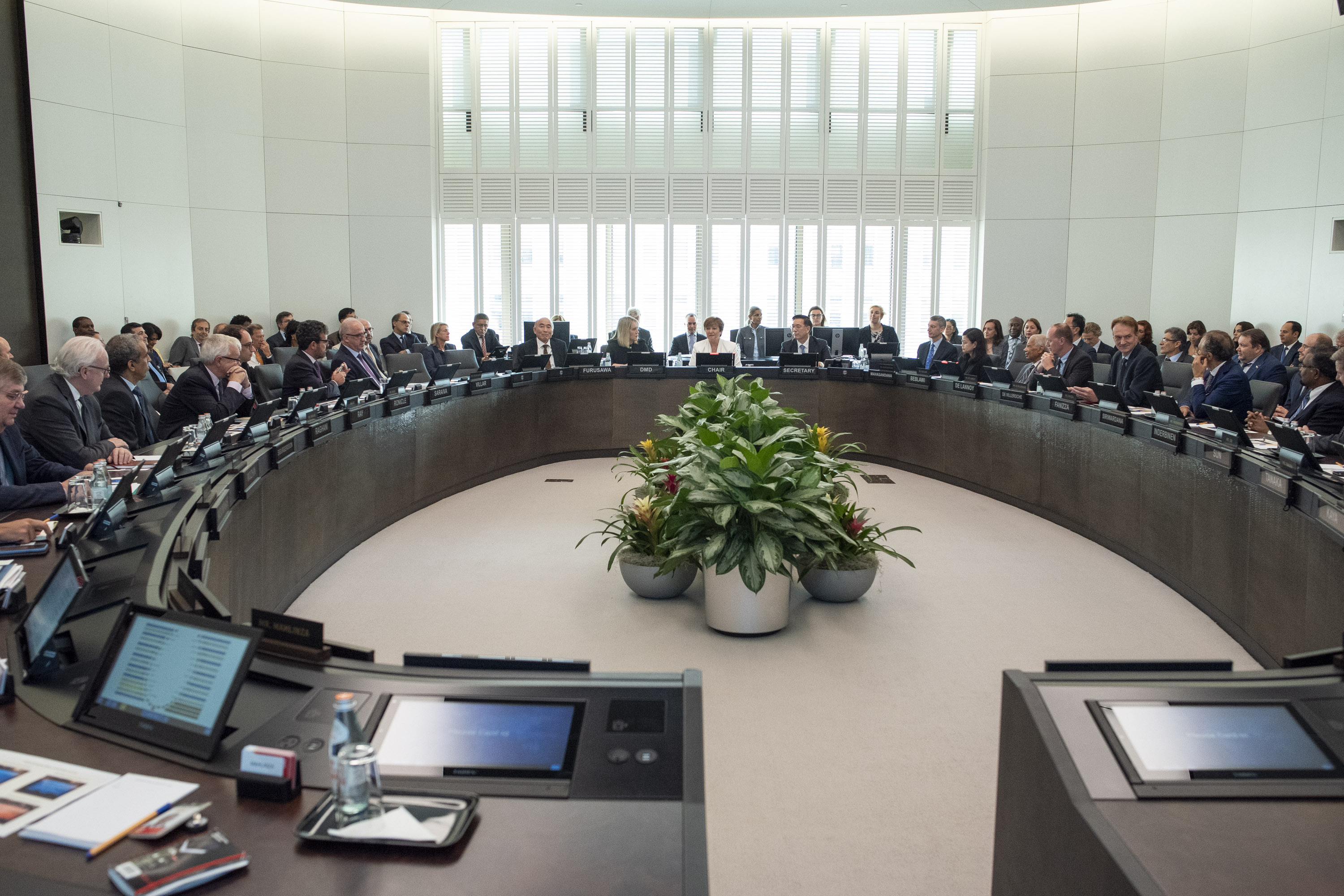
IMF Executive Board Concludes the 2024 Article IV Consultation and the Fifth Review of the Extended Credit Facility Arrangement and Approves US$ 43 million Disbursement for the Republic of Congo
IMF News, July 11, 2024
Source details
- Canonical URL
- IMF Executive Board Concludes the 2024 Article IV Consultation and the Fifth Review of the Extended Credit Facility Arrangement and Approves US$ 43 million Disbursement for the Republic of Congo
Other formats
Bibliographic details
- Published: July 11, 2024
Key actions and financing
- The Executive Board completed the fifth review of the Arrangement under the Extended Credit Facility (ECF).
- The completion of the review allows for an immediate disbursement of SDR 32.4 million (about US$ 43 million).
- Total disbursements under the ECF Arrangement to date: SDR 291.6 million.
- Press Release No. 24/269 — July 11, 2024.
Macroeconomic outlook and program performance
- Economic recovery continued amid challenges from inflationary pressures and an uncertain global environment.
- Program performance was described as broadly satisfactory, but structural reforms continued to experience delays.
- All end-December 2023 quantitative performance criteria were met, except the continuous zero ceiling performance criterion on new external arrears, which was breached by instances of delayed debt service (a waiver for non-observance was granted).
- Growth outlook:
- Growth is expected to pick up over the next two years, approaching subsequently a range of 3.5 to 3.8 percent.
- Inflation outlook:
- Inflation will return from currently elevated levels to the region’s 3 percent target.
- External sector:
- The current account surplus is projected to continue declining, before turning negative, partly reflecting the projected decline in oil prices.
Fiscal stance and public finance management
- Fiscal policy focus: reducing fragilities while enhancing debt sustainability.
- 2023 developments:
- Spending reductions tightened the fiscal deficit more than anticipated in 2023.
- Critical social spending and public sector investments are projected to return to previous levels in 2024.
- Priorities for public finance management:
- Improved management of public finances, especially on public investment and debt, to facilitate larger, more effective, and higher quality development spending.
- Enhance information sharing and coordination among government agencies on issues related to debt service.
- Increase transparency on public debt.
Structural reforms, governance, and social spending
- Structural reforms:
- Reform benchmarks aiming for more transparency, improved debt management, and the protection of public resources have been completed, albeit with delay for some of them.
- Structural reforms continue to experience delays and sustained implementation is needed.
- Governance and anti-corruption:
- Broader governance reforms, encompassing anti-corruption and transparency, are critical for improving the business environment.
- Further operationalizing the anti-corruption architecture, including improvements to the AML/CFT framework, would be pivotal.
- Social spending:
- Efforts to ensure faster execution of social spending need to be stepped up.
- Policy advice includes streamlining fuel subsidies coupled with enhanced social assistance targeted to the vulnerable.
- State-owned enterprises and financial inclusion:
- Steadfast implementation of state-owned enterprise reforms and raising financial inclusion are recommended to support inclusive and resilient growth.
Risks and regional implications
- Downside risks identified:
- Potential escalation of conflicts around the globe.
- Climate shocks.
- Oil price volatility.
- Tighter external financial conditions.
- Slower reform implementation.
- Regional implications:
- The ECF-supported program will contribute to the regional effort to preserve external stability for the Central African Economic and Monetary Union (CEMAC).
Statement by IMF management (Mr. Bo Li, Deputy Managing Director and Acting Chair)
- Recovery assessment:
- “The Republic of Congo’s recovery has continued at moderated speed, supported by robust but softer non-hydrocarbon growth and gradual reform implementation.”
- Policy prescriptions emphasized:
- Maintain fiscal consolidation efforts through continued spending discipline, broadening of the tax base, and scaling down of tax expenditures.
- Strengthen management of public finances and debt to ensure debt sustainability and avoid accumulation of new arrears.
- Advance economic diversification founded in private investment by deepening structural and governance reforms.
- Improve transparency of public finances and the hydrocarbon sector.
- Raise financial inclusion and adapt to risks emanating from climate change.
IMF Communications Department — July 11, 2024