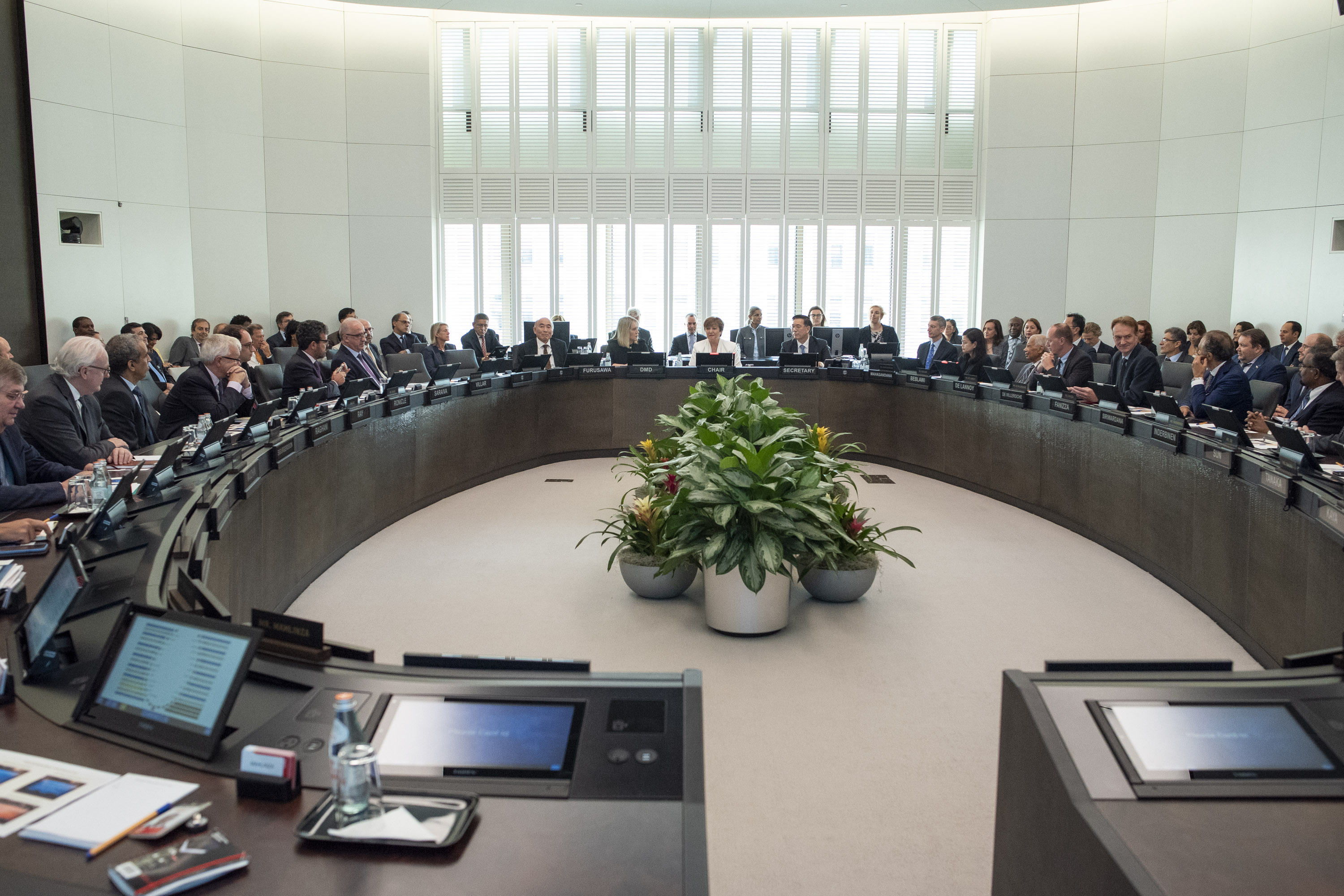
IMF Executive Board Concludes 2025 Article IV Consultation with Finland
IMF News, January 21, 2025
Source details
- Canonical URL
- IMF Executive Board Concludes 2025 Article IV Consultation with Finland
Other formats
Bibliographic details
- Published: January 21, 2025
Overview
- On January 15, the Executive Board of the International Monetary Fund (IMF) concluded the Article IV consultation with Finland.
- The Finnish economy is recovering from the 2023 recession, supported by easing inflation and real wage growth.
- Rebound is hindered by stagnant construction investment and weak external demand.
- Employment remains robust, driven by lower real wages, increased immigration, higher public employment, and increased participation rates.
- Inflation has temporarily fallen below 2 percent, reflecting declining energy prices and subdued domestic demand.
Economic outlook and projections
- The economy is projected to have contracted by 0.3 percent in 2024 before rebounding to around 1½ percent in 2025, as private investment and consumption recover alongside easing interest rates and stabilizing house prices.
- External demand will pick up somewhat but will be offset by stronger imports.
- Inflation is expected to stabilize around 2 percent in 2025, supported by the recent VAT hike and recovering domestic demand.
- Risks are tilted to the downside, including intensification of regional conflicts and geopolitical fragmentation.
- Structural challenges weigh on the medium-term outlook, notably adverse demographics and low productivity growth.
Executive Board assessment — major messages
- Directors welcomed Finland’s strengthening growth momentum following the 2023 recession and the decline in inflation.
- Directors noted longstanding structural challenges, including low productivity growth and an aging population, with risks tilted to the downside, particularly on the external front.
- To strengthen resilience, Directors highlighted the need to ensure fiscal sustainability and financial stability while implementing structural reforms to boost potential growth.
Fiscal policy and public finances
- Directors commended the authorities’ ongoing fiscal efforts but emphasized the need for additional consolidation to reverse public debt dynamics amid pressures from defense and aging‑related spending.
- The adjustment should involve both spending and revenue measures, while protecting productivity‑enhancing spending, including public investments, education, and R&D.
Key fiscal figures (percent of GDP unless otherwise indicated)
- Overall balance: -2.8 (2021), -3.0 (2022), -3.7 (2023), -3.2 (2024), -2.6 (2025), -2.3 (2026), -2.1 (2027)
- Primary balance: -2.9 (2021), -3.9 (2022), -2.0 (2023), -1.4 (2024)
- Structural balance (in percent of potential GDP): -2.4 (2021), -2.30 (2022), -2.5 (2023)
- Structural primary balance (in percent of potential GDP): -3.3 (2021)
- Gross debt: 73.1 (2021), 73.9 (2022), 77.0 (2023), 81.6 (2024), 84.2 (2025), 85.3 (2026), 85.9 (2027), 86.6 (2028), 87.4 (2029), 88.2 (2030)
Financial sector assessment and recommendations
- Directors were encouraged by banking system resilience but noted remaining pockets of vulnerability:
- High reliance on wholesale funding
- Household indebtedness
- Cross‑border risks
- Directors welcomed the reinstatement of the systemic risk buffer and recommended further strengthening of the macroprudential toolkit.
- Directors commended Finland’s initiative in conducting joint Nordic and Baltic‑wide banking sector stress tests, and urged continued monitoring of financial stability risks related to non‑bank financial institutions.
- Directors encouraged further strengthening the AML/CFT framework.
Structural reforms and growth-enhancing measures
- Directors agreed structural reforms are essential to enhance Finland’s potential growth.
- They welcomed recent labor market reforms and encouraged further efforts to:
- Increase labor force participation rates
- Reduce skill mismatches
- Address the steep decline in average hours worked since the pandemic
- Additional measures to improve productivity could include:
- Easing access to risk capital
- Reviewing barriers to entry into the services sector
- Promoting the deepening of the European Single Market
- Directors considered strengthening the role of carbon sinks through additional policy measures, including taxes, important to help meet Finland’s national climate mitigation targets.
Selected economic indicators, 2021–30 (key series)
Output and demand (percentage change, unless otherwise indicated)
- GDP: 2.7 (2021), 1.5 (2022), -1.2 (2023), -0.3 (2024), 1.4 (2025), 1.3 (2026), 1.2 (2027)
- Domestic demand: 3.0 (2021), -4.2 (2022), -0.8 (2023), 1.9 (2024), 1.8 (2025), 1.6 (2026)
- Private consumption: 3.2 (2021), 0.3 (2022), -0.4 (2023), 1.0 (2024), 1.1 (2025)
- Public consumption: 3.9 (2021), -1.0 (2022), 3.4 (2023), 0.5 (2024), 0.6 (2025), 0.9 (2026)
- Gross fixed capital formation: 1.7 (2021), 2.6 (2022), -9.0 (2023), -6.6 (2024), 4.2 (2025), 3.8 (2026), 3.5 (2027)
- Net exports (contribution to growth in percent of GDP): -0.1 (2021), -1.7 (2022), 3.1 (2023), -0.2 (2024), 0.0 (2025)
Prices, costs, and income
- Consumer price inflation (harmonized, average): 2.1 (2021), 7.2 (2022), 4.3 (2023), 2.0 (2024)
- Consumer price inflation (harmonized, end-year): 8.8 (2021) [note: table shows only this single end-year value]
Labor market
- Participation Rate (15-74 years): 67.0 (2021), 68.0 (2022), 68.6 (2023), 68.9 (2024), 69.3 (2025), 69.6 (2026), 70.1 (2027), 70.5 (2028), 70.9 (2029), 71.4 (2030)
- Employment: 2.4 (2021), -1.1 (2022), 0.4 (2023), [no further annual entries displayed]
- Unemployment rate (in percent): 7.6 (2021), 6.8 (2022), 8.3 (2023), 8.1 (2024), 7.9 (2025), 7.8 (2026), 7.4 (2027), 7.3 (2028)
Potential output
- Output gap (in percent of potential output): -0.9 (2021), -2.2 (2022), -1.5 (2023), -0.5 (2024)
- Growth in potential output: 0.8 (2021)
National saving and investment
- Gross national saving: 25.1 (2021), 25.3 (2022), 22.4 (2023), 21.3 (2024), 21.9 (2025), 22.5 (2026), 22.9 (2027), 23.3 (2028), 23.5 (2029), 23.7 (2030)
- Gross domestic investment: 24.8 (2021), 27.5 (2022), 22.8 (2023), 21.5 (2024), 22.3 (2025), 23.6 (2026), 23.8 (2027), 23.9 (2028)
Balance of payments and external sector
- Goods and services balance: 0.1 (2021), -1.9 (2022), 0.2 (2023)
- Net international investment position: 2.3 (2021), 12.6 (2022), 12.0 (2023), 11.2 (2024), 10.4 (2025), 9.5 (2026)
- Gross external debt: 209.6 (2021), 215.7 (2022), 215.3 (2023), 214.8 (2024), 211.7 (2025), 209.2 (2026), 206.6 (2027), 204.5 (2028), 202.4 (2029), 200.3 (2030)
- Sources cited in the original release: Bank of Finland; BIS; International Financial Statistics; IMF Institute; Ministry of Finance; Statistics Finland; and IMF staff calculations.
IMF Executive Board press release, January 21, 2025.