


Climate Change



The IMF and Climate Change
Climate change presents a major threat to long-term growth and prosperity, and has a direct impact on the economic wellbeing of all countries. The IMF has an important role to play in helping its members institute fiscal and macroeconomic policies to help address these climate-related challenges. We are mainstreaming climate-related risks and opportunities into our macroeconomic and financial policy advice. Climate considerations are now embedded in our bilateral and multilateral surveillance, capacity development, and lending. We also collaborate with other organizations on climate issues.
Through our analytical work we have examined policy issues such as an international carbon price floor, the transition to a green economy, border carbon adjustments, scaling up private climate finance in emerging market and developing economies, strengthening climate information architecture, fiscal policies to support adaptation, and green public investment and public financial management.
Australia: 2025 Article IV Consultation-Press Release; Staff Report; and Statement by the Executive Director for Australia
The re-elected government has laid out a bold reform agenda since taking office in May. Following a period of high inflation, the convergence of the economy toward balance is creating the opportunity to focus on ambitious structural reforms to address medium-term challenges. Delivering on the government’s three main economic goals of boosting productivity, maintaining fiscal sustainability and ensuring economic resilience will help strengthen Australia’s economy amid an uncertain global outlook.
Liberia: Public Investment Management Assessment (PIMA) Update and Climate PIMA
Liberia is at a pivotal stage in its post-conflict recovery, where infrastructure investment is crucial for economic growth and stability. The IMF's Fiscal Affairs Department conducted a Public Investment Management Assessment (PIMA) Update and Climate PIMA to evaluate Liberia's public investment management institutions and their climate resilience. The assessment found modest improvements in public investment institutions since 2016, with relative strengths in planning but weaknesses in implementation of investment projects. Recommendations include enhancing project scrutiny, strengthening PPP oversight, and integrating climate considerations into investment planning. These actions aim to improve infrastructure governance, boost economic resilience, and address climate vulnerabilities.
Republic of Tajikistan: TADAT Assessment
The IMF conducted a repeat Tax Administration Diagnostic Assessment Tool (TADAT) evaluation of the Republic of Tajikistan's tax administration system from October 17 to November 1, 2025. The assessment aimed to establish an updated baseline for tax administration performance, identify areas for potential reform, and evaluate achievements since an assessment in 2019. The evaluation highlights significant improvements across all nine performance outcome areas. Key strengths include a modern integrated tax management information system supporting wide range of taxpayer services comprehensive electronic filing and payment systems, risk-based audits, and data matching capabilities. Areas for development include development of compliance improvement plans, including for the large taxpayer segment, and implementing formal binding tax rulings.
Republic of Türkiye: 2025 Article IV Consultation-Press Release; Staff Report; and Statement by the Executive Director for the Republic of Türkiye
Since the 2024 Art. IV consultation, the authorities have aimed to balance disinflation with steady growth. Following a fiscal expansion in 2024, the deficit was reduced substantially in 2025 and, despite policy rate cuts, real interest rates remain high. Inflation (31 percent y/y in December) is falling slowly, and growth remains solid (4.0 percent y/y in 2025:Q1-Q3). With unchanged policies, including further rate cuts expected by markets, inflation is likely to continue to recede but remain in double digits and above the CBRT’s targets, and activity would fall short of its potential. Inflation would likely stay above targets and limit economic growth. Türkiye’s elevated inflation is also taking a toll on the financial sector and inequality, while productivity growth has been lackluster. Inflation risks remain on the upside, while a volatile external environment will require vigilance, particularly on FX risks. Delayed reanchoring of inflation expectations would also raise the probability of a shock that could reignite inflation and undermine confidence.
Thailand: 2025 Article IV Consultation-Press Release; Staff Report; and Statement by the Executive Director for Thailand
Thailand’s economy has been resilient in an uncertain global economic environment. However, it faces salient structural challenges, cyclical headwinds and political uncertainty. GDP growth is projected to slow from 2.1 percent in 2025 to 1.6 percent in 2026, and inflation average -0.1 percent in 2025 and 0.4 percent in 2026.
IMF Executive Board Concludes 2026 Article IV Consultation with Australia
On February 9, 2026, the Executive Board of the International Monetary Fund (IMF) concluded the Article IV consultation with Australia.
IMF Executive Board Concludes 2025 Article IV Consultation with Türkiye
The Executive Board of the International Monetary Fund (IMF) concluded the Article IV consultation with Türkiye.
IMF Staff Concludes Visit to Lebanon
An International Monetary Fund (IMF) mission, led by Ernesto Ramirez Rigo, visited Beirut, Lebanon, from February 10 to 13, 2026, to discuss progress on key economic and financial reforms. At the conclusion of the mission, Mr. Ramirez Rigo made the following statement:
IMF Staff Completes 2026 Article IV Mission to Cameroon
An International Monetary Fund (IMF) mission, headed by Christine Dieterich, visited Cameroon during January 29 to February 12 to conduct the IMF’s 2026 Article IV Consultation discussions.
IMF Executive Board Concludes 2025 Article IV Consultation with Thailand
Thailand’s GDP growth is estimated to have slowed from 2.5 percent in 2024 to 2.1 percent in 2025 and expected to decline further to 1.6 percent in 2026 as external headwinds intensify. Inflation is projected to remain subdued at 0.4 percent in 2026 before gradually rising thereafter.
IMF Executive Board Concludes 2025 Article IV Consultation with Germany
The Executive Board of the International Monetary Fund (IMF) completed the Article IV Consultation for Germany.
Australia: 2025 Article IV Consultation-Press Release; Staff Report; and Statement by the Executive Director for Australia
The re-elected government has laid out a bold reform agenda since taking office in May. Following a period of high inflation, the convergence of the economy toward balance is creating the opportunity to focus on ambitious structural reforms to address medium-term challenges. Delivering on the government’s three main economic goals of boosting productivity, maintaining fiscal sustainability and ensuring economic resilience will help strengthen Australia’s economy amid an uncertain global outlook.
Liberia: Public Investment Management Assessment (PIMA) Update and Climate PIMA
Liberia is at a pivotal stage in its post-conflict recovery, where infrastructure investment is crucial for economic growth and stability. The IMF's Fiscal Affairs Department conducted a Public Investment Management Assessment (PIMA) Update and Climate PIMA to evaluate Liberia's public investment management institutions and their climate resilience. The assessment found modest improvements in public investment institutions since 2016, with relative strengths in planning but weaknesses in implementation of investment projects. Recommendations include enhancing project scrutiny, strengthening PPP oversight, and integrating climate considerations into investment planning. These actions aim to improve infrastructure governance, boost economic resilience, and address climate vulnerabilities.
Republic of Tajikistan: TADAT Assessment
The IMF conducted a repeat Tax Administration Diagnostic Assessment Tool (TADAT) evaluation of the Republic of Tajikistan's tax administration system from October 17 to November 1, 2025. The assessment aimed to establish an updated baseline for tax administration performance, identify areas for potential reform, and evaluate achievements since an assessment in 2019. The evaluation highlights significant improvements across all nine performance outcome areas. Key strengths include a modern integrated tax management information system supporting wide range of taxpayer services comprehensive electronic filing and payment systems, risk-based audits, and data matching capabilities. Areas for development include development of compliance improvement plans, including for the large taxpayer segment, and implementing formal binding tax rulings.
Republic of Türkiye: 2025 Article IV Consultation-Press Release; Staff Report; and Statement by the Executive Director for the Republic of Türkiye
Since the 2024 Art. IV consultation, the authorities have aimed to balance disinflation with steady growth. Following a fiscal expansion in 2024, the deficit was reduced substantially in 2025 and, despite policy rate cuts, real interest rates remain high. Inflation (31 percent y/y in December) is falling slowly, and growth remains solid (4.0 percent y/y in 2025:Q1-Q3). With unchanged policies, including further rate cuts expected by markets, inflation is likely to continue to recede but remain in double digits and above the CBRT’s targets, and activity would fall short of its potential. Inflation would likely stay above targets and limit economic growth. Türkiye’s elevated inflation is also taking a toll on the financial sector and inequality, while productivity growth has been lackluster. Inflation risks remain on the upside, while a volatile external environment will require vigilance, particularly on FX risks. Delayed reanchoring of inflation expectations would also raise the probability of a shock that could reignite inflation and undermine confidence.
Thailand: 2025 Article IV Consultation-Press Release; Staff Report; and Statement by the Executive Director for Thailand
Thailand’s economy has been resilient in an uncertain global economic environment. However, it faces salient structural challenges, cyclical headwinds and political uncertainty. GDP growth is projected to slow from 2.1 percent in 2025 to 1.6 percent in 2026, and inflation average -0.1 percent in 2025 and 0.4 percent in 2026.
IMF Executive Board Concludes 2026 Article IV Consultation with Australia
On February 9, 2026, the Executive Board of the International Monetary Fund (IMF) concluded the Article IV consultation with Australia.
IMF Executive Board Concludes 2025 Article IV Consultation with Türkiye
The Executive Board of the International Monetary Fund (IMF) concluded the Article IV consultation with Türkiye.
IMF Staff Concludes Visit to Lebanon
An International Monetary Fund (IMF) mission, led by Ernesto Ramirez Rigo, visited Beirut, Lebanon, from February 10 to 13, 2026, to discuss progress on key economic and financial reforms. At the conclusion of the mission, Mr. Ramirez Rigo made the following statement:
IMF Staff Completes 2026 Article IV Mission to Cameroon
An International Monetary Fund (IMF) mission, headed by Christine Dieterich, visited Cameroon during January 29 to February 12 to conduct the IMF’s 2026 Article IV Consultation discussions.
IMF Executive Board Concludes 2025 Article IV Consultation with Thailand
Thailand’s GDP growth is estimated to have slowed from 2.5 percent in 2024 to 2.1 percent in 2025 and expected to decline further to 1.6 percent in 2026 as external headwinds intensify. Inflation is projected to remain subdued at 0.4 percent in 2026 before gradually rising thereafter.
IMF Executive Board Concludes 2025 Article IV Consultation with Germany
The Executive Board of the International Monetary Fund (IMF) completed the Article IV Consultation for Germany.
The IMF’s approach to climate change is guided by its Climate Change Strategy, which sets out how the institution will integrate climate-related macroeconomic and financial risks into its core activities, including surveillance, lending, and capacity development.

Surveillance
Article IV consultations will cover macro-critical issues related to climate change. These include macroeconomic policies to adapt to and build resilience to climate change; challenges presented by a global transition to low-carbon energy; and domestic policy challenges that arise in the context of achieving countries’ own mitigation goals as well as countries’ contributions to the global mitigation effort.
Financial Stability Assessment Program (FSAP)
FSAPs are paying increasing attention to climate risk analysis for the financial system. Recent FSAPs have looked at the implications of transition risk in Norway, South Africa, Chile, Colombia and the UK, and physical risk in the Philippines. Where relevant, climate risk considerations are also being embedded in FSAP reviews of financial supervision and regulation.

Capacity Development
The IMF provides capacity development to member countries vulnerable to climate change and natural disasters.
- The Climate Policy Assessment Tool (CPAT) helps policymakers to assess, design, and implement climate mitigation policies for over 200 countries.
- The climate-module of Public Investment Management Assessments (C-PIMA) tool helps governments identify potential improvements in public investment institutions and processes to build low-carbon and climate-resilient infrastructure.
- The Climate Policy Diagnostics (CPD) provides countries with an in-depth analysis of their climate policies, focusing on mitigation and adaptation strategies, and addresses the necessary institutional and legal frameworks to support these policies.
- The Macroeconomics of Climate Change course and other regional workshops help build knowledge at Finance Ministries and Central Banks.

Policy Advice
Adaptation
Guidance on building financial and institutional resilience to natural disasters and extreme weather events.
Mitigation
Advice on measures to contain and reduce emissions through policies and tools to help countries achieve their mitigation goals.
Data
The IMF's Climate Change Indicators Dashboard provides a platform for disseminating climate change data for macroeconomic and financial stability analysis.

Lending
The IMF’s Resilience and Sustainability Trust (RST) helps low-income and vulnerable middle-income countries build resilience to external shocks and ensure sustainable growth, contributing to their longer-term balance of payments stability. It complements the IMF’s existing lending toolkit by providing longer-term, affordable financing to address longer-term challenges, including climate change and pandemic preparedness.
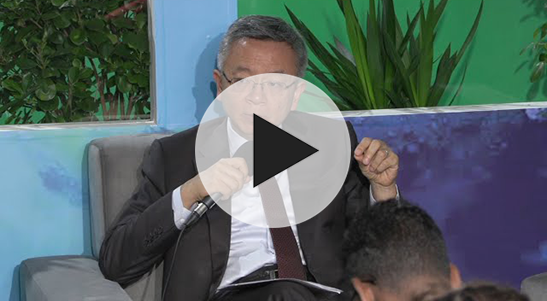
COP29: Bridging the Adaptation Financing Gap: Challenges and Potential Solutions
Panelists discuss how to enhance partnerships and cooperation to scale up adaptation financing for EMDEs and explore the role various stakeholders play in n attracting private capital for adaptation investments.
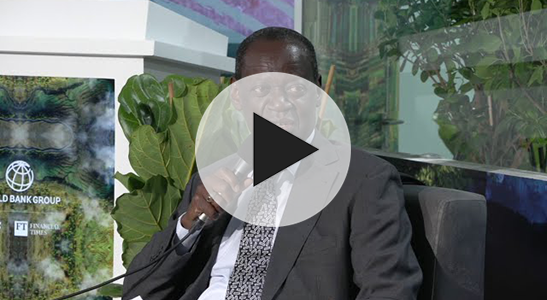
COP29: The Pioneering Role of IMF’s Resilience and Sustainability Trust (RST) in Climate Action
Panelists discuss how specific countries benefited from the Resilience and Sustainability Trust (RST) and the lessons learned in the process.
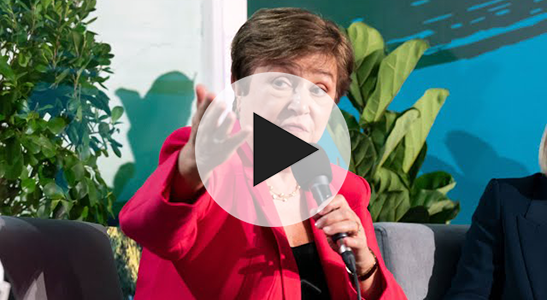
COP29 Event – Unlocking Financing for the Green Transition in Emerging and Developing Economies
Delivering on global climate goals requires a shift to renewable energy and other green technologies. The main challenge for developing economies is securing funding for this transition. With limited fiscal space and low financial development, foreign direct investment (FDI) and official lending are crucial.