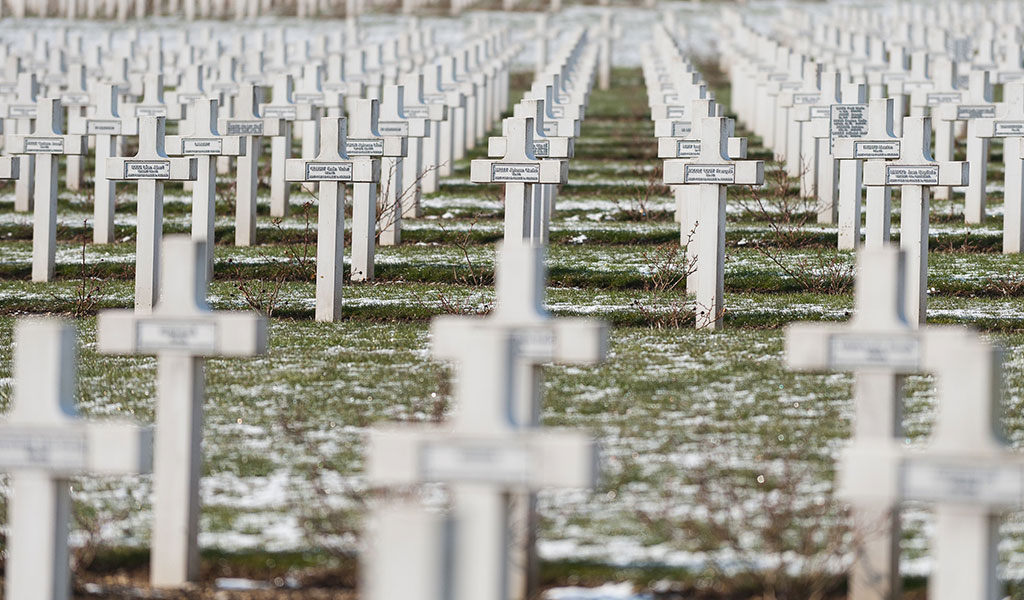
When History Rhymes
IMF Blog, November 5, 2018
Source details
- Canonical URL
- When History Rhymes
Other formats
Bibliographic details
- Authors: Christine Lagarde
- Published: November 5, 2018
International cooperation (theme)
- Mark Twain: “History never repeats itself, but it does often rhyme.”
- Heads of state gathering in Paris on the 100th anniversary of the end of World War I should “listen closely to the echoes of history and avoid replaying the discordant notes of the past.”
- The IMF and other post‑World War II institutions (United Nations, World Bank) are part of a legacy formed to provide durable solutions to shared global problems.
Historical parallels: pre‑1914 and today
- The 50 years leading up to the Great War featured:
- remarkable technological advances: steamships, locomotion, electrification, and telecommunications.
- previously unprecedented global integration—often called the first era of globalization—where goods, money, and people moved across borders with relatively minimal impediments.
- between 1870 and 1913, large gains in exports as a share of GDP in many economies—a sign of increasing openness.
- Distributional outcomes in that era:
- Great wealth creation accompanied by severe inequality.
- In 1910 in the United Kingdom the top 1% controlled nearly 70% of the nation’s wealth—a disparity never reached before or after.
- Contemporary similarities called out:
- dizzying technological advances, deepening global integration, and growing prosperity that has lifted vast numbers out of poverty, but has also left many behind.
- rising inequality and uneven gains from technological change and globalization have contributed to political backlash.
Risks of mismanaging technological change and globalization
- Historical lesson: when rising inequality and uneven gains prompt a backlash, countries may prioritize national advantage over mutual cooperation, leading to zero‑sum behavior.
- Consequence in the early 20th century:
- scramble for national advantage, forsaking cooperation, culminating in catastrophe as modern technology was deployed toward war.
- Post‑war failures:
- In 1918, leaders “failed to draw the correct lessons,” retreating from trade, attempting to recreate the gold standard, and eschewing peaceful cooperation mechanisms.
- John Maynard Keynes argued that imposing financial ruin on Germany would eventually lead to disaster.
Adaptation and institutional evolution since World War II
- The post‑World War II system was designed to adapt:
- examples of evolution include the move to flexible exchange rates in the 1970s and the creation of the World Trade Organization.
- The IMF positions itself as part of institutions that can evolve to sustain global cooperation.
Call for a new multilateralism (analysis and policy direction)
- A new multilateralism is advocated that is:
- more inclusive,
- more people‑centered,
- more accountable.
- Scope of the new multilateralism should address a broader spectrum of challenges, including:
- financial integration and fintech,
- the cost of corruption,
- climate change.
- The IMF highlights recent research offering policy ideas:
- macroeconomic benefits of empowering women,
- modernizing the global trading system.
Responsibilities and concluding analysis
- Each leader and every citizen has a responsibility to contribute to rebuilding cooperative systems.
- Core assertion: “The peaceful coexistence of nations and the economic prospects of millions depends squarely on our ability to discover the rhymes within our shared history.”
Source: Christine Lagarde, “When History Rhymes,” November 5, 2018.
Content in this bundle
- 当历史再现; IMF博客; 2018年11月5日
- 歴史が韻をを踏むとき クリスティーヌ・ラガルド;2018年11月5日
- Когда история рифмуется; Кристин Лагард; 5 ноября 2018 года
References
- عربي
- Português
- https://www.imf.org/wp-content/uploads/2018/11/BLOG-1024x600-WWI-Multilateralism-The-ossuary-of-Douaumon-France-rance-MATHIEU-PATTIER-SIPA-Newscom-sfphotosthree697094.jpg
- new multilateralism
- macroeconomic benefits of empowering women
- modernizing the global trading system
- Steering the World Toward More Cooperation, Not Less