




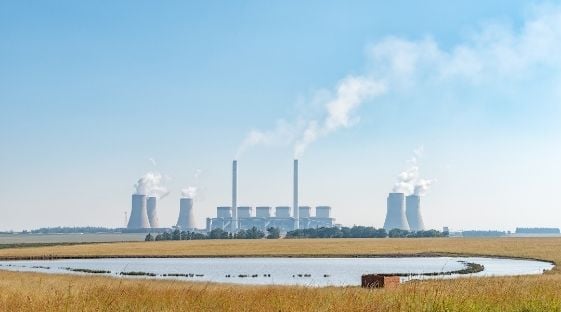
Pictured is the Tutuka Power Station in South Africa’s Mpumalanga province. The country is highly reliant on coal for power generation. (Photo: GroblerduPreez/iStock by Getty Images)
How South Africa Can Advance Reforms to Achieve its Climate Goals
February 18, 2022
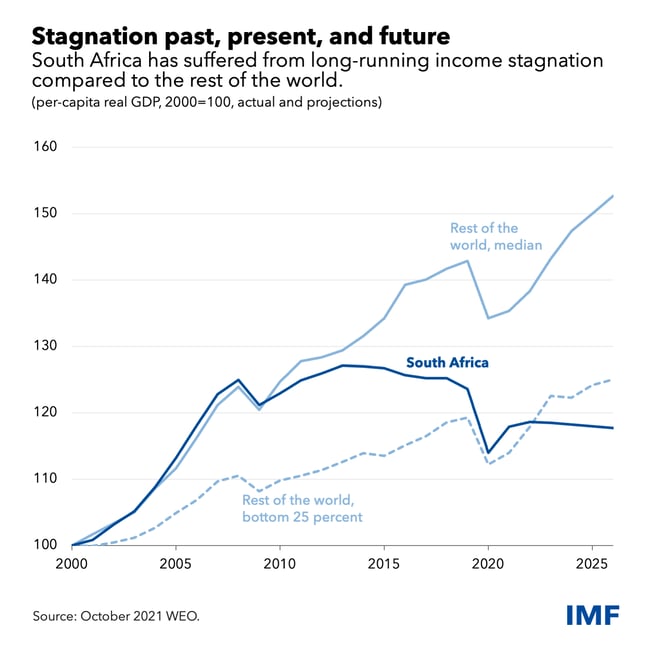
In our recent review of South Africa’s economy we explore how to raise growth, reduce inequality and unemployment, and bolster the economy’s green credentials and climate resilience. These challenges have been deepened by the pandemic, which exacerbated South Africa’s economic problems, including a decade-long stagnation of per-capita income, high unemployment, and vast income inequality. But the challenges can be met in a complementary manner.
The rebound from the crisis presents an opportunity. To seize on this, the government will need to address deep structural constraints that limit the durability of the economic recovery. South Africa’s ambition of achieving carbon-neutrality by midcentury requires a profound economic transformation built on significant green investments, in turn supported by a business-friendly environment, a labor market that makes it easier to create jobs, and improved governance and transparency.
A just climate transition
South Africa is vulnerable to the increased frequency and severity of extreme weather events. Also, the nation’s high dependence on coal for energy increases its greenhouse gas emissions.
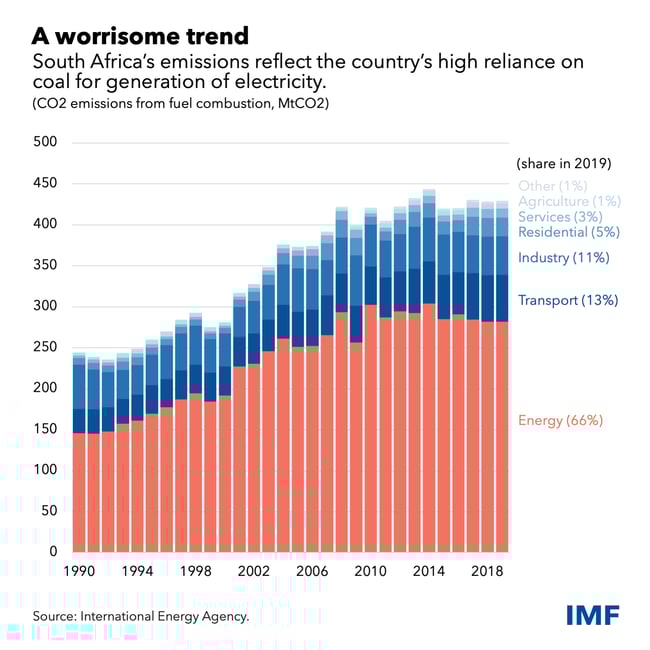
A just transition involves a move away from fossil fuels, with the benefits being shared by all. The transition will improve environmental and health conditions and create new and better jobs. Crucially, affected communities will be able to face the transition at a minimum cost and benefit from a more climate-resilient economy. But with millions of livelihoods connected to the coal value chain, achieving a just transition will be challenging and needs to be done carefully.
The authorities have taken encouraging initial steps. The international community has shown interest in contributing to the transition as evidenced by the support pledged at the COP26 climate summit.
Making the energy market competitive with reliable supply at lower costs
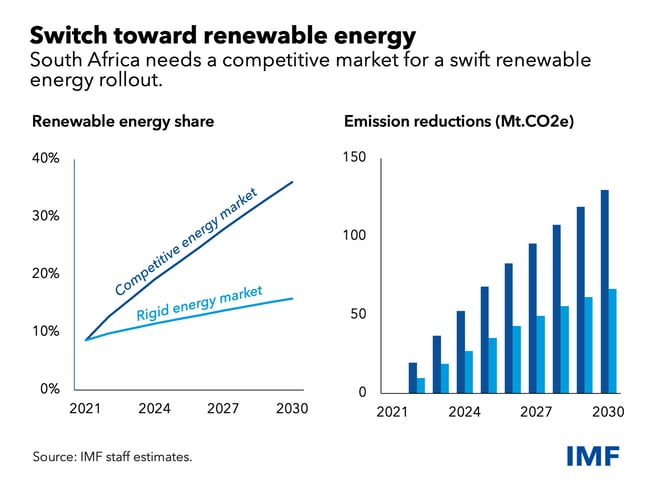
In a competitive market, the energy sector would be responsive to the relative prices of different sources, particularly to the prices of coal and of renewables. Adequate carbon pricing, advances in technology, and enhanced competition in the sector will help bring down costs and facilitate the transition to renewable energy.
The cost of renewable energy in South Africa has already declined significantly and become competitive with that of energy from coal. Assuming a progressive increase in the carbon tax to $75 a ton of greenhouse gases by 2030, IMF staff simulations show that the share of renewable energy could more than double in a competitive energy market comparing to that in a rigid one.
Fundamental changes are needed to build a competitive energy market:
- An overhaul of the state power company, Eskom. This high-debt monopoly has become an impediment to economic growth, notably through rising electricity tariffs and frequent power outages. Eskom should move to a viable business model, reduce its footprint in the sector, and compete with private-sector producers and providers.
- Regulatory streamlining. Red tape and burdensome bureaucratic procedures in the sector should be streamlined to give better opportunities for businesses to compete and innovate.
Reforms to facilitate a green transition
A green and climate-resilient future with lower poverty and inequality will require higher growth. Higher growth, in turn, will require reforms to:
- Put public debt on a sustainable path. This calls for containing fiscal risks, including risks from state-owned enterprises (SOEs) that are vulnerable to the decarbonization transition such as those in charge of the network industries. Inefficient government transfers to SOEs should be streamlined to create room for more productive activities. A better design of carbon taxes (now too low when factoring in allowances and exemptions) would contribute to the decarbonization goal by providing a more effective price signal to reduce greenhouse gas emissions and also by opening policy room to assist low-income households and vulnerable workers and regions.
- Promote job creation to help workers migrate out of the coal value chain. The economic recovery in 2021, mainly driven by lifting pandemic-related mobility restrictions and improvements in terms of trade and global financial conditions, has not created many jobs. The renewable energy rollout will create jobs, but challenges to be addressed include mismatches in terms of job location and necessary qualifications as well as education and training. Addressing these challenges is essential to support workers who are displaced by the decarbonization transition and to prepare the young for the future.
- Welcome all firms to invest and compete on a level playing field to stimulate private investment. Policy signals related to a green recovery need to be consistent.
- Address governance vulnerabilities. Accelerating governance reforms and fighting corruption will foster trust among stakeholders and contribute to better planning and implementation of the climate transition. Moreover, efficient utilization of resources to support affected communities and regions will be essential to ensuring social cohesion.
***
Haonan Qu is a senior economist in the IMF’s African Department.