Views & Commentaries Free Email Notification Receive emails when we post new
items of interest to you.  |
|
|
|
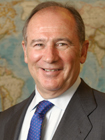
Outlook for 2005 The early years of the 21st century have presented the international community with difficult challenges. The world faces new threats that have penetrated places once considered immune to insecurity. Rapid changes in the global economy have introduced worries about assumptions of continued prosperity. Thus, it is important to recognize the remarkable achievements of the past year: global growth is at its highest level in three decades and concerns about economic instability actually have receded. Indeed, recent increases in oil prices are largely the result of this rising demand in the industrialized countries and Asia. Every region—including Europe—has shared in the current boom, and even the shift toward higher interest rates has been well received by financial markets. High oil prices may end up tempering the expansion slightly, but the world can still expect solid growth in 2005. That said, it would be a mistake to lapse into complacency. Our rapidly changing global economy faces many difficult transitions. This holds true for the advanced economies, which must address rapidly aging workforces; for emerging market countries that depend on continued export growth and foreign capital flows; and for the poor countries that struggle on the fringes of the global economy. It is the responsibility of the international community to work together to provide the strongest assurances that growth and prosperity are achievable for all mankind. The International Monetary Fund has an important role to play in this ongoing effort as the institution tasked by 184 countries to oversee the stability of the global economy. The Fund is responsible for deepening countries' understanding of the policy issues that they face—individually and collectively—and it must promote enhanced vigilance and reform. As Managing Director of the IMF, I have been deeply impressed with the commitment of the institution—both its membership and its staff—to achieving the goals of global economic stability and prosperity. The Fund offers policy expertise and financial resources that can make a difference in this world. But there is a clear understanding that the IMF must constantly work to enhance its capabilities in a changing world. Thus, I have launched a strategic review of the institution focusing on the reforms necessary to make our operations even more effective. The immediate task for the international community is to take advantage of the current global expansion to address fundamental challenges. For some, this means strengthening financial sectors, enhancing the transparency of economic policy-making, building up foreign reserves and increasing exchange-rate flexibility. Among the industrialized countries, the U.S. must address its excessive budget deficit, and some European countries still need to energize their economies, especially by freeing labor markets. Japan needs to sustain its financial and corporate sector reforms. Looking ahead, the advanced economies also must address the fiscal challenge of their aging populations by dealing with health and pension issues. The recent surge in oil prices has placed a spotlight on energy issues. We need to expand production capacity, diversify energy sources and enhance conservation. Countries cannot overlook the need for comprehensive energy strategies. Furthermore, many oil-producing countries need to use their windfall revenues wisely, and they need to become more transparent with the money they earn. Reforms will provide the foundation for enduring global economic growth. The IMF is committed to working with each member to help the world continue on this path. IMF EXTERNAL RELATIONS DEPARTMENT
| ||||||||||||||||