
The Impact of Higher Oil Prices on the Global Economy | |||||||||||||||||||||||||||||||||||||||||||||||||||||||||||||||||||||||||||||||||||||||||||||||||||||||||||||||||||||||||||||||||||||||||||||||||||||||||||||||||||||||||||||||||||||||||||||||||||||||||||||||||||||||||||||||||||||||||||||||||||||||||||||||||||||||||||||||||||||||||||||||||||||||||||||||||||||||||||||||||||||||||||||||||||||||||||||||||||||||||||||||||||||||||||||||||||||||||||||||||||||||||||||||||||||||||||||||||||||||||||||||||||||||||||||||||||||||||||||||||||||||||||||||||||||||||||||||||||||||||||||||||||||||||||||||||||||||||||||||||||||||||||||||||||||||||||||||||||||||||||||||||||||||||||||||||||||||||||||||||||||||||||||||||||||||||||||||||||||||||||||||||||||||||||||||||||||||||||||||||||||||||||||||||||||||||||||||||||||||||||||||||||||||||||||||||||||||||||||||||||||||||||||||||||||||||||||||||||||||||||||||||||||||||||||||||||||||||||||||||||||||||||||||||||||||||||||||||||||||||||||||||||||||||||||||||||||||||||||||||||||||||||||||||||||||||||||||||||||||
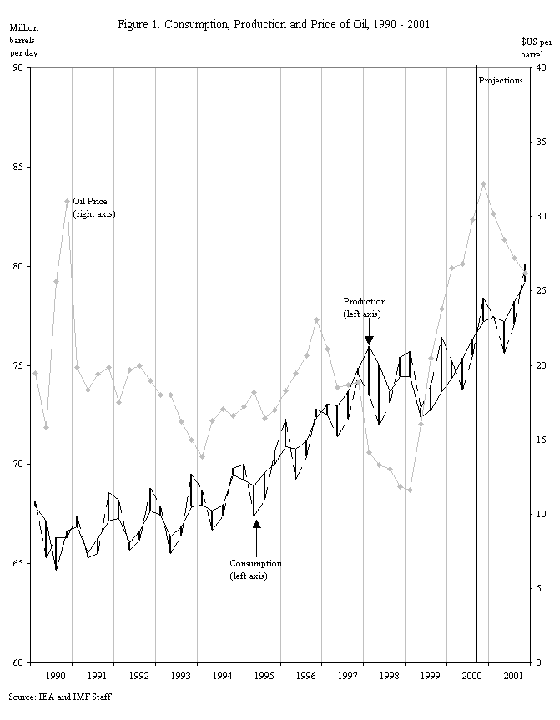
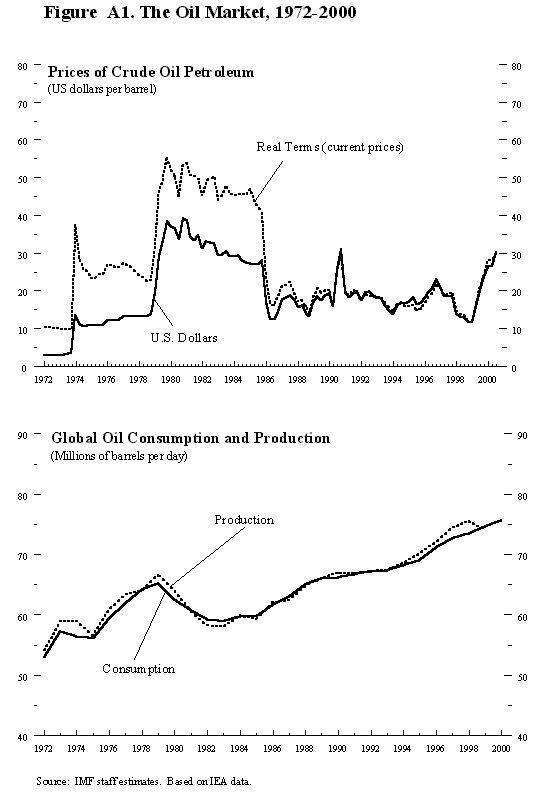
I. IntroductionOver the past two years, oil prices have increased very sharply, with the Fund's reference price rising from a 25 year low of $11 per barrel in February 1999 to a peak of close to $35 per barrel in the first week of September 2000.2 After easing somewhat in early October, oil prices increased again in late October and November to an average of about $32 per barrel. At the same time, futures markets indicated that average oil prices in 2001 would be about $5 per barrel higher than projected in the most recent World Economic Outlook (WEO) published in late September.3 The recent World Economic Outlook contained an extensive discussion of the potential impact of higher prices.4 The purpose of this paper is to expand on that discussion in the light of developments since then. The paper is divided into three sections. Section I reviews the causes underlying the recent oil price increase and the outlook for 2001. Section II discusses the potential impact of a sustained $5 per barrel increase in the price of oil on the global economy, focusing on the key channels through which it operates, and the effects of differing policy responses. Section III provides a summary and includes a discussion of main policy implications for developed and developing countries. An Appendix reviews lessons from earlier oil price increases. Since late November, oil prices have fallen back significantly, reflecting both the slowing of global economic activity-which to some degree, of course, itself reflects higher oil prices-and the impact of recent OPEC production increases, resulting in a rising level of stocks. As of December 20th, the Fund's reference price had fallen back to just over $22 per barrel, while futures markets suggest that the average price of oil in 2001 will be just under $24, only $1 higher than in the original WEO baseline. While oil prices remain highly volatile, if this decline is sustained the recent spike in oil prices would be shorter lived than assumed in the discussion below, and the resulting impact on growth and inflation would be correspondingly less severe. II. Recent Developments and Outlook in Oil MarketsIn October and November, 2000 the world oil price averaged over three times higher than its February 1999 low, and, excluding the Gulf war period, reached a 15 year high in both real and nominal terms. In the mid-1990s, as the pace of economic expansion picked up so did world demand in general for energy and for oil in particular. The effect on oil prices was muted as oil production largely kept pace with the increase in oil consumption.5 With the onset of the Asian crisis in 1997, as well as subdued activity in Japan and Europe, global consumption of oil fell significantly short of production and the Fund's indicator price for oil fell progressively from about $20 a barrel in early 1997 to below $11 in February 1999 (Figure 1). In an effort to arrest the decline in the price of oil, the Organization of Petroleum Exporting Countries (OPEC) met on several occasions in 1998 and concluded agreements to restrain production.6 The upward trend in production was reversed, but compliance with the agreements was not sufficient to prevent price declines.7 In early 1999, however, OPEC's production restraints were reinforced by parallel agreements with some other oil exporting countries (most notably Mexico and Norway) which enabled oil production to be reduced more effectively from the second quarter of 1999 onwards. Prices progressively increased, more than doubling by the end of the year and oil production fell below oil consumption even in the summer period when stocks usually accumulate. Early this year, in an effort to moderate the price increase, OPEC policy reverted to one of periodic increases in production targets. In March, OPEC increased targeted production by 1.7 million barrels per day-equivalent to about 2 percent of world production. Following this increase, and partly in response to concerns by some OPEC members on the long term effect of high prices, including loss of market share to non-OPEC producers, OPEC informally defined a target price band of $22 to $28 a barrel and prescribed increases or decreases of one half million barrels per day, should the OPEC reference price remain outside this range for more than 20 consecutive market days.8 Subsequently, OPEC increased its production targets by amounts in excess of one half million barrels on June 21 and September 10, and by one half million barrels on October 30. The recent price rise is the fourth episode of sharp upward movement in the price of petroleum in the past thirty years. So far it is much smaller in terms of magnitude of the terms of trade impact than the first two episodes, but it has outpaced the third (see Annex). In terms of the magnitude of the price change, the first and second oil price shocks, in the mid and late-1970s, respectively, each entailed a more than tripling of the price of oil; and both lasted for about 5 years. By contrast, the price spike in 1990-91 lasted only about six months and even at its highest point was less than double the price in the preceding period.
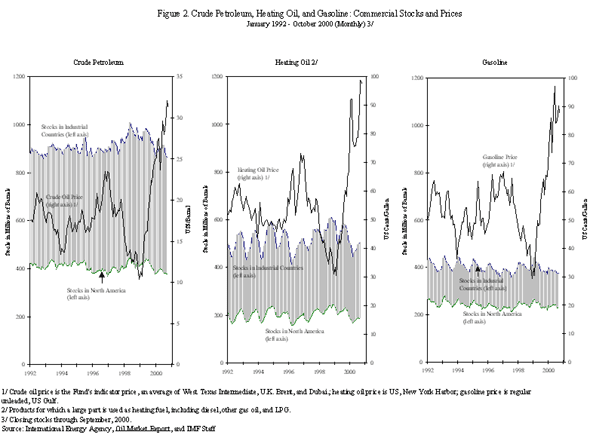
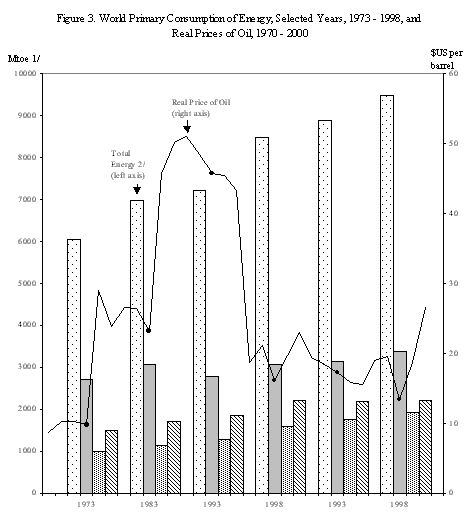
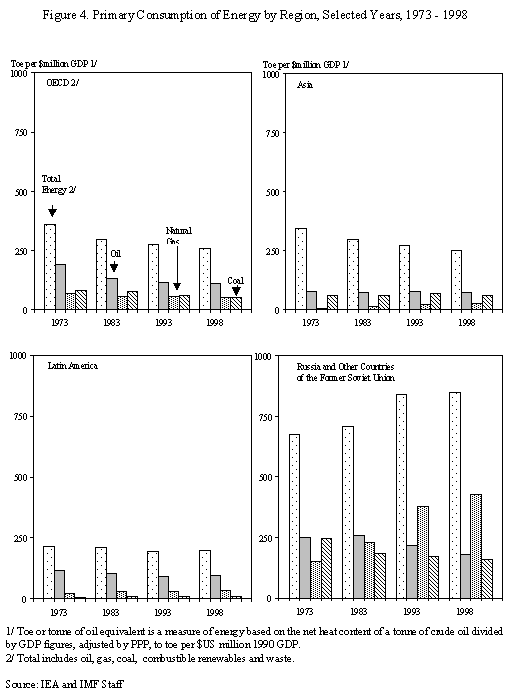
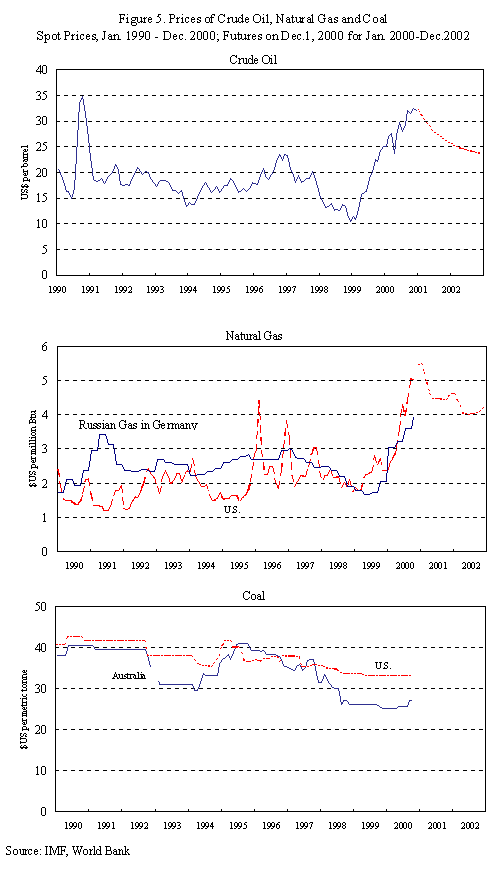
A. Current Market Conditions and Near Term OutlookThe current market conditions and the near term outlook for oil reflect the interplay of production, stocks and consumption. Over the past two years global economic growth has greatly strengthened-from a rate of 2.6 percent in 1998 to 3.4 percent in 1999 and to an estimated 4.7 percent in 2000. As a result, the growth in global oil consumption increased from 0.6 percent in 1998 to 1.6 percent in 1999, before moderating somewhat this year due to the sharp oil price increase. There are noticeable seasonal patterns in production and in primary consumption cycles of oil. Peaks for both cycles occur in the fourth quarter of the year, and troughs in the second quarter. Measured stocks of crude oil and products are usually run down near the end of the calendar year when consumers in the northern hemisphere build up their supplies (invisible stocks) of heating oil for the winter season and visible stocks are rebuilt around the middle of the following year. In 1999 the seasonal accumulation of stocks did not occur because of producers' attempts to curb production at a time when the rate of demand growth was increasing, and it contributed to the doubling of the oil price during the year. Latest data on production and consumption suggest some replenishment of stocks of oil products in the middle months of this year. However, a strong seasonal demand for gasoline led refineries to bias the mix of their output towards gasoline at the expense of heating oil. In addition, it appears that stocks of heating oil held by final consumers in recent weeks have been higher than usual because of concerns about higher prices and/or shortages during the height of the heating season, as well as worries about a cold winter. (The volume of heating oil sold in the United States to final consumers has been 10 to 20 percent higher than in recent years). As a result, visible stocks of heating oil appear to be low and many market analysts have questioned the extent to which these stocks would cover seasonal demand, especially should the weather in the northern hemisphere be colder than average (Figure 2). For this reason the price of oil this year has been unusually sensitive to weather information and this situation is likely to persist throughout much of the winter. With stocks so low, the market has become highly sensitive to news relating to short term supply changes and much attention is given to the actions and intentions of OPEC. On October 30, after the price of oil in the OPEC basket had stayed above its agreed price range of $22 to $28 for twenty consecutive working days, OPEC announced a half million barrel per day increase in the aggregate production target for its members. As in the three previous increases in production targets this year, the new target failed to bring down the price to the upper level of the target range. Recently, however, the concern of many OPEC members has turned to the possibility of "overproduction" should the current tight market conditions ease early next year. At its regular meeting held on November 12, OPEC decided that production targets should not be increased until the group's meeting in mid-January when they would be reconsidered.9 Saudi Arabia, however, has stated that it remains ready to provide extra deliveries should prices surge again. In addition, many short-term political developments and problems along the production-consumption chain, which in periods of ample stocks would receive little attention, are adding to price uncertainty. Recently these have included such diverse matters as Iraq's request for payment in euros rather than dollars; escalation of conflict between Israel and the Palestinians and the threat that this may spill over into actions affecting oil deliveries; blockades of oil terminals by commercial truckers aiming to pressure governments in Europe to cut petroleum taxes; and localized gasoline price spikes in the United States.10 Added to these are changes in oil-specific government policy such as the use of strategic reserves, notably in instances of persistently low stocks. The main such event was the announcement on September 22 of a release of 30 million barrels by the United States from its Strategic Petroleum Reserves to oil companies, in exchange for an equivalent future delivery between August and November 2001. Key factors that will influence the supply-demand situation over the next six to nine months include the severity of the winter, the pace of global economic activity, and whether any oil production increases will be sustained. An important consideration is the fact that nearly all OPEC countries, with the exception of Saudi Arabia, are close to or producing at full capacity which may make it difficult to agree to production increases which will lower oil prices and hence revenues for most OPEC members. (There is also very little spare capacity in non-OPEC countries). As noted above, oil prices have fallen back significantly in December; however, uncertainty regarding future prices remains high and it is not difficult to envisage situations which could lead to prices at least $5 higher, or $5 lower. B. Energy Intensity of Consumption and ProductionThe medium to longer term prospects for oil prices reflect the changing structure of energy use and of the energy intensity of production. The International Energy Agency (IEA) publishes country energy balance sheets which measure energy production and consumption in terms of the heat content of oil. These data indicate that world energy use at the primary level (refineries, heat plants, electricity plants, etc.) increased by about 50 percent over the 25-year period from 1973 to 1998 (Figure 3). Over this period, there has also been a shift away from oil towards natural gas, a less expensive and less polluting source of energy (see Box 1). The increase in global consumption of oil was only 25 percent while that for natural gas was over 50 percent. The share of coal has remained roughly constant at about 25 percent of overall fuel consumption. In the early 1980's, after the first and second oil price shocks, there was little growth in total global energy consumption, and world oil consumption fell. They both resumed their upward trend in the late 1980's. In OECD countries, the ratio of energy consumption to real GDP has fallen steadily and that of petroleum consumption to real GDP has fallen at a greater rate (Figure 4). In Russia and other countries of the former Soviet Union, total energy consumption has fallen progressively in the 1990s in line with the decline in real GDP, but energy intensity remains largely unchanged. In these countries, natural gas replaced petroleum as the leading source of energy in the 1980s and this trend has been accentuated in the 1990s. In developing countries energy consumption has increased steadily. This increase is largely in line with the growth in real GDP although there appears to be some decline in the ratio of energy use to GDP in the 1990s, at least in Asia. In these countries, more so than elsewhere, the growth in the consumption of natural gas has outpaced the growth in consumption of oil and the share of natural gas in total energy use has doubled. In 2000, the price of oil has been at its highest level since the mid-1980s, excluding the brief price spike at the end of 1990. The current price hike, if maintained for any significant length of time, is likely to accentuate the trend towards energy conservation and the shift from oil to other sources of energy, especially in sectors other than transport. Consumption of oil is likely to continue to grow in the medium term but, as in the past three decades, at a considerably slower rate than other energy sources, particularly those which have a cost advantage. The longer the oil price hike lasts, the more this process will be accentuated. The price increase for petroleum has spilled over into the market for natural gas-the source of energy most closely competitive with petroleum, but not yet into the market for coal, the other leading source of energy (Figure 5). Because of the incorporation of oil prices into formulas for the pricing of future deliveries of natural gas, the price increase for natural gas has lagged behind that of petroleum by about six months. The effect of the higher oil prices was incorporated for the most part in the second and third quarters of this year. However, international transfers resulting from changes in prices of natural gas are of less consequence to the global economy than those of petroleum. The price of natural gas per unit of energy is considerably lower than that of petroleum and a much smaller proportion of natural gas production enters international trade (as discussed in Box 1). III. The Impact on the Global EconomyThe latest World Economic Outlook projections were based on an assumed path of oil prices that is about $5/barrel lower in 2001 and 2002 than suggested by futures markets during October and November 2000. Higher oil prices affect the global economy through a variety of channels:
To undertake an analysis of these five channels, several simulations of a sustained $5 per barrel (20 percent) increase in the price of oil were run using MULTIMOD, focusing on the implications for real GDP, inflation, and monetary policy.12 In these simulations, it is assumed that the monetary authorities in advanced countries target expected core inflation, while fiscal policy is passive, allowing automatic stabilizers to operate. The results, reported in Table 2, indicate that a $5 per barrel increase in the price of oil would reduce the level of global output by around ¼ percentage point over the first 4 years, after which the output losses slowly fade away. The impact is somewhat larger for industrial countries than for developing countries as a group, particularly as regards domestic demand, largely due to terms-of-trade effects (as many developing countries are net oil exporters). However, as discussed below, the significant diversity across developing countries, in particular the mixture of oil exporters and importers, means that the impact on individual developing countries is often large. Table 1. Impact of an Oil Price Increase of - $5 per barrel on Oil Exporting and Oil Importing Countries (for 2000)
Source: WEO and staff calculations. 1/ An oil-dependent exporter is defined as a country for which at least 10% of export earning are derived from the (net) exports of oil. Some of the limitations of this exercise should be recognized. First, these results underestimate the global impact in that they do not incorporate the impact of higher prices of other energy products, such as gas, which is a particularly important source of energy in the transition countries. Second, the impact of the rise in oil prices may be amplified if they exacerbate existing macroeconomic imbalances or lead to inappropriate policy responses, particularly in oil importing countries. Third, the simulations take little account of relative demand effects within countries. A. The Impact on Industrial CountriesFor the industrial countries as a group, real GDP falls 0.3 percentage points below the baseline in 2001 and 2002 before recovering subsequently, while real domestic demand follows a similar profile but with a somewhat greater short-term loss of 0.4 percentage points because of negative terms-of-trade effects. The impact on activity and demand in the United States and euro area are somewhat larger than the industrial country average, while the impact on the group "other industrial countries" is smaller than the average because the largest two members of this group-the United Kingdom and Canada-are net oil exporters. Headline CPI inflation rises in all countries in the short run, with particularly large impact in the United States and euro area, resulting in an increase in real and nominal short-term interest rates as monetary policy responds to counter second round wage and price increases (as noted earlier, the monetary authorities are assumed to target core inflation). The financial impact of the increase in oil prices is quite muted. Exchange rates remain relatively stable, with the dollar appreciating slightly relative to the yen and euro because the United States faces a smaller terms-of-trade shock. Lower expected future profits result in a fall of 1-2 percent in equity prices in the advanced economies. If adverse confidence effects were to magnify these effects, the corresponding effect on the real economy would also be larger. Financial market considerations are discussed in more detail below. These differences in response reflect the net effect of the differing importance of the four most important channels through which the oil price hike is transmitted to activity in the short-term-a temporary impact on supply potential proportional to the energy intensity of production (as the change in relative prices of intermediate goods temporarily disrupts existing production arrangements13), the fuel tax wedge, the increase in expected core inflation, and the terms-of-trade impact on real incomes. The supply-side impact is largest in the United States, as it has a higher energy intensity of production than most other industrial countries. The higher the fuel tax wedge, the smaller the proportional impact on retail prices of a given rise in oil prices. The United States has the smallest wedge and hence the biggest impact. The inflationary consequences and monetary policy response are most significant in the United States and euro area, reflecting a combination of relatively high energy consumption (which increases the inflationary impact in the United States), inertia in the inflation process (which is particularly important in the euro area, with its labor market rigidities), and differences in resistance to real income losses (which is low in Japan). The negative terms-of-trade impact, on the other hand, is smaller in the United States than the euro area and Japan, as the United States has significant domestic oil production, and is positive for the other industrial countries as a group. Table 2. Permanent $5
per Barrel Increase in the Price of Oil: Baseline Scenario
1Includes countries not in other groups. Table 3 provides summary comparisons of this simulation result with estimated impact on industrial economies from two other global macroeconomic models: the OECD's INTERLINK and McKibbin-Sachs Global 2 (MSG2).14 The results show some interesting differences which highlight the uncertainties surrounding the estimated impact of an oil price increase.
Table 3. Comparison of the Baseline Scenario with Outside Simulations
Source: The OECD simulations are reported in ECSS(2000)5,
"Oil: Impact and Policy Implications of the Current Situation," October
24, 2000. The MSG2 simulations were generated by Warrick McKibbon of
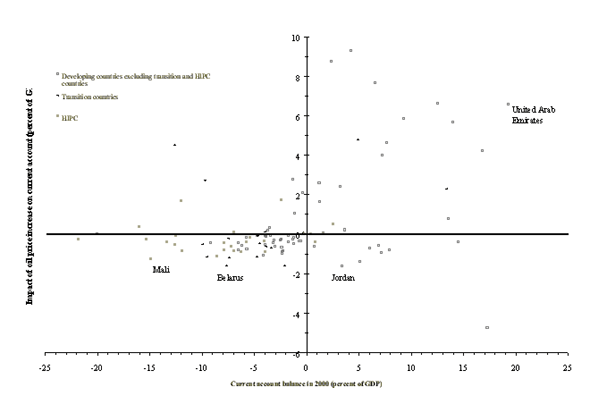
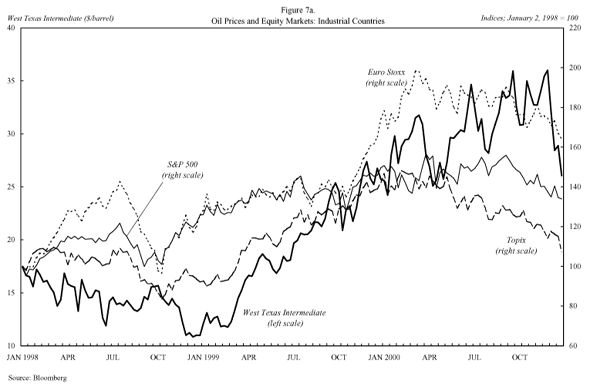
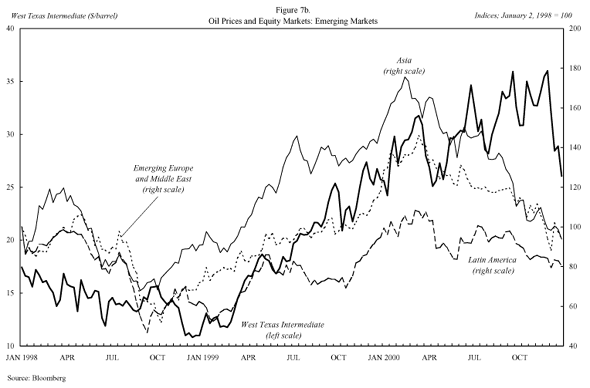
the Brookings Institution at the staff's request. The results described above are based on price equations which incorporate historical estimates of the degree of resistance to declines in real income in advanced economies. It is possible, however, that the extent of inflation pass through from terms-of-trade disturbances has declined in recent years as labor markets and profit margins have become more flexible.15 In the current episode, the pass through from the oil price hike into core inflation in advanced economies appears to have been relatively limited, implying that the second round inflationary effects might be smaller than assumed above. It is also possible that the wage response is being delayed as relatively few labor contracts have come up for renegotiation, as the most recent hike in oil prices occurred since mid-August.16 Nevertheless, to explore the effects of limited second round effects further, Table 4 reports a second MULTIMOD simulation which assumes that there is no pass through of the impact effects of higher oil prices into core inflation. As core inflation remains unchanged, the assumed monetary policy rule calls for essentially no change in short-term interest rates. As a result, the fall in real GDP and real domestic demand is only around one half of the impact reported in the baseline. Other MULTIMOD results indicate that delaying the monetary response can significantly increase the loss in output if it erodes confidence in the central bank's commitment to control inflation, reinforcing one of the lessons from past oil shocks that the monetary response should be prompt (see Annex). Finally, some additional simulation results also suggest that monetary policy errors can significantly increase the loss in output if they erode confidence in the central bank's commitment or ability to control inflation. The conclusion one can draw from these results is that monetary authorities need to make a broad based assessment and make use of a wide range of analytic tools in estimating the extent to which the oil price increase is likely to pass through into core inflation and have an impact on potential output in the short run. B. The Impact on Developing and Transition EconomiesThe impact on individual developing countries would likely be at least as large as for many of the industrial countries. On the one hand, oil exporting countries—which suffered seriously from the decline in oil prices in 1997-98—benefit substantially (this includes a number of countries that have recently experienced financial crises, such as Ecuador, Indonesia, Russia, and Venezuela). On the other hand, there is a significant adverse impact on oil importing countries, especially as dependency on oil has not fallen to the same extent as in industrial countries. Figure 6 illustrates how the impact of a $5 per barrel oil price hike will affect developing countries differently. For example, in the top right quadrant the square marked United Arab Emirates shows that country has a large current account surplus and that the oil price increase is expected to further increase that surplus by more than 5 percent of GDP. By contrast, many of the oil-importing HIPC and transition economies are expected to be adversely affected. For example, Belarus was expected to be running a current account deficit of over 7 percent of GDP. The oil price hike would add to the current account deficit by about 1.6 percent of GDP. Mali, shown in the lower left quadrant, is an example of a HIPC country that is running a current account deficit of almost 15 percent of GDP. The oil price increase would add to its current account deficit by 1¼ percent. A number of countries also face additional pressures from weak non-oil commodity prices, and have limited access to capital markets, which will further increase the adverse impact on domestic absorption. Table 4. Permanent $5 per Barrel
Increase in the Price of Oil: Alternative Scenario
Major Emerging Market Economies Table 5 summarizes the impact of a $5/barrel increase in the price of oil, estimated by IMF country desks for 16 major emerging market countries,17 separating out the direct effect of higher oil prices, and the second round effects stemming from the decline in global growth and higher interest rates in advanced economies. The results vary widely by region, depending in large part on the relative size of oil importing to exporting countries. Asia experiences the largest negative impact on growth. Latin America, emerging Europe and Africa are less adversely affected by the oil shock owing the larger influence of net oil exporters in aggregate activity. There is an even wider variation within and across regions as to the impact of the oil price rise on inflation, depending on the pass through to domestic prices and whether countries allow the oil price increase to feed through into administered energy prices. Asia is expected to experience the largest increases in inflation, owing in part to the rapid pass through of oil price increases to domestic prices. Figure 6. Impact of a $5 per Barrel Oil Price Increase on Current Account Blances
Table 5. Emerging Markets-Estimated Effects After 1 Year of a $5 Oil Price Hike
Source: Staff estimates. The first round effects on the current account are, on the whole, similar to those for growth. For all countries the external effects of the reduction in export demand and an increase in interest rates leads to a deterioration in the external accounts, although these effects tend to be much smaller than the first round effects, particularly for oil importers. Among the oil importing countries, the largest impact on GDP growth and the balance of payments is expected to be felt in India, Korea, Pakistan, Philippines, Thailand, and Turkey. Both Pakistan and Turkey were already expected to run sizable current account deficits, and given the oil price increase their current account deficits are expected to worsen by a further ½ percent of GDP. The oil price hike generally benefits the six oil exporters in the sample, and the external current account position universally improves substantially. The impact on activity, however, is more ambiguous. Domestic demand and output can fall even in oil exporting countries, as the propensity to consume of oil producers within each economy is lower than the propensity to consume of oil consumers, and second round effects due to lower demand for exports and higher U.S. interest rates also slow activity. Overall, growth is projected to rise in Russia and Indonesia but to fall in Argentina, China, Mexico, and Malaysia. How do the above results compare with estimates by other analysts? Most of the work that has been published by other analysts has focused on measuring the direct effect of the oil price hike, and are generally consistent with Table 5.18 There are relatively few estimates of the impact on growth and inflation in developing economies. Recent work on the impact of the oil price rise in Asia by Deutsche Bank and Merrill Lynch, like the staff estimates, suggest relatively moderate effects. Oil Importing HIPC and CIS Countries While the Heavily Indebted Poor Countries (HIPC countries) and transition economies account for only a small share of global GDP, many of them are among the most seriously affected by higher oil prices. Indeed, 30 of the 40 HIPC countries, and a majority of the Commonwealth of Independent States (CIS) countries, are net oil importers. Most of these countries have very low per capita incomes, high level of oil imports relative to GDP, large current account deficits, high external debt, and very limited access to global capital markets.19 As Figure 6 shows, many HIPC countries, and to a lesser extent the transition countries, are clustered in the lower quadrant, indicating these countries are already running large current account deficits and will encounter a significant deterioration in that balance. In the absence of international assistance, the lack of access to private capital markets will likely make the impact of higher oil prices on output relatively large, as it will have to be met primarily through a reduction in domestic demand. The direct impact of higher oil prices on the HIPC and transition countries are set out in Table 6. To put the impact of the oil shock in perspective, note that the largest negative first round impact on the current account for the emerging market economies was 0.5 percent (the Philippines), while the average impact for the oil-importing HIPC and CIS economies is expected to be 0.8 percent and 1.7 percent, respectively. All of the CIS and several HIPC countries will be seriously affected, with trade balance deteriorating by more than 1 percent of GDP. With essentially no access to international capital markets, this could well lead to a sharp contraction in domestic demand.20 The first round impact on the current accounts of the HIPC and transition economies is about $0.7 billion for both groups. In terms of quotas, this is around one eighth of quota for the average oil-importing HIPC and one quarter of quota for an average oil-importing CIS country. A $5 per barrel oil price hike is expected to raise the net trade balance of the OPEC countries by approximately $64 billion (7 percent of GDP); after allowing for the impact of lower global growth, the net trade balance would improve by 6.5 percent of GDP. All of these countries are expected to experience improvement of their current account balances of between 4 and 9 percent of GDP, with Iraq as the largest beneficiary (Table 7). Amongst the other countries, Venezuela stands to gain the least and Nigeria the most, reflecting the relative importance of oil in the economy. The impact of higher oil prices on growth and activity in oil producing countries will depend on a variety of factors, most importantly how these windfall oil revenues are spent.21 In many oil exporting countries, a significant proportion of higher oil revenues will accrue to the government (Table 8). The reaction of the government, in turn, is likely to depend on the underlying financial situation of the country. Saudi Arabia, which has traditionally been a net creditor, may choose to replenish reserves. The authorities may also decide to use some of the additional revenue to ease spending restraints adopted as oil prices declined. For other oil exporters that have in the past been net debtors, such as Mexico and Venezuela, a rise in oil prices would not only increase export earnings but could also lower external borrowing costs, assuming the higher oil prices would reduce the risk premia charged these countries as their future export earnings rose. Table 6. Selected HIPC and CIS Countries-Preliminary
Estimates of First
Table 7. OPEC - Preliminary
Estimates of First Round Effects of an Oil
1Computation is based
on an increase of oil prices of $5 per barrel. Both the baseline simulation reported above and the OECD simulations assume that oil-exporters would spend around 75 percent of their additional export revenues on imports after three years, in line with historical averages. However, this estimate could be on the high side and hence the increase in imports by major oil exporters could be underestimated. In the GCC countries, the completion of major infrastructure projects, greater government expenditure controls, and rising privatization receipts may well reduce the short run propensity to spend the additional revenues. More generally, the oil price rise is viewed by many as temporary, which may increase the desire to save the proceeds. Finally, countries that run down reserves in response to the oil price falls in 1997 and 1998 may use current revenue to rebuild external reserves and strengthen their fiscal positions, and there appears to be a determined effort by most oil exporters to avoid the boom-bust cycle of the past. An increase in the oil price, by affecting economic activity, corporate earnings, inflation and monetary policy has implications for asset prices and financial markets. Table 8. Selected Oil-Exporting Developing and Transition Countries: First-Year Impact of a 20 Percent Increase in Oil Prices on Public Sector Revenues1
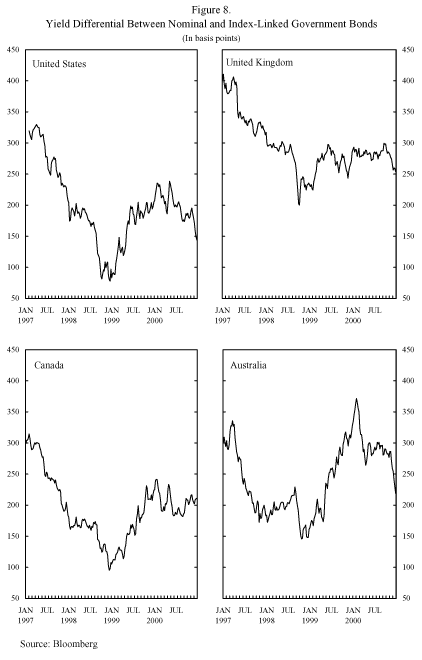
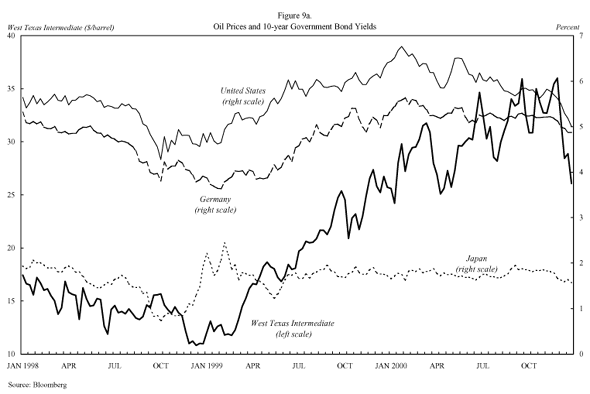
Source: IMF staff estimates. The impact on financial markets in turn provides additional channels through which the oil price increase would affect economic variables. However, given cyclical developments in the world economy, it is unclear to what extent the recent increase in the oil price has been directly responsible for the recent turbulence in advanced country financial markets and movements in currency markets. In the case of oil importing emerging markets, however, there have been noticeable adverse effects across a range of financial and currency markets, which appear directly linked to oil market developments, while risk premia on external debt of most oil exporters have declined significantly. In equity markets, an increase in oil prices would be expected to lead initially to a weakening in the earnings of firms producing energy intensive output and in their market valuations. This would occur both through higher production costs, which would be particularly severe in the traditional manufacturing and transportation companies, as well as through the slowdown in demand. Subsequently, if the oil price rise were deemed to be permanent, there would be adjustment costs entailed in changing the input mix, with substitution away from oil. There is evidence that in both industrial and emerging countries there have been adverse effects of higher energy prices on production costs and corporate earnings. Until the beginning of this year, however, these effects were masked by cyclical upturns, increasing business and investor confidence, rising profit margins, and in the case of the Asian countries, sharp recoveries from the downturns in the preceding years. Thus in the first year or so following the rebound in oil prices (mainly in 1999) global equity markets appeared to be rising almost in tandem with the rise in oil prices (Figure 7a and 7b).22 Since then, there has been a sharp sell-off in global equity markets, particularly in the technology sectors, and a significant increase in volatility in these markets. There are clear indications that the increase in oil prices has had an adverse effect on equity markets by affecting the pace of activity and corporate earnings, as well as confidence. Nevertheless, it is important to note that the sell-off in equity markets reflects a number of other developments. The most important of these is a sharp scaling back of earnings expectations and a more realistic assessment of growth prospects of companies, particularly in the technology sector, which is largely independent of developments in oil prices. More narrowly, there have been concerns about the operations of companies in the telecom sector, which appear to have overextended themselves, leading to spill-over effects in the rest of the technology sector. Another important and related factor has been the tightening in monetary policy in the United States and also in Europe, with spill-overs effects globally. Although some of the tightening has been clearly in response to concerns about rising inflation and inflationary expectations due to the increase in oil prices, in the United States at least it also reflects growth above potential and tight labor markets. The effect of the oil price rise in the fixed income markets has been relatively limited, and in some cases has been offset by other developments. This reflects, in particular, the evidence that the effect of the oil price hike on inflation has been relatively muted. An assessment of inflation indexed bonds in the major countries suggests that expectations of inflation, after increasing markedly last year, have stabilized or even eased (Figure 8). Government bond yields, after rising last year by about 75 to 100 basis points, have fallen back this year, partly reflecting the government debt buybacks mainly in the United States. It is also possible that the surpluses by oil exporters have been invested in the government bond markets, leading to the downward pressures on yields (Figure 9a). At the shorter end of the yield curves, there has been an increase, reflecting both the tightening monetary stance as well as the increase in inflation.
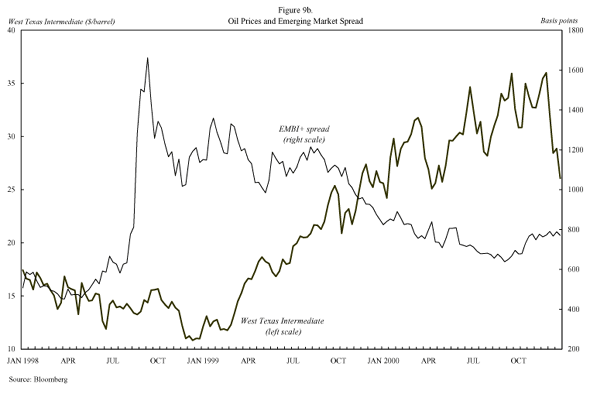
In the case of oil importing emerging markets, yields on local currency denominated debt have increased somewhat more than the increase in yields in industrial countries. This reflects in part the larger impact on inflation, given the greater energy intensity in emerging markets, but may also reflect uncertainties about the monetary response. Spreads on hard currency debt have also increased somewhat over the past year, and reflect some waning in external investor confidence in the prospects of these economies which may be related in part to higher oil prices (Figure 9b). In the case of major oil exporting emerging markets, particularly Russia, there has been a significant decline in spreads reflecting improving external and fiscal balances. Finally, in currency markets it has been suggested that the desire to invest the proceeds of oil exporters in U.S. dollar denominated assets, and increased transactions demand for dollars in which oil is priced, have meant that higher oil prices are associated with a stronger value of the U.S. dollar. A recent study suggests that higher oil prices are positive for the U.S. dollar exchange rate and have exacerbated the downward pressures on the euro.23 While there are a variety of other factors underlying the configuration of the G3 currency rates, it is possible that in the recent period higher oil prices have had some effect on the G3 currencies. It should be noted, however, that the value of the Japanese yen has continued to be high against the euro, even though Japan's dependence on oil is similar to that of the euro area. The currencies of several emerging markets have recently come under pressure as oil import bills have increased, and there has been some slackening in the flow of portfolio capital and direct investment. However, the pressure on currencies has been exacerbated by a variety of economic and political factors unrelated to developments in the oil market. IV. Conclusions and Policy ImplicationsFor much of the period since the October 2000 World Economic Outlook was completed, oil prices have averaged $5 per barrel higher than assumed in that exercise. A sustained oil price increase of that size would imply a permanent transfer of about ¼ percent of GDP from global oil importers to oil exporters, relative to the WEO baseline, with additional transfers of income from oil consumers to oil producers within countries. Such a terms of trade shock would affect the global economy through supply and demand effects as well as via second-round effects on inflation, for example, through higher wage claims. This in turn would affect the extent to which central banks raise interest rates to offset inflationary pressures, and therefore the impact of the oil price increase on real activity. The impact on asset prices and financial markets would provide additional channels. As simulations in Section 2 indicate, the size of the impact on demand and activity depends critically on these factors. While it is still too early to make a final judgment, the latest data suggest that the impact on core inflation in advanced countries has been relatively modest to date and there is little sign of feed through into wage claims. Although there has been a decline in consumer and business confidence, they so far remain relatively strong and although stock prices have fallen, the decline appears to be much more due to non-oil related factors. On the other hand, however, there are signs that expenditure by oil producing countries may be lower than the staff's model suggests, which would tend to increase the adverse effects on global growth, and the impact of higher prices of other fuels-notably gas- also needs to be taken into account. Overall, were oil prices in 2001 to be $5/barrel higher than anticipated in the WEO baseline, the overall impact on global growth would likely be of the order of ¼ percent in terms of yearly average growth, with the effects concentrated in 2001. If oil prices were to fall back-as the most recent futures market data suggest-the $5/barrel shock would be temporary rather than permanent in nature, and the impact on activity therefore reduced.
In developing countries, the impact of a sustained $5/barrel oil price increase would vary widely across countries. It would be the largest in Asia, where there are relatively few oil producers. Given current account surpluses or small deficits in many of these countries, balance of payments are not in most cases a concern, but there would be an unwelcome brake on activity in present circumstances. The impact would generally be smaller in the Latin American countries, while many of the HIPC and several CIS economies would be quite seriously affected. With regard to policy implications, as experience in previous oil shocks shows (see Annex), monetary policy in advanced countries will need to prevent second round price effects. This will help ensure that there is only a price level effect, but not a continuing impact on the rate of inflation. This is likely to be helped at the current juncture by generally greater flexibility of labor markets in most advanced countries. The underlying fiscal stance should in general remain broadly unchanged, although automatic stabilizers can play a role in supporting activity. On the microeconomic side, any adjustment of taxes on gasoline and other petroleum products would need to be considered in terms of what is appropriate from the overall fiscal and macroeconomic situation. If the oil price increase appears to be temporary, there would appear to be little merit in adjusting taxes. However, if prices remain, or are expected to remain, at a higher level and ad valorem taxes generate revenue increases greater than required for fiscal policy considerations, there is bound to be some rethinking of the best use of the revenue windfall. The appropriate strategy will depend upon the tax structure of the country concerned. The macroeconomic policy implications for oil importing developing countries are similar to those for advanced economies in terms of monetary policy and the fiscal response, with the appropriate macroeconomic response also depending upon the cyclical situation, existing policy stance, and exchange rate regime. Countries with fixed exchange rates will, of course, be unable to ease the impact on activity through a currency depreciation. Finally, it is particularly important that oil importing countries minimize budgetary costs by passing through the hike in oil prices onto administered energy prices, especially if there is a reduction in access to international capital markets, constraining the ability to use foreign borrowing to finance the deterioration in the external accounts. The major policy issue for oil-importing HIPC and CIS countries is their inability to cushion the impact of the terms-of-trade shock. This implies that, in the absence of additional concessional official finance, the adjustment to the oil price hike would need to come from a reduction in domestic demand relative to output. Such an adjustment would most probably require a combination of fiscal tightening and a depreciation in the real exchange rate. As long as an adequate policy response is implemented, there would be a strong case for additional international assistance to help cushion the short-term disruptions caused by an oil price hike that appear likely to be temporary. Unlike in oil-importing countries, the main policy issue in the major oil-exporters is ensuring that the fiscal and terms-of-trade benefits of higher oil prices do not lead to an excessively procyclical policy stance. Given the high volatility of oil prices, it is particularly important to ensure that government spending is not increased rapidly to levels which may become unsustainable if oil prices fall in the future.
Annex: Lessons from the response
of Advanced Economies
|
|||||||||||||||||||||||||||||||||||||||||||||||||||||||||||||||||||||||||||||||||||||||||||||||||||||||||||||||||||||||||||||||||||||||||||||||||||||||||||||||||||||||||||||||||||||||||||||||||||||||||||||||||||||||||||||||||||||||||||||||||||||||||||||||||||||||||||||||||||||||||||||||||||||||||||||||||||||||||||||||||||||||||||||||||||||||||||||||||||||||||||||||||||||||||||||||||||||||||||||||||||||||||||||||||||||||||||||||||||||||||||||||||||||||||||||||||||||||||||||||||||||||||||||||||||||||||||||||||||||||||||||||||||||||||||||||||||||||||||||||||||||||||||||||||||||||||||||||||||||||||||||||||||||||||||||||||||||||||||||||||||||||||||||||||||||||||||||||||||||||||||||||||||||||||||||||||||||||||||||||||||||||||||||||||||||||||||||||||||||||||||||||||||||||||||||||||||||||||||||||||||||||||||||||||||||||||||||||||||||||||||||||||||||||||||||||||||||||||||||||||||||||||||||||||||||||||||||||||||||||||||||||||||||||||||||||||||||||||||||||||||||||||||||||||||||||||||||||||||||||
|
Oil Prices
|
Direct Impact on Net Trade
Balance of Advanced Countries |
||||
| Episode |
Pre-hike1
|
Post-hike2
|
Change
|
(U.S.$ Billions)
|
(% of GDP)
|
| 1973 to 1974 |
3.2
|
11.6
|
8.4
|
-88
|
-2.6
|
| 1978 to 1980 |
13.3
|
36.6
|
23.3
|
-232
|
-3.7
|
| 1989 to 1990 |
17.9
|
28.3
|
10.4
|
-38
|
-0.2
|
| 1999 to 2001 |
17.9
|
29.0
|
11.1
|
-96
|
-0.4
|
Source: IMF staff estimates.
1The average oil price in the first year of each episode.
2The average oil price in the last year of each
episode, except for 1990 and 2001. For 1990, it is the average price
for the second half of the year. For 2001, the price is projected using
futures markets data.
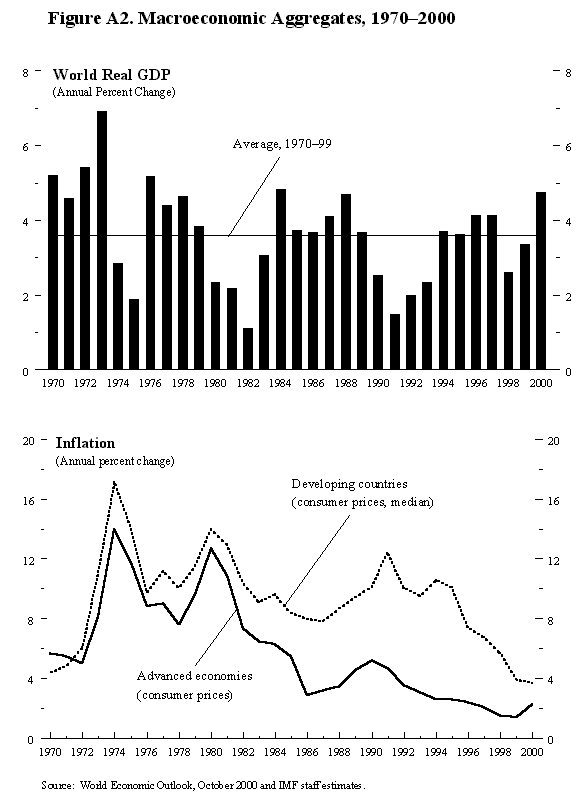
In contrast, Germany and Switzerland maintained the restrictive monetary policies that had been put in place before the oil shock hit. The inflation impact of the oil price rise was largely limited to the first round effect, and consumer price inflation returned to low single-digit levels in the second half of the 1970s. In Japan, easy monetary conditions in the early 1970s contributed to a surge in output and inflation in 1973. In mid-1973, however, the Bank of Japan tightened monetary policy and maintained a firm anti-inflationary stance in response to the oil shock. Inflation rose to nearly 25 percent following the oil price rise, driven by the momentum that had already built up in the economy, combined with Japan's high dependence on imported oil, but then declined rapidly to around 4 percent by 1978.
A further notable point regarding the first oil shock was the substantial rise in the labor share of national income in all G7 countries apart from the United States. Reflecting in part the widespread use of indexation mechanisms, wages reacted strongly to the oil price rise, while firms were unwilling or unable to pass along higher wages and non-wage labor costs into output prices. Profitability fell and financial difficulties in the corporate sector increased, leading to sharp declines in investment and stockbuilding that were major contributors to the fall in GDP in 1975.
The 1979/80 oil price hike, which had a terms-of-trade impact on advanced countries around one percentage point of GDP larger than the first shock, occurred at a time when the advanced economies were growing at a more moderate pace compared with the lead-up to the previous shock. This was accompanied by higher unemployment and lower capacity utilization. Inflation, while still high in many countries, was generally declining rather than increasing as in 1973-with the notable exception of the United States where inflation pressures had been building even before the second oil shock hit.
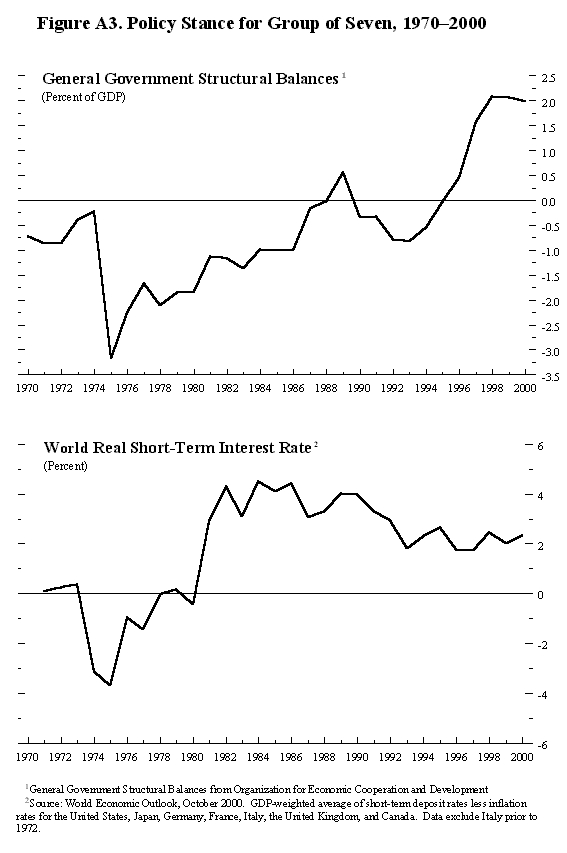
Compared with the first oil price shock, the policy response reflected macroeconomic concerns which focused more squarely on containing the inflation impact-including preventing a wage-price spiral and ensuring real wage adjustment. In the main industrial countries, short-term interest rates, which had already been rising prior to the oil price hike, were increased further in 1980 and 1981, with a cumulative average increase from 1979 to 1981 of 3½ percentage points. This monetary policy tightening restored positive real interest rates, which averaged around 2½ percent in the G7 in the early 1980s. (Figure A3). Fiscal policy was also tightened, with structural deficits in most of the advanced economies declining from 1979 to 1982. While actual budget deficits in the G7 increased by 2½ percentage points of GDP over this period, the cumulative discretionary tightening was around 1½ percentage points of GDP after taking into account the effect of automatic stabilizers and higher interest rates. Wage growth did not pick up as it did in the first crisis and, reflecting this, the share of labor costs in G7 national income was broadly stable in the early 1980s.
The policy response to the increase in oil prices in the second half of 1990 followed the pattern of the 1979/80 period. The very short-lived nature of this increase, coupled with the declining role of oil in overall economic activity, also limited the impact on inflation. In particular, the industrial countries maintained non-accommodative monetary policies in order to curtail the inflation impact of the oil price rise. In the United States, for example, the Federal Funds rate increased immediately after the sharp oil price rise in August, before declining subsequently as the economy slowed. In Europe, the oil shock came on top of fiscal stimulus arising from the reunification of Germany. To stem the inflation risks arising from this combination of pressures, short-term interest rates in Germany, France, Italy, and the smaller euro area economies increased substantially between 1990 and 1991, rising further in 1992. While the general government structural balance deteriorated sharply in Germany between 1990 and 1991, structural deficits declined in all the other major industrial countries over this period (apart from Japan, which maintained an unchanged surplus).
These policy responses contributed to a rapid decline in inflation in the G7 countries-consumer price inflation fell from 5 percent in 1990 to just over 4 percent in 1991 and 3 percent in 1992. In Japan and, to a lesser extent, the United Kingdom, the monetary tightening following the oil shock represented a delayed response to the asset price buildup of the late-1980s. The unwinding of these asset price pressures exacerbated the subsequent slowdown in these economies.
Overall Policy Lessons
The experience from the earlier large oil price hikes has shown that such increases, particularly when they turn out to be persistent, can significantly increase global inflationary pressures and reduce global demand and output growth, as the fall in aggregate demand in oil importers exceeds the rise in demand from oil exporters.25 These short-term effects die away, in part because the response of oil production and consumption to price changes rises significantly over time. However, there can also be more long-lived negative effects on activity associated with the losses in capital due to large changes in relative prices of inputs, as well as the impact of lagged increases in the prices of oil substitutes.
The disruption caused by an oil price hike also depends on the state of the business cycle, the response of macroeconomic policies, and the flexibility of the underlying economies. Key lessons from the past are:
Many of these lessons have already been reflected in the functioning of the global economy. In particular, monetary authorities have become more independent and have been given clear mandates to maintain price stability, while continuing structural policy initiatives have made economies more flexible. In addition, the oil intensity of production-particularly in the advanced economies-is lower than in the past, partly due to the impact of previous oil price hikes on technology, and several advanced countries are now significant oil exporters. Consequently, the oil price increase required to provide a terms-of-trade impact on advanced countries of the size seen in 1973/74 or 1979 would be very large-a price rise of over $50 per barrel.
As far as taxes on petroleum products are concerned, such taxes are an important source of revenue in most advanced countries, but vary widely across countries and over time. The oil price hikes of the 1970s led to falls in effective tax rates as specific excise taxes on petroleum products were not altered. Since the mid-1980s, however, taxes have tended to increase.26 Any adjustment of taxes on gasoline and other petroleum products would need to be considered in terms of what is appropriate from the overall fiscal and macroeconomic situation. If the oil price increase appears to be of short duration, there would appear to be little merit in adjusting taxes. However, if prices remain, or are expected to remain, at a higher level and ad valorem taxes generate revenue increases greater than required for fiscal policy considerations, there is bound to be some rethinking of the best use of the revenue windfall. The appropriate strategy will depend upon the tax structure of the country concerned. Particularly for countries that have regulated prices, a full pass through of the oil price increase would generally be appropriate, if consistent with the overall macroeconomic and fiscal situation of the country.
|
Box 1. Natural Gas and Other Non-Oil Energy Sources Over the past twenty-five years there has been a substantial increase in the share of natural gas in global energy consumption, mainly at the expense of petroleum. The International Energy Agency (IEA) estimates that the share of natural gas in total primary energy consumption increased from 16 percent in 1973 to 20 percent in 1998, while the share of petroleum has declined from 47 percent to 37 percent. The share of hydro and nuclear energy increased from 3 percent to 9 percent and that of coal has remained roughly constant at about 23 percent. Both natural gas and coal are typically less expensive per unit of energy than petroleum, but they both have some characteristics that limit their use and define their markets. While petroleum is mainly transported by sea, it can be internationally traded without restriction other than the cost of transport. Natural gas is most easily transported by pipeline and this favors its consumption in areas that are in geographical proximity to producers. Rising environmental concerns favor the increased consumption of natural gas. Both oil spills and nuclear leaks, and carbon dioxide emissions from coal have become serious environmental threats that reduce the appeal of these energy sources. The price of natural gas moves in close tandem with the price of petroleum, albeit usually with some lag, and, as a result, in 2000 there has been a substantial shift in the terms of trade in favor of natural gas producers at the expense of natural gas consumers. Changes in the price of coal tend to be slow because of the prevalence of longer-term supply and purchase commitments in this market. Reflecting the lower price of natural gas per unit of energy and its lower share of the world energy market, the estimated value of world primary consumption of natural gas in 2000 is about one third of the estimated valued of primary consumption of petroleum.1 In addition, partly because of the cost of infrastructure to provide transportation of gas from source to users, a lower proportion of world production of natural gas enters international trade. Thus export receipts and imports bills for natural gas are considerably lower than those for oil, although there may still be significant effects within countries as the shift in income from oil consumers to oil producers reduces aggregate demand. An increase of $1 per million BTUs, an amount roughly equivalent to a $5 increase in the price of oil, would provide an increase in global earnings to natural gas exporting countries of about $17 billion; this compares with the increase to oil exporting countries of $65 billion for a $5 per barrel. Although globally the amounts for natural gas are much lower than those for petroleum, for many individual countries these amounts are very large. Russia alone provides nearly 40 percent of world exports of natural gas, which provides 20 percent of its export earnings. Canada ranks second with about 15 percent of world net exports but only 3 percent of its export earnings. Algeria provides 12 percent of the world total and receives about 30 percent of its export earnings from this commodity. 1In this calculation one price is used globally for each commodity. The price for natural gas is $3.45 per Mbtu, which is the Fund's baseline price for natural gas (Russian gas delivered in Germany). The price for petroleum is $29 per barrel, which is the Fund's baseline petroleum spot price (U.K. Brent, West Texas Intermediate, and Dubai). |
|
Box 2. Counterfactual Simulation: The Impact of Recent Oil Price Fluctuations on the World Economy Following the conclusion of the Gulf War, oil prices enjoyed a period of relative stability, averaging around $20 per barrel until early-1998. Since that time, however, the oil price has become much more volatile, ranging between $11 per barrel in early 1999, and $35 per barrel in September 2000. As oil prices are now about $5 per barrel higher than assumed in the latest WEO baseline, the analysis in this paper has focused primarily on the impact of this change. However, it is also useful to examine the impact of the past movements in oil prices on the global economy. To this end, MULTIMOD was used to generate a counterfactual scenario in which oil prices were assumed to remain constant at U.S. $20 barrel from mid-1997. That simulation was then compared with simulations using the actual/estimated outturn for oil prices during 1998-2002.1 The main results of this comparison are as follows:
Overall, these results suggest that oil price fluctuations provided some support for activity during the 1998-99 slowdown, moderated global growth in 2000 when it moved above its long-term trend, and are estimated to have a continued dampening effect on world output in 2001and 2002. Table B2. Impact of Oil Price
Variability: Counterfactual Scenario
1Because MULTIMOD embodies forward-looking expectations, the projected future path for oil prices has important implications in this experiment. Consequently, WEO projections of the path of future oil prices made in 1998 were used to obtain the simulation results for that year, and similarly for 1999 and 2000. |
Footnotes
1Prepared by a staff team consisting of David Robinson, Tamim Bayoumi, Manmohan S. Kumar, Peter Isard, Maitland MacFarlan, Hali Edison, Blair Rourke, Benjamin Hunt, and Ximena Cheetham.
2The Fund's reference price is a simple average of the three main crude oils-U.K. Brent, Dubai, and West Texas Intermediate.
3The WEO assumption was based on futures prices as of mid-May, 2000; the assumed price was $26.53 in 2000 and $23.00 in 2001. The staff generally does not revise the commodity price assumptions unless there is a sustained price change of over 10 percent, which did not occur until late August.
4See Chapter II, "Current Issues in the World Economy," October 2000, World Economic Outlook.
5An exception was the early part of the 1996/97 winter when stocks of heating oil fell to low levels. These stocks were replenished in early 1997.
6OPEC accounts for about 60 percent of world trade and 40 percent of world production. Non-OPEC producers normally produce at or near capacity and development of new capacity through investment expenditures takes time before fresh supplies become available.
7Lower oil prices in 1997 - early 1999 contributed to lower expenditures on oil exploration and production, which may in turn have contributed to the ensuing rise in prices in 1999-2000.
8The price for the OPEC reference basket is generally about 50 cents per barrel (2 percent) below the Fund's indicator spot price.
9The statements by OPEC officials at this time brought into question the group's commitment to the "automatic" mechanism to defend the upper end of the $22-28 "price range." The cautious stance of OPEC is probably related to a perception that it may be more difficult to reduce production targets than to increase them.
10Oil distribution companies claim that the differences in state specifications for gasoline make for difficulties in moving supplies from state to state in the event of a short term supply disruption such as a refinery or weather related problems or a localized surge in demand.
11As can be seen in Table 1, there is transfer of income from oil importers to oil exporters of $65 billion (0.2 percent of global GDP). The net transfer from advanced countries is around $50 billion (0.2 percent of their GDP), with about two-thirds accruing to the Middle East (almost 6 percent of regional GDP). Africa and the Western Hemisphere also gain somewhat, while developing Asia faces a net loss of income of 0.2 percent of GDP.
12As MULTIMOD incorporates future expectations, the results will tend to be larger for a permanent shock than a temporary one. However, the differences appear limited for realistic variations in the oil price assumption. Similar results were obtained from a simulation in which oil prices were assumed to rise by 20 percent for the first two years, and then slowly fall back to a permanent increase of 8 percent.
13MULTIMOD does not distinguish between intermediate and final goods; hence, the simulations rely on judgmental estimates of the extent to which a rise in the price of intermediate inputs reduces the amount of (potential) output that can be profitably supplied in the short run, given the existing capital stock.
14The MSG2 simulation incorporate the same permanent 20 percent price increase as the baseline scenario while the OECD simulation has a temporary shock in which the increase in the oil price averages about 18 percent over the first two years. Comparisons with estimates of effects of oil price increases from other sources are difficult due partly to differences in the time profiles of the assumed shocks. Estimates by the World Bank of a scenario in which oil prices rise by 50 percent in the first year and decline back to historical average levels by the third year indicate that industrial country GDP declines by 0.25 percent on average for two years, and CPI inflation increases by less than 0.2 percentage points (see "The Impact of Oil Prices on Developing Countries-2000 and 2001," PREM Economic Policy and DEC Prospects Group, September 21, 2000).
15See Mark A. Hooker, "Are Oil Shocks Inflationary? Asymmetric and Nonlinear Specifications versus Changes in Regime," working paper, Federal Reserve Board, December 1999.
16In addition, it is important that policy makers recognize that pass through may have fallen over time largely because monetary policy has become less accommodating in the face of deteriorations in the terms-of-trade. In this case, any attempt to exploit this new trade-off by loosening policy will simply result in greater pass through.
17These estimates are not based on MULTIMOD.
18The largest difference tends to be for the net oil exporters, probably reflecting the inclusion of gas exports for these countries in some instances.
19The World Economic Outlook has discussed the recent experiences of HIPC and CIS countries in some depth. See Chapter IV, "How Can the Poorest Countries Catch Up?," May 2000 and Chapter III, "Transition and Policy Issues," October 2000.
20In the past, oil importing CIS countries have financed external deficits in a disorderly manner through running arrears with Russian energy companies. Whether this will occur in the current environment is unclear.
21While it is beyond the scope of this paper to assess the impact of higher oil prices in individual oil producers, much will also depend on the degree of diversification of the economy. In those countries in which oil dominates production, the expansionary impact of additional expenditures induced by higher oil prices will be quite small.
22It has also been suggested that some of the surpluses from oil exporting countries may have been invested in the major equity markets, offsetting to some extent the supply side effects.
23Goldman Sachs, "Fears of a Global Hard Landing Starting to Recede", November 2000.
24This Annex is largely based on OECD and IMF analyses of the impact of previous oil shocks-as presented, for example, in various issues of the OECD's Economic Outlook and the World Economic Outlook of the IMF.
25A similar effect also appears to occur across firms within countries, with the proportionate fall in demand in industries that lose revenue exceeding the increase in demand of industries whose revenues increase. This is important for oil producers with diversified economies such as the United Kingdom.
26Apart from raising revenues at relatively low administrative cost, taxes are levied on petroleum products for a variety of reasons: to ease congestion, to reduce pollution and environmental damage, and to recover costs of maintaining and building roads.