What the Fed Rate Rise Means for Corporate Debt in Emerging Markets
IMF Blog, January 9, 2017
Source details
- Canonical URL
- What the Fed Rate Rise Means for Corporate Debt in Emerging Markets
Other formats
Bibliographic details
- Authors: Adrian Alter, Selim Elekdag
- Published: January 9, 2017
Overview
- Authors: Adrian Alter, Selim Elekdag
- Date: January 9, 2017
- Context: In December 2016, the U.S. Fed raised interest rates for the first time in a year, and said they planned more increases in 2017. Emerging market currencies took a bit of a dive, but overall investors didn’t overreact and run for the doors with their money.
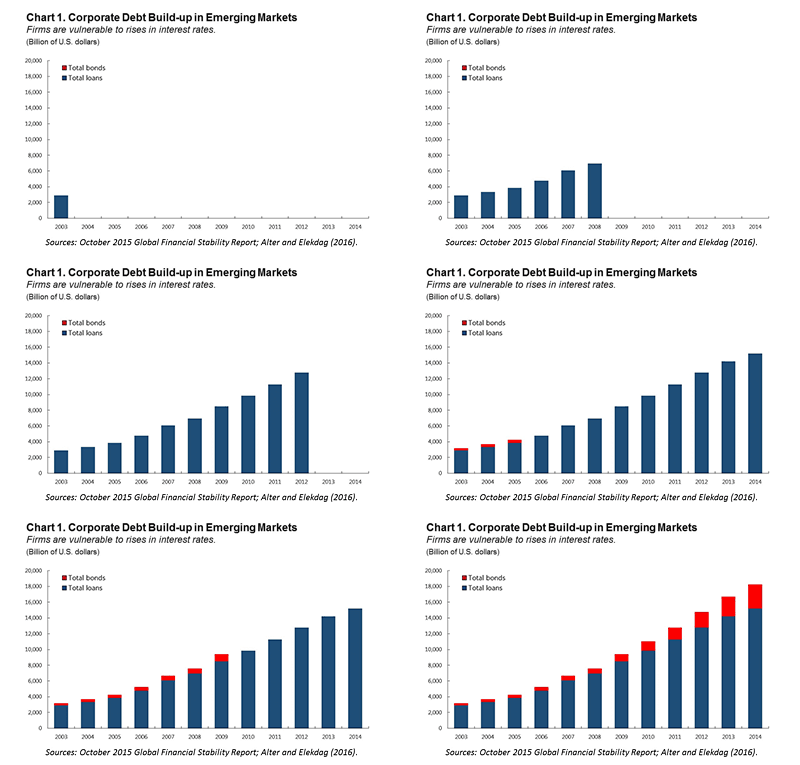
- High-level concern: Emerging market corporations are loaded down with debt in both local and foreign currency—to the tune of roughly $18 trillion—fueled in large part by low interest rates in the United States. This debt now makes them vulnerable to the expected interest rate increases in 2017.
The debt balloon
- Trend: The debt of nonfinancial firms in emerging markets has quadrupled over the past decade, with bonds accounting for a growing share.
- Macro risk: The considerable increase in corporate debt raises concerns given the link between the rapid build-up in leverage in emerging markets and past financial crises.
- Key findings from the authors' new paper:
- Debt accumulation was more pronounced for firms which are more dependent on external financing.
- Relative to other types of firms, small and medium-sized enterprises disproportionately increased their leverage.
- The impact of U.S. monetary policy on debt growth was greater for sectors that are more heavily dependent on external funding in financially open emerging markets with relatively more rigid exchange rate regimes.
- Global financial conditions affected emerging market firms’ growth in debt in part by relaxing corporate borrowing constraints.
Where debt is highest
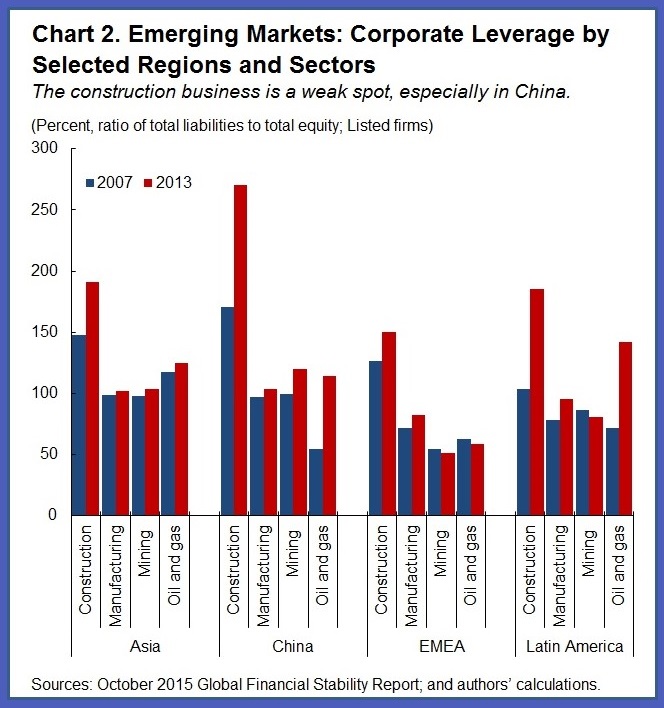
- Sectoral pattern: Corporate debt in emerging markets has climbed faster in more cyclical sectors, with the greatest growth seen in construction.
- Geography and sectoral detail: The striking increase in leverage within the construction sector is most notable in China and Latin America.
- Currency exposure: Firms that took on more debt have, on average, also increased their foreign exchange exposures.
Near-term outlook and timing
- Policy risk horizon: Expected interest rate increases in 2017 pose rollover and refinancing risks for indebted firms in emerging markets.
- Upcoming IMF release: Readers can stay tuned for more details on emerging markets and the global economy when the IMF releases the update to the World Economic Outlook on January 16.
Source: What the Fed Rate Rise Means for Corporate Debt in Emerging Markets — Adrian Alter, Selim Elekdag; January 9, 2017.
Content in this bundle
- Emerging Market Corporate Leverage and Global Financial Conditions