Tackling The Jobs Crisis: What's To Be Done?
IMF Blog, July 23, 2012
Source details
- Canonical URL
- Tackling The Jobs Crisis: What's To Be Done?
Other formats
Bibliographic details
- Authors: Gerd Schwartz, Ruud de Mooij
- Published: July 23, 2012
Overview and key message
- Authors: Gerd Schwartz, Ruud de Mooij
- Date: July 23, 2012
- Central claim: Reforms of tax and expenditure policies can help confront the jobs crisis, including in the short term, by actively supporting labor demand, strengthening incentives (or reducing disincentives) to work, and expanding training and job assistance while preserving equity objectives.
Labor market challenges
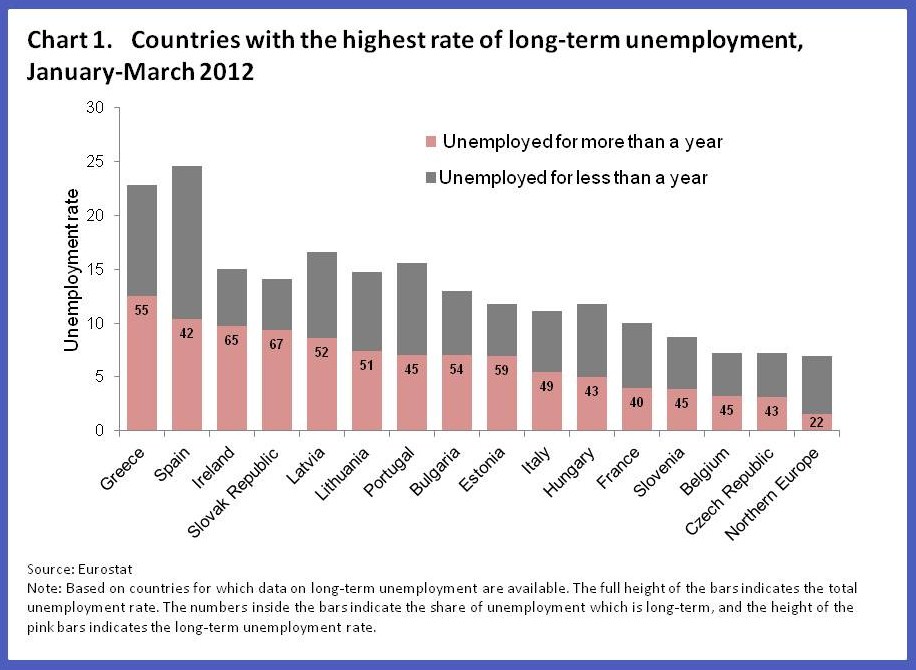
- Long-term unemployment: unemployment lasting more than one year is often much higher than short-term unemployment, particularly compared to Northern European countries that have effectively managed to contain long-term unemployment.
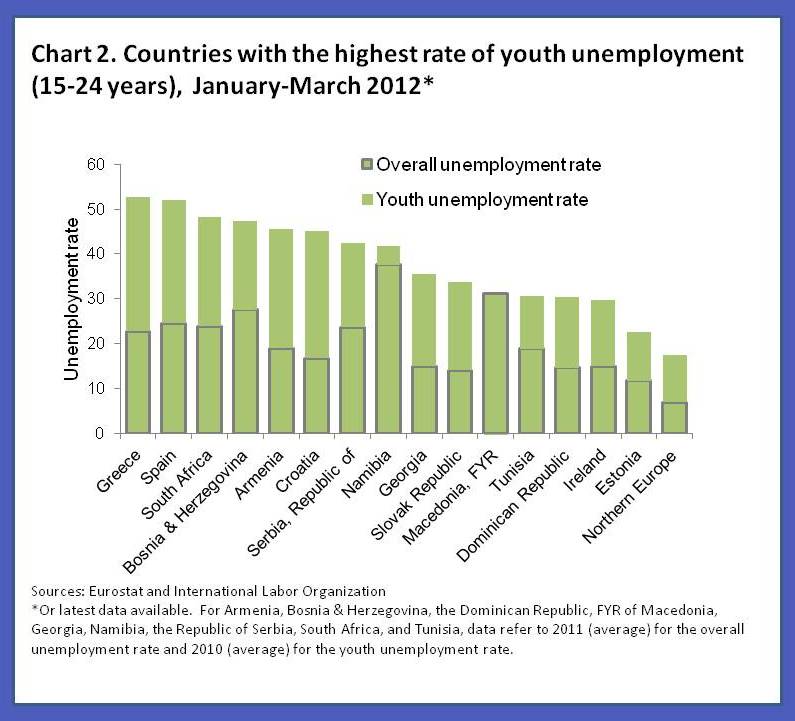
- Youth unemployment: rates among those aged 15–24 stand at over 50 percent in Greece and Spain and are close to three times the overall unemployment rate in a number of economies.
- Skill-related unemployment: high unemployment rates for unskilled labor are much higher than those for skilled labor.
- Labor force non-participation: many countries have a large share of the working-age population no longer looking for employment; non-participation may reflect cultural preferences or discouragement from weak job prospects or lack of financial incentives.
- Policy rationale: Raising labor force participation over the medium term can help spur economic growth and contribute to fiscal consolidation by expanding the tax base.
Fiscal policy and design matters
- Principle: Fiscal policy matters for employment in both the short term and the medium term.
- Four areas of potential reform:
- Tax wedges:
- Cutting the “tax wedge” (the amount of tax as a proportion of take-home pay) works best when targeted to groups most responsive to financial incentives: women, workers close to retirement, and the low-skilled.
- Examples: tax credits to increase take-home pay for low-skilled workers; reducing the tax wedge on the income of the secondary earner in a two-income family; lower employer social insurance contributions targeted to low-wage earners in the short run.
- Consideration: More progressive tax schedules could be a revenue-neutral reform that reduces tax wedges for low-skilled workers.
- Unemployment benefits:
- Tougher job search requirements, combined with intensive monitoring and appropriate sanctions, have been successful in reducing the length of unemployment spells.
- Conditionality: Making receipt of benefits conditional on participation in “active labor market” programs has increased exit rates out of unemployment.
- Active labor market programs:
- Aim: better match those seeking work with job vacancies; most effective if targeted at the young and long-term unemployed.
- Examples: subsidized on-the-job training and apprenticeships to smooth youth transition from school to work; targeted wage subsidies effective for generating jobs for the long-term unemployed and unskilled.
- Caution: Beyond targeted and time-limited interventions, merely providing more public sector jobs is generally ineffective in improving employment outcomes.
- Pension systems:
- Encourage older workers to work longer by adjusting future pension benefits fully for extra years of contribution, eliminating the financial incentive to retire early.
Timing, sequencing, and country specificity
- Timing: Measures to foster higher labor-force participation take more time to yield results than measures aimed at boosting demand or improving matching.
- Long-term effect: Over the longer-term, higher labor force participation rates, including for older workers, have been shown not to increase unemployment, but rather to be correlated with higher total employment through economic growth.
- Country specificity: The appropriate reform mix differs across countries and must be adapted to and appropriately sequenced for each country’s employment challenges, labor market institutions, and fiscal constraints.
- Immediate priorities where unemployment has risen sharply:
- Restore labor demand.
- Implement active labor market programs that help match labor supply and demand.
- Medium-term priority: Begin reforms to increase labor force participation without delay, given their longer gestation period.
Source: IMFBlog (Gerd Schwartz, Ruud de Mooij), July 23, 2012