COVID-19 Pandemic and the Middle East and Central Asia: Region Facing Dual Shock
IMF Blog, March 24, 2020
Source details
- Canonical URL
- COVID-19 Pandemic and the Middle East and Central Asia: Region Facing Dual Shock
Other formats
Bibliographic details
- Authors: Jihad Azour
- Published: March 24, 2020
Overview and immediate impact
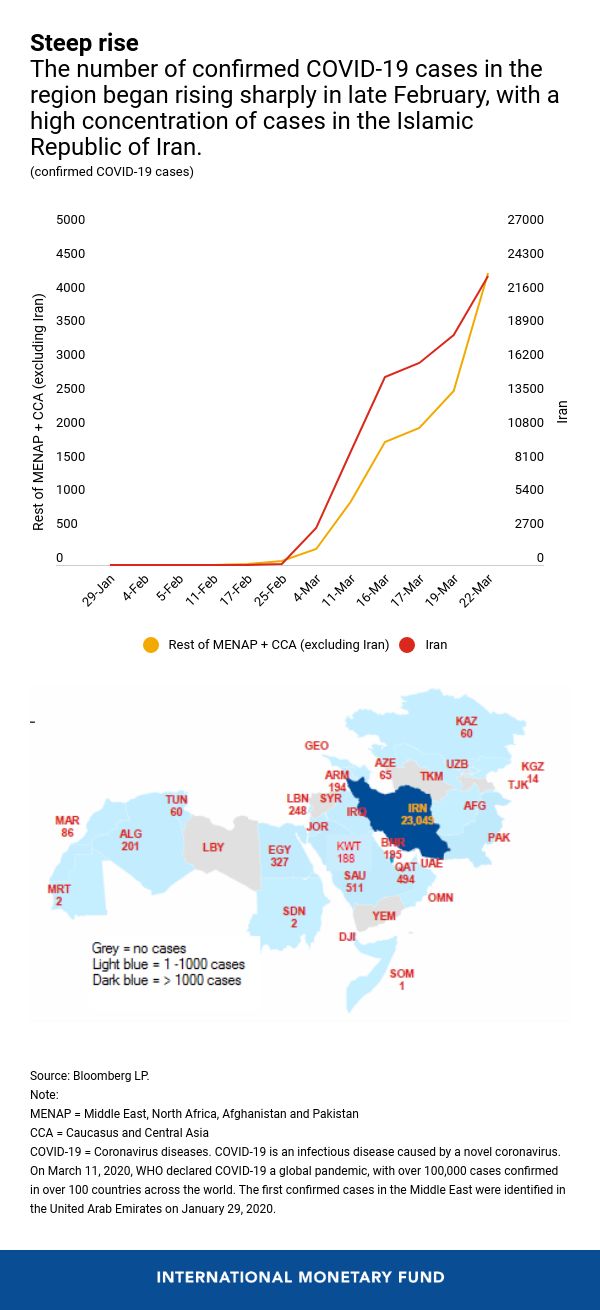
- Three-quarters of the countries reporting at least one confirmed case of COVID-19.
- The coronavirus pandemic is the largest near-term challenge to the region and could intensify, especially in fragile and conflict-torn states such as Iraq, Sudan, and Yemen.
- The region faces simultaneous shocks: a drop in domestic and external demand, a reduction in trade, disruption of production, a fall in consumer confidence, and tightening of financial conditions.
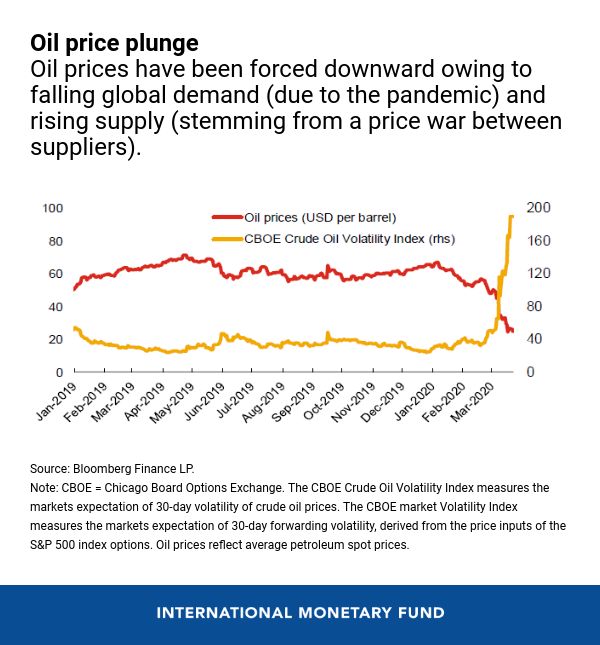
- The region’s oil exporters face an additional shock from plunging oil prices: oil prices have fallen by over 50 percent since the start of the public health crisis.
- The intertwined shocks are expected to deal a severe blow to economic activity in the region, at least in the first half of this year, with potentially lasting consequences.
Channels of economic impact (key findings)
- Tourism and services:
- Tourist cancellations in Egypt have reached 80 percent.
- Hospitality and retail have been affected in the United Arab Emirates and elsewhere.
- Large employment in the service sector implies wide reverberations if unemployment rises and wages and remittances fall.
- Production and investment:
- Production and manufacturing are being disrupted and investment plans put on hold.
- Business and consumer confidence have plunged.
- Commodity and fiscal channels:
- Lower export receipts for oil exporters will weaken external positions and reduce revenue, putting pressure on government budgets.
- Oil importers will likely be affected by second-round effects, including lower remittance inflows and weaker regional demand.
- Financial channels:
- Decline in portfolio flows to the region by near $2 billion since mid-February, with sizable outflows observed in recent weeks.
- Equity prices have fallen, and bond spreads have risen.
- The region has an estimated $35 billion in maturing external sovereign debt in 2020, increasing vulnerability.
Policy priorities and recommended responses
- Immediate public-health priority:
- Protect the population through mitigation and containment measures; governments should spare no expense to ensure health systems and social safety nets are adequately prepared.
- Examples: governments in the Caucasus and Central Asia increasing health spending; the Islamic Republic of Iran ramping up health spending and providing additional funding to its Ministry of Health.
- Preventing a temporary health crisis from becoming a protracted recession:
- Use timely and targeted policies on hard-hit sectors and populations, including temporary tax relief and cash transfers.
- Temporary fiscal support should provide well-targeted help to affected households and businesses to weather the stop in economic activity.
- Where fiscal space is limited, accommodate support by reprioritizing revenue and spending objectives within existing fiscal envelopes.
- Central banks should stand ready to provide ample liquidity to banks, particularly those lending to small and medium-sized enterprises.
- Regulators could support prudent restructuring of distressed loans without compromising loan classification and provisioning rules.
- Sequencing and limits to stimulus:
- When the immediate crisis dissipates, consider conventional fiscal measures such as restarting infrastructure spending, though fiscal space has been significantly eroded over the last decade.
- Attempting to stimulate the economy while containment measures are ongoing is unlikely to be successful and risks eliminating limited fiscal space.
- Country-specific constraints and measures:
- Several countries (Kazakhstan, Qatar, Saudi Arabia, and the United Arab Emirates) have announced large financial packages including tax and fee deferrals, loan payment deferrals, and increased concessional financing for small and medium-sized enterprises.
- Oil-importing countries with very high debt may lack resources to respond adequately; they should balance easing credit conditions with avoiding vulnerability to capital outflows and, where possible, allow the exchange rate to cushion some shocks.
- Sizeable financing needs are likely to arise in some countries.
IMF engagement and support
- The IMF has been in continuous interaction with regional authorities to offer advice and assistance, especially those in urgent need of financing.
- The Fund has several tools to help members and a dozen countries from the region have approached the Fund for financial support.
- Work is ongoing to expedite approval of such requests; later this week the Executive Board will consider a request from the Kyrgyz Republic for emergency financing, likely the first such disbursement since the outbreak of the COVID-19 pandemic. A few other requests will be considered by the Executive Board in the coming days.
- Emphasis on international cooperation to prevent lasting economic scars.
Jihad Azour, March 24, 2020 — IMF blog.
References
- عربي
- Português
- https://www.imf.org/wp-content/uploads/2020/03/CHART-1-eng-march-23-mcd-covid-chart-1.jpg
- https://www.imf.org/wp-content/uploads/2020/03/CHART-2-eng-march-23-mcd-covid-chart-3.jpg
- a recent blog
- https://www.imf.org/wp-content/uploads/2020/03/CHART-3-eng-march-23-mcd-covid-chart-3-1.jpg
- tools at its disposal
- The IMF and COVID-19