



Advances and Challenges in Regional Integration
Jointly organized by Hitotsubashi University and the IMF Regional Office for Asia and the Pacific
March 3-4, 2016
A decade ago, there was much discussion about when Asia might achieve full economic integration, including the establishment of a monetary union. This reflected rapid expansion of intra-regional trade in Asia, and the optimism in the success of European integration, as the 50th anniversary of the Treaty of Rome was approaching. Now, while there remains a broad consensus on the desirability of economic integration, the landscape has become more nuanced.
Asia saw rapid advances in the integration of its economies over the last quarter century. This integration occurred spontaneously mainly through trade, driven by the integration of Asian economies into the Global Value Chain (GVC). This integration has expanded the export growth model of individual Asian economies into a regional wide driver of growth, supporting the traditional view that economic integration confers substantial benefits to the economy.
This successful episode of trade integration was accompanied by a growing policy push towards further integration. The AEC Blueprint, launched in 2007, will see completion in 2015, while the number of regional trade arrangements has increased rapidly. However, the complex web of competing arrangements has raised questions as to whether the ‘noodle bowl’ of trade arrangements are helping or not, and whether countries must look to deeper integration beyond trade liberalization, including liberalization in the movement of capital and labor, in order to achieve further gains. Importantly, despite the importance of migrant labor for a number of countries within the region, there has been little focus on freer movement of labor.
The established optimistic view that further integration, supported by policy measures, will lead to higher growth has recently suffered from some setbacks. On the one hand, there has recently been deceleration of trade growth within Asia, possibly reflecting in part the broadening of the range of production processes undertaken by China in GVC. This process has to some extent been offset by the large increase of demand in China for final goods, supplied by its Asian neighbors, but the recent slowdown in Chinese growth is casting a shadow on trade prospects of the region. The problems in Europe is casting the European experience in a less favorable light, highlighting the importance of political and fiscal integration to support economic integration. The recent quest for a ‘high-quality’ trade arrangement has sharpened the perennial question of how existing producers that would suffer from trade liberalization might be protected or compensated. Moreover, the slowing global growth has resulted in some retrogression of trade liberalization.
Turning to financial integration, there was always less unanimity in its perceived benefits, with Asian economies generally preferring to take a gradual approach towards capital account liberalization and opening up of its financial markets. Nonetheless, advances in globalization of financial markets inevitably encompassed Asia, leading to integration of Asian economies into the global capital markets.
The Asian Financial Crisis of 1997-98 and the recent Global Financial Crisis impressed policy makers in the region the potential dangers of relying on extra-regional players to provide financial services to facilitate trade and investment within the region. However, this led to a policy push towards regional financial integration rather than an outright rejection of financial opening. In that vein, much official effort has gone into developing an ‘Asian Bond Market’ to intermediate regional savings into regional investment opportunities, as well as the effort to create a stronger regional safety net for balance of payments crisis. Nonetheless, the progress of financial integration in the region lags well behind those achieved in the real sectors. While there are efforts to further integrate regional financial markets, including through the ambitious ASEAN Banking Integration Framework to create a single banking market in ASEAN, other factors such as the volatility of global capital flows and the concerns for domestic financial stability consequences restrain integration efforts.
This seminar will discuss the current state of economic and financial integration within Asia, and the policies that will be required to promote effective and welfare-increasing integration for all the Asian economies.
Program
March 3, 2016 |
|
8:30 am - |
Registration |
| 9:00 am - | Welcome Remarks Prof. Akira Ariyoshi, Professor, Asian Public Policy Program (APPP), Hitotsubashi University Mr. Odd Per Brekk, Director, Regional Office for Asia and the Pacific (OAP), International Monetary Fund (IMF) |
9:10 am - |
Opening Address Mr. Mitsuhiro Furusawa, Deputy Managing Director, IMF |
9:30 am - |
Keynote Address Prof. Anne O. Krueger, Senior Research Professor of International Economics, the School for Advanced International Studies, Johns Hopkins University, and Senior Fellow, the Stanford Center for International Development |
10:00 am - |
Coffee break |
10:20 am - |
Session 1: Evolving nature of economic integration and policy challenges Presentation 1-1: Changing pattern of integration Presentation 1-2: The future of Regional Arrangements Presentation 1-3: Regional labor mobility General Discussions |
12:50 pm - |
Photo Session |
1:00 pm - |
Lunch |
2:30 pm - |
Session 2: Financial integration Chair: Mr. Odd Per Brekk, IMF The current state of financial integrationPresentation 2-1: Overview Presenter: Dr. Yati Kurniati, Director of Macroprudential Policy Department, Bank Indonesia Presentation 2-3: View from private financial institutions Presenter: Mr. Go Watanabe, Chief Executive Officer, Asia & Oceania Region, the Bank of Tokyo-Mitsubishi UFJ, Ltd. (Brief Q&A could follow each presentation) |
3:45 pm - |
Coffee Break |
4:00 pm - |
Session 2 (continued): 4. Thailand: Ms. Alisara Mahasandana, Senior Director, International Department, Bank of Thailand General Discussions |
5:15 pm |
End of first day seminars |
6:30 pm - |
Cocktail |
7:00 pm - |
Keynote Address |
March 4, 2016 |
|
10:00 am - |
Panel Discussion Prof. Fukunari Kimura, Keio University and ERIA Prof. Anne O. Krueger, Johns Hopkins University SAIS, and the Stanford Center for International Development Dr. Yati Kurniati, Bank Indonesia Mr. Daikichi Momma, Director-General, International Bureau, Ministry of Finance, Japan Mr. Alexandros T. Mourmouras, IMF Dr. Cyn-Young Park, ADB |
12:00 pm - |
Concluding Remarks |
12:15 pm - |
Lunch |
2:00 pm |
End of Seminar |
This seminar is funded by the Government of Japan through its JSA trust fund at the IMF. |
|
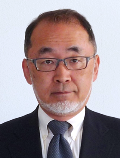 Prof. Ariyoshi has a long career in policymaking in the Ministry of Finance and the Financial Services Agency of the Japanese Government, including as the Deputy Vice Minister of Finance for International Affairs. He has also worked extensively at the IMF, including as the Director for the Regional Office for Asia and the Pacific and Assistant Director of the Monetary and Exchange Affairs Department. He holds a D. Phil in Economics from the University of Oxford. Major fields: Macroeconomics, international finance and financial regulation.
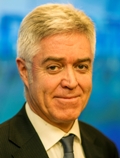 Mr. Odd Per Brekk, a Norwegian national, has been the Director of the IMF’s Regional Office for Asia and the Pacific since July 2013. Mr. Brekk joined the IMF in 1987 and has held several senior positions in the European and Asia and Pacific Departments, including mission chief to Indonesia and Lithuania, and Senior Resident Representative in Turkey and Russia. During 2005–09, he was the Advisor to the First Deputy Managing Director.
Earlier in his career, Mr. Brekk worked in the African and Central Banking Departments of the IMF. Before joining the IMF, Mr. Brekk was a senior economist at the Bank of Norway. He holds a graduate degree in economics from the University of Oslo.
Mr. Odd Per Brekk, a Norwegian national, has been the Director of the IMF’s Regional Office for Asia and the Pacific since July 2013. Mr. Brekk joined the IMF in 1987 and has held several senior positions in the European and Asia and Pacific Departments, including mission chief to Indonesia and Lithuania, and Senior Resident Representative in Turkey and Russia. During 2005–09, he was the Advisor to the First Deputy Managing Director.
Earlier in his career, Mr. Brekk worked in the African and Central Banking Departments of the IMF. Before joining the IMF, Mr. Brekk was a senior economist at the Bank of Norway. He holds a graduate degree in economics from the University of Oslo.
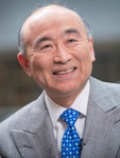 Mr. Mitsuhiro Furusawa assumed office as Deputy Managing Director of the International Monetary Fund on March 2, 2015.
 Prof. Anne O. Krueger is a Senior Research Professor of International Economics at the School for Advanced International Studies at Johns Hopkins University and a Senior Fellow at the Stanford Center for International Development (SCID). She is the Herald L. and Caroline Ritch Professor emeritus of Sciences and Humanities in the Economics Department at Stanford, and was a senior fellow of the Hoover Institution and founding director of SCID. She was First Deputy Managing Director of the International Monetary Fund from 200l to 2006. Prior to Stanford, she had been University Professor of Economics at Duke University, Vice President for Economics and Research at the World Bank, and Professor of Economics at the University of Minnesota. She is Distinguished Fellow and past President of the American Economic Association and a senior fellow of the National Bureau of Economic Research, a member of the National Academy of Sciences, the American Academy of Arts and Sciences, the Econometric Society, and the American Philosophical Society. She has published extensively on international trade and finance, economic policy reform, and economic development.
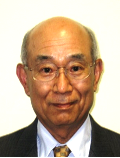 Prof. Shinji Asanuma is currently Visiting Professor of Asian Public Policy Program, School of International and Public Policy, Hitotsubashi University. Concurrently, he is Visiting Senior Advisor to Japan International Cooperation Agency (JICA). He served as Director of Planning and Budgeting of the World Bank in 1984-87 and, subsequently, as Country Director, Asia 1 Department in 1987-91, responsible for a number of South-Asian countries.
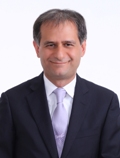 Mr. Ganelli, an Italian national, joined the IMF in 2003, and assumed his current position as Deputy Head of Office in September 2015. Before being assigned to OAP in August 2012 as a Senior Economist, he was based at the IMF’s Headquarters in Washington DC, where he worked in the Fiscal Affairs, European and Institute for Capacity Development departments. During his IMF career he participated in several missions to various countries in Europe, Asia, and Africa. He is currently a member of the IMF team which carries out the annual Article IV consultation with Japan. He holds a PhD in Economics from the University of Warwick (UK). His research focuses on fiscal policy issues and, more recently, on structural reforms in Japan.
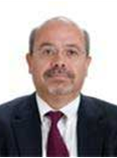 Mr. Alex Mourmouras is the Division Chief in the IMF's Asia Pacific Department and
mission chief for Malaysia and Singapore. Previously, he served as Chief of the
European and Middle Eastern Division in the IMF's Institute for Capacity Development, Senior Economist in the Policy Development and Review Department, and Economist in the Fiscal Affairs Department. Prior to joining the IMF, Dr. Mourmouras was an Associate Professor of Economics and Director of Graduate Studies at the University of Cincinnati. He obtained his PhD in Economics at the University of Minnesota and a Bachelor's Degree in Applied Mathematics from Harvard College.
Mr. Alex Mourmouras is the Division Chief in the IMF's Asia Pacific Department and
mission chief for Malaysia and Singapore. Previously, he served as Chief of the
European and Middle Eastern Division in the IMF's Institute for Capacity Development, Senior Economist in the Policy Development and Review Department, and Economist in the Fiscal Affairs Department. Prior to joining the IMF, Dr. Mourmouras was an Associate Professor of Economics and Director of Graduate Studies at the University of Cincinnati. He obtained his PhD in Economics at the University of Minnesota and a Bachelor's Degree in Applied Mathematics from Harvard College.