

Newsletter
Japan-IMF Scholarship Program for Asia
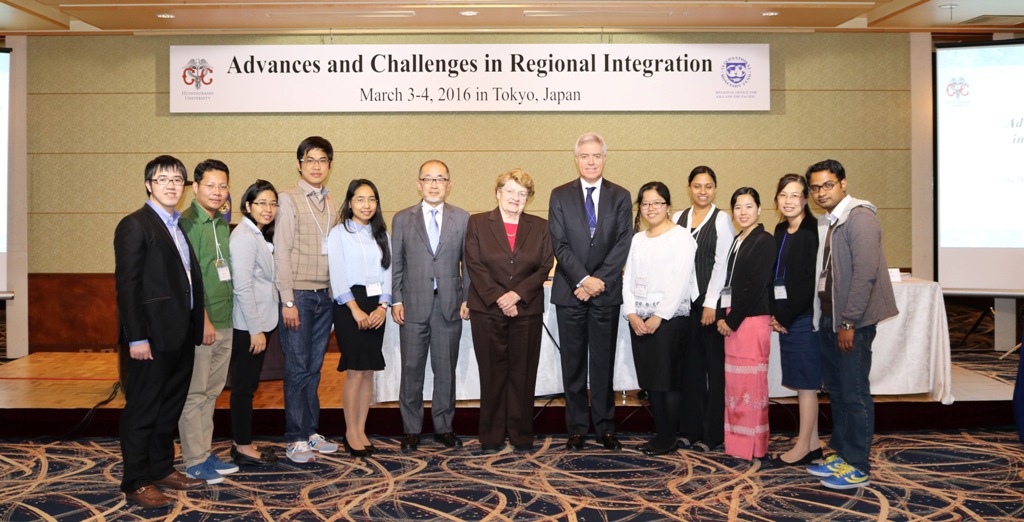
Hitotsubashi University-OAP Joint Seminar on “Advances and Challenges in Regional Integration”, Tokyo, March 3-4, 2016
Vol 12. May 2016
This JISPA newsletter brings you up-to-date information on JISPA events as well as featured alumni and scholars. JISPA provides scholarships for junior government officials of key economic agencies in Asia and the Pacific who wish to undertake graduate studies in related fields at universities in Japan.
The 12th newsletter is a combined issue for March and June. It features an alumni interview with Mr. Bambang Pramono, Bank Indonesia, who participated in the Japan-IMF Macroeconomic Seminar for Asia (JIMS) held in February 2016. Ms. Asel Myrzataevna Sultanalieva, the National Bank of the Kyrgyz Republic, is also interviewed as a current scholar. The "JISPA Today" introduces JISPA activities during December 2015-May 2016.
JISPA Activities
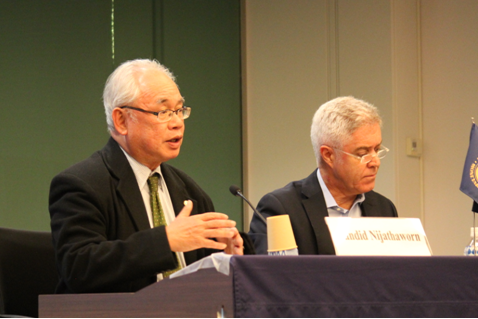 JISPA Seminars: OAP organized the following seminar exclusively for the JISPA scholars.
Read More
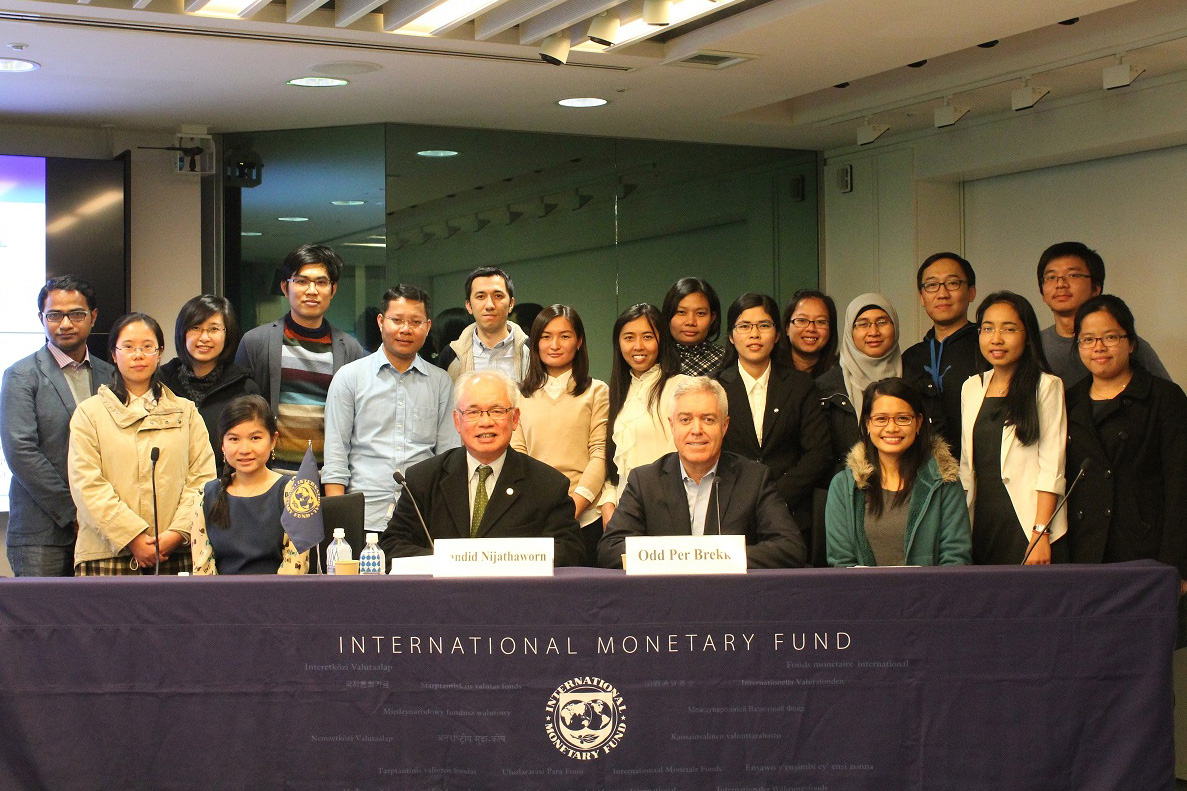
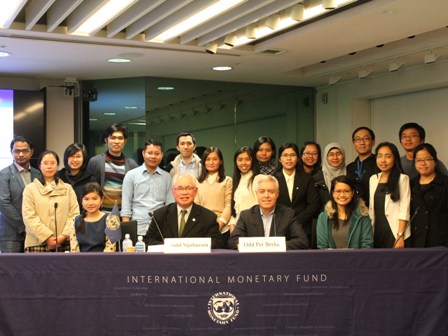
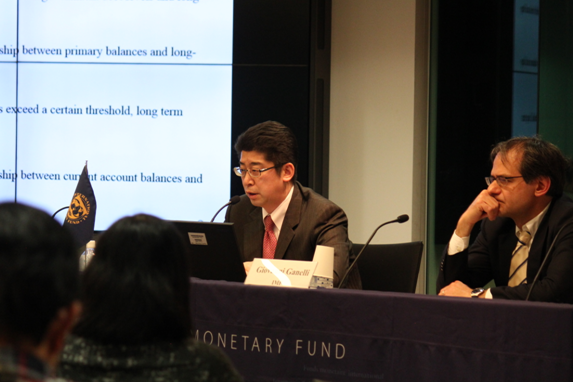 While Dr. Bandid gave the lecture on ethical leadership, which is important for policymakers, Mr. Nakamura gave a presentation based on his working paper, which analyzed the effects of fiscal conditions on long-term interest rates. Both presentations were well appreciated by the scholars as the topics were of high relevance to their career path and research interests.
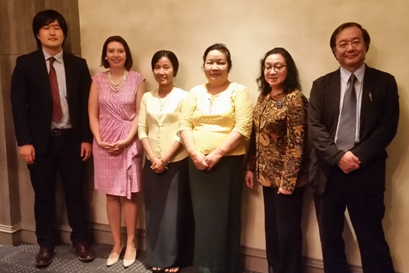 At the end of May, the Committee again convened in Tokyo to discuss and summarize its findings and recommendations. The review report, which is the final output of the JISPA review process, is scheduled to be submitted to OAP’s Director in June (last sentence needs to be updated)
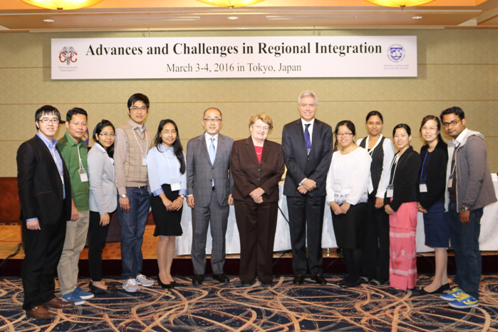 OAP Hosted Seminars: The JISPA scholars were also invited to the following OAP seminars held in Tokyo. In particular, the scholars were invited as observers to the Hitotsubashi-OAP joint seminar on “Advances and Challenges in Regional Integration” held on March 3-4, 2016, and they had valuable opportunities to listen to the most updated progress in the area of financial integration and hear views of prominent professors and policymakers.
Alumni News
JISPA offered a unique opportunity to broaden my understanding and knowledge of developing and implementing economic policies, which are invaluable for my career at the Bank of Indonesia.
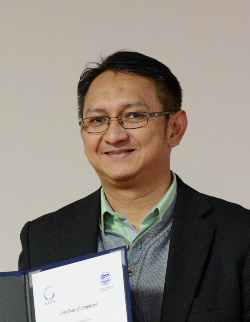 Mr. Bambang Pramono is working for Bank Indonesia (a central bank of Indonesia) as Senior Economist/Senior Advisor. He studied at the International University of Japan (IUJ) as a JISPA scholars from AY2002-03 until AY2003-04.
Read More
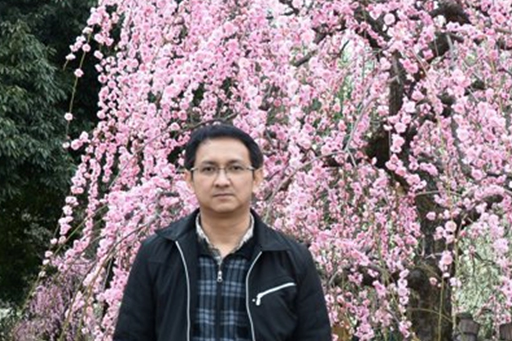 Studying at IUJ with the support of the JISPA was a very rewarding experience. The program offered a unique opportunity to broaden my understanding and knowledge of developing and implementing economic policies, which are invaluable for my career at the Bank of Indonesia. Moreover the IUJ's international environment enhanced my personality, provided me with an eye-opening cultural experience, and endowed me with a global network of friends. I want to thank all IUJ professors and IMF staff who provided me with all the knowledge, experience, and financial support.
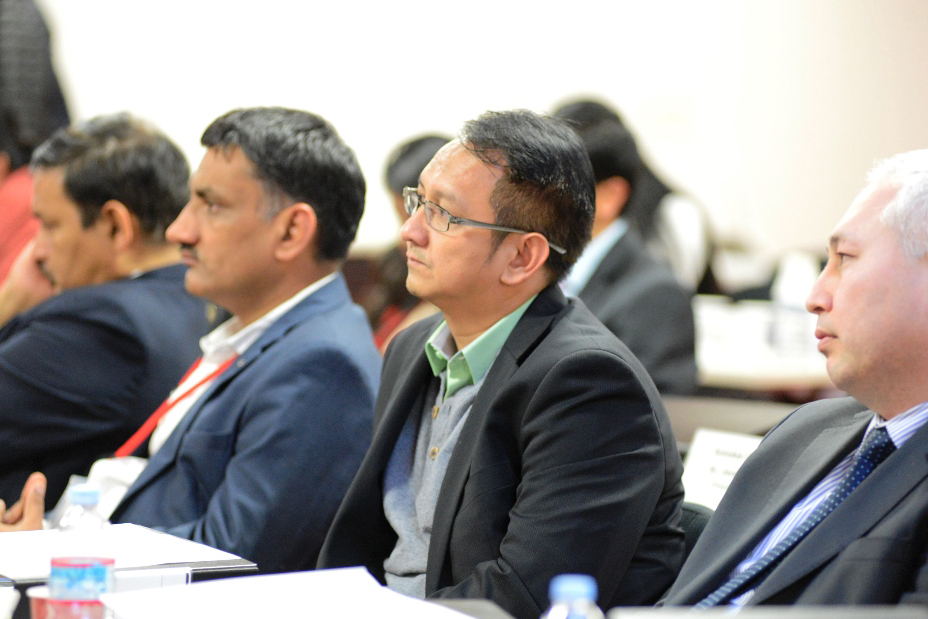 It has been a very effective, productive and interesting learning week event to all of us during the Japan-IMF Macroeconomic Seminar for Asia (JIMS). I found the topics covered quite relevant and useful, starting from the overview of the World Economic Outlook presented by the IMF. The JIMS offered courses on various macroeconomic framework options, structural changes and their applicability and relevance to infrastructure, SME developments, promoting regional trade integration, execution of conventional and unconventional monetary and exchange rate policies, fiscal policies, key notes on debt management, in particular bond market developments, long term investors strategies, Global Value Chain, FDIs and PPP. Specifically, it provided the lessons learnt from the Japanese economic model that should allow us to cope with the risks associated with the approaches, taking into consideration our specific cultural differences, national values, structural capacity, political ability which would enable us to skip risks.
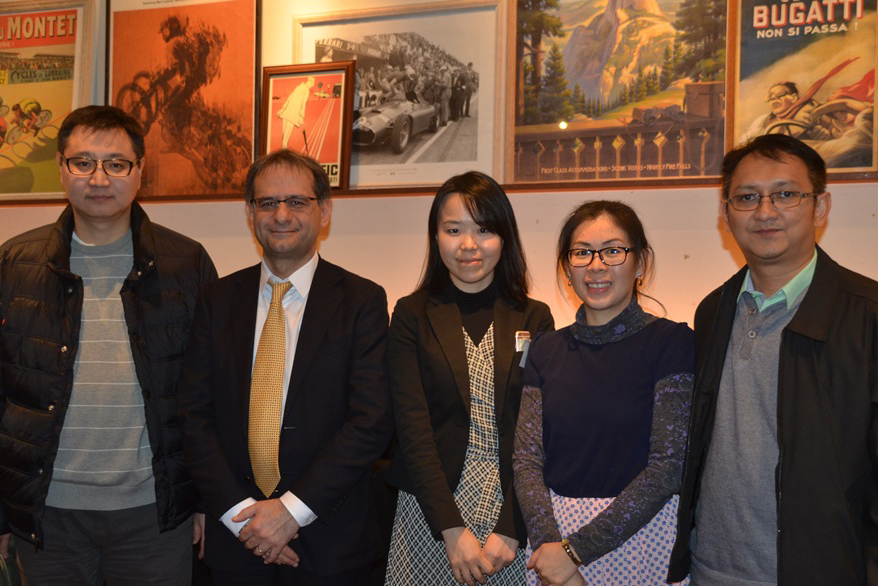 I hope that the Japanese government will be more open to giving a chance for foreigners, especially from Indonesia, not only to study but also to work. In addition, it would be appreciated if the Japanese government could be more friendly to tourists or Muslims by providing adequate facilities, which I understand that ongoing efforts are being made.
Current Scholar
The JISPA was an excellent choice: administered by the IMF and run by excellent partnership universities in Japan. And definitely, the best evidence of the program’s success is the progress of its alumni: the experience of some of my senior colleagues who graduated from the JISPA was my main motivation to apply for the program.
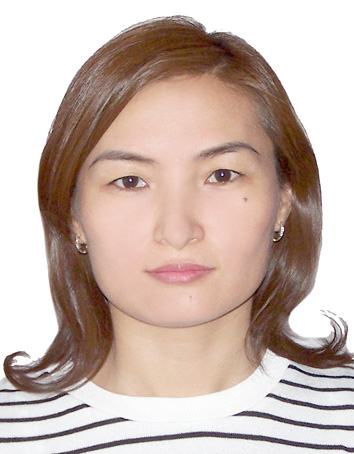 Ms. Asel Myrzataevna Sultanalieva is studying at the one-year Macroeconomic Policy Program of the National Graduate Institute for Policy Studies (AY2015-16). She is seconded from the National Bank of the Kyrgyz Republic. Since her family arrived to Japan, she has been trying to dedicate all her free time to being with them. She and her family like to explore Tokyo and suburbs, and, to learn more about local culture, people and everyday life together.
Read More
Ms. Asel Myrzataevna Sultanalieva is studying at the one-year Macroeconomic Policy Program of the National Graduate Institute for Policy Studies (AY2015-16). She is seconded from the National Bank of the Kyrgyz Republic. Since her family arrived to Japan, she has been trying to dedicate all her free time to being with them. She and her family like to explore Tokyo and suburbs, and, to learn more about local culture, people and everyday life together.
Read More
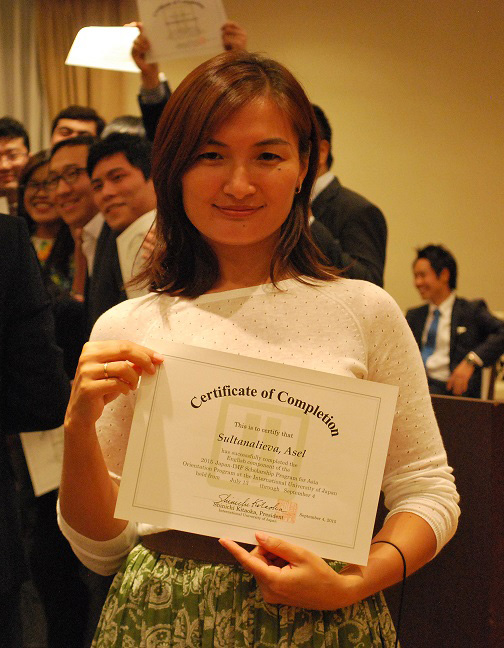 The National Graduate Institute for Policy Studies (GRIPS) provides a Macroeconomic Policy Program for JISPA scholars. During the fall semester I have studied essential courses like Macroeconomics, Microeconomics and Econometrics. In addition, I chose classes of particular interest to me: monetary economics, accounting and financial management, and statistics. Now I am taking International Finance and Government and Market courses. I am also taking a very interesting course devoted to development issues of East-Asian economies.
 During the last eight months in Japan. I have had many positive experiences. Here I have met many people coming from different cultures, and have gained experience from them which I value as lessons learnt. I remember a young Japanese girl I met near Roppongi Station a few months ago. It was raining heavily. Even though she had no coat on, and I had my windbreaker on, she kindly offered me her umbrella. I was really touched by her kindness.
 In my opinion, the Orientation Program is one of the best parts of the JISPA. Participating in the program greatly helped my preparedness for graduate studies. I had a chance to improve my knowledge in mathematics, econometrics and economics, and I really enjoyed the English and Japanese language classes. I would like to make a special mention of the Oral Communication Skills classes taught by Professor Mohammed Ahmed, where I had the most exciting experience of making individual presentations.
Back number
Links
JISPA Photo
JISPA Seminar by Dr. Bandid Nijathaworn, Tokyo, December 7, 2015