


Japan-IMF Scholarship Program for Asia (JISPA)

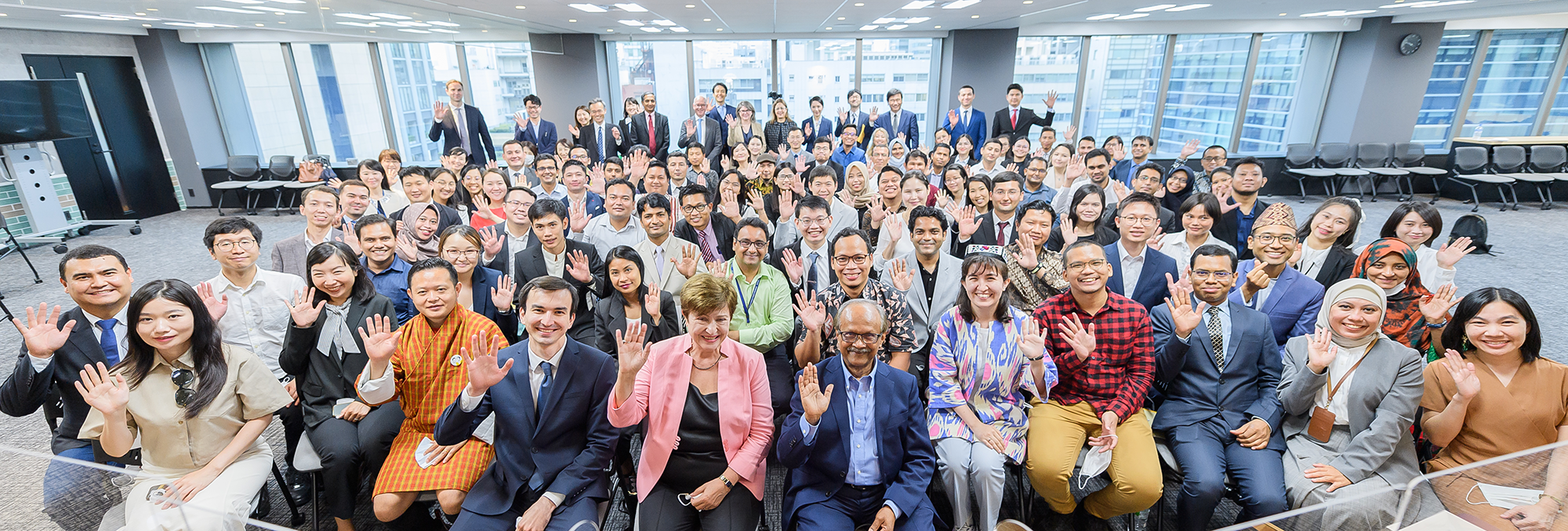
JISPA Townhall Meeting with the MD, July 2022

JISPA is a Scholarship for Young Officials

The Japan-IMF Scholarship Program for Asia (JISPA) is more than just a scholarship — it’s a gateway to becoming a future leader in economic policy.

The Japan-IMF Scholarship Program for Asia (JISPA) is a scholarship initiative aimed at developing future leaders in economic policymaking across Asia and the Pacific. Funded by the Government of Japan and administered by the IMF Regional Office for Asia and the Pacific, the program enables junior government officials from the region to pursue graduate studies in Japan. By equipping officials with advanced policy tools and knowledge, JISPA strengthens institutional capacity across the region, enabling their officials to design and execute economic policies that support sustainable growth and development

Since its inception in 1993, over 1,000 officials have been awarded the scholarship and many alumni serve in senior roles—such as governors, vice ministers, and other high-level policymakers—helping shape economic policy in their home countries.
Two-Track Scholarship

JISPA offers two study tracks: a Master’s Track and a Ph.D. Track. The Master’s Track features tailored designed Master’s programs in macroeconomics at select partner universities, while the Ph.D. Track allows scholars to pursue doctoral studies at any university in Japan. Each year, approximately 35 new scholarships are awarded for the Master’s Track, while only a small number of candidates are selected for the Ph.D. Track.

Master's Track

The JISPA Master’s Track is the flagship program of the scholarship, offering scholars the opportunity to pursue a specially designed master’s degree in economics or public policy at one of the IMF’s partner universities in Japan. Currently, four universities participate in the program, each offering specialized courses designed to enhance scholars' capacity in economic policymaking. These programs include:

National Graduate Institute for Policy Studies (GRIPS)
Macroeconomic Policy Programs (Master of Public Policy or Master of Public Economics - one-year program; and Master of Arts in Public Economics - two-year program)

Hitotsubashi University (HIT)
Asian Public Policy Program [Master of Public Policy (Public Economics) - two-year program]

International University of Japan (IUJ)
Macroeconomic Policy Program (Master of Arts in Economics - two-year program)

The University of Tokyo (UTokyo)

Master of Public Policy, International Program (Master of Public Policy - two-year program)

JISPA e-Brochure for Master's Track

Skills to be Attained

Ph.D. Track

The Ph.D. track provides support for junior government officials seeking to pursue a Ph.D. at any leading university in Japan. This track is designed for highly motivated public officials aiming to align their academic research with their roles as future economic policymakers.

Applicants must first secure admission to a doctoral program in Japan independently, as the IMF does not manage university applications.

Benefits

The scholarship covers tuition-related costs and most living expenses for the scholar herself/himself.[1] Benefits include:

Admission and tuition fees
Monthly stipend
Allowance for one round-trip economy airfare
Orientation Program fees (Master’s Track only)
Pre-arrival allowance (visa fees and medical exam) (Master’s Track only)
Field-trip fees arranged by the partner university (Master’s Track only)
Research Related Fees (Ph.D. Track only)

As for the Master’s Track, the Partner Universities offer assistance for: 

Visa application
Dormitories
Insurance package 

No expenses incurred by accompanying family members of the scholar are covered. No other scholarship can be accepted by JISPA scholars.


[1]Disbursement of scholarships is made through the university in which scholars enroll.

Eligibility

To be eligible for the scholarship, an applicant must meet the following criteria[1]:

1. A national of one of the following countries: Bangladesh, Bhutan, Cambodia, India, Indonesia, Kazakhstan, Kyrgyz Republic, Lao P.D.R., Malaysia, Maldives, Mongolia, Nepal, Pacific Island Countries, Papua New Guinea, Philippines, Sri Lanka, Tajikistan, Thailand, Timor-Leste, Turkmenistan, Uzbekistan, and Vietnam

2. Officials employed and nominated by one of the following or related government agencies

-  Central bank, ministry of economy, ministry of finance, ministry of planning/development, ministry of trade/commerce, tax administration, national statistics bureau, financial regulatory agencies, or similar government bodies.

-  Officials working in other government areas that significantly influence macroeconomic policy formulation or implementation may also be considered.

3. Holding a Bachelor’s degree for the Master’s Track / a Master’s degree for the Ph.D. Track

4. Fluent in English[2]

For the Ph.D. track, applicants are expected to be admitted into, or be applying to a graduate program in economics in Japan.


[1] Priority is given to the following types of candidates:

1. Under 36 years old
2. Have not obtained a Master’s Degree from outside their own country
3. Have a minimum of 2 years work experience in the public sector at the time of application.

[2] Applicants are encouraged to submit a TOEFL or IELTS score report and register the JISPA institution code as listed below when taking the test. 

               TOEFL: “C626 – Japan-IMF Scholarship Program for Asia”
               IELTS: “JISPA: Japan-IMF Scholarship Program for Asia”

Selection Criteria

Scholarship awards are based on several key criteria, including the candidate’s academic record, work experience, proficiency in mathematics and statistics, English language skills, and potential to contribute to macroeconomic and financial management as well as economic development in their home countries. The assessment also considers personal qualities such as commitment to public service, eagerness to learn, and openness to new ideas. Additionally, the final selection takes into account regional, agency and gender balance to ensure diverse representation.

Activities for JISPA Scholars

Before starting their studies, new JISPA scholars attend an orientation program in Japan to prepare for academic and cultural life in Japan. After settling into their universities, scholars participate in a variety of JISPA events, including welcome and farewell receptions with officials from the Bank of Japan, Ministry of Finance, and embassies. Scholars also have the opportunity to engage in seminars such as townhall meetings with IMF Management, policy dialogues with Japanese policymakers and IMF economists, a summer workshop to deepen analytical skills, and thesis presentations. Additionally, partner universities organize annual field trips to explore Japan’s economy and culture through visits to key sites.

Voices from Scholars

Follow-up Activities for JISPA Alumni

Since its inception in 1993, the JISPA scholarship has been awarded to over 1,000 officials. Graduates are invited to alumni gatherings held in various countries and encouraged to stay connected through an online alumni networking platform that fosters both friendship and professional dialogue. OAP also manages the JISPA Continuing Education (CE) program, which invites alumni with at least four years of work experience after graduation to return to Japan for a two-week course designed to enhance their analytical skills and policymaking expertise. In addition to these initiatives, JISPA regularly organizes alumni events in target countries and maintains an active online network to support ongoing collaboration among its alumni community.

Loading component...