Speech at the 44th SEACEN Governors' Conference, by Dominique Strauss-Kahn, Managing Director, IMF
IMF News, February 7, 2009
Source details
- Canonical URL
- Speech at the 44th SEACEN Governors' Conference, by Dominique Strauss-Kahn, Managing Director, IMF
Other formats
Bibliographic details
- Published: February 7, 2009
Context and setting
- Kuala Lumpur, Malaysia, February 7, 2009
- As Prepared for Delivery
- Delivered at the 44th SEACEN Governors' Conference and the 50th Anniversary of Bank Negara Malaysia.
State of the global economy — key findings
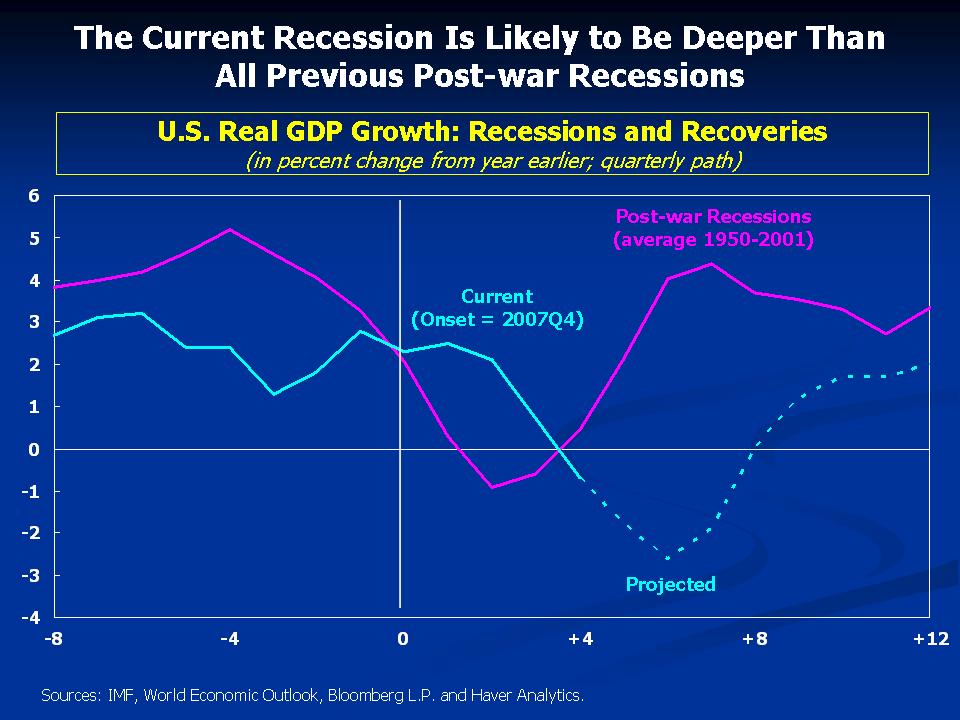
- Global growth projected to be close to zero, described as "the worst performance in most of our lifetimes."
- Forecasted recessions in most advanced economies.
- Some prospects of a recovery in 2010, conditional on strong policy action.
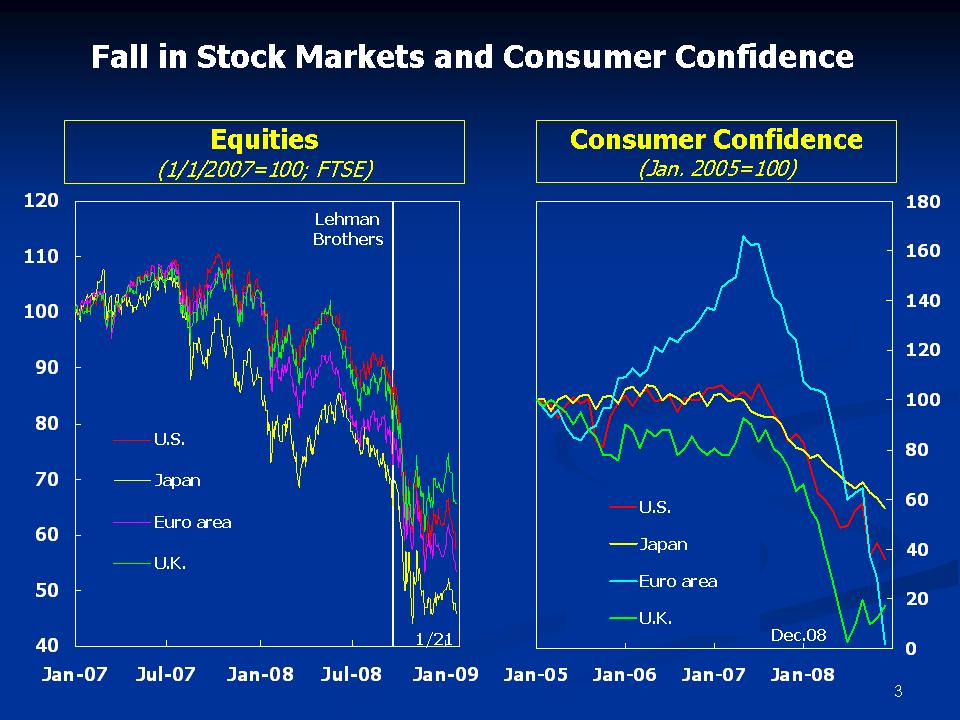
- "Loss of confidence is now the central problem."
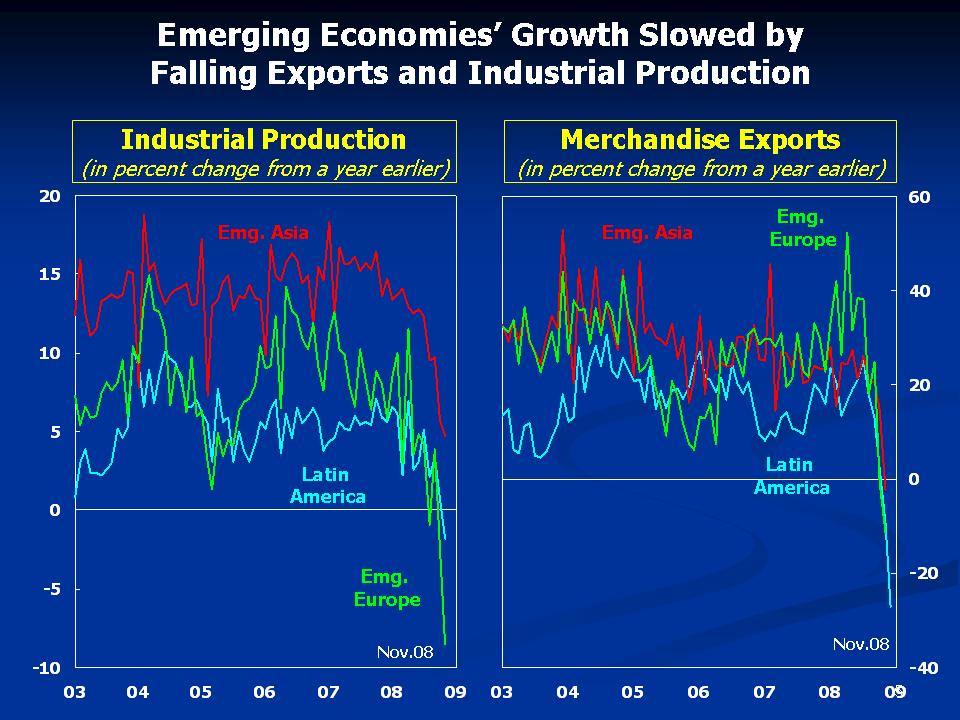
- Asian growth forecast for 2009 halved to "about 2½ percent" due to heavy export dependence and collapse in global trade and industrial activity.
- Sharp fall in financing for emerging markets observed even without government intervention.
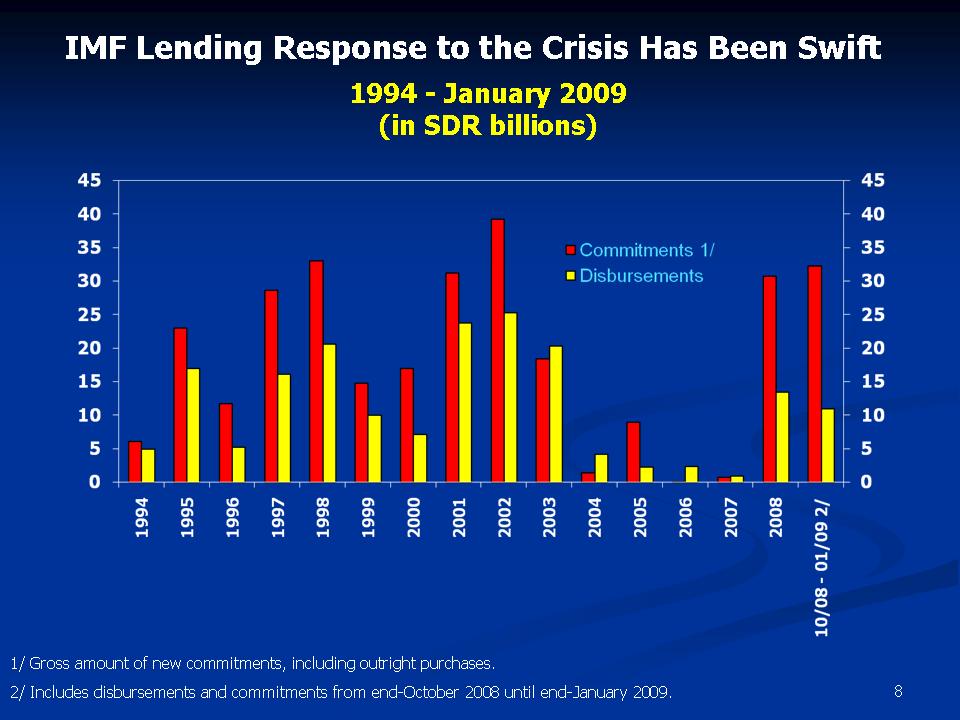
- The IMF "lent more than it has in any single month in its history" in November last year.
Restoring stability to financial markets — findings and recommended actions
- Immediate steps taken: massive liquidity support, extensions of deposit insurance and guarantees.
- Underlying problem: lack of confidence in solvency stemming from insufficient recognition of past losses and fears of new losses beyond real estate.
- Governments should push the bank restructuring process forward with emphasis on cleansing balance sheets:
- Re-examine bank balance sheets on a worst-case basis, determine viability, and restructure where required; be ready for full-fledged intervention.
- Provide public support where necessary to rehabilitable banks via capital, bad asset carve outs, and guarantees.
- Sell or wind-up insolvent banks quickly, depending on remaining franchise value.
- Establish new public resolution agencies to manage "bad assets" to maturity or sale; precedent cited: Korea, Malaysia, Thailand, and Sweden.
- Acknowledgement that these measures will be expensive and take time, but delay increases costs of banking crises.
Supporting aggregate demand — analysis and policy prescriptions
- Monetary policy responses praised: central banks acted quickly (examples: Monetary Authority of Singapore, Reserve Bank of India, Bank of Korea, central banks across Asia including Malaysia).
- Monetary policy alone is insufficient given financial market disruption.
- The IMF has advocated fiscal stimulus for a year; there is now "a broad consensus" on fiscal stimulus.
- Not all countries can undertake fiscal stimulus; some face risks to creditworthiness and may need to contract budgets.
- Countries able to act should do their part; fiscal stimulus is one way to increase domestic demand.
- China highlighted as having room for further fiscal stimulus and for rebalancing demand toward private consumption through:
- Improving the social safety net, especially social insurance and pensions.
- Allowing greater flexibility for its currency to appreciate over time.
- Increased domestic demand in China would support intra-regional trade and exports for other Asian countries.
Support for crisis-hit countries — IMF role and resource needs
- The Fund has provided substantial support to Hungary, Ukraine, Pakistan, Iceland, Latvia and Belarus; increased support to many low-income countries and readiness to do more.
- Anticipation that worst effects on emerging economies may still be to come due to cuts in exports and drying up of capital flows.
- Two-pronged IMF preparedness:
- Resource adequacy: Japan has offered to add "$100 billion" to Fund resources; other countries urged to follow.
- Operational adaptation: Reduce stigma associated with IMF support in Asia by collaborating closely with regional groupings like SEACEN and ASEAN + 3, including through cofinancing.
Policies to avoid a future crisis — governance, oversight, and coordination
- Need for changes in financial market regulation and greater international coordination, especially from countries with growing financial centers.
- The IMF's special role: expertise in assessing linkages between financial sector and financial market rules and macroeconomic outcomes; critical for regulatory framework design and oversight.
- Early warning systems require improvement: current warnings were too scattered and unspecific to trigger collective policy responses.
- Need for a less fragmented and more pointed early warning system to integrate expertise across institutions.
- Risks are not confined to emerging markets; review of systemic risks in advanced and emerging market countries, with better oversight and stronger responses to asset price surges.
- Need to generate action once warnings are issued; past lack of international coordination was problematic.
- Example: domestic guarantees and liquidity provision during the crisis increased cross-border risk.
- A central body is needed to lead responses to systemic risks; the G-20 is beginning to play this role but does not represent all countries.
- The IMF could play this role provided deficits in ownership and efficiency are addressed.
- Specific need to implement agreements on rebalancing quota shares and to agree on a timetable for the next stage of quota reform; hope these will be done "this year."
Concluding observations
- Causes of the crisis identified as: opacity of financial markets, greed of some bankers, complacency of regulators and policy makers.
- Institutional changes can reduce future crisis likelihood, but immediate priority is exiting the present danger through clear thinking and new willingness to cooperate.
- Positive note on Bank Negara Malaysia's 50 years as "a tower of intellectual strength" and SEACEN's 40 years as "an example of cooperation between countries."
Speech at the 44th SEACEN Governors' Conference, by Dominique Strauss-Kahn, Managing Director, IMF
Content in this bundle
References
- Malaysia and the IMF
- United States and the IMF
- People's Republic of China and the IMF
- Republic of Korea and the IMF
- Speeches
- Dominique Strauss-Kahn
- Statement by the IMF Managing Director Dominique Strauss-Kahn at the Conclusion of his Visit to Malaysia
- PRESS CENTER
- https://www.imf.org/external/np/speeches/2009/images/020709_1a.jpg
- https://www.imf.org/external/np/speeches/2009/images/020709_2a.jpg
- https://www.imf.org/external/np/speeches/2009/images/020709_4a.jpg
- https://www.imf.org/external/np/speeches/2009/images/020709_5a.jpg
- https://www.imf.org/external/np/speeches/2009/images/020709_7a.jpg
- https://www.imf.org/en/home