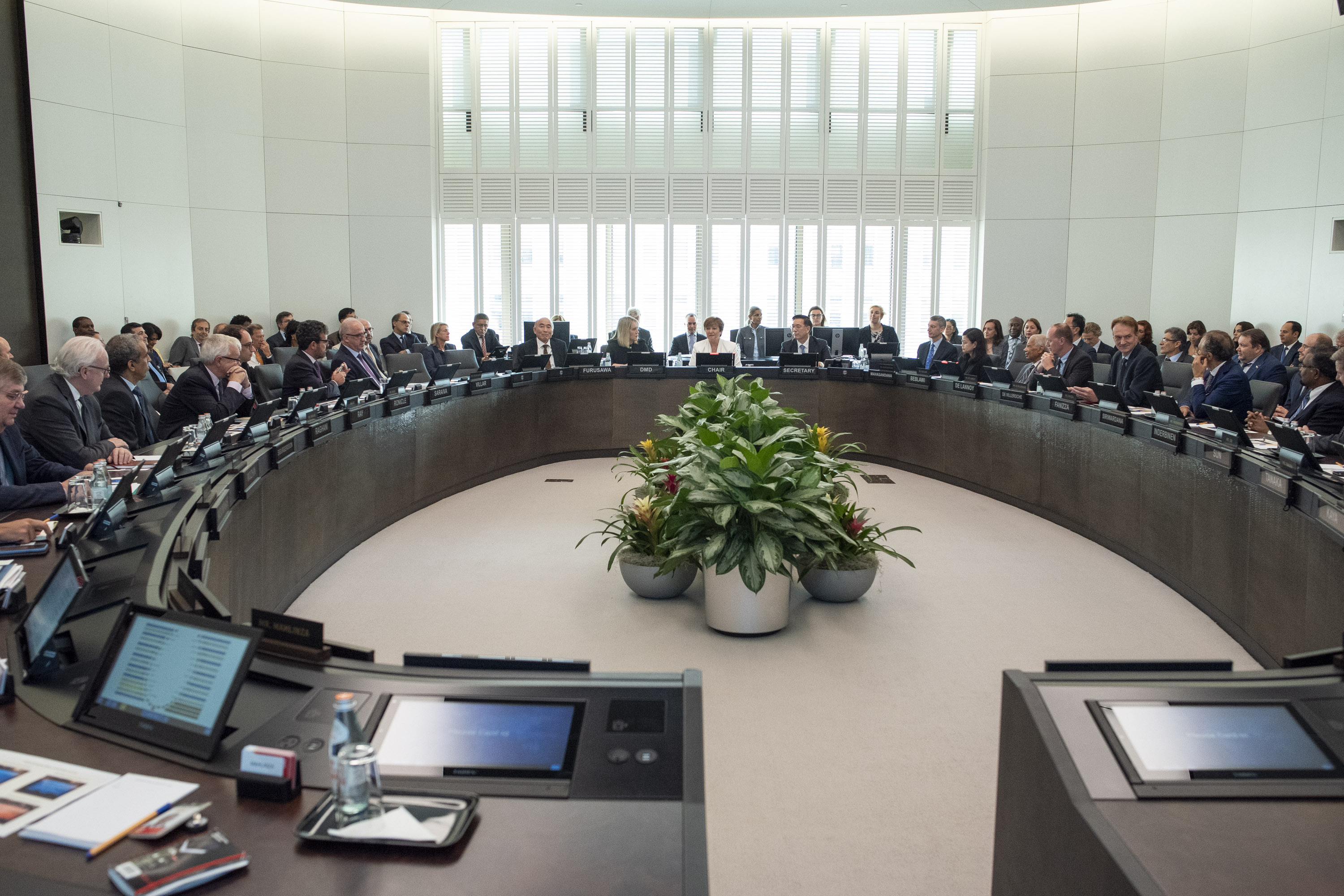
IMF Executive Board Discusses the FY 2016–2017 Diversity and Inclusion Annual Report
IMF News, November 17, 2017
Source details
- Canonical URL
- IMF Executive Board Discusses the FY 2016–2017 Diversity and Inclusion Annual Report
Other formats
Bibliographic details
- Published: November 17, 2017
Background
- The annual report is prepared by the IMF’s Diversity and Inclusion Office in consultation with the Inclusion and Diversity Council.
- The Inclusion and Diversity Council is a Fund-wide representative body that provides guidance to management, department heads, and departmental Diversity Reference Groups on diversity-related matters.
- The report is published annually on the Fund’s external website and provides an accounting of the institution’s efforts to promote a more diverse and inclusive working environment for all employees.
- Meeting date referenced: On July 19, 2017, the Executive Board discussed the FY 2016–2017 Diversity and Inclusion Annual Report.
Executive Board Assessment — Key findings
- Directors welcomed the opportunity to discuss the FY 2016–2017 Diversity and Inclusion Annual Report and recognized progress made in staff diversity and inclusion.
- Directors noted management’s commitment to achieve the 2020 benchmarks.
- Directors emphasized that staff diversity and inclusion are important objectives for the Fund and further efforts are needed to meet the 2020 targets so as to reflect fully the Fund’s diverse membership and to enhance the quality of the Fund’s work to better serve its member countries.
- Directors stressed the importance of enhancing gender equity through Economic Dividends for Gender Equality (EDGE) certification.
- Some Directors called for refocusing diversity efforts toward under represented regions (URRs) where there is evidence of lack of progress and clear risks of not achieving the 2020 benchmarks.
- Directors welcomed progress towards benchmarks for women and staff from URRs, with some benchmarks being achieved ahead of the target date.
- Remaining challenges highlighted:
- Ensuring benchmarks on B level and recruitment of staff from URRs are met.
- Further enhancing an inclusive culture in the Fund.
- Some Directors recommended a review of the experience with the B level Diversity Program, which ended in FY2015.
- Directors noted that diversity is a broader challenge than meeting the existing benchmarks and urged stronger efforts to attract people with diverse educational background, linguistic skills, and professional experience.
- Continued efforts required to build a more inclusive culture where all staff feel valued regardless of ethnicity, gender, disability, sexual orientation or religion.
- Progress on regional and gender diversity continues to be uneven; some Directors recommended applying the strong and determined strategy used for gender diversity to regional diversity.
- Several Directors asked to consider setting a benchmark on hiring of women from URRs.
- Directors recognized Management’s actions:
- Raising the accountability of Fund Departments.
- Continuing to monitor progress in diversity and inclusion.
- Commitment to keep the Board informed.
- Directors called for a stronger and more proactive action plan to track meaningful progress toward boosting diversity and inclusion.
- Emphasis on identifying factors that hinder promotion of diversity and inclusion and supporting full transparency of the recruitment and selection process.
- Need for stronger collaboration between Human Resources Department (HRD) and recruiting departments and ensuring that the composition of hiring interview panels is diverse.
- A few Directors urged management to empower HRD and the Diversity and Inclusion Office to oversee implementation and provide guidance to each department.
- Merit in benchmarking against other international organizations and leveraging external advisors’ expertise.
- Directors supported strengthening the pipeline by aligning diversity and inclusion efforts with the HR strategy, including:
- Enhancing onboarding.
- Modernizing policies and practices.
- Strengthening talent development both in house and through external hires.
- Creating an inclusive culture.
- Concerns expressed that the current benefits package may not reflect needs or expectations of a more diverse workforce; the upcoming comprehensive benefits review seen as an important opportunity to modernize.
- Directors emphasized that HR rules need to be more flexible, including a well-articulated policy on flexible work arrangements to improve work and family life balance for all staff.
- Attention recommended on raising managers’ awareness on diversity-related issues and minimizing unconscious biases in recruitment, promotion, and annual performance assessment.
- Leveling the playing field for pivotal assignments identified as an important component of overall talent management strategy; Directors suggested presenting concrete examples of pivotal assignments and specific recommendations to ensure all staff have the opportunity to be considered.
- A few Directors emphasized balancing efforts to achieve diversity targets with the need to take merit into account when deciding on recruitment and promotion.
- Improvements in HR data over the past years were welcomed, but Directors emphasized need for further efforts on transparency on diversity-related issues.
- Several Directors emphasized the need for Fund leadership to give diversity and inclusion more prominence in the public domain and recommended developing a diversity charter that sets out a vision of a diverse, open, and inclusive work environment that communicates expectations and accountability.
- Directors noted retirement dynamics at the Fund in the coming years would create a window of opportunity to advance the diversity and inclusion agenda.
- Directors called for a more systematic and structured interview process with exiting staff to understand reasons for separation and to ensure the Fund can retain the best talent to fulfil its mandate.
Specific recommendations and actions urged by Directors
- Refocus diversity efforts toward under represented regions (URRs) with evidence of lack of progress.
- Consider setting a benchmark on hiring of women from URRs.
- Review the B level Diversity Program experience (program ended in FY2015).
- Strengthen accountability and monitoring by Fund Departments; keep the Board informed.
- Develop a stronger and more proactive action plan to track meaningful progress.
- Identify and address factors hindering promotion of diversity and inclusion.
- Ensure full transparency of recruitment and selection processes.
- Strengthen collaboration between HRD and recruiting departments; ensure diverse interview panels.
- Empower HRD and the Diversity and Inclusion Office to oversee implementation and guide departments.
- Benchmark against other international organizations and use external advisors’ expertise.
- Align diversity and inclusion efforts with HR strategy: enhance onboarding, modernize policies and practices, strengthen talent development, and create an inclusive culture.
- Use the comprehensive benefits review to modernize the benefits package to reflect a more diverse workforce.
- Make HR rules more flexible; develop a well-articulated policy on flexible work arrangements.
- Raise managers’ awareness on diversity issues and minimize unconscious biases in recruitment, promotion, and performance assessment.
- Present concrete examples and recommendations for ensuring equitable access to pivotal assignments.
- Increase public prominence of diversity and inclusion issues and consider developing a diversity charter.
- Implement a systematic exit-interview process to understand separations and retain talent.
Press Release No. 17/446 — November 17, 2017; IMF Communications Department; PRESS OFFICER: Wafa Amr; Phone: +1 202 623-7100; Email: MEDIA@IMF.org