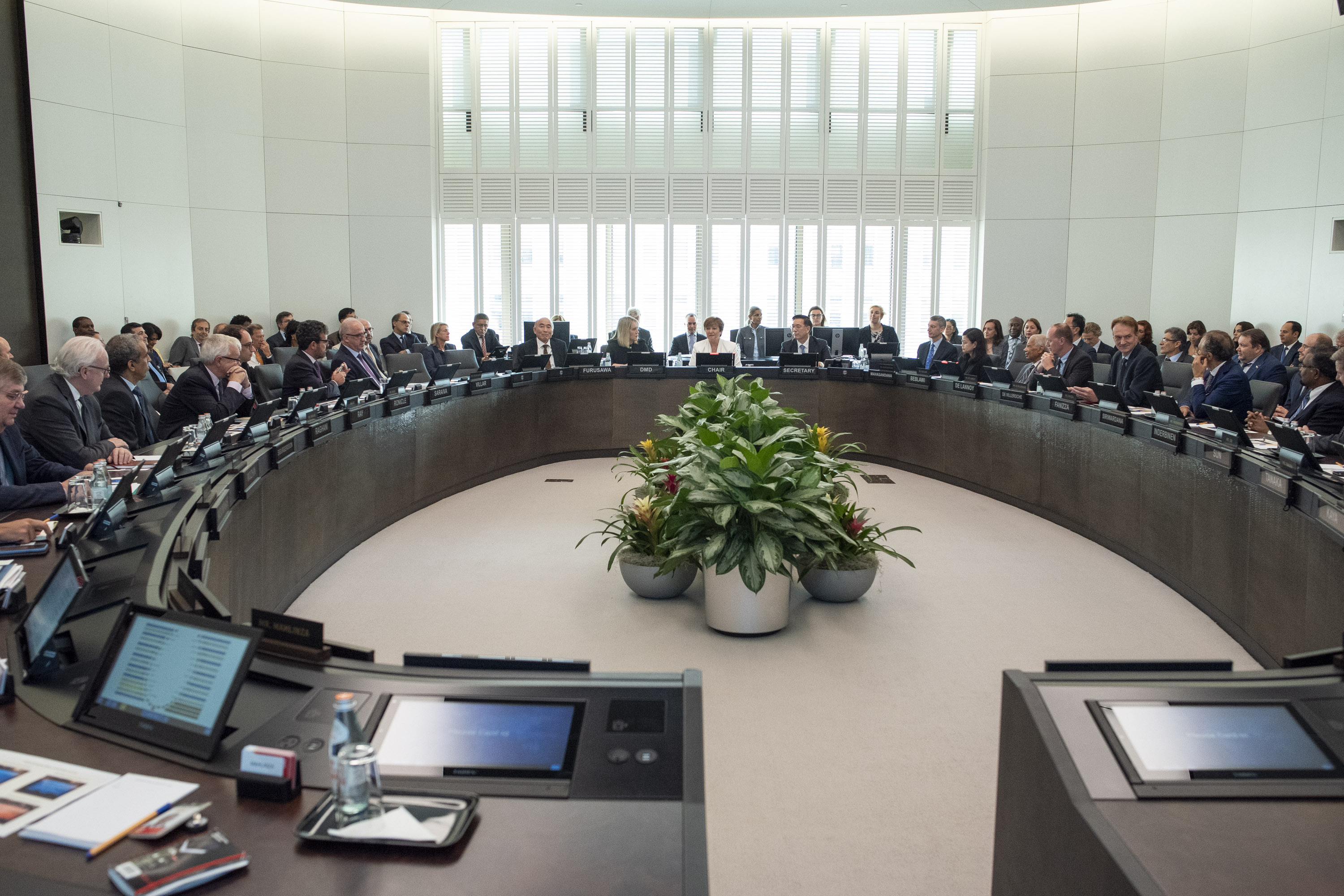
IMF Executive Board Approves US$3.7 Billion Extended Arrangement Under the Extended Fund Facility for Angola
IMF News, December 7, 2018
Source details
- Canonical URL
- IMF Executive Board Approves US$3.7 Billion Extended Arrangement Under the Extended Fund Facility for Angola
Other formats
Bibliographic details
- Published: December 7, 2018
Executive Board decision and financing
- On December 7, 2018, the Executive Board approved a three-year EAEFF in an amount of SDR 2.673 billion (about US$3.7 billion or 361 percent of Angola’s quota).
- The Decision allows an amount of SDR715 million (about US$990.7 million) to be immediately made available to Angola.
- The remaining amount will be phased in over the duration of the program, subject to semi-annual reviews.
Program objectives and critical pillars
- Purpose: support Angola’s economic reform program to restore external and fiscal sustainability and lay foundations for sustainable, private-sector-led economic diversification.
- Critical pillars of the program include:
- Fiscal consolidation to bring debt to safer levels.
- Increased exchange rate flexibility to regain competitiveness.
- Supportive monetary policy to reduce inflation.
- Strengthening the banking system.
- Enabling a better business environment.
- Updating the AML/CFT legal framework.
- Improving governance.
Fiscal policy measures and recommendations
- Fiscal consolidation is identified as a core element of the program.
- Authorities’ planned measures include:
- Increase non-oil revenue, including by introducing a value added tax.
- Eliminate subsidies.
- Clear domestic arrears.
- Protecting the poor and most vulnerable is emphasized; sequencing of reforms and putting in place off-setting measures will be important.
- Strengthening public financial management is expected to improve allocation of scarce public resources and strengthen policy formulation and implementation.
- Upfront fiscal consolidation in 2018 and gradual consolidation in the medium term is described as necessary to place public debt on a downward trajectory and create space for infrastructure and social spending.
- Strengthened debt management and transparency is critical to address debt-related risks.
- Sound policy implementation can mitigate risks from international oil prices.
Exchange rate regime and monetary policy
- Exchange rate depreciation and commitment to a market-determined exchange rate are described as critical steps toward eliminating foreign exchange shortages and restoring external competitiveness.
- The liberalized exchange rate regime will be supported by tight monetary policy to anchor inflation expectations and allow accumulation of international reserves.
Financial sector stability
- Safeguarding financial sector stability is identified as critical for the success of the program.
- Authorities’ plans include:
- Improve governance and credit-risk management at public banks.
- Conduct an asset quality review for largest banks to inform possible recapitalization and restructuring needs.
- Reexamine policies that create foreign exchange mismatches in bank balance sheets to promote financial sector stability.
- Mitigate pressures on correspondent banking relationships by submitting a new AML/CFT law to Parliament.
Structural reforms and governance
- Structural reforms under the program aim to diversify the economy to reduce fiscal risks and foster private sector development.
- Planned structural measures include:
- Restructuring state-owned enterprises.
- Improving the business climate.
- Strengthening economic governance.
- Continuing to fight corruption.
Statement by Mr. Tao Zhang, Deputy Managing Director and Acting Chair
- Summarizes the Macroeconomic Stabilization Program focus: strengthening fiscal sustainability, reducing inflation, promoting a more flexible exchange rate regime and improving financial sector stability.
- Notes implementation of a National Development Plan for 2018–22 to address structural bottlenecks and promote human development, public sector reform, diversification and inclusive growth.
- Reiterates emphasis on governance improvements and anti-corruption efforts.
- Highlights sequencing and offsetting measures to protect vulnerable populations and the role of strengthened fiscal and debt management.
IMF Communications Department — Press Release No. 18/463