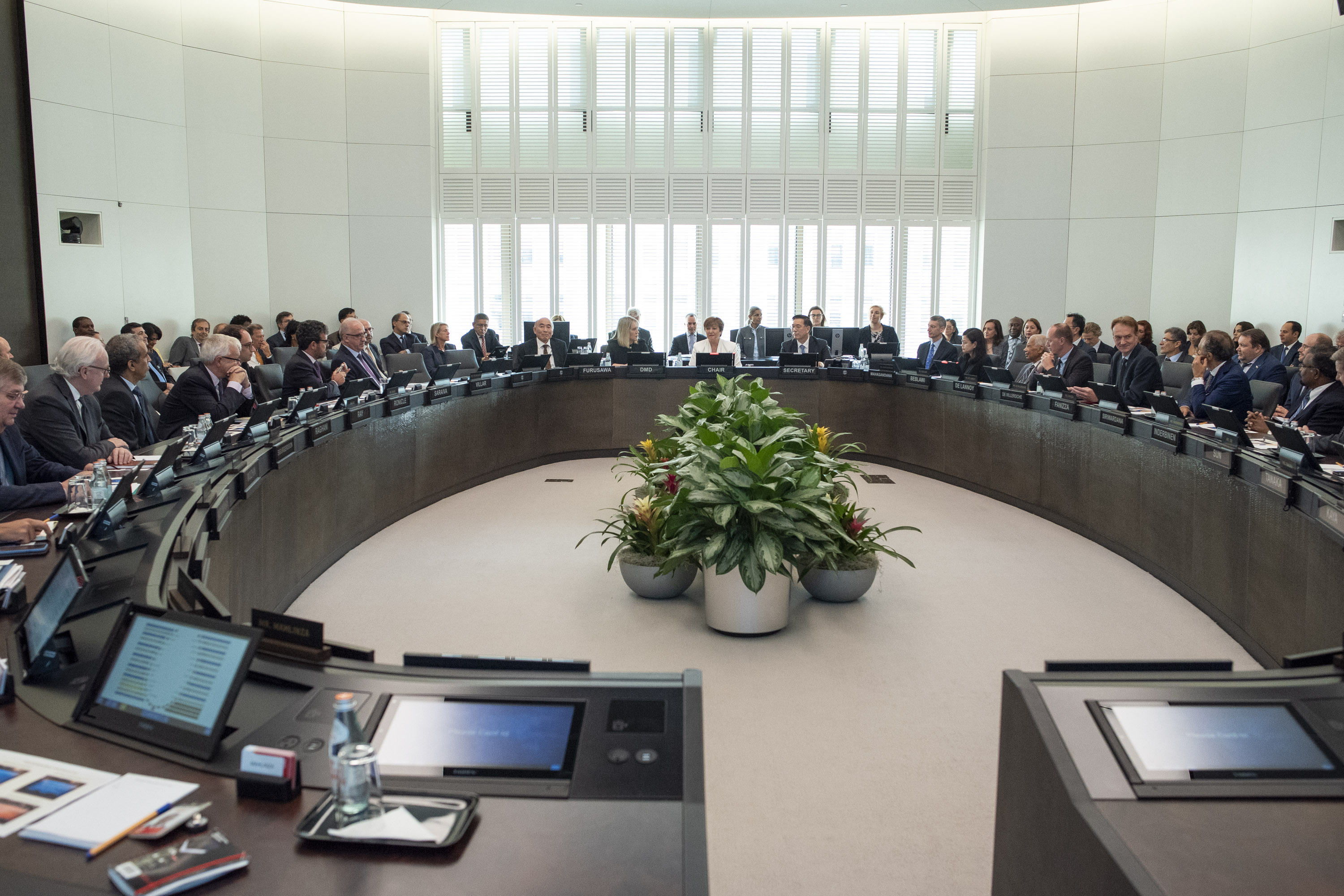
IMF Executive Board Concludes 2020 Article IV Consultation with the People’s Republic of China
IMF News, January 8, 2021
Source details
- Canonical URL
- IMF Executive Board Concludes 2020 Article IV Consultation with the People’s Republic of China
Other formats
Bibliographic details
- Published: January 8, 2021
Economic outlook and projections
- GDP growth projected at 1.9 percent in 2020 and 7.9 percent in 2021.
- Core inflation subdued; CPI inflation in 2020-21 expected to be below the pre-crisis target of about 3 percent.
- Corporate leverage expected to rise by about 10 percentage points of GDP in 2020.
- Current account surplus projected to widen to 1.9 percent of GDP in 2020 from 1.0 percent in 2019, then narrow to below 1 percent in 2021.
- Drivers of 2020 surplus: lower commodity prices, collapse in outbound tourism, surge in exports of pandemic-related and other goods supported by early recovery and higher export prices.
Policy response and fiscal stance
- Policy measures: liquidity provision to banking system; expanded re-lending facilities to smaller enterprises; repayment moratorium until Q1 2021.
- Social measures: increased disbursement and coverage of unemployment insurance; tax relief and waived social security contributions by employers.
- General government deficit (including estimated off-budget investment spending) projected to rise to 18.2 percent of GDP in 2020 from 12.6 percent in 2019.
- Executive Directors recommended continuation of moderately supportive fiscal and monetary policies until recovery is on solid ground; medium-term fiscal consolidation necessary to ensure debt sustainability.
- Directors saw benefits in improving the macro-fiscal framework, including intergovernmental coordination and macroeconomic data.
Financial stability and banking sector
- Temporary financial-sector support should be replaced with policies to address problem loans and strengthen regulatory and supervisory frameworks as recovery takes hold.
- Need for a comprehensive bank restructuring framework in line with international best practices to allow orderly exit of weaker banks.
- Directors noted potential benefits from digital currencies but called for more work to assess risks.
- Encouraged continued improvements to the AML/CFT framework.
Structural reform progress and recommendations
- Progress noted: opening of the financial sector (shortening negative lists for foreign investment; removal of restrictions on investment quota for foreign institutional investors); hukou reforms improving labor mobility; amendment of patent law to strengthen intellectual property protection.
- Slow progress: real-sector reforms, especially state-owned enterprises (SOEs) and competitive neutrality between private and state-owned firms.
- Directors stressed need for further SOE reforms, including ensuring competitive neutrality and removing remaining implicit guarantees.
- Structural reform priorities: boost potential growth, reduce external imbalances, build a more resilient, green, and inclusive economy.
External sector and exchange rate policy
- Directors expected temporary widening of current account in 2020 to narrow over the medium term as pandemic effects unwind and growth rebalances.
- Greater exchange rate flexibility recommended to help adjust to changing external environment.
- Some Directors called for improved transparency of foreign exchange interventions and phasing out of capital flow management measures.
Global cooperation and multilateral responsibilities
- Directors welcomed authorities’ commitment to global cooperation and support for an open, rules-based international trade system.
- Encouraged China’s role in multilateral efforts: making any approved vaccine developed in China widely available and mitigating climate change.
- Noted China’s key role in G-20 DSSI and Common Framework for debt relief to low-income countries; further improvements in data transparency needed for success.
Selected economic indicators (highlights from table)
- Real GDP (base=2015): 6.9 (2015), 6.8 (2016), 6.7 (2017), 6.1 (2018), 1.9 (2019? / 2020 as noted earlier), 7.9 (2021), 5.7 (2022), 5.6 (2023), 5.5 (2024), 5.4 (2025).
- Consumer prices (average): 1.4 (2015), 2.0 (2016), 1.6 (2017), 2.1 (2018), 2.9 (2019), 2.4 (2020), 0.5 (projection year unspecified).
- Total capital formation (percent of GDP): 43.0 (2015), 42.7 (2016), 43.2 (2017), 44.0 (2018), 43.1 (2019), 41.8 (2020), 41.2 (2021), 40.4 (2022), 39.6 (2023), 38.8 (2024), [value for 2025 not listed].
- Gross national saving (percent of GDP): 45.8 (2015), 44.5 (2016), 44.8 (2017), 44.1 (2018), 45.0 (2019), 42.0 (2020), 41.1 (2021), 40.2 (2022), 39.4 (2023).
- Total nonfinancial sector debt (percent of GDP): series includes values such as 222, 241, 277, 284, 289, 293, 295, 297 (table formatting indicates continued high levels across projection years).
- Household disposable income (percent of GDP): 61.1 (2015), 61.6 (2016), 60.1 (2017), 59.3 (2018), 59.1 (2019), 57.6 (2020), 59.2 (2021), 58.9 (2022), 58.6 (2023), 58.3 (2024).
- Household savings (percent of disposable income): 38.4 (2015), 37.2 (2016), 35.7 (2017), 34.8 (2018), 34.4 (2019), 37.1 (2020), 33.7 (2021), 31.8 (2022), 29.9 (2023), 27.9 (2024), 25.9 (2025).
- Household debt (percent of GDP): 39.1 (2015), 44.7 (2016), 48.9 (2017), 52.3 (2018), 55.6 (2019), 61.3 (2020), 62.4 (2021), 64.0 (2022), 64.9 (2023), 66.0 (2024).
- General budgetary government net lending/borrowing (Percent of GDP): -2.8 (2015), -3.7 (2016), -3.8 (2017), -4.7 (2018), -6.3 (2019), -11.9 (2020), -11.0 (2021), -10.1 (2022), -9.1 (2023), -8.3 (2024), -7.5 (2025).
- Revenue (percent of GDP): 28.8 (2015), 28.2 (2016), 27.8 (2017), 28.3 (2018), 27.7 (2019), 24.5 (2020), 25.0 (2021), 25.3 (2022), 25.8 (2023), 26.5 (2024), 27.1 (2025).
- Expenditure (percent of GDP): 33.5 (2015), 33.9 (2016), 34.2 (2017), 35.8 (2018), 36.9 (2019), 39.3 (2020), 38.9 (2021), 38.3 (2022), 37.9 (2023), 37.8 (2024), 37.6 (2025).
- Debt (percent of GDP): 36.7 (2015), 36.2 (2016), 36.5 (2017), 38.1 (2018), 47.2 (2019), 49.5 (2020), 51.2 (2021), 52.6 (2022), 53.8 (2023).
- Current account balance (percent of GDP): 1.8 (2015), 1.0 (2016), 0.8 (2017), 0.6 (2018).
- Gross official reserves (billions of U.S. dollars): 3,406 (2015), 3,098 (2016), 3,236 (2017), 3,168 (2018), 3,223 (2019), 3,579 (2020), 3,842 (2021), 4,127 (2022), 4,427 (2023), 4,734 (2024), 5,056 (2025).
- Nominal GDP (billions of RMB): 69,209 (2015), 74,598 (2016), 82,898 (2017), 91,577 (2018), 99,493 (2019), 103,462 (2020), 113,377 (2021), 122,286 (2022), 131,750 (2023), 142,072 (2024), 153,020 (2025).
- Augmented debt (percent of GDP): 55.2 (2015), 66.4 (2016), 72.8 (2017), 76.4 (2018), 80.5 (2019), 91.7 (2020), 96.4 (2021), 101.4 (2022), 105.6 (2023), 109.3 (2024), 112.7 (2025).
- Augmented net lending/borrowing (percent of GDP): -8.7 (2015), -15.9 (2016), -13.5 (2017), -11.8 (2018), -12.6 (2019), -18.2 (2020), -17.2 (2021), -16.3 (2022), -15.4 (2023), -14.6 (2024), -13.8 (2025).
Executive Board assessment — key messages
- Commended authorities for effective containment measures and swift macroeconomic and financial policy support.
- Noted growth remains unbalanced; recommended policies to strengthen private demand for more balanced medium‑term growth.
- Recommended modernization of the monetary policy framework to strengthen transmission of conventional interest rate policies and enhance financial intermediation.
- Called for enhancements to the social safety net to reduce precautionary savings and greater progressivity in the tax system to address income inequality.
- Encouraged continued opening of the financial sector and further hukou reforms to improve labor mobility.
- Highlighted importance of China’s role in global vaccine availability, climate mitigation, and multilateral debt relief efforts, noting data transparency improvements are needed.
IMF Executive Board Concludes 2020 Article IV Consultation with the People’s Republic of China — Press Release No. 21/1 (January 8, 2021).