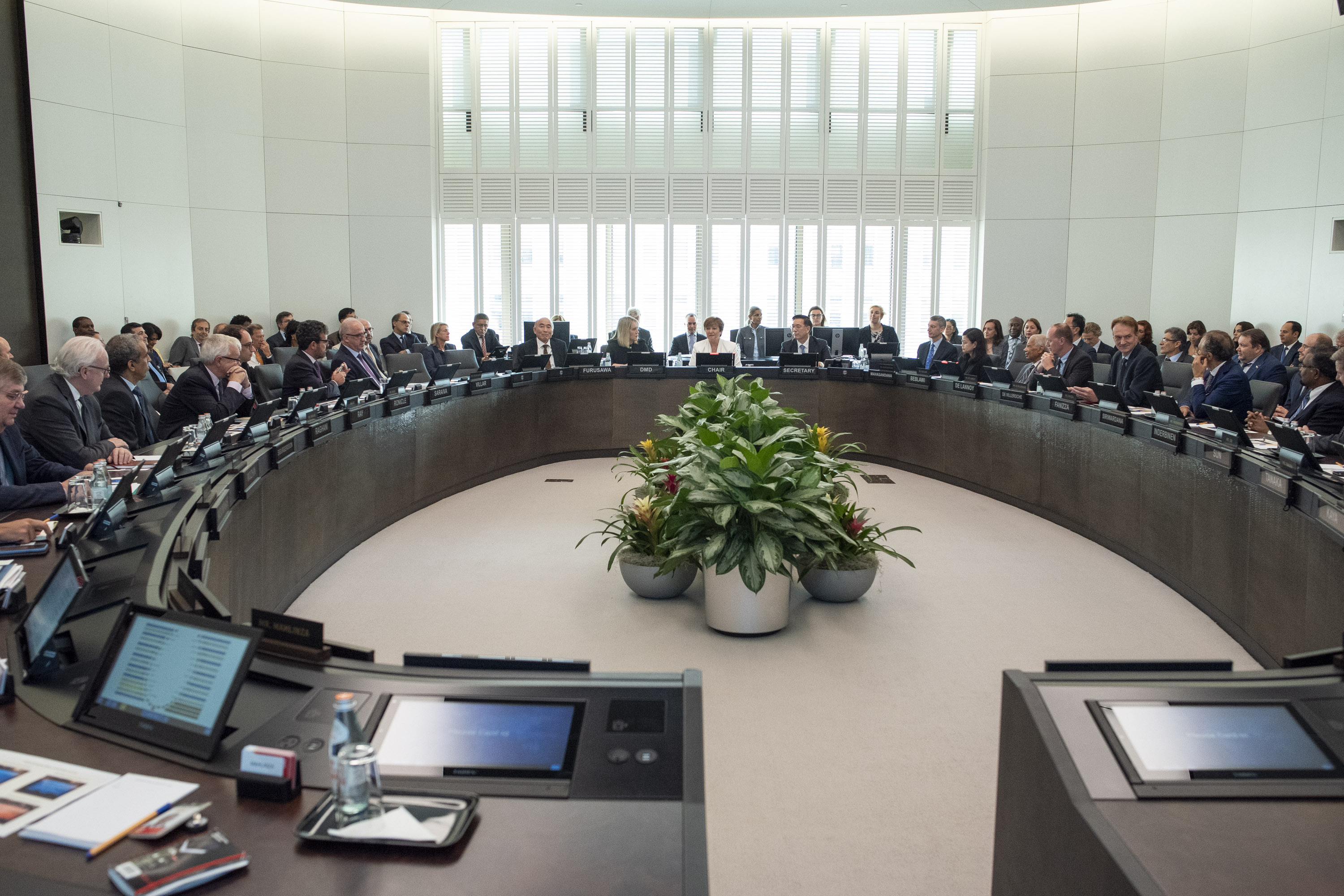
IMF Executive Board Approves a US$302 Million 48-month Arrangement Under the Extended Credit Facility for Burkina Faso
IMF News, September 21, 2023
Source details
- Canonical URL
- IMF Executive Board Approves a US$302 Million 48-month Arrangement Under the Extended Credit Facility for Burkina Faso
Other formats
Bibliographic details
- Published: September 21, 2023
Arrangement details and financing
- Approved: a 48-month arrangement under the Extended Credit Facility (ECF).
- Financing amount: SDR228.76 million (about US$302 million).
- Full amount reported elsewhere in the text as US$302.5 million (SDR228.76 million).
- Immediate disbursement: reported as SDR24 million (about US$31.8 million) and elsewhere as SDR24.08 million (about US$31.8 million).
- The arrangement follows a Food Shock Window disbursement in March, 2023.
Macroeconomic context and shocks
- Country faces protracted balance of payments problems driven by:
- large development needs;
- the COVID-19 pandemic;
- adverse weather conditions;
- deteriorating domestic security;
- the food insecurity crisis; and
- spillovers from Russia’s war in Ukraine.
- Shocks have disrupted economic activity, affected livelihoods, and exacerbated macroeconomic imbalances.
- External and fiscal buffers eroded substantially in 2022:
- current account deficit reached 6.2 percent of GDP;
- overall fiscal balance widened to 10.6 percent of GDP;
- economic growth in 2022 decelerated to 1.5 percent year-on-year, after 6.9 percent of GDP in 2021;
- more than 40 percent of the population remains below the poverty line.
- Additional contextual risks noted: volatile political environment, fragile and deteriorating security conditions, the impact of Russia’s war in Ukraine on energy prices and key agricultural imports, and post-pandemic international supply-chain disruptions.
Program objectives and pillars
- Program aims:
- address protracted balance of payments problems;
- achieve macroeconomic stabilization;
- mitigate the impact of current shocks on the most vulnerable;
- reduce poverty.
- Program built on three pillars:
1. creating fiscal space for priority spending; 2. strengthening resilience to shocks while reducing poverty; 3. reinforcing fiscal discipline, transparency, and governance.
- Program intended to help close financing gaps amid:
- tighter financial conditions on the regional bond market;
- larger deficits and debt vulnerabilities;
- weak donor support.
- The arrangement will also help mitigate risks of sharp policy corrections if financing shortfalls materialize.
Key economic indicators (as reported)
- SDR228.76 million = about US$302 million (also referenced as US$302.5 million in the text).
- Immediate disbursement: SDR24 million (about US$31.8 million) and SDR24.08 million (about US$31.8 million).
- Current account deficit: 6.2 percent of GDP (2022).
- Overall fiscal balance: widened to 10.6 percent of GDP (2022).
- Economic growth: 1.5 percent year-on-year (2022); 6.9 percent of GDP (2021).
- Poverty incidence: more than 40 percent of the population below the poverty line.
Policy commitments and reforms
- Fiscal policy:
- authorities committed to gradual fiscal consolidation to return to the regional convergence criteria for the fiscal deficit;
- plans to step up efforts to increase domestic revenue mobilization and improve the quality and transparency of public spending.
- Revenue-side reforms:
- broaden the tax base, including by closing tax loopholes in the mining sector;
- strengthen tax and customs administration.
- Expenditure-side reforms:
- bring the public sector wage bill as a share of tax revenue to a sustainable level over the medium term;
- reform the energy sector to reduce untargeted energy subsidies.
- Governance and transparency:
- strengthen fiscal governance and transparency to restore donors’ trust and catalyze concessional financing.
Social protection, humanitarian, and structural priorities
- Given large humanitarian and socio-economic development needs, the program envisages:
- scaling up social spending;
- strengthening social protection, including consolidating existing social safety nets;
- accelerating the establishment of the Single National Registry of Beneficiaries.
- Long-term development priorities:
- sustain structural reforms to foster economic growth and diversification;
- reduce poverty through improvements to the business environment, reinforced governance and anti-corruption efforts, and addressing the security crisis.
Statement highlights from the Acting Chair (Mr. Kenji Okamura, Deputy Managing Director)
- The arrangement would:
- help address balance of payments needs and create fiscal space for priority spending;
- reduce public debt vulnerabilities;
- contribute to strengthening resilience to security and climate shocks while reducing poverty and inequality;
- reinforce fiscal discipline, transparency, and governance.
- A resolute commitment to the policy and reform agenda under the arrangement, and to the timeline of the political transition, is critical to:
- safeguard fiscal and debt sustainability;
- anchor the country’s macroeconomic outlook; and
- catalyze additional concessional financing.
Press Release No. 23/320 — IMF Executive Board Approves a US$302 Million 48-month Arrangement Under the Extended Credit Facility for Burkina Faso (September 21, 2023)