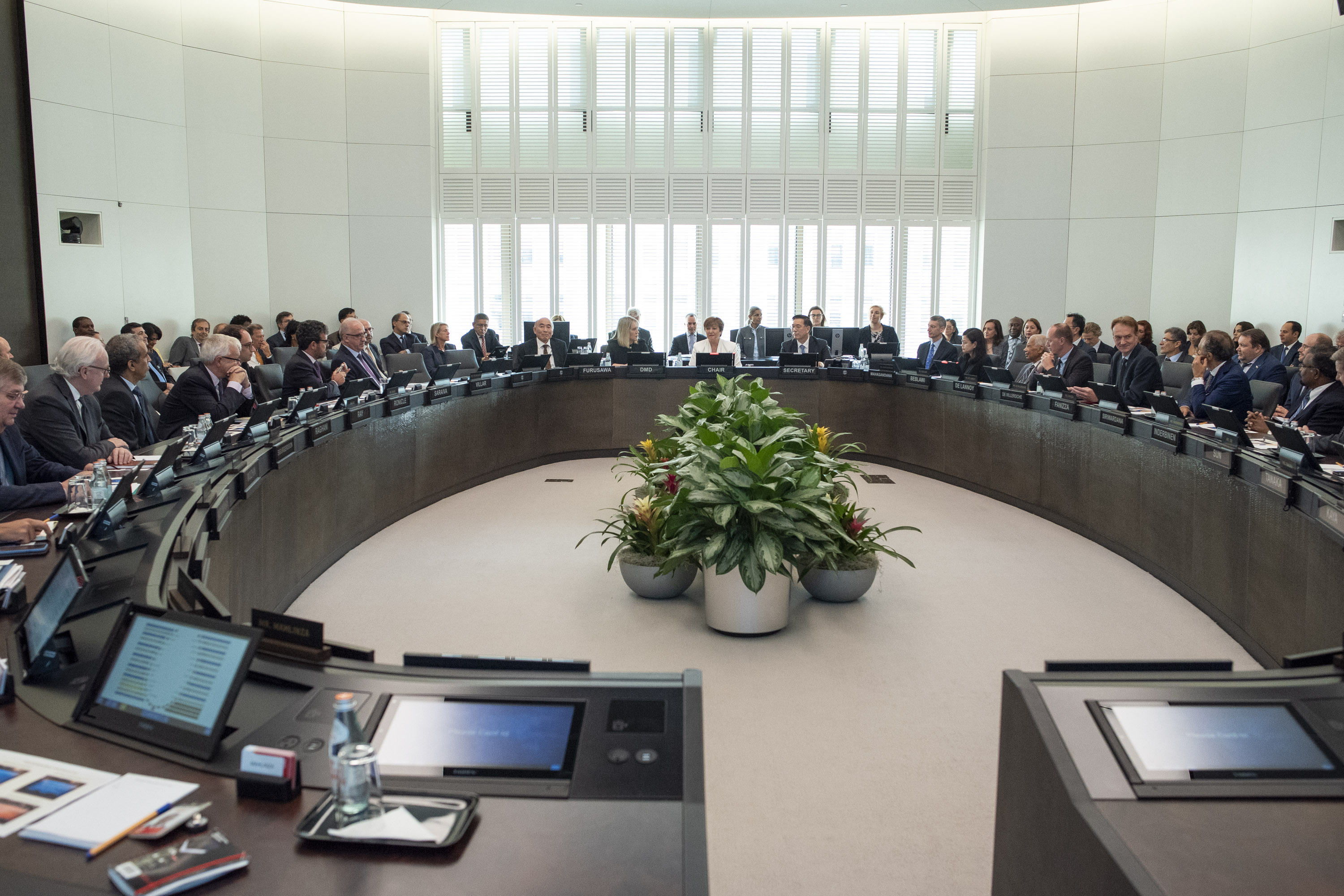
IMF Executive Board Approves US$1.2 Billion Extended Arrangement Under the Extended Fund Facility for Jordan
IMF News, January 10, 2024
Source details
- Canonical URL
- IMF Executive Board Approves US$1.2 Billion Extended Arrangement Under the Extended Fund Facility for Jordan
Other formats
Bibliographic details
- Published: January 10, 2024
Arrangement overview and access
- A new 4-year Extended Fund Facility (EFF) arrangement with Jordan was approved for an amount equivalent to SDR 926.37 million (about US$1.2 billion and equivalent to 270 percent of Jordan’s quota).
- The new arrangement replaces and succeeds the previous EFF arrangement approved in March 2020 that was set to expire in March 2024.
- Immediate access: SDR 144.102 million (about US$190 million) available on approval; the remaining amount will be phased over the duration of the program, subject to eight program reviews.
- Six reviews were completed on time under the previous arrangement and all commitments set for the seventh review were met.
Policy priorities and program objectives
- Maintain macro-stability and further build resilience.
- Continue gradual fiscal consolidation to place public debt on a steady downward path while protecting social and capital spending.
- Improve financial viability and efficiency of the electricity sector.
- Safeguard the exchange rate peg with appropriate monetary policies.
- Accelerate structural reforms to achieve stronger, more inclusive growth and job creation by:
- improving the business environment;
- increasing access to finance;
- enhancing labor market flexibility;
- strengthening public administration.
Fiscal and monetary stance
- Fiscal consolidation measures include broadening the tax base, improving tax compliance, and increasing spending efficiency.
- Planned expansion of social assistance with further improvements in targeting to protect vulnerable households.
- Monetary policy to continue focusing on preserving the peg to the U.S. dollar and maintaining monetary and financial stability, adjusting policy rates as needed to support the peg.
- Emphasis on improving efficiency and viability of public utilities to preserve public finance sustainability while delivering essential services.
Financial sector and external support
- The Central Bank of Jordan maintained prudent policies that safeguarded the peg and helped keep inflation low.
- The banking sector is described as healthy.
- Jordan was removed from FATF’s grey list following solid progress in strengthening financial integrity.
- Implementation of recommendations of the 2023 IMF-World Bank Financial System Stability Assessment is important to further strengthen financial sector oversight.
- Donor support remains essential to help Jordan navigate the external environment, host a large number of refugees, and maintain reform momentum.
Selected economic indicators, 2022–28 (estimates and projections)
- Output
- Real GDP growth (in percent): 2022: 2.4; 2023: 2.6; 2024: 3.0
- Employment
- Unemployment: 2022: 22.9; 2023: …
- Prices
- Inflation (in percent) 1/: 2022: 4.2; 2023: 2.2; 2024: 2.7; 2025: 2.5
- Government finances (in percent of GDP)
- Central government revenue and grants 2/: 2022: 25.8; 2023: 26.2; 2024: 26.8; 2025: 27.1; 2026: 27.3; 2027: 27.7
- Of which: grants: 2022: 2.3; 2023: 2.1; 2024: 1.9; 2025: 1.6; 2026: 1.5
- Expenditures 2/: 2022: 31.6; 2023: 31.5; 2024: 32.4; 2025: 32.3; 2026: 32.0; 2027: 30.9; 2028: 30.1
- Overall central government balance: 2022: -5.8; 2023: -5.3; 2024: -5.5; 2025: -5.2; 2026: -4.7; 2027: -3.2; 2028: -2.4
- Primary government balance (exc. grants, NEPCO and WAJ): 2022: -3.6; 2023: -2.8; 2024: -2.1; 2025: -1.4; 2026: -0.7; 2027: 0.0; 2028: 0.7
- Combined public sector balance 3/: 2022: -4.8; 2023: -4.6; 2024: -4.1; 2025: -3.1; 2026: -2.2
- Government gross debt: 2022: 111.3; 2023: 111.5; 2024: 112.7; 2025: 112.9; 2026: 112.5; 2027: 110.4; 2028: 108.2
- Government gross debt, net of SSC holdings of government debt 4/: 2022: 88.8; 2023: 88.7; 2024: 88.3; 2025: 87.1; 2026: 85.3; 2027: 82.0; 2028: 78.6
- Money and credit
- Broad money (percent change): 2022: 5.5; 2023: 5.6
- Credit to the private sector (percent change): 2022: 8.0; 2023: 4.0; 2024: 5.0; 2025: 6.0; 2026: 6.2; 2027: 6.5; 2028: 6.7
- Balance of payments
- Current account including grants: 2022: -7.9; 2023: -7.0; 2024: -6.3; 2025: -4.5; 2026: -4.0
- Gross reserves (in months of imports): 2022: 6.8; 2023: 6.6; 2024: 7.2; 2025: 7.0
- In percent of Reserve Adequacy Metric: 2022: 102; 2023: 94; 2024: 91; 2025: 95; 2026: 101
- Public external debt (in percent of GDP): 2022: 47.7; 2023: 42.2; 2024: 44.3; 2025: 44.8; 2026: 43.4; 2027: 39.5
Key director’s statement points (Mr. Kenji Okamura, Deputy Managing Director and Acting Chair)
- Jordan maintained macro-stability and moderate economic growth through adept policy making and sizable international support.
- Prudent fiscal and monetary policies reduced deficits, strengthened reserve buffers, preserved financial stability, and maintained market confidence.
- Going forward, policies under the EFF focus on maintaining macro-stability, building resilience, and accelerating structural reforms to achieve stronger, more inclusive growth and job creation, and to tackle high unemployment.
- Priorities include fiscal consolidation with protection for priority social and capital spending, expanding and better targeting social assistance, improving public utilities’ efficiency and viability, and continuing monetary prudence to support the exchange rate peg.
- Structural reforms should improve the business environment, strengthen competition, reduce red tape, and press ahead with labor market reforms to lower youth unemployment and enhance female labor participation.
- Donor support is emphasized as essential to help Jordan navigate external challenges, host refugees, and maintain reform momentum.
Press Release No. 24/004; January 10, 2024; IMF Communications Department.