• IMF Live
International Monetary FundInternational Monetary Fund

Loading component...

IMF Conference

Related Links

  • Paper: Asset Purchases and Direct Financing: Guiding Principles for Emerging Markets and Developing Economies during COVID-19 and Beyond

Loading component...

Loading component...

Back to Top

Agenda

Loading component...

Loading component...

  • About
      • IMF’s Work

      • IMF at a Glance
      • Surveillance
      • Lending
      • Capacity Development
      • IMF Factsheets List
      • How the IMF Supports the Global Economy
      • RESOURCES

      • IMF Members
      • IMF Finances
      • IMF Financial Statements
      • IMF Senior Officials
      • IMF in History
      • Archives of the IMF
      • Job Opportunities
      • TOPICS

      • Artificial Intelligence
      • Fintech
      • Fiscal Policies
      • Governance and Anti-Corruption
      • All Topics
  • Research
      • Flagship Publications

      • World Economic Outlook
      • Global Financial Stability Report
      • Fiscal Monitor
      • External Sector Report
      • Other Publications

        • Staff Discussion Notes
        • Working Papers
        • IMF Research Perspectives
        • Economic Review
        • Commodity Prices
        • Commodities Data Portal
        • IMF Researchers
        • Annual Research Conference
        • Other IMF Events
  • Countries
      • IMF reports and publications by country

        • A
        • B
        • C
        • D
        • E
        • F
        • G
        • H
        • I
        • J
        • K
        • L
        • M
        • N
        • O
        • P
        • Q
        • R
        • S
        • T
        • U
        • V
        • Y
        • Z
        • IMF Resident Representative Offices
        • IMF Regional Reports
        • IMF and Europe
        • IMF Members' Quotas and Voting Power, and Board of Governors
      • Regional Offices

      • IMF Regional Office for Asia and the Pacific
      • IMF Capacity Development Office in Thailand (CDOT)
      • IMF Office in the Pacific Islands
      • IMF Europe Office in Paris and Brussels
      • IMF Regional Office for Central, Eastern and Southeastern Europe
      • IMF Regional Office in Riyadh
      • IMF Regional Office in Central America, Panama, and the Dominican Republic
      • Eastern Caribbean Currency Union (ECCU)
  • Capacity Development
      • What We Do
      • How We Work
      • IMF Training
      • Digital Training Program
      • Online Learning
      • Our Partners
      • Country Stories
      • Technical Assistance Reports
      • High-Level Summary Technical Assistance Reports
      • Strategy and Policies
  • News
      • All News

        • IMF Live
        • Country Focus
        • Chart of the Week
        • Communiqués
        • Mission Concluding Statements
        • Press Releases
        • Speeches
        • Statements at Donor Meetings
        • Transcripts
        • Views & Commentaries
      • See Also

      • IMFBlog
      • Article IV Consultations
      • Financial Sector Assessment Program (FSAP)
      • Seminars, Conferences, & Other Events
      • E-mail Notification
      • For Journalists

      • Press Center

        The IMF Press Center is a password-protected site for working journalists.

      • Login or Register
      • Information of interest
  • Videos
      • IMF Live
      • About the IMF
      • Conferences
      • Press briefings
      • Speeches
      • Special Features
      • Africa
      • Americas
      • Asia
      • Europe
      • Middle East and Central Asia
      • Economic Outlook
      • Annual and spring meetings
      • Capacity Development
      • Most Recent
      • Most Popular
  • Data
      • IMF Data Portal
      • World Economic Outlook Databases
      • AI Preparedness Index
      • Climate Change Indicators Dashboard
      • IMF Finances
      • Standards for Data Dissemination
      • International Financial Statistics
      • Financial Access Survey
      • G20 Data Gaps Initiative
      • Currency Composition of Official Foreign Exchange Reserves
      • World Revenue Longitudinal Data
  • Publications
      • RESOURCES

      • Publications Advanced Search
      • IMF eLibrary
      • IMF Bookstore
      • Publications Newsletter
      • Essential Reading Guides
      • FLAGSHIPS

      • World Economic Outlook
      • Global Financial Stability Report
      • Fiscal Monitor
      • External Sector Report
      • Regional Economic Reports
      • KEY SERIES

      • Country Reports
      • Departmental Papers
      • Policy Papers
      • Books
      • Selected Issues Papers
      • IMF NOTES

      • IMF Notes
      • How-To Notes
      • Technical Notes and Manuals
      • Staff Discussion Notes
Email notification sign-up

Sign up to receive free e-mail notices when new series and/or country items are posted on the IMF website.

Modify your profile


New Monetary Policy Tools for Emerging Market and Developing Economies

December 2, 2021

The COVID-19 pandemic spurred Emerging Markets and Developing Economies’ (EMDE) central banks to introduce a wide array of unconventional monetary policy actions. These included asset purchases, typically of sovereign debt, to improve bond market liquidity and ease market stresses. These tools appeared effective in improving market functioning and are likely to remain a key component of the toolkit of EMDE central banks. Even so, the use of these tools is quite novel, and care must be taken to ensure that they are deployed to maximize effectiveness while minimizing risks, including of fiscal dominance. Important challenges lie ahead. Those EMDE central banks which undertook larger and more protracted interventions must design a strategy for exiting from UMP programs, and some EMDEs must consider how to transition away from providing direct financing to the government. Some EMDE central banks may also decide—perhaps down the road—that conditions warrant using balance sheet expansion to boost the macroeconomy, similar to the quantitative easing programs of many advanced economies.

Bo Li, Deputy Managing Director, IMF will open the event with a brief overview of some of the challenges currently facing central bankers. It will be followed by an in-depth panel discussion considering the conditions that may warrant the use of asset purchases and other unconventional monetary policy tools by EMDEs, and how these tools should be utilized to maximize effectiveness while minimizing risks to central bank balance sheets and independence. The panel will be moderated by Tobias Adrian, IMF Financial Counsellor, and will comprise Lesetja Kganyago, Governor, South African Reserve Bank; Elvira Nabiullina, Governor, Bank of Russia; and Carmen Reinhart, Senior Vice President and Chief Economist, World Bank Group.

This is a public event, and no registration will be required. The event will be livestreamed on this webpage on Thursday, December 2, 2021, 8:30 a.m. - 9:45 a.m. (ET).

December 2, 2021

8:30 – 8:32 a.m.

Welcome Remarks

Tobias Adrian, Financial Counsellor and Director of the Monetary and Capital Markets Department, IMF

8:32 – 8:40 a.m.

Opening Remarks

Bo Li, Deputy Managing Director, IMF

Read the Speech

8:40 – 9:45 a.m.

Panel Discussion

Moderator: Tobias Adrian

Panelists:

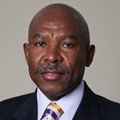
Lesetja Kganyago, Governor, South African Reserve Bank
<img alt=Lesetja Kganyago was reappointed as the Governor of the South African Reserve Bank for a second term in November 2019; his first was effective from 9 November 2014. He had been a Deputy Governor of the SARB since May 2011.

Governor Kganyago has more than 20 years of experience in formulating and implementing public policy, having spent this time at the central bank and at National Treasury. He has led South Africa’s technical team in various G20 Ministers of Finance and Central Bank Governors meetings and summits, including the Inaugural Summit in 2008. He has chaired the IMF–World Bank Development Committee Deputies and the G20 Working Group on IMF Governance Reform. He was also the Vice-Chair of the Financial Stability Board’s Standing Committee on Standards Implementation for four years.

Currently, Governor Kganyago chairs the Committee of Central Bank Governors of the Southern African Development Community and co-chairs the Financial Stability Board’s Regional Consultative Group for sub-Saharan Africa. He also chairs the Financial Stability Board’s Standing Committee on Standards Implementation, and he chaired the International Monetary and Financial Committee from January 2018–December 2020.

Governor Kganyago holds a Master of Science degree in Development Economics from the University of London (School of Oriental and African Studies) and a Bachelor of Commerce degree in Accounting and Economics from the University of South Africa.
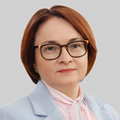
Elvira Nabiullina, Governor, Bank of Russia
<img alt=Upon being appointed as the Governor of the Bank of Russia and Member of the Bank of Russia Board of Directors in June 2013, Ms. Elvira Nabiullina became the first woman to run a central bank of a G8 country.

Prior to joining the Bank of Russia, she was an economic advisor to the President of the Russian Federation. Ms. Nabiullina has built her career at the Ministry of Economy of the Russian Federation, acting as the Minister of Economic Development in 2008-2012 and the Minister of Economic Development and Trade in 2007-2008, and having held several other positions in the Ministry before that.

Ms. Nabiullina has also been the Head of the Expert Council of the Organizing Committee for Russia’s G8 Presidency in 2006, as well as the President and Head of Research at the Centre for Strategic Research Foundation.
Carmen Reinhart, Senior Vice President and Chief Economist, World Bank Group
<img alt=Carmen M. Reinhart is the Senior Vice President and Chief Economist of the World Bank Group. Assuming this role on June 15, 2020, Reinhart provides thought leadership for the institution at an unprecedented time of crisis. She also manages the Bank’s Development Economics Department.

Reinhart is on public service leave from Harvard Kennedy School, where she is the Minos A. Zombanakis Professor of the International Financial System. Previously, she was Senior Policy Advisor and Deputy Director at the International Monetary Fund and held positions as Chief Economist and Vice President at the investment bank Bear Stearns. She also serves in the Advisory Panels of the Federal Reserve Bank of New York and the International Monetary Fund.

Reinhart has been listed among Bloomberg Markets Most Influential 50 in Finance, Foreign Policy’s Top 100 Global Thinkers, and Thompson Reuters' The World's Most Influential Scientific Minds. In 2018 she was awarded the King Juan Carlos Prize in Economics and NABE’s Adam Smith Award, among others.

She holds a Ph.D. from Columbia University.

International Monetary Fund
  • About
  • Research
  • Countries
  • Capacity Development
  • News
  • Events
  • Videos
  • Data
  • Publications
  • Social Media Hub
  • Annual Report
  • Copyright and Usage
  • Privacy Notice
  • Contact Us
  • Careers
  • Glossary
  • Scam Alert
  • IMF Brand
  • عربي
  • 中文
  • Français
  • 日本語
  • Русский
  • Español

© 2026 International Monetary Fund. All rights reserved.

  • IMF Live