


Climate Change



The IMF and Climate Change
Climate change presents a major threat to long-term growth and prosperity, and has a direct impact on the economic wellbeing of all countries. The IMF has an important role to play in helping its members institute fiscal and macroeconomic policies to help address these climate-related challenges. We are mainstreaming climate-related risks and opportunities into our macroeconomic and financial policy advice. Climate considerations are now embedded in our bilateral and multilateral surveillance, capacity development, and lending. We also collaborate with other organizations on climate issues.
Through our analytical work we have examined policy issues such as an international carbon price floor, the transition to a green economy, border carbon adjustments, scaling up private climate finance in emerging market and developing economies, strengthening climate information architecture, fiscal policies to support adaptation, and green public investment and public financial management.
South Africa: 2025 Article IV Consultation-Press Release; Staff Report; and Statement by the Executive Director for South Africa
Owing to its ample natural endowments, independent institutions, and strong monetary policy framework, South Africa’s economy has proven resilient to renewed global turbulence related to greater protectionism, fragmentation, and heightened policy uncertainty in 2025. However, long-standing impediments—entrenched structural rigidities, inadequate infrastructure, governance weaknesses, and rising public debt—continue to constrain the economy’s ability to create much needed jobs and achieve its true growth potential.
Cote d'Ivoire: Fifth Reviews Under the Extended Arrangement Under the Extended Fund Facility and the Arrangement Under the Extended Credit Facility, Request for Modification of a Quantitative Performance Criterion, and Fourth Review Under the Resilience and Sustainability Facility Arrangement-Press Release; Staff Report; and Statement by the Executive Director for Côte d’Ivoire
Côte d’Ivoire’s economy continues to show resilience, supported by the restoration of fiscal and external buffers. The EFF/ECF-supported program approved in May 2023 (400 percent of quota) has largely eliminated macroeconomic imbalances and safeguarded a moderate risk of debt distress. Important measures have been taken under the RSF arrangement (150 percent of quota) to contribute to prospective balance of payments stability and tackle challenges from climate change and to meet the country’s ambitious adaptation and mitigation objectives. The authorities’ reform commitments under both programs support Côte d’Ivoire’s efforts to pursue economic transformation to upper-middle income status over the medium term. The outlook remains favorable, supported by sustained consumption and investment, as well as a further expansion of the hydrocarbon and mining sectors, and innovative financing instruments reflecting strong investor confidence. Risks remain broadly balanced amid persistent global uncertainty.
Republic of Kazakhstan: State-Owned Enterprises, the Fiscal Stance, and Risks
State-owned enterprises (SOEs) remain a cornerstone of Kazakhstan’s economy and growth model. However, SOEs’ quasi-fiscal activities conducted outside the fiscal framework obscure the overall fiscal stance, complicating macroeconomic management. This paper finds that the balance sheet expansion by major SOEs averaged about 20 percent of the state budget expenditure over the past five years. If this activity were booked as budgetary expenditure, the non-oil deficit would have been about 3.5 percentage points higher in 2024–25, indicating a larger fiscal expansion than recorded in official budget figures. Moreover, underperformance of several SOEs could create significant contingent fiscal risks. Policymakers should better align SOE investment with fiscal objectives, strengthen monitoring, and assess risks to public finances.
Banking on Nonbanks
We study how banking groups adjust corporate credit supply in response to tighter macroprudential policies. Using granular data on syndicated corporate loans, we show that banking groups reallocate lending from bank subsidiaries toward affiliated nonbank financial institutions (NBFIs) following regulatory tightening. Relative to bank subsidiaries within the same group, NBFI subsidiaries expand lending, and their credit supply also increases in absolute terms. We estimate that by ‘banking on’ their nonbanks, banking groups offset, on average, more than half of the contraction in bank lending induced by macroprudential tightening. Our findings highlight an important intra-group reallocation channel through which banking groups can partially offset regulatory constraints and result in greater bank–nonbank interconnectedness.
Distributional Impacts of Inflation Accounting for Behavioral Effects and Real Assets
This paper analyzes the redistributive effects of inflation across 18 European economies from 2021:Q3 to 2022:Q2, using unique micro-datasets for this country sample. We estimate inflation’s impact on household welfare through the consumption basket, income, and wealth channels. Our main contribution is incorporating real assets into the wealth channel and accounting for behavioral responses to inflation in both the income and wealth channels. These factors significantly alter inflation’s distributional effects compared to previous literature. The inflation shock is estimated to have caused an average welfare loss equivalent to 18.5 percent of annual household income across our sample, with households in the poorest income quintiles suffering the largest losses. Cross-country differences also widen when real assets are incorporated, with a few economies even showing welfare gains for some or all quintiles because house prices rose faster than inflation.
IMF Executive Board Concludes 2025 Article IV Consultation with South Africa
The Executive Board of the International Monetary Fund (IMF) completed the Article IV Consultation with South Africa.
Statement by IMF Deputy Managing Director Kenji Okumura at the Conclusion of His Visit to Côte d'Ivoire
Mr. Kenji Okamura, Deputy Managing Director of the International Monetary Fund (IMF), issued the following statement today in Abidjan at the end of his visit to Côte d'Ivoire:
Joint Statement by the Saudi Finance Minister and IMF Managing Director on the Conclusion of the Second Annual AlUla Conference for Emerging Market Economies
The second annual Conference for Emerging Market Economies was held in AlUla, Saudi Arabia, on February 8-9, co-organized by the Saudi Ministry of Finance and the International Monetary Fund (IMF).
The International Monetary Fund (IMF) and the Arab Monetary Fund (AMF) Continue to Deepen Cooperation through an Updated Memorandum of Understanding
The International Monetary Fund (IMF) and the Arab Monetary Fund (AMF) are further deepening their cooperation under a renewed Memorandum of Understanding (MoU) signed today by Dr. Kristalina Georgieva, IMF Managing Director, and Dr. Fahad M. Alturki, Director General and Chairman of the AMF.
Policies Amid a Reset of the International Trade and Financial Systems
Remarks by IMF Managing Director Kristalina Georgieva at the 2026 AlUla Conference for Emerging Market Economies
IMF Executive Board Concludes the 2025 Article IV Consultation, Seventh Review under the Extended Credit Facility Arrangement, and Third Review under the Resilience and Sustainability Facility Arrangement with Cabo Verde
The IMF Executive Board completed the 2025 Article IV consultation, the seventh Extended Credit Facility (ECF) arrangement review, and third Resilience and Sustainability Facility (RSF) arrangement review.
South Africa: 2025 Article IV Consultation-Press Release; Staff Report; and Statement by the Executive Director for South Africa
Owing to its ample natural endowments, independent institutions, and strong monetary policy framework, South Africa’s economy has proven resilient to renewed global turbulence related to greater protectionism, fragmentation, and heightened policy uncertainty in 2025. However, long-standing impediments—entrenched structural rigidities, inadequate infrastructure, governance weaknesses, and rising public debt—continue to constrain the economy’s ability to create much needed jobs and achieve its true growth potential.
Cote d'Ivoire: Fifth Reviews Under the Extended Arrangement Under the Extended Fund Facility and the Arrangement Under the Extended Credit Facility, Request for Modification of a Quantitative Performance Criterion, and Fourth Review Under the Resilience and Sustainability Facility Arrangement-Press Release; Staff Report; and Statement by the Executive Director for Côte d’Ivoire
Côte d’Ivoire’s economy continues to show resilience, supported by the restoration of fiscal and external buffers. The EFF/ECF-supported program approved in May 2023 (400 percent of quota) has largely eliminated macroeconomic imbalances and safeguarded a moderate risk of debt distress. Important measures have been taken under the RSF arrangement (150 percent of quota) to contribute to prospective balance of payments stability and tackle challenges from climate change and to meet the country’s ambitious adaptation and mitigation objectives. The authorities’ reform commitments under both programs support Côte d’Ivoire’s efforts to pursue economic transformation to upper-middle income status over the medium term. The outlook remains favorable, supported by sustained consumption and investment, as well as a further expansion of the hydrocarbon and mining sectors, and innovative financing instruments reflecting strong investor confidence. Risks remain broadly balanced amid persistent global uncertainty.
Republic of Kazakhstan: State-Owned Enterprises, the Fiscal Stance, and Risks
State-owned enterprises (SOEs) remain a cornerstone of Kazakhstan’s economy and growth model. However, SOEs’ quasi-fiscal activities conducted outside the fiscal framework obscure the overall fiscal stance, complicating macroeconomic management. This paper finds that the balance sheet expansion by major SOEs averaged about 20 percent of the state budget expenditure over the past five years. If this activity were booked as budgetary expenditure, the non-oil deficit would have been about 3.5 percentage points higher in 2024–25, indicating a larger fiscal expansion than recorded in official budget figures. Moreover, underperformance of several SOEs could create significant contingent fiscal risks. Policymakers should better align SOE investment with fiscal objectives, strengthen monitoring, and assess risks to public finances.
Banking on Nonbanks
We study how banking groups adjust corporate credit supply in response to tighter macroprudential policies. Using granular data on syndicated corporate loans, we show that banking groups reallocate lending from bank subsidiaries toward affiliated nonbank financial institutions (NBFIs) following regulatory tightening. Relative to bank subsidiaries within the same group, NBFI subsidiaries expand lending, and their credit supply also increases in absolute terms. We estimate that by ‘banking on’ their nonbanks, banking groups offset, on average, more than half of the contraction in bank lending induced by macroprudential tightening. Our findings highlight an important intra-group reallocation channel through which banking groups can partially offset regulatory constraints and result in greater bank–nonbank interconnectedness.
Distributional Impacts of Inflation Accounting for Behavioral Effects and Real Assets
This paper analyzes the redistributive effects of inflation across 18 European economies from 2021:Q3 to 2022:Q2, using unique micro-datasets for this country sample. We estimate inflation’s impact on household welfare through the consumption basket, income, and wealth channels. Our main contribution is incorporating real assets into the wealth channel and accounting for behavioral responses to inflation in both the income and wealth channels. These factors significantly alter inflation’s distributional effects compared to previous literature. The inflation shock is estimated to have caused an average welfare loss equivalent to 18.5 percent of annual household income across our sample, with households in the poorest income quintiles suffering the largest losses. Cross-country differences also widen when real assets are incorporated, with a few economies even showing welfare gains for some or all quintiles because house prices rose faster than inflation.
IMF Executive Board Concludes 2025 Article IV Consultation with South Africa
The Executive Board of the International Monetary Fund (IMF) completed the Article IV Consultation with South Africa.
Statement by IMF Deputy Managing Director Kenji Okumura at the Conclusion of His Visit to Côte d'Ivoire
Mr. Kenji Okamura, Deputy Managing Director of the International Monetary Fund (IMF), issued the following statement today in Abidjan at the end of his visit to Côte d'Ivoire:
Joint Statement by the Saudi Finance Minister and IMF Managing Director on the Conclusion of the Second Annual AlUla Conference for Emerging Market Economies
The second annual Conference for Emerging Market Economies was held in AlUla, Saudi Arabia, on February 8-9, co-organized by the Saudi Ministry of Finance and the International Monetary Fund (IMF).
The International Monetary Fund (IMF) and the Arab Monetary Fund (AMF) Continue to Deepen Cooperation through an Updated Memorandum of Understanding
The International Monetary Fund (IMF) and the Arab Monetary Fund (AMF) are further deepening their cooperation under a renewed Memorandum of Understanding (MoU) signed today by Dr. Kristalina Georgieva, IMF Managing Director, and Dr. Fahad M. Alturki, Director General and Chairman of the AMF.
Policies Amid a Reset of the International Trade and Financial Systems
Remarks by IMF Managing Director Kristalina Georgieva at the 2026 AlUla Conference for Emerging Market Economies
IMF Executive Board Concludes the 2025 Article IV Consultation, Seventh Review under the Extended Credit Facility Arrangement, and Third Review under the Resilience and Sustainability Facility Arrangement with Cabo Verde
The IMF Executive Board completed the 2025 Article IV consultation, the seventh Extended Credit Facility (ECF) arrangement review, and third Resilience and Sustainability Facility (RSF) arrangement review.
The IMF’s approach to climate change is guided by its Climate Change Strategy, which sets out how the institution will integrate climate-related macroeconomic and financial risks into its core activities, including surveillance, lending, and capacity development.

Surveillance
Article IV consultations will cover macro-critical issues related to climate change. These include macroeconomic policies to adapt to and build resilience to climate change; challenges presented by a global transition to low-carbon energy; and domestic policy challenges that arise in the context of achieving countries’ own mitigation goals as well as countries’ contributions to the global mitigation effort.
Financial Stability Assessment Program (FSAP)
FSAPs are paying increasing attention to climate risk analysis for the financial system. Recent FSAPs have looked at the implications of transition risk in Norway, South Africa, Chile, Colombia and the UK, and physical risk in the Philippines. Where relevant, climate risk considerations are also being embedded in FSAP reviews of financial supervision and regulation.

Capacity Development
The IMF provides capacity development to member countries vulnerable to climate change and natural disasters.
- The Climate Policy Assessment Tool (CPAT) helps policymakers to assess, design, and implement climate mitigation policies for over 200 countries.
- The climate-module of Public Investment Management Assessments (C-PIMA) tool helps governments identify potential improvements in public investment institutions and processes to build low-carbon and climate-resilient infrastructure.
- The Climate Policy Diagnostics (CPD) provides countries with an in-depth analysis of their climate policies, focusing on mitigation and adaptation strategies, and addresses the necessary institutional and legal frameworks to support these policies.
- The Macroeconomics of Climate Change course and other regional workshops help build knowledge at Finance Ministries and Central Banks.

Policy Advice
Adaptation
Guidance on building financial and institutional resilience to natural disasters and extreme weather events.
Mitigation
Advice on measures to contain and reduce emissions through policies and tools to help countries achieve their mitigation goals.
Data
The IMF's Climate Change Indicators Dashboard provides a platform for disseminating climate change data for macroeconomic and financial stability analysis.

Lending
The IMF’s Resilience and Sustainability Trust (RST) helps low-income and vulnerable middle-income countries build resilience to external shocks and ensure sustainable growth, contributing to their longer-term balance of payments stability. It complements the IMF’s existing lending toolkit by providing longer-term, affordable financing to address longer-term challenges, including climate change and pandemic preparedness.
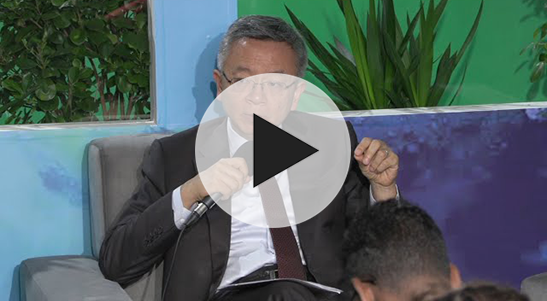
COP29: Bridging the Adaptation Financing Gap: Challenges and Potential Solutions
Panelists discuss how to enhance partnerships and cooperation to scale up adaptation financing for EMDEs and explore the role various stakeholders play in n attracting private capital for adaptation investments.
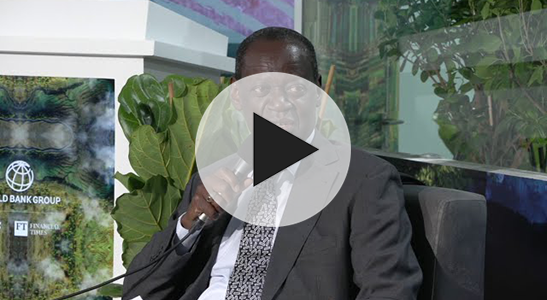
COP29: The Pioneering Role of IMF’s Resilience and Sustainability Trust (RST) in Climate Action
Panelists discuss how specific countries benefited from the Resilience and Sustainability Trust (RST) and the lessons learned in the process.
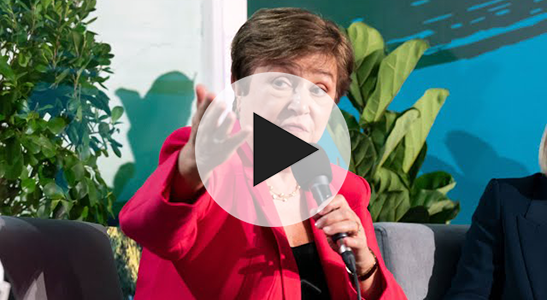
COP29 Event – Unlocking Financing for the Green Transition in Emerging and Developing Economies
Delivering on global climate goals requires a shift to renewable energy and other green technologies. The main challenge for developing economies is securing funding for this transition. With limited fiscal space and low financial development, foreign direct investment (FDI) and official lending are crucial.