





Mural at Bob Marley Museum in Kingston, Jamaica. Jamaica's key economic priorities are maintaining stability and supporting growth, says Nigel Clarke (photo: Gilbert Bellamy/Reuters/Newscom)
Jamaica's Economic Reform and Growth: Interview with Nigel Clarke
May 10, 2017
Since 2013, Jamaica has made significant strides in restoring economic stability: inflation is low, the current account deficit has been cut in half, and business and consumer confidence are high. But economic growth—an important barometer of prosperity—remains low, and unemployment and poverty rates remain high. Public debt—which is on a downward trajectory—is still at 120 percent of GDP, adding to those challenges.
Related Links
To support reforms, the government requested a new IMF loan in November 2016—a Stand-By Arrangement, which the government is treating as an insurance against unforeseen external economic shocks.
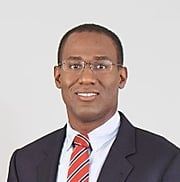
In an interview, Nigel Clarke, Jamaica’s Ambassador of Economic Affairs and Deputy Chair of the Economic Growth Council, talks about his country’s priorities and new initiatives, the role of multilateral institutions in supporting economic reforms, and policies underway to raise growth, create jobs, and achieve better social outcomes.
What are your main economic priorities as Ambassador of Economic Affairs for Jamaica?
Our key economic priorities are maintaining stability and supporting growth. It is important for Jamaica to continue implementation of the structural reforms required to entrench macroeconomic stability and fiscal sustainability while, at the same time, ensuring that economic expansion is given all possible support.
While growth and employment are steadily improving, the unemployment rate is still high—at 12.9 percent. What more can Jamaica do to support job creation?
As we pursue economic growth, it is crucial that job creation be a part of that effort. In fact, the Prime Minister, who is also the Minister of Economic Growth, deliberately named his ministry the Ministry of Economic Growth and Job Creation, recognizing the need to ensure that jobs come with growth.
In Jamaica, the industries currently poised to absorb the most jobs are agriculture and business process outsourcing. In the agricultural sector, the two key impediments are access to reliable water and a lack of strong linkages with the tourism sector. To ensure that agriculture can grow sustainably, employing more Jamaicans, we will need to invest in water storage and distribution systems, and irrigation. But the government doesn’t have the capacity to do this on its own, and will need to partner with the private sector.
 |
||
|
Nigel Clarke, Jamaica's |
Business process outsourcing has an enormous capacity to employ more people. The forecasts indicate that this sector can employ an additional 20,000 to 30,000 people over the medium term. But to make that happen, we’ll need to invest in training to ensure that the interested persons have the right skills.
What are the planned reforms of the public sector? How will they help stimulate growth?
Public sector transformation is about simplification; transparent systems for hiring, promotions, and exits; unification of practices; merging entities with overlapping functions; sharing services where feasible; divesting public entities that can perform better in private hands; and ensuring more efficient and effective service delivery.
A big part of public sector reform is also public pension reform. The new Public Pension Act recently passed by the lower House of Parliament replaces 30 separate pieces of legislation that dealt with the award of public sector pensions with a single law. That’s simplification. In addition, the retirement age has been raised, the accrual rates have been changed, and the pension contributions are required from all public sector employees.
Another strategy has been implementing mechanisms that promote greater utilization of government assets through sales and privatizations, which spurs economic efficiency and momentum.
We believe that the transformation of the public sector will further ignite economic expansion as those additional public resources generated by streamlining are absorbed by the broader economy. As public entities move into private hands, resource allocation becomes more efficient.
"Multilateral entities like the IMF…bring to the table the results of the world laboratory—the technical knowledge, skills, and advice—of what has worked and what hasn’t worked so well."
Tell us about the Economic Growth Council and its role in supporting growth.
The Economic Growth Council was appointed by the Prime Minister to advise the government on a set of initiatives that can help stimulate economic growth. The idea is that the government then agrees on the initiatives that it can support as well as on specific policy recommendations that fall under each initiative.
The process began with a long consultative period where the Council met with various groups in Jamaica, including labor unions, academia, civil society, private sector groups, ministries, departments and agencies, multilateral institutions, and diplomatic missions. Those consultations helped create a consensus on a priority set of initiatives that have been well received by the public and are informing our approach toward economic growth.
Some of these policy recommendations have also been incorporated into the precautionary Stand-By Arrangement with the IMF. The Council has the mandate to follow up on the implementation of these policy commitments and report to the Jamaican public on a quarterly basis.
Jamaica is committed to a primary surplus of 7 percent of GDP over the medium term. Can this surplus be sustained? How will the government achieve this?
It will be challenging, but the short answer is yes we can. The primary surplus that we have decided to pursue is not arbitrary; it is designed to achieve a larger objective, which is the reduction in Jamaica’s debt to levels that are sustainable. I would remind you that Jamaica achieved a primary surplus target of 7.5 percent for a few years, though not without difficulty.
Maintaining a primary surplus of 7 percent requires sustained growth in government revenues and the judicious management of expenditure. These, in turn, will necessitate continued expansion of the economy, increases in tax efficiency, and the prioritization of critical spending along with the achievement of efficiency gains. We spoke briefly about growth earlier. With respect to increasing tax efficiency, the strategy has been centered on the move from a system of direct to indirect taxation.
The policy shift towards a greater reliance on indirect taxation has the advantage of broadening the tax base, simplifying collection while increasing the assurance of revenue. We’ve already seen the benefit of this switch. Tax revenues over-performed expectations in the last financial year, which is largely outside of the recent historical experience of Jamaica.
But before concluding let me remind you that the 7 percent primary surplus target is merely an intermediate goal. It is a means to an end. The substantive goal is the achievement of real economic independence, where Jamaica has the policy space to address its opportunities and challenges, without reliance on the multilateral community, in a manner that sustains and even enhances that independence.
How will the new budget ensure that the most vulnerable groups will be protected?
Our numbers confirm that the absolute dollar increases in allocation for social protection spending between this budget and the previous one are larger in absolute terms than the collective increases in budgetary allocation for social protection over the past four years combined. So, there has been a substantial increase in the provisions for social protection.
But we won’t rest there. It’s not only about the level; it’s also about the targeting and about the delivery. Over the medium term, we expect to completely overhaul the system of social protection to ensure that the targeting is improved so that more categories of persons fall within the umbrella.
But, in the short term, the allocation has been increased dramatically largely through two existing programs: a school feeding program that ensures that children who are going to school have adequate nutrition; and monthly stipends to cover the basic needs of the most vulnerable people.
What is being done to improve the investment climate?
To improve the investment climate for the thousands of businesses that operate in Jamaica, we need to reduce or remove some of the supply-side bottlenecks. The government is making it easier for businesses to procure licenses, comply with regulations, and to obtain permits. The government is also taking steps to ensure that small- and medium-sized entities have access to finance at reasonable rates and terms. Importantly, the government is also engaged in structural, legislative, and operational reforms to improve citizen security and public safety, thereby improving the productivity of labor and capital as well as enhancing general well-being.
What role do international institutions, such as the IMF, have in helping countries implement sound policies?
Multilateral entities like the IMF have an abundance of experience gathered by working with diverse countries over long periods of time. So, they bring to the table the results of the world laboratory—the technical knowledge, skills, and advice—of what has worked and what hasn’t worked so well. And multilaterals like the IMF have financial resources, which are always an important part of the mix.
Engagement with the multilateral community can therefore help keep countries on the right path with these institutions acting as a collective policy bank and policy reservoir.
Given what is usually at stake, performing that role well requires an inclination to listen, to be aware of local nuances, the local context, and local history. Although we sometimes disagree, on balance, our experience has been that the multilateral community and entities like the IMF are, ultimately, forces for good in the world.