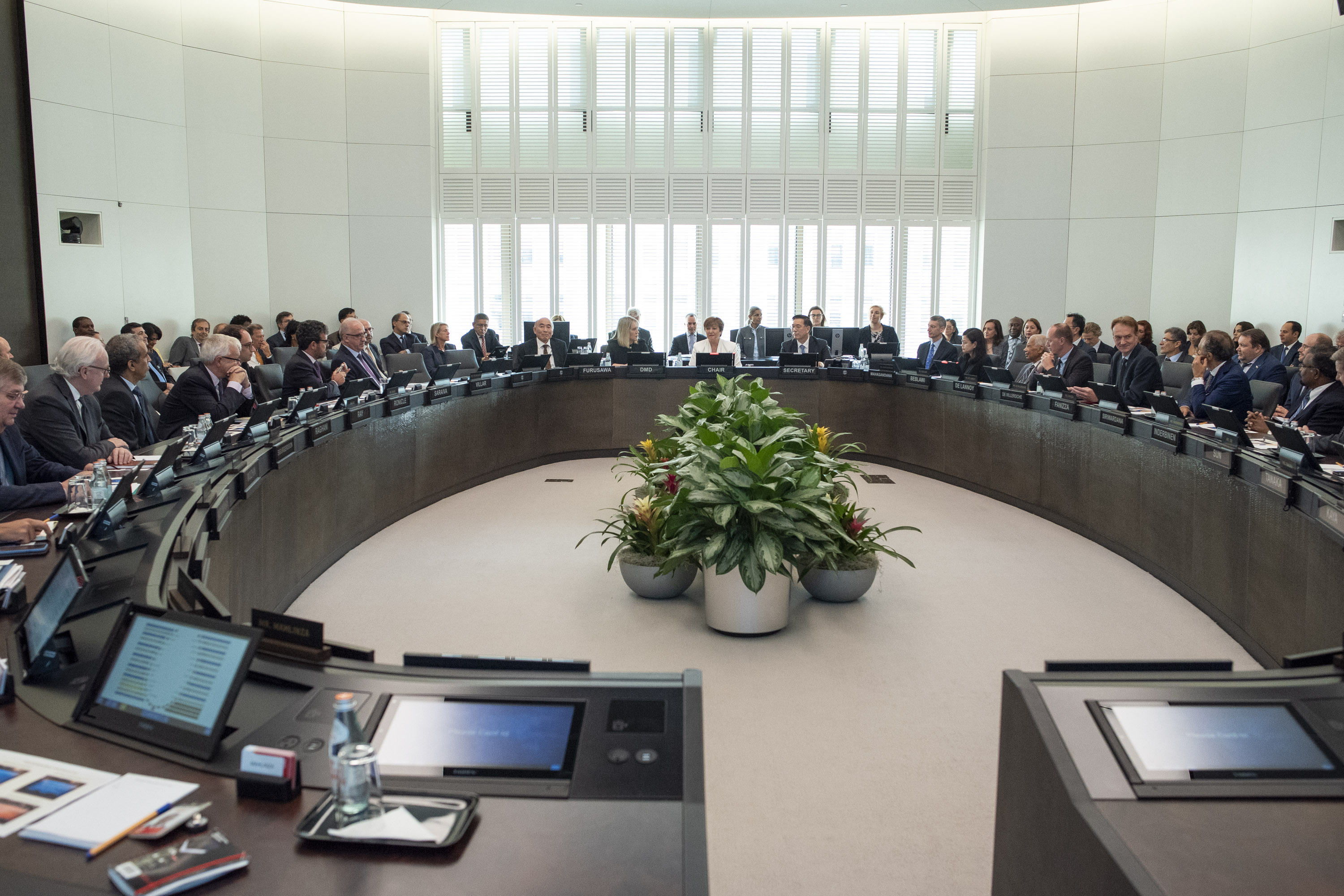
On November 25, 2019, the Executive Board of the International Monetary
Fund (IMF) concluded the Article IV consultation
[1]
with India. The staff report and the macroeconomic projections are
based on data available through October 16, 2019.
India has been among the fastest-growing economies in the world over
the past few years, lifting millions out of poverty. However, growth
slowed to 5.0 percent in the April-June 2019 quarter (y/y), a six-year
low. The deceleration of consumption and investment was exacerbated by
weaknesses in the non-bank financial sector and corporate and
environmental regulatory uncertainty. Weak demand in conjunction with
continued low food prices—thanks to successive normal monsoon rainfall
and agricultural sector reforms—caused average inflation to moderate to
a multi-year low of 3.4 percent in FY2018/19. Through August, inflation
remained below the mid-point of the Reserve Bank of India (RBI)’s
medium-term inflation target band of 4 percent ± 2 percent.
After rising through late 2018, external vulnerabilities eased in the
first three quarters of 2019, on lower oil prices and renewed portfolio
inflows. In FY2018/19, the current account deficit (CAD) widened to 2.1
percent of GDP, on a rising oil import bill. Foreign direct investment
(FDI) financed about half of the CAD. The rupee depreciated by about
3.4 and 5.9 percent on average in real and nominal effective terms in
FY2018/19, also reflecting portfolio outflows in mid-2018. The U.S.
dollar value of non-oil merchandise exports expanded by 6.6 percent,
broadly maintaining India’s global export market share. Gross reserves
declined by US$12 billion during FY2018/19 to US$413 billion (7 months
of imports), while the net forward position fell by US$34 billion.
Gross reserves rose to US$429 billion by end-August 2019 on renewed
portfolio inflows and they remain adequate. India’s external debt
remains low at 19 percent of GDP.
Macro-financial risks from banking sector weaknesses have decreased
somewhat, and steps have been taken to enhance monitoring of NBFCs and
alleviate liquidity pressures faced by some NBFCs. Capital injections
from the government budget and the initial results of the
implementation of the Insolvency and Bankruptcy Code (IBC) have
improved public sector banks (PSBs) capital position and asset quality.
The plan to merge several PSBs reduces their number to 12 but does not
change the large presence of the government in the banking system. The
growth of bank credit decelerated to 10 percent (y/y) in August 2019,
from 14 percent (y/y) in December 2018.
Despite a shortfall in revenues relative to ambitious targets, the
central government broadly adhered to its headline fiscal deficit
objective. As a result, there was a small improvement in the on-budget
fiscal balance in FY2018/19 (IMF presentation, see table). This was
accomplished through substantial on-budget revenue-expenditure
compression, facilitated by financing some obligations off budget.
While the headline general government fiscal deficit narrowed
meaningfully, thanks in part to a decline in the fiscal deficits of the
states, the public sector borrowing requirement (PSBR) remained high.
The PSBR includes borrowing by most central public sector undertakings
(PSUs, borrowing by state PSUs and by local governments is not included
because of data unavailability). The path of the PSBR in recent years
suggests that fiscal policy has been more accommodative than what is
implied by the path of the general government deficit. This also
explains why India’s general government debt has remained high, at
about 69 percent of GDP. But India’s debt profile is conducive to debt
sustainability, with debt largely held by residents, denominated in
domestic currency, and with relatively long maturity. The FY2019/20
central government budget envisages a reduction in the fiscal deficit
of 0.1 percent of GDP (a reduction by 0.2 percent of GDP in the
structural primary balance, both IMF definition) but is again based on
overly optimistic revenue targets, and the recent reduction of
corporate income tax rates makes achieving the budget targets
increasingly unlikely.
The macroeconomic outlook is more subdued and uncertain than in recent
years. Growth is projected at 6.1 percent in FY2019/20. Investment and
private consumption are expected to firm in the second half of the
fiscal year. This is expected to be supported by the lagged effects of
monetary policy easing, recent measures to facilitate monetary policy
transmission and address corporate and environmental regulatory
uncertainty, and government programs to support rural consumption being
rolled out. Over the medium term, growth is projected to gradually rise
to its medium-term potential of 7.3 percent on continued commitment to
inflation targeting, gradual macro-financial and structural reforms,
including implementation of reforms initiated earlier, such as the
Goods and Services Tax (GST) and the Insolvency and Bankruptcy Code
(IBC), as well as ongoing steps to liberalize FDI flows and further
improve the ease of doing business.
Inflation is projected to remain around 3.4 percent with the effect of
subdued demand broadly offsetting dissipating base effects of low food
prices. The current account deficit is projected to narrow marginally,
to 2.0 percent of GDP. The balance of payments would return to surplus,
on returning capital inflows thanks to more accommodative global
financial conditions. The rise in protectionism and retreat from
multilateralism could affect India directly through the trade channel
and indirectly through confidence effects and related effects on
financial markets. While there may be trade diversion toward India from
the U.S.-China tariff escalation, the macroeconomic impact is expected
to be small given India’s relatively low trade openness and less
diversified exports base.
Risks to the outlook are tilted to the downside. Key domestic risks
include tax revenue shortfalls and delays in structural reforms. Credit
growth could also remain subdued, as there is a perception of increased
risk aversion among banks and implementation of the recently announced
PSB consolidation could divert focus and weigh on near-term credit
growth. The main external risks pertain to higher oil prices, a sharp
rise in risk premia in global financial markets, and rising
protectionism globally.
Executive Board Assessment
[2]
They noted that India’s rapid economic expansion in recent years has
lifted millions of people out of poverty. However, in the first half of
2019 a combination of factors led to subdued economic growth in India.
With risks to the outlook tilted to the downside, Directors called for
continued sound macroeconomic management. They saw an opportunity with
the strong mandate of the new government to reinvigorate the reform
agenda to boost inclusive and sustainable growth.
Directors noted that a credible medium‑term fiscal consolidation path
driven by subsidy‑spending rationalization and tax‑base enhancing
measures is needed to reduce debt, free up financial resources for
private investment, and reduce the interest bill. Some Directors
advocated that automatic stabilizers should be allowed to operate in
the short run. Directors called for more robust revenue projections and
enhanced fiscal transparency and budget coverage.
Directors recommended that near‑term policies to address cyclical
weakness focus on monetary policy and broad‑based macro‑structural
reforms. In this regard, they welcomed the monetary policy easing
undertaken so far this year and recommended that an easing bias be
maintained at least until the projected recovery takes hold.
Directors noted that inflation targeting has contributed to
macroeconomic stability by better anchoring inflation expectations,
thus helping improve the economic well‑being of low‑income households.
Continued action is needed to improve the monetary transmission
mechanism to enhance the effectiveness of monetary policy and enable
the central bank to achieve the medium‑term inflation target on a
sustained basis. Directors also welcomed the authorities’ commitment to
maintain exchange rate flexibility. They noted that foreign exchange
intervention should continue to be two‑way and limited to disorderly
market conditions.
Directors welcomed the steps taken to tackle the twin bank and
corporate balance sheet problem but noted the continued challenges of
the financial sector. They recommended that the recently announced
public sector bank merger plan be accompanied by deep operational
restructuring and far‑reaching governance reforms in order to improve
efficiency, risk management, and credit allocation. Directors welcomed
the strengthened monitoring and regulation of non‑bank financial
companies and recommended enhancing the availability of timely and
granular data to help restore confidence in the sector. Directors urged
further follow‑up on the FSAP recommendations.
Directors commended the authorities’ concerted efforts to strengthen
the business climate. These efforts need to be complemented by
continued labor, product market, land, and other reforms aimed at
increasing labor market flexibility, enhancing competition, and
reducing the scope for corruption. This will help harness India’s
demographic dividend by creating more and better jobs for the
rapidly‑growing labor force and enhancing female labor force
participation. Directors also welcomed the important progress that has
been made in strengthening the supply side of the economy through large
infrastructure investments. They noted that land reform remains
essential to raise agriculture sector productivity and achieve the
authorities’ ambitious infrastructure development targets. Directors
also encouraged further trade and investment liberalization.
|
Table 1. India: Selected Social and Economic
Indicators, 2015/16–2020/21 1/
|
|
I. Social Indicators
|
|
|
GDP (2018/19)
|
|
|
Poverty (percent of population)
|
|
|
Nominal GDP (in billions of U.S.
dollars):
|
2,719
|
|
Headcount ratio at $1.90 a day (2011):
|
21.2
|
|
GDP per capita (U.S. dollars) (IMF
staff est.):
|
2,038
|
|
Undernourished (2015):
|
15.3
|
|
Population characteristics
(2018/19)
|
|
|
Income distribution (2011, WDI)
|
|
|
Total (in billions):
|
1.33
|
|
Richest 10 percent of households:
|
30.1
|
|
Urban population (percent of total):
|
34.0
|
|
Poorest 20 percent of households:
|
8.1
|
|
Life expectancy at birth (years,
2015/16):
|
68.3
|
|
Gini index (2011):
|
|
35.7
|
|
II. Economic Indicators
|
|
|
|
|
|
|
|
|
|
|
|
|
|
|
|
|
|
|
|
2015/16
|
2016/17
|
2017/18
|
2018/19
|
2019/20
|
2020/21
|
|
|
|
|
|
Est.
|
Projections
|
|
|
Growth (in percent)
|
|
|
|
|
|
|
|
Real GDP (at market prices)
|
8.0
|
8.2
|
7.2
|
6.8
|
6.1
|
7.0
|
|
Prices (percent change, period average)
|
|
|
|
|
|
|
|
Consumer prices - Combined
|
4.9
|
4.5
|
3.6
|
3.4
|
3.4
|
4.1
|
|
Saving and investment (percent of GDP)
|
|
|
|
|
|
|
|
Gross saving 2/
|
31.1
|
29.6
|
29.1
|
29.2
|
29.3
|
29.5
|
|
Gross investment 2/
|
32.1
|
30.2
|
30.9
|
31.3
|
31.3
|
31.8
|
|
Fiscal position (percent of GDP) 3/
|
|
|
|
|
|
|
|
Central government overall balance
|
-4.1
|
-3.7
|
-3.9
|
-3.8
|
-4.5
|
-4.2
|
|
General government overall balance
|
-7.2
|
-7.1
|
-6.4
|
-6.2
|
-7.4
|
-7.1
|
|
General government debt 4/
|
68.8
|
68.8
|
69.4
|
69.1
|
69.8
|
69.1
|
|
Cyclically adjusted balance (% of
potential GDP)
|
-7.2
|
-7.3
|
-6.5
|
-6.2
|
-7.2
|
-6.9
|
|
Cyclically adjusted primary balance (%
of potential GDP)
|
-2.5
|
-2.6
|
-1.7
|
-1.2
|
-2.2
|
-2.0
|
|
Money and credit (y/y percent change,
end-period)
|
|
|
|
|
|
|
|
Broad money
|
10.1
|
10.1
|
9.2
|
10.5
|
9.7
|
11.3
|
|
Bank credit to the private sector
|
10.6
|
8.0
|
9.5
|
12.7
|
8.4
|
11.1
|
|
Financial indicators (percent,
end-period)
|
|
|
|
|
|
|
|
91-day treasury bill yield (end-period)
5/
|
7.4
|
7.2
|
6.2
|
6.2
|
5.3
|
…
|
|
10-year government bond yield
(end-period) 5/
|
7.5
|
6.7
|
7.4
|
7.4
|
6.7
|
…
|
|
Stock market (y/y percent change,
end-period) 5/
|
-9.4
|
16.9
|
11.3
|
17.3
|
4.9
|
…
|
|
External trade (on balance of payments
basis)
|
|
|
|
|
|
|
|
Merchandise exports (in billions of
U.S. dollars)
|
266.4
|
280.1
|
309.0
|
337.2
|
346.0
|
358.9
|
|
(Annual percent change)
|
-15.9
|
5.2
|
10.3
|
9.1
|
2.6
|
3.7
|
|
Merchandise imports (in billions of
U.S. dollars)
|
396.4
|
392.6
|
469.0
|
517.5
|
534.4
|
567.7
|
|
(Annual percent change)
|
-14.1
|
-1.0
|
19.5
|
10.3
|
3.3
|
6.2
|
|
Terms of trade (G&S, annual percent
change)
|
5.7
|
1.4
|
-2.3
|
-1.8
|
0.1
|
0.9
|
|
Balance of payments (in billions of
U.S. dollars)
|
|
|
|
|
|
|
|
Current account balance
|
-22.1
|
-14.4
|
-48.7
|
-57.2
|
-57.8
|
-73.5
|
|
(In percent of GDP)
|
-1.0
|
-0.6
|
-1.8
|
-2.1
|
-2.0
|
-2.3
|
|
Foreign direct investment, net ("-"
signifies inflow)
|
-36.0
|
-35.6
|
-30.3
|
-30.7
|
-36.7
|
-40.0
|
|
Portfolio investment, net (equity and
debt, "-" = inflow)
|
4.1
|
-7.6
|
-22.1
|
2.4
|
-14.7
|
-14.4
|
|
Overall balance ("-" signifies balance
of payments surplus)
|
-17.9
|
-22.4
|
-43.6
|
3.2
|
-21.1
|
-15.1
|
|
External indicators
|
|
|
|
|
|
|
|
Gross reserves (in billions of U.S.
dollars, end-period)
|
360.2
|
370.0
|
424.5
|
412.9
|
434.0
|
449.1
|
|
(In months of next year's imports
(goods and services))
|
8.8
|
7.6
|
7.9
|
7.4
|
7.3
|
7.0
|
|
External debt (in billions of U.S.
dollars, end-period)
|
485.0
|
471.3
|
529.3
|
513.1
|
560.9
|
613.6
|
|
External debt (percent of GDP,
end-period)
|
23.1
|
20.6
|
20.0
|
18.9
|
19.1
|
19.2
|
|
Of which:
Short-term debt
|
9.2
|
8.8
|
8.3
|
8.1
|
8.6
|
8.9
|
|
Ratio of gross reserves to short-term
debt (end-period)
|
1.9
|
1.8
|
1.9
|
1.9
|
1.7
|
1.6
|
|
Debt service ratio 6/
|
8.8
|
7.8
|
7.9
|
8.3
|
8.5
|
8.3
|
|
Real effective exchange rate (annual
avg. percent change) 7/
|
5.2
|
1.9
|
3.0
|
-3.5
|
6.1
|
…
|
|
Exchange rate (rupee/U.S. dollar,
end-period) 8/
|
68.3
|
64.8
|
65.0
|
69.2
|
71.8
|
…
|
|
Memorandum item (in percent of GDP)
|
|
|
|
|
|
|
|
Fiscal balance under authorities'
definition
|
-3.9
|
-3.5
|
-3.5
|
-3.3
|
-3.7
|
-3.8
|
|
Sources: Data provided by the Indian
authorities; Haver Analytics; CEIC Data
Company Ltd; Bloomberg L.P.; World
Bank, World Development Indicators;
and IMF staff estimates and
projections.
|
|
|
1/ Data are for April–March fiscal
years.
|
|
|
|
|
|
|
|
2/ Differs from official data,
calculated with gross investment and
current account. Gross investment
includes errors and omissions.
|
|
|
3/ Divestment and license auction
proceeds treated as below-the-line
financing.
|
|
|
|
|
4/ Includes combined domestic
liabilities of the center and the
states, and external debt at year-end
exchange rates.
|
|
|
5/ For 2019/20, as of September 2019.
|
|
|
|
|
|
|
|
6/ In percent of current account
receipts, excluding grants.
|
|
|
|
|
|
|
|
7/ For 2019/20: the change in the
average for April-August 2019 from
April-August 2018.
|
|
|
|
|
8/ For 2019/20, as of end-August, 2019.
|
|
|
|
|
|
|
|
[1]
Under Article IV of the IMF's Articles of Agreement, the IMF holds
bilateral discussions with members, usually every year. A staff
team visits the country, collects economic and financial
information, and discusses with officials the country's economic
developments and policies. On return to headquarters, the staff
prepares a report, which forms the basis for discussion by the
Executive Board.
[2]
At the conclusion of the discussion, the Managing Director, as
Chairman of the Board, summarizes the views of Executive Directors,
and this summary is transmitted to the country's authorities. An
explanation of any qualifiers used in summings up can be found
here:
http://www.imf.org/external/np/sec/misc/qualifiers.htm.