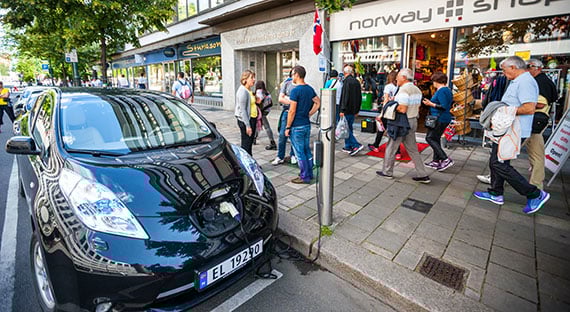
Electric car charging on Oslo street, Norway. Specific policies for key sectors such as transport can help the EU achieve its climate targets. (photo: anouchka/iStock)
Seven Charts on Climate Policies for Key Sectors in the European Union
September 24, 2020
The European Union remains a global leader in reducing greenhouse gas emissions. The European Commission has proposed a significant cut in emissions by 2030 and net zero emissions by 2050.
Related Links
Meeting the bold new targets will require strong and sustained policy efforts, including more ambitious carbon pricing and sector-specific complementary policies. The large stimulus packages put together by European governments to facilitate the recovery from the COVID-19 crisis also provide an opportunity to intensify the adoption of climate-friendly policies.
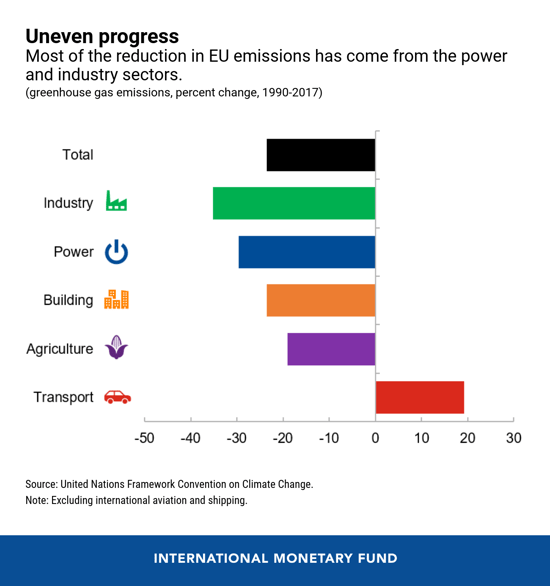
- Five sectors—power, industry, transport, buildings, and agriculture—account
for about 95 percent of total emissions in the EU. Progress in climate
change mitigation over the past three decades has been uneven, with the
strongest emissions reductions coming from the power and industry sectors,
while other sectors have seen less progress.
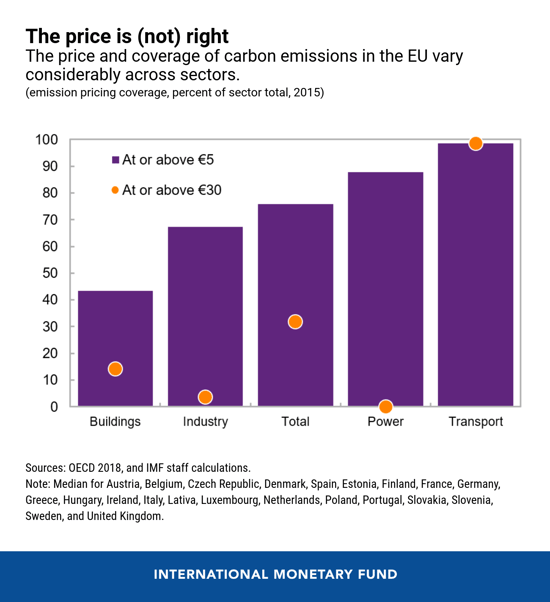
- More decisive and robust carbon pricing should be at the
core of the
policy package. Setting a predictable and progressive path for carbon prices and
expanding the coverage to all emissions will create incentives for
households and firms to reduce their emissions and steer consumption and
investment toward sustainable activities and green technologies. It will
also provide additional revenues, which could allow governments to cut
labor and other distortionary taxes, bolster green investment, and support
vulnerable groups.
-
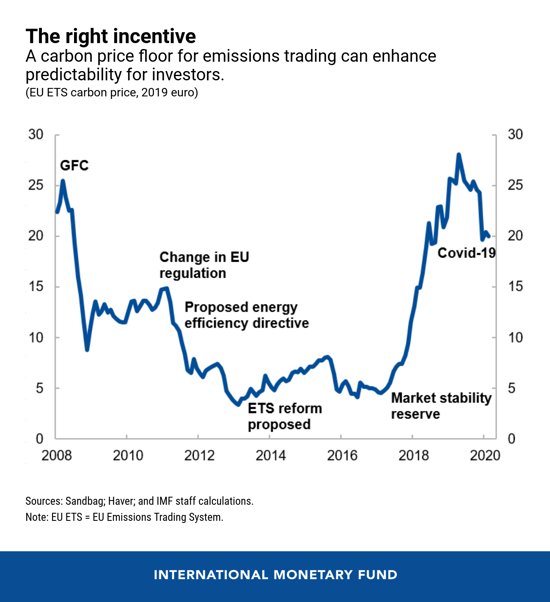
The EU Emissions Trading System (ETS) remains the main tool to further cut emissions in the power and industry sectors. While it provides certainty in emission reductions, the implied carbon price can be volatile. Introducing a carbon price floor would provide a predictable price signal to guide investment decisions. Regulations and standards could provide additional nonprice incentives to reduce emissions.
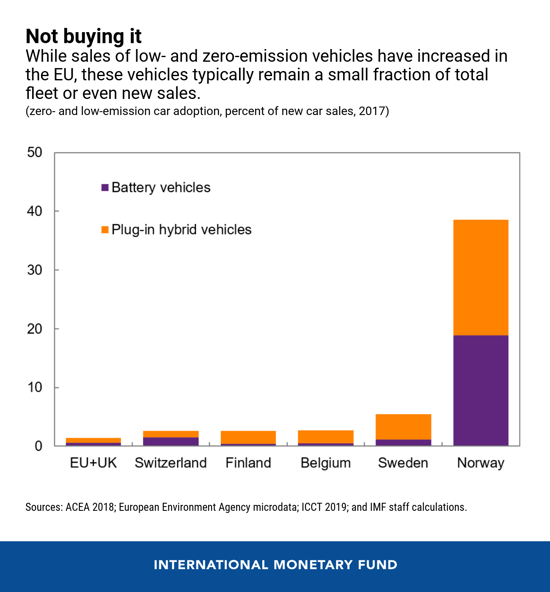
- In the transport sector, evidence suggests that countries
with CO2-differentiated vehicle taxes have typically achieved a
greater reduction in emissions. So-called “feebates”—which combine a tax on
high-emissions vehicles with a subsidy for low-emission ones—can be used to
more aggressively shift purchases toward cleaner vehicles.
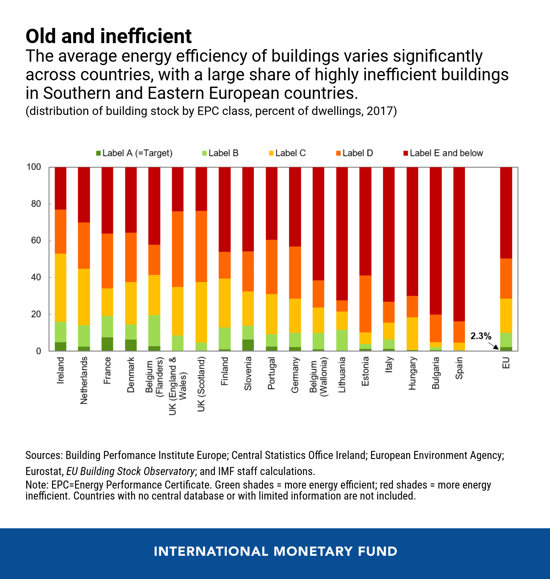
- In the residential building sector, about 35 percent of
the EU’s dwellings are more than 50 years old, and more than 90 percent of
the housing stock is energy inefficient. A key policy lever in this sector
would be targeted government support for energy improvements and the
electrification of heating systems. Low-interest rate “green mortgages” and
grants for poor households can be used to overcome liquidity constraints.
Harmonizing and regulating energy efficiency ratings would also help.
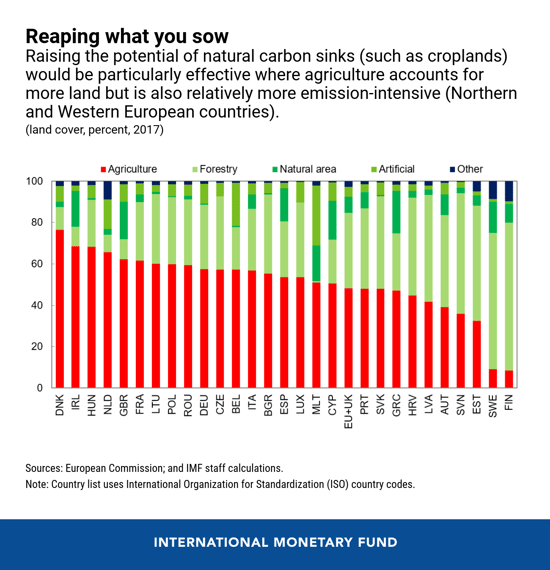
- In agriculture, emissions occurring from certain natural processes are difficult to reduce, but it is also possible for soil to absorb carbon. Pivoting current EU farm subsidies away from livestock toward greater land stewardship could enhance the land’s carbon sequestration potential. In addition, demand measures to shift consumer choices away from emission-intensive products, such as dairy and beef, would help reduce emissions. Policies could include removing preferential value-added tax rates and introducing standards and measures to raise awareness, such as carbon footprint labels on food.
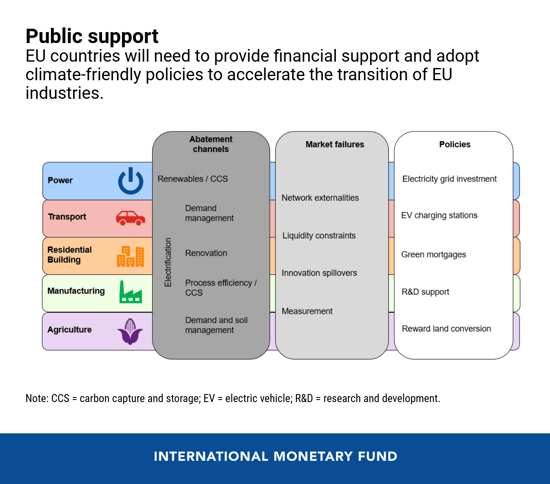
- More broadly, across all sectors, public investment and financial support will be vital where market failures constrain private investment. For instance, governments can support the expansion of power grids, and low-emission transportation networks and logistics. They could also promote research and development in low-emission technologies, new forms of energy storage systems, such as hydrogen generation, and less-developed renewable power sources, such as offshore wind.
While higher carbon prices in all sectors will help, they may not be enough to address some sector-specific obstacles to reducing emissions. Complementary policies will therefore be crucial.