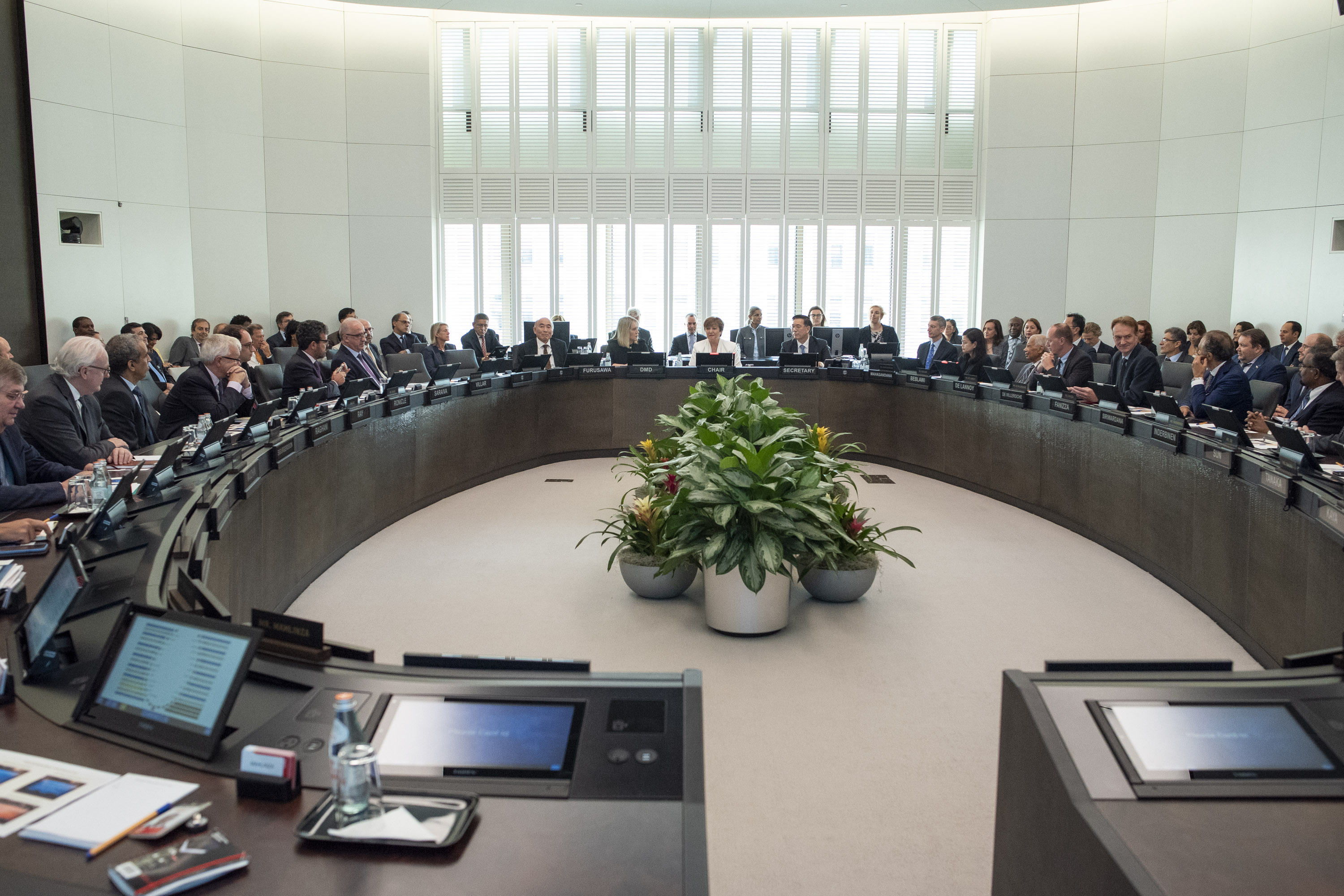
IMF Executive Board Approves US$650 million Stand-by Arrangement and an Arrangement under the Standby Credit Facility and Completes the Third Review Under the Policy Coordination Instrument for Senegal
IMF News, June 7, 2021
Source details
- Canonical URL
- IMF Executive Board Approves US$650 million Stand-by Arrangement and an Arrangement under the Standby Credit Facility and Completes the Third Review Under the Policy Coordination Instrument for Senegal
Other formats
Bibliographic details
- Authors: Credit Facility
- Published: June 7, 2021
Approval, financing, and program scope
- Executive Board approved an 18-month Stand-by arrangement (SBA) and an arrangement under the Stand-By Credit Facility (SCF) for Senegal.
- Board approved SDR 453 million (about US$650 million or CFAF 350 billion) in combined SCF/SBA support.
- Approval enables an immediate disbursement of SDR 129.4 million or about US$187 million.
- Prior Fund emergency support to Senegal in April 2020 amounted to US$442 million (Press Release No. 20/152).
- The 18-month arrangements will run concurrently with the Policy Coordination Instrument (PCI) until end-2022 and provide a policy anchor for the next phase of the authorities’ COVID-19 response and a job-rich recovery.
Economic impact of COVID-19 and near-term outlook
- The COVID-19 pandemic hit the Senegalese economy hard, particularly affecting those active in the informal sector; hospitality, tourism and transport sectors suffered severe contractions.
- Growth and outlook:
- GDP at constant prices: 2019 = 4.4; 2020 = 1.5; 2021 (proj.) = 3.7; 2022 (proj.) = 5.5; 2023 (proj.) = 10.8; 2024 (proj.) = 6.1; 2025 (proj.) = 5.4 (annual percentage change).
- Non-hydrocarbon GDP and hydrocarbon GDP components listed in table (values preserved in table).
- Staff view: a subdued recovery is expected for 2021 with growth reaching about 3.7 percent; the near-term macroeconomic outlook has deteriorated owing to the protracted COVID-19 pandemic, higher commodity prices, and higher financing needs for the vaccine rollout.
- Downside risks include a third wave of the COVID-19 pandemic.
- The fiscal strategy and new Fund financing under the SCF/SBA, additional donor support, and the extension of the G-20 Debt Suspension Initiative are expected to help unwind the actual but short-term balance-of-payments need.
Fiscal policy stance, revenue mobilization, and debt considerations
- Authorities and staff agreed on a revised budget deficit trajectory for 2021–23 which incorporates the COVID-19 vaccine rollout and a new program to boost youth and women employment.
- Fiscal anchor: fiscal policy should remain anchored by a credible, revenue-based consolidation towards a fiscal deficit of 3 percent of GDP by 2023, in line with the WAEMU norm.
- Key fiscal metrics (percent of GDP):
- Revenue: 2019 = 20.4; 2020 = 20.0; 2021 = 20.2; 2022 = 21.0; 2023 = 23.0; 2024 = 23.9.
- Total expenditure: 2019 = 24.3; 2020 = 26.4; 2021 = 25.7; 2022 = 25.2; 2023 = 24.9; 2024 = 26.0; 2025 = 26.9.
- Net lending/borrowing (overall balance) excluding grants: 2019 = -5.5; 2020 = -8.7; 2021 = -7.4; 2022 = -6.3; 2023 = -4.8; 2024 = -4.5.
- Net lending/borrowing including grants: 2019 = -3.9; 2020 = -6.4; 2021 = -5.4; 2022 = -4.2; 2023 = -3.0.
- Primary fiscal balance: 2019 = -1.9; 2020 = -4.3; 2021 = -3.3; 2022 = -0.9.
- Staff emphasis: identification of strong revenue mobilization measures and full commitment to the medium-term revenue mobilization strategy are essential; additional spending for youth and women employment should be well-targeted and efficient and accompanied by reforms to support private sector job creation.
- Public debt dynamics:
- Total public debt: 2019 = 63.8; 2020 = 68.7; 2021 = 70.9; 2022 = 69.9; 2023 = 64.9; 2024 = 62.8; 2025 = 61.1 (percent of GDP).
- Staff note: public debt has risen continuously in recent years; risks to debt sustainability need to be carefully monitored and concessional financing should be prioritized.
Transparency, governance, and structural reforms
- Authorities published quarterly budget execution reports detailing the use of pandemic-related resources; the report of the Fonds Force COVID-19 monitoring committee has been finalized.
- The annual audit of procurement procedures, including those related to COVID-19 spending, will be finalized end June and the audit court will publish its report on the 2020 budget law implementation in October.
- Structural and governance priorities:
- Continue implementation of the Economic and Social Resilience Program (PRES) which helped strengthen the health sector and mitigate income losses.
- Finalize legal framework for management of upcoming hydrocarbon revenue reflecting best international practices.
- Ongoing reforms to improve public financial management to strengthen spending efficiency and transparency.
- PCI-supported reform agenda remains appropriate to achieve strong and inclusive growth while maintaining macroeconomic stability.
Selected external and monetary indicators (highlights from Table 1)
- Current account balance (official transfers included): 2019 = -8.1; 2020 = -11.3; 2021 = -3.2 (percent of GDP).
- Gross domestic investment: 2019 = 31.9; 2020 = 30.6; 2021 = 32.4; 2022 = 33.1; 2023 = 33.2; 2024 = 30.7; 2025 = 31.4 (percent of GDP).
- Gross national savings: 2019 = 21.1; 2020 = 22.6; 2021 = 27.7; 2022 = 27.5; 2023 = 27.6.
- Broad money change: 2019 = 8.2; 2020 = 12.4; 2021 = 8.6 (changes in percent of beginning-of-year broad money).
- Consumer prices (annual average): 2019 = 1.0; 2020 = 2.5; 2021 = 2.0.
- Memorandum: Gross domestic product (CFAF billions): 2019 = 13,655; 2020 = 14,185; 2021 = 14,998; 2022 = 16,159; 2023 = 18,218; 2024 = 19,681; 2025 = 21,127.
- National Currency per U.S. Dollar (Average): 2019 = 586; 2020 = 575.
IMF Press Release No. 21/159, June 7, 2021.