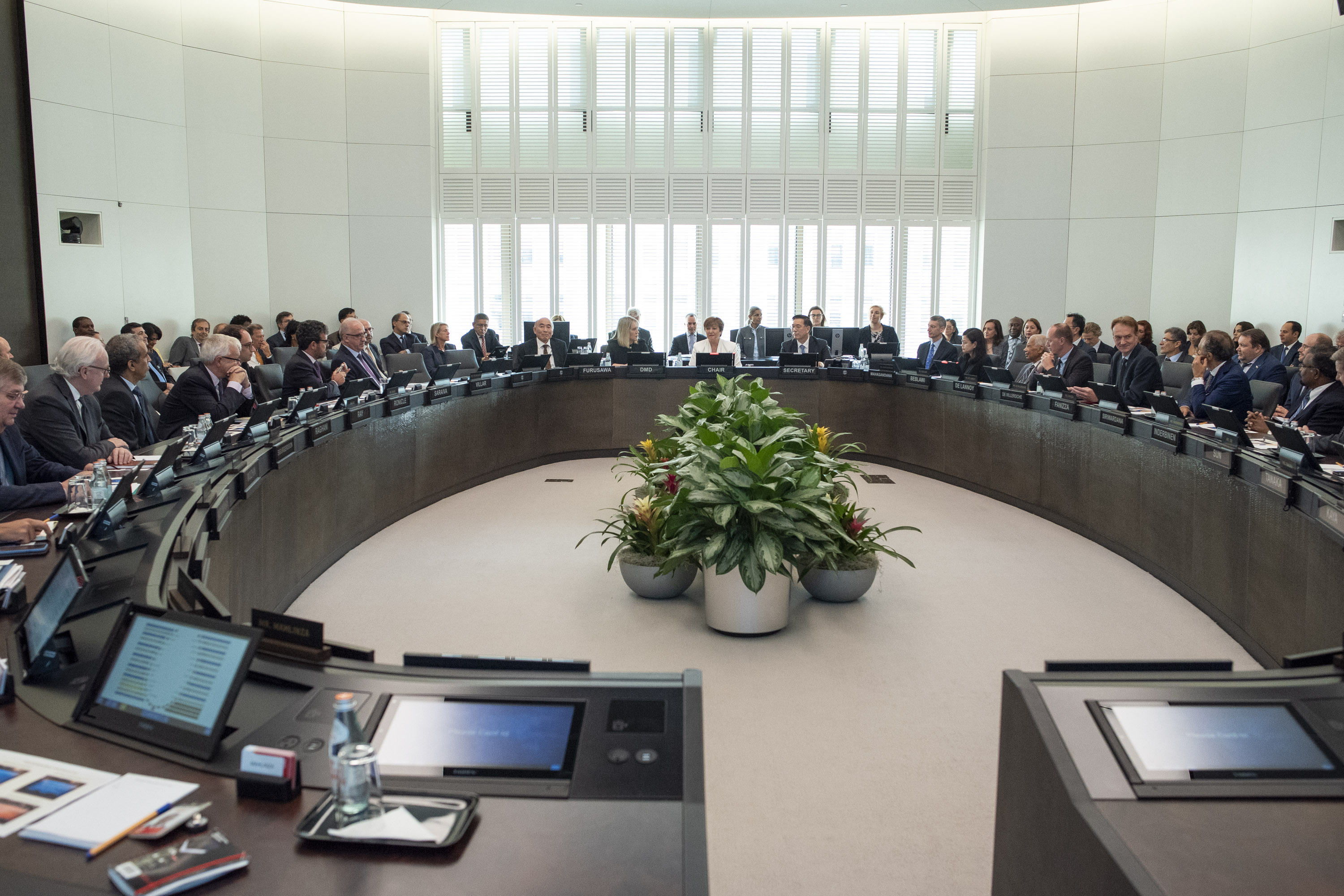
IMF Executive Board Concludes 2021 Article IV Consultation with Croatia
IMF News, September 10, 2021
Source details
- Canonical URL
- IMF Executive Board Concludes 2021 Article IV Consultation with Croatia
Other formats
Bibliographic details
- Published: September 10, 2021
Pandemic shock and policy response
- The Croatian economy experienced a 8.0 percent drop in activity in 2020 driven by the pandemic and two devastating earthquakes.
- Tourism receipts fell by some 60 percent (yoy) in 2020.
- Policy responses and support:
- Ample fiscal and monetary policy support and appropriate relaxation of supervisory requirements contained effects of the pandemic.
- EU funds (loans, transfers) financed most fiscal support measures, somewhat alleviating the government’s financial position.
- The CNB intervened in the currency market and purchased government securities amounting to about 5.5 percent of GDP.
- The CNB lowered reserve requirements and conducted repo operations.
- A €2 billion SWAP arrangement with the ECB was announced in mid-April 2020.
- External and price developments:
- The current account posted a small 0.4 percent deficit in 2020 despite the collapse in tourism receipts.
- Gross public and external debt climbed by almost 16 and 6 percentage points, respectively.
- Inflation remained benign, with a recent uptick noted.
Growth and inflation projections
- Short-term projections:
- 2021 growth projected at 5.4 percent.
- 2022 growth projected at 5.8 percent.
- Projections assume 2/3 recovery of tourist arrivals in 2021 and nearly full recovery in 2022.
- Investment to be bolstered by large EU investment grants over the medium-term.
- Medium term:
- Growth projected to ease closer to 3 percent over the medium term.
- Inflation projected to pick up and stay at 2 percent through 2023, in line with the ECB inflation target.
- Risk factors:
- Large risks on both sides, including virus mutations in the near-term which could result in significant economic scarring.
- Medium-term downside risks include slower recovery in EU trading partners, ineffective absorption of EU funds, and challenges in delivering promised complementary reforms.
- Upside possibilities include a more rapid and successful vaccination campaign and larger-than-projected positive effects from green investments and digitalization.
Executive Board Assessment and policy advice
- Directors welcomed:
- Swift measures taken to combat COVID-19 that built foundations for the projected recovery underpinned by tourism and investment.
- Authorities’ efforts to balance pandemic recovery with fiscal prudence while remaining vigilant to support the nascent recovery as needed.
- Fiscal policy guidance:
- Important to avoid further tax cuts to conserve fiscal resources.
- Place public debt levels on a downward trajectory over the medium term.
- Structural reforms and EU funds absorption:
- Call for accelerated implementation of structural reforms and increased capacity to absorb EU structural funds, particularly in public investment management.
- Such reforms are essential to close the income gap to the EU average and to achieve decarbonization, digitalization, and diversification.
- Welcomed plans to implement a civil service remuneration system that rewards productivity and merging of healthcare services across sub-national governments.
- Monetary, exchange rate, and euro adoption:
- Monetary policy considered appropriately accommodative within exchange rate anchor limits and ample global liquidity.
- Welcomed ERM II membership in July 2020 and authorities’ strategic priority of euro adoption.
- Noted benefits of euro adoption and welcomed commitment to observe convergence criteria and improve the AML/CFT framework and SOE governance.
- Financial sector vigilance:
- Need to remain vigilant to financial and banking sector risks with expiration of regulatory easing introduced under European Banking Authority guidelines.
- Welcomed decision to facilitate write-offs of NPLs and efforts to strengthen the insolvency framework.
- Urged vigilance over credit developments in the real estate market and readiness to absorb excess liquidity and impose adequate macroprudential measures if needed.
Selected economic indicators (highlights from 2016–26 projections)
- Real GDP growth (percent change, annual average):
- 2016: 3.5
- 2017: 3.4
- 2018: 2.8
- 2019: 2.9
- 2020: -8.0
- 2021 (Proj.): 5.4
- 2022 (Proj.): 5.8
- 2023 (Proj.): 4.0
- 2024 (Proj.): 3.3
- 2025 (Proj.): 3.2
- 2026 (Proj.): 3.1
- Unemployment rate:
- 2016: 15.0
- 2017: 12.4
- 2018: 9.9
- 2019: 7.8
- 2020: 9.0
- 2021 (Proj.): 8.5
- 2022 (Proj.): 8.0
- 2023 (Proj.): 7.7
- 2024 (Proj.): 7.2
- 2025 (Proj.): 7.0
- 2026 (Proj.): 6.8
- CPI inflation (avg.):
- 2016: -1.1
- 2017: 1.1
- 2018: 0.8
- 2019: 0.1
- 2020: 1.8
- 2021 (Proj.): 1.9
- 2022 (Proj.): 2.0
- Domestic investment (percent of GDP):
- 2016: 21.0
- 2017: 22.0
- 2018: 23.4
- 2019: 22.6
- 2020: 25.6
- 2021 (Proj.): 26.4
- 2022 (Proj.): 27.2
- 2023 (Proj.): 28.0
- 2024 (Proj.): 28.5
- 2025 (Proj.): 27.6
- 2026 (Proj.): 27.0
- Domestic saving (percent of GDP):
- 2016: 23.2
- 2017: 25.5
- 2018: 25.3
- 2019: 25.7
- 2020: 25.8
- 2021 (Proj.): 25.9
- 2022 (Proj.): 26.8
- 2023 (Proj.): 27.7
- General government revenue (percent of GDP):
- 2016: 46.5
- 2017: 46.0
- 2018: 46.2
- 2019: 47.5
- 2020: 48.0
- 2021 (Proj.): 51.2
- 2022 (Proj.): 52.4
- 2023 (Proj.): 52.1
- 2024 (Proj.): 50.5
- 2025 (Proj.): 48.8
- 2026 (Proj.): 48.1
- General government expenditure (percent of GDP):
- 2016: 47.4
- 2017: 45.2
- 2018: 47.2
- 2019: 55.4
- 2020: 55.3
- 2021 (Proj.): 54.1
- 2022 (Proj.): 51.7
- 2023 (Proj.): 49.4
- 2024 (Proj.): 48.5
- General government balance (percent of GDP):
- 2016: -1.0
- 2017: 0.4
- 2018: -7.4
- 2019: -4.1
- 2020: -2.9
- 2021 (Proj.): -1.2
- 2022 (Proj.): -0.5
- 2023 (Proj.): -0.4
- Structural balance (percent of GDP, simplified approach):
- 2016: 0.5
- 2017: -5.7
- 2018: -3.2
- 2019: -2.6
- 2020: -1.8
- General government debt (percent of GDP, Maastricht definition):
- 2016: 80.8
- 2017: 77.5
- 2018: 74.2
- 2019: 72.8
- 2020: 88.7
- 2021 (Proj.): 87.6
- 2022 (Proj.): 84.4
- 2023 (Proj.): 81.6
- 2024 (Proj.): 78.9
- 2025 (Proj.): 76.1
- 2026 (Proj.): 73.3
- Current account balance (percent of GDP):
- 2016: 2.2
- 2017: 3.0
- 2018: -0.6
- 2019: -0.8
- 2020: -0.2
- Gross official reserves (billions of euros):
- 2016: 13.5
- 2017: 15.7
- 2018: 17.4
- 2019: 18.6
- 2020: 18.9
- 2021 (Proj.): 24.0
- 2022 (Proj.): 25.4
- 2023 (Proj.): 26.1
- 2024 (Proj.): 26.6
- IMF metric (percent):
- 2016: 88.5
- 2017: 102.0
- 2018: 112.4
- 2019: 103.4
- 2020: 125.6
- 2021 (Proj.): 138.9
- 2022 (Proj.): 143.2
- 2023 (Proj.): 147.2
- 2024 (Proj.): 146.9
- 2025 (Proj.): 145.7
- 2026 (Proj.): 144.4
- Total external debt (percent of GDP):
- 2016: 95.8
- 2017: 88.4
- 2018: 81.9
- 2019: 81.3
- 2020: 79.4
- 2021 (Proj.): 75.0
- 2022 (Proj.): 71.0
- 2023 (Proj.): 67.9
- 2024 (Proj.): 65.3
- 2025 (Proj.): 63.1
Source: IMF Communications Department, Press Release No. 21/258 (Executive Board conclusions on the 2021 Article IV consultation with Croatia).