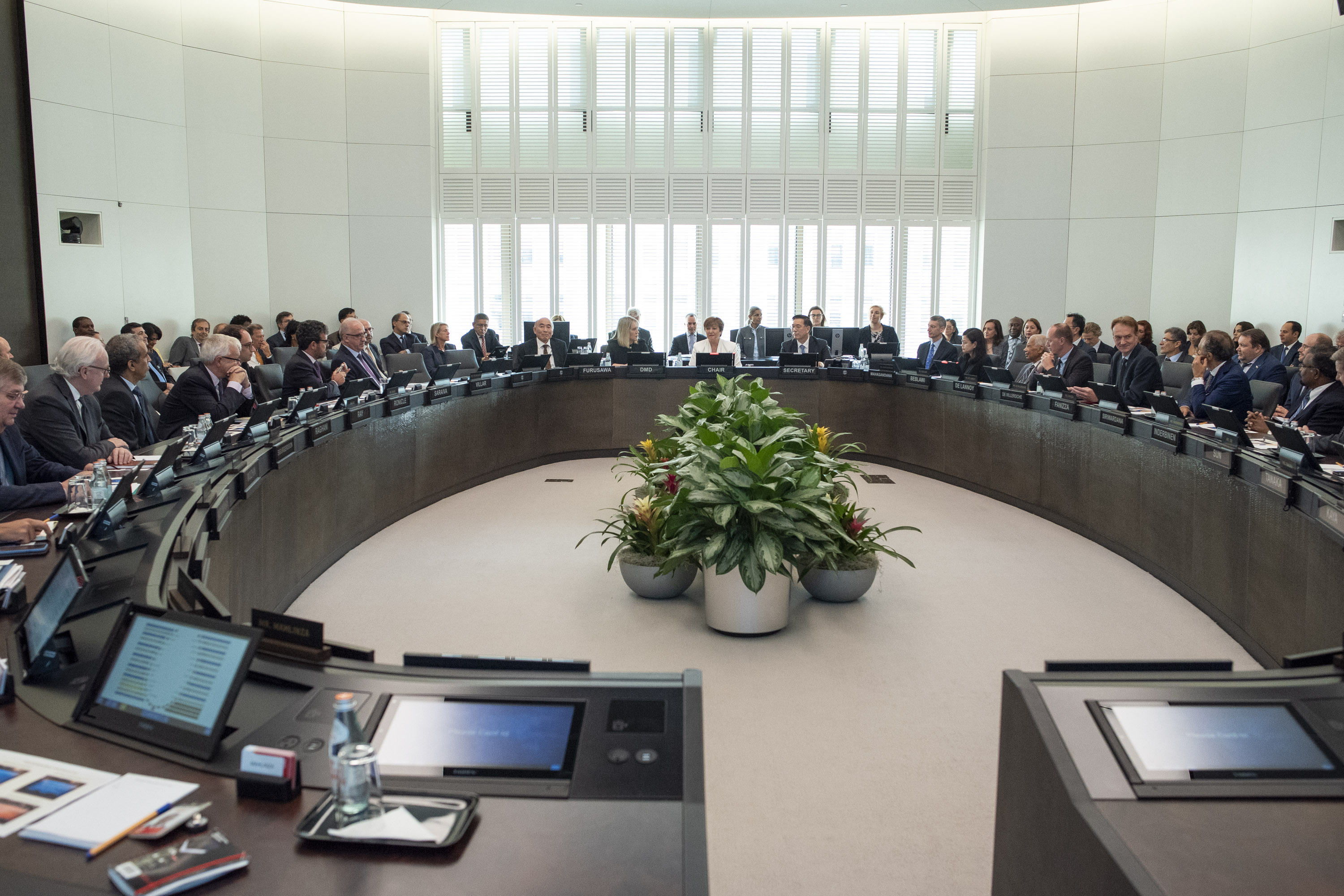
IMF Executive Board Concluded 2023 Article IV Consultation with The Kingdom of Bahrain
IMF News, July 11, 2023
Source details
- Canonical URL
- IMF Executive Board Concluded 2023 Article IV Consultation with The Kingdom of Bahrain
Other formats
Bibliographic details
- Published: July 11, 2023
Recent economic developments
- Real GDP grew by 4.9 percent in 2022.
- Non-hydrocarbon GDP grew by 6.2 percent in 2022; hydrocarbon GDP contracted by 1.4 percent in 2022.
- Non-hydrocarbon growth was driven by public, financial, and hospitality services and manufacturing.
- CPI inflation accelerated from -0.6 percent (average in 2021) to 3.6 percent in 2022.
- State budget deficit narrowed to 1.2 percent of GDP in 2022, from 6.4 percent in 2021.
- Overall fiscal deficit declined from 11 percent of GDP in 2021 to 6.1 percent of GDP in 2022.
- Government debt declined to 117.6 percent of GDP in 2022 from 127.1 percent of GDP in 2021.
- Current account surplus estimated at 15.4 percent of GDP in 2022, up from a 6.6 percent of GDP surplus in 2021.
- Banking system described as resilient with ample buffers and has withstood the phasing out of COVID measures and tightening financial conditions.
Outlook and risks
- Growth projected to moderate to 2.7 percent in 2023.
- Non-oil GDP projected to grow by 3.3 percent in 2023.
- Growth projected to stabilize at around 2.7 percent over the medium term.
- Key uncertainties identified: oil price volatility, international financial turmoil and ongoing tightening, and a slowdown in global growth.
Fiscal and external policy assessment
- Authorities committed to fiscal and structural reforms under the Fiscal Balance Program and Economic Recovery Plan focused on reducing the fiscal deficit and public debt and advancing diversification.
- Directors emphasized implementing a medium-term fiscal adjustment plan to ensure fiscal and external sustainability and reduce reliance on oil revenues.
- Importance of embedding fiscal reforms in a credible medium-term fiscal framework was underscored.
- Improving debt and fiscal transparency, including by gradually reducing extrabudgetary spending, was recommended.
- Directors emphasized freezing the government overdraft account at the central bank and developing a plan for its repayment to bolster reserves and support the external position and the peg.
Monetary and financial sector policy assessment
- Directors agreed the exchange rate peg continues to serve Bahrain well as a monetary anchor; monetary policy should continue to follow the Fed.
- Fiscal consolidation and structural reforms seen as supportive of the external position.
- Successful withdrawal of COVID support measures was welcomed.
- Continued close monitoring of financial stability risks and strengthening of macroprudential frameworks recommended given headwinds from tightening financial conditions.
- Recommendations included further strengthening of regulatory, supervisory, bank resolution, and macroprudential frameworks.
- Encouraged careful assessment of benefits and risks in introducing a central bank digital currency, with Fund CD support.
- Bahrain’s leading role in the fintech agenda was welcomed.
Structural reforms and longer-term priorities
- Continue improving labor market flexibility and empowering women to increase labor force participation.
- Leverage opportunities from regional integration.
- Press ahead with climate mitigation through a gradual phasing out of energy subsidies and further investments in renewable energy to facilitate the climate transition without creating additional fiscal needs or weighing on growth.
Key statistics (selected, as reported)
- Real GDP growth: 2.2 (2019); -4.6 (2020); 2.7 (2021); 4.9 (2022); 3.6 (2023 projection).
- Hydrocarbon: -0.1 (2019); -0.3 (2020); -1.4 (2021); 0.1 (2023 projection).
- Non-hydrocarbon: -5.6 (2019); 3.3 (2020); 6.2 (2021); 4.3 (2023 projection).
- Consumer Price Index (period average): 1.0 (2019); -2.3 (2020); -0.6 (2021).
- Nominal GDP (BD millions): 14,534 (2019); 13,018 (2020); 14,778 (2021); 16,691 (2022); 16,980 (2023 projection); 17,778 (2024 projection).
- Revenue (percent of GDP): 23.7 (2019); 17.9 (2020); 20.8 (2021); 23.1 (2022); 23.2 (2023 projection); 23.0 (2024 projection).
- o/w Hydrocarbon revenue (percent of GDP): 14.5 (2019); 9.5 (2020); 12.2 (2021); 14.6 (2022); 14.0 (2023 projection); 14.1 (2024 projection).
- Expense (percent of GDP): 28.6 (2019); 30.9 (2020); 27.5 (2021); 26.0 (2022); 25.1 (2023 projection); 24.4 (2024 projection).
- Expenditure1 (percent of GDP): 32.7 (2019); 35.8 (2020); 31.8 (2021); 29.2 (2022); 28.5 (2023 projection); 27.1 (2024 projection).
- Net lending (+) / Net borrowing (-) (percent of GDP): -9.0 (2019); -17.9 (2020); -11.0 (2021); -6.1 (2022); -5.4 (2023 projection); -4.1 (2024 projection).
- Government gross debt (percent of GDP): 101.6 (2019); 130.1 (2020); 127.1 (2021); 117.6 (2022); 121.1 (2023 projection); 119.9 (2024 projection).
- Goods Exports (US$ billion): 18.1 (2019); 22.4 (2020); 30.2 (2021); 25.9 (2022); 27.3 (2023 projection).
- of which: Hydrocarbon (US$ billion): 9.9 (2019); 5.9 (2020); 15.1 (2021); 11.7 (2022); 12.5 (2023 projection).
- Goods Imports (US$ billion): 17.3 (2019); 14.2 (2020); 17.5 (2021); 21.9 (2022); 20.6 (2023 projection); 22.1 (2024 projection).
- Current account balance (US$ billion): -0.8 (2019); -3.2 (2020); 2.6 (2021); 6.8 (2022); 3.4 (2023 projection); 3.1 (2024 projection).
- Current account (percent of GDP): -2.1 (2019); -9.4 (2020); 6.6 (2021); 15.4 (2022); 7.6 (2023 projection).
- Official reserve assets2 (US$ billion): 3.7 (2019); 4.7 (2020); 4.5 (2021); 8.0 (2022).
- In months of prospective non-oil imports: 1.2 (2019); 2.3 (2020); 3.0 (2021).
- Broad money (percent change): 11.1 (2019); 6.5 (2020); 3.9 (2021); 6.1 (2022); 4.1 (2023 projection).
Press Release No. 23/260 — July 11, 2023
References
- https://www.imf.org/-/media/images/imf/bios/imfboard.jpg
- The Executive Board
- Kingdom of Bahrain and the IMF
- Kuwait and the IMF
- Oman and the IMF
- Qatar and the IMF
- Saudi Arabia and the IMF
- United Arab Emirates and the IMF
- IMF Policy Advice -- A Factsheet
- Press Releases
- PRESS CENTER
- https://www.imf.org/en/home