Day One: Tuesday, September 25, 2018 (HQ2 Conference Hall 1)
|
| 04:30 pm — 05:00 pm |
Registration, HQ2 Auditorium
|
| 05:15 pm — 05:30 pm |
Welcome, Rhoda Weeks-Brown, General Counsel, Legal Department, IMF |
05:30 pm — 06:00 pm
|
Opening Remarks, Ross Leckow, Deputy General Counsel, Legal Department, IMF
watch the video of the speeches
|
| 06:00 pm — 08:00 pm |
Reception |
Day Two: Wednesday, September 26, 2018 (HQ2 Conference Hall 1)
|
| 08:30 am — 09:00 am |
Continental Breakfast
A short video will introduce the audience to fintech topics (video developed by Herve Tourpe, Majid Malaika, Subrato Sensharma, Papa Niang, and Aquiles Farias, Information and Technology Department, IMF)
|
| 09:00 am — 09:15 am |
Introduction, Rhoda Weeks-Brown, General Counsel, Legal Department, IMF |
| 09:15 am — 10:30 am |
Session 1: Introduction to Fintech and Some Legal Considerations
This session is dedicated to an overview of recent Fintech developments of relevance for the financial sector. It will cover the main services, with a focus on crypto assets, and will provide basic information on the underlying technologies, such as blockchain, crowdfunding, machine learning. It will lay out the key legal questions that they give rise to, and will also explain why the IMF is involved.
Chair
Edward Anderson, Director and CIO, Information Technology Department, IMF
Speakers
Usman Sheikh, Partner, Gowling WLG, Toronto - Presentation
Laura Shin, Crypto Journalist
Nasir Zubairi, Chief Executive Officer, Luxembourg House of Financial Technology
Watch Video
|
| 10:30 am — 11:00 am |
Group Photo and Coffee Break
|
| 11:00 am — 12:30 pm |
Session 2: Private Crypto Assets and Central Bank Digital Currencies
Since Bitcoin's appearance in 2009, hundreds of new cryptocurrencies have been created. And they all present slightly, or fundamentally different characteristics. In addition, some Central Banks are also considering issuing their own digital currency.
This session will discuss the rationale behind the increased interest in cryptocurrencies and central bank digital currencies, and benefits and risks they may have.
Chair
Vikram Haksar, Assistant Director, Strategy, Policy, and Review Department, IMF
Speakers
Monika Johansson, Advisor, Payments Department, Riksbank - Presentation
Changchun Mu, Deputy Director-General of the Payment and Settlement Department, People’s Bank of China
Antoinette O’Gorman, Former CCO, Ripple Labs, Inc. - Presentation
Rebecca Simmons, Partner, Sullivan & Cromwell, New York
Watch Video
|
| 12:30 pm — 01:45 pm |
Luncheon Speaker, Tobias Adrian, Financial Counsellor and Director, Monetary and Capital Markets Department, IMF
Watch Video
|
| 01:45 pm — 03:30 pm |
Session 3
Fintech, a Double-Edged Sword for AML/CFT
Some Fintech products offer greater transparency and the means to facilitate compliance with AML/CFT obligations. This is for example the case of digital ID and some of the new customer due diligence utilities. The distributed ledger technology (DLT) itself enables greater tracing of transactions. But other products, such as crypto assets, can potentially also be ideal mechanisms to launder funds, evade taxes and even fund terrorism, notably because of the greater anonymity that they provide.
This session will discuss the risks related to some of the main Fintech products, in particular crypto assets, and will seek to identify the opportunities that Fintech presents to implement a stronger, more effective AML/CFT framework. It will also discuss the legal measures that should be considered in the implementation of the AML/CFT standard to mitigate the risks.
Moderator
Yan Liu, Assistant General Counsel, Legal Department, IMF
Speakers
Michael Gronager, CEO and Co-Founder, Chainanalysis
David Lewis, Executive Secretary, Financial Action Task Force
Brent McIntosh, General Counsel, U.S. Department of the Treasury
Mohamed Nyaoga, Chairman of Board, Central Bank of Kenya - Presentation
Watch Video
|
| 03:30 pm — 04:00 pm |
Coffee Break
-
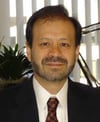 Augusto de la Torre works internationally as a free-lance senior policy consultant, teaches at Columbia University’s School of Public and International Affairs, holds the position of Director of the Economics Research Center at the Universidad de las Américas in Quito, Ecuador, and is a Non-Resident Senior Fellow at the Brookings Institution. He worked for the World Bank occupying various senior roles, including as Chief Economist for Latin America. Prior to that, he served as the Governor of the Central Bank of Ecuador (1993-1996) and as an economist for the IMF (1986-1992). He has published extensively on a broad range of financial, macroeconomic, and economic development topics. He holds M.A. and Ph.D. degrees in Economics from the University of Notre Dame and holds a Licenciatura in Philosophy from the Catholic University of Ecuador. Augusto de la Torre works internationally as a free-lance senior policy consultant, teaches at Columbia University’s School of Public and International Affairs, holds the position of Director of the Economics Research Center at the Universidad de las Américas in Quito, Ecuador, and is a Non-Resident Senior Fellow at the Brookings Institution. He worked for the World Bank occupying various senior roles, including as Chief Economist for Latin America. Prior to that, he served as the Governor of the Central Bank of Ecuador (1993-1996) and as an economist for the IMF (1986-1992). He has published extensively on a broad range of financial, macroeconomic, and economic development topics. He holds M.A. and Ph.D. degrees in Economics from the University of Notre Dame and holds a Licenciatura in Philosophy from the Catholic University of Ecuador.
|
| 04:00 pm — 05:30 pm |
Session 4
Break-Out Session
During this session, participants will be divided into three groups, discussing: (i) Implications of private crypto assets on existing legal framework (e.g., Are they securities, commodities, money or something else?); (ii) legal considerations related to central bank digital currencies (e.g., What are the main characteristics which make such currencies legal tender?); (iii) the specific money laundering and terrorism financing risks associated with crypto-assets and the measures needed to mitigate them. After their group discussion, the participants will reconvene before the plenary session and be invited to share their main takeaways.
Chair
Nadim Kyriakos-Saad, Assistant General Counsel, Legal Department, IMF
Facilitators
Rebecca Simmons, Partner, Sullivan & Cromwell, New York
Masaru Itatani, Senior Consulting Counsel, Legal Department, IMF
Kristel Grace Poh, Senior Financial Sector Expert, Legal Department, IMF
Nadine Schwarz, Senior Counsel, Legal Department, IMF
|
Day Three: Thursday, September 27, 2018 (HQ2 Conference Hall 1)
|
08:30 am — 09:00 am
|
Continental Breakfast
|
| 09:00 am — 09:10 am |
Introduction, Katharine Christopherson, Assistant General Counsel, Legal Department, IMF |
| 09:10 am — 10:55 am |
Session 5
Financial Market Infrastructure and New or Emerging Payment Systems
The use of DLT in domestic and cross-border transactions changes in a fundamental way long-established operating models and industry relationships. Moreover, new person-to-person payment methods, such as mobile payments, offered by nonbank entities are creating new opportunities by increasing financial inclusion, but they also raise questions for policy makers. This session will seek to identify key legal considerations that these new and emerging technologies raise, such as considerations regarding the finality and irrevocability of payments, data protection and cybersecurity, eligibility and access, the role of clearing houses and, more broadly, legal implications that Fintech raises for clearing and settlement systems.
Chair
Froukelien Wendt, Senior Financial Sector Expert, Monetary and Capital Markets Department, IMF - Presentation
Speakers
Anne Butler, Chief Legal Officer and Head of Research and Policy, Payments Canada - Presentation
Cristián Carmona, Senior Counsel, Central Bank of Chile
Jess Cheng, Counsel, Legal Department, IMF - Presentation
Klaus Löber, Senior Adviser, Market Infrastructures and Payments, Central European Bank - Presentation
Ewetse T. Rakhudu, General Counsel, Bank of Botswana - Presentation
Watch Video
|
10:55 am — 11:00 am
|
Coffee Break
|
| 11:00 am — 12:30 pm |
Session 6
Smart Contracts - Presentation
The development of DLT may bring about a considerable increase in the use of so-called smart contracts, including for financial transactions. This raises a number of legal issues, in particular, relating to their very nature (exemplified by the question “is code a contract?”), and their interpretation and enforcement. Moreover, this interactive session will discuss whether the development of smart contracts may require new skill sets for lawyers.
This session includes a short presentation on the basic concepts behind smart contracts, and how they may impact the legal profession. A hands-on demo with an actual smart contract will demonstrate how paper contracts can be embodied in a digital form.
(Herve Tourpe, Majid Malaika, Subrato Sensharma, Papa Niang, and Aquiles Farias, Information and Technology Department, IMF contributed to the demo.)
Chair
Gordon Ian Myers, Chief Counsel for Technology and Private Equity, IFC
Discussants
Patrick Murck, Fellow, Harvard Berkman Klein Center
Marco Santori, President and Chief Legal Office, Blockchain
Houman Shadab, Co-Director, Accord Project
Watch Video
|
12:30 pm — 01:30 pm
|
Key Note Speaker, Randall Quarles, Vice Chairman, Federal Reserve Board
|
| 01:45 pm — 03:00 pm |
Session 7
Fintech – Governance and Transparency
The use of technology such as blockchain can provide more means to enhance transparency and strengthen public sector integrity. This session will offer a broad perspective on how technology is transforming the exercise of key governmental functions. It will explore how some of the opportunities presented by fintech products and technological developments more generally, such as automated payment processes, the abolition of intermediaries, and clearer statistics can strengthen public governance and curb corruption.
Chair
Ceda Ogada, Deputy General Counsel, Legal Department, IMF
Speakers
Praveen Garg, Additional Secretary & Financial Advisor, The Ministry of Environment and Forest & Climate Change, India - Presentation
Mikari Kashima, Associate Director-General, Institute for Monetary and Economic Studies, Bank of Japan - Presentation
Martin Lindpere, Economic Advisor to the Prime Minister of Estonia and Advisor to the Nordic-Baltic Executive Director of the World Bank
Patricia Moreira, Managing Director, Transparency International
Watch Video
|
03:00 pm — 03:30 pm
|
- Coffee Break
-
|
03:30 pm — 04:45 pm
|
Session 8
Main Take-Aways, and the Future of Fintech
This session will seek to take a broad view at how technology and automation will affect the financial sector, and more generally society. How will technology change business models and, more fundamentally, how the world transacts? What lessons can we draw from economies that have leapfrogged from a cash-based retail sector to an efficient and inclusive financial system? How will the roles for national authorities and regulators continue to evolve, and how will critical issues such as cybersecurity be tackled? And, importantly, how can we ensure that fintech expands financial access and deepens financial inclusion in a meaningful and lasting way? The session will draw insights on the role of lawyers and national authorities in ensuring that technology-driven innovation can support a healthy and inclusive financial sector.
Chair
Ross Leckow, Deputy General Counsel, Legal Department, IMF
Speakers
Christopher Calabia, Senior Advisor, Supervisory and Regulatory Policy, Gates Foundation
Carrie Suen, Head of International Legal, Ant Financial Services Group
Stefan Thomas, Founder, Coil
Chiara Zilioli, General Counsel, European Central Bank
Watch Video
|
04:45 pm — 05:00 pm
|
Closing and Wrap-Up: Rhoda Weeks-Brown, General Counsel, Legal Department, IMF
|
| 05:00 pm — 06:00 pm |
Farewell Cocktail |



