



Former mayor Federico Gutiérrez discusses how prioritizing security and sustainability paved the way for a 21st century city
In 1991, Medellín, Colombia’s second-largest urban area, was the world’s most violent city. Today, the “City of Eternal Spring” is internationally recognized as one of the most innovative, inclusive, and sustainable cities in the world.
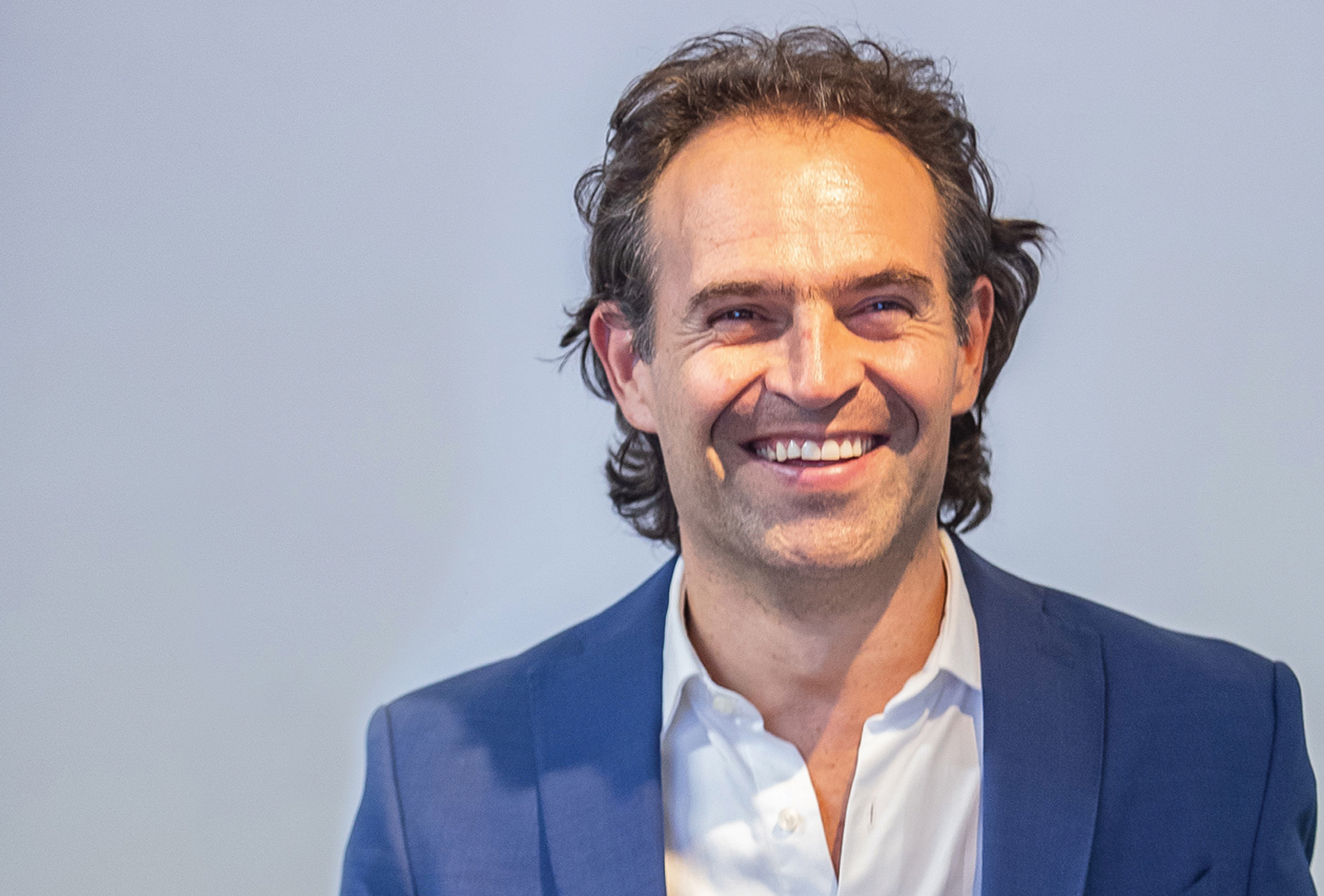
Federico Gutiérrez, born in Medellín in 1974 at the advent of Colombia’s violent period of armed conflict, was the city’s mayor from January 2016 until January 2020—helping spearhead many efforts to cement the city’s future as one of peace and prosperity. He credits the determination and unity shown by the people of Medellín for their commitment to overcoming violence and conflict, which has won their city accolades and admiration. Speaking with F&D’s Marjorie Henríquez, Gutiérrez shares his thoughts on the city’s remarkable transformation over the past three decades.
F&D: What was the turning point for Medellín?
FG: In the 1980s and 1990s our society hit rock bottom with the tragedy of narcoterrorism. In 1991 we recorded a homicide rate of 381 murders per 100,000 inhabitants. Today the rate is approximately 20 per 100,000 inhabitants—a 95 percent decrease. Although the only acceptable figure is zero, we have achieved significant progress in curbing violence and ensuring respect for life.
As to whether there was a specific turning point, that is complicated and open to debate. Ever since businesspeople decided to stay in Medellín in the 1980s and 1990s—not giving in to the violence—we began to develop a vital strategy rooted in teamwork. The business fabric of our city is extremely solid, and this can be explained to a great extent by the difficulties that the private sector had to face in order to survive. In the midst of violence, staying was a great act of bravery.
There were no shortcuts, but there were practical solutions. One of the latter involved partnerships between the public sector, private sector, academia, and civil society. Teamwork as a society was a determining factor in the city’s social transformation. The mafia upended our values: it turned hard and honest work into easy money, sobriety into opulence and, worst of all, it took the value out of life and instead put a price on it. Though we still have a long way to go, we have started recovering such values as life, respect, and freedom.
In fewer than three decades, Medellín has become a benchmark for the world. It is a socially innovative city that is today an affiliate center for the Fourth Industrial Revolution for Latin America, in partnership with the World Economic Forum. Experiencing the worst things possible as a society has made us stronger and more resilient. Medellín is a city that acknowledges its past, takes pride in its present, and above all, views its future optimistically.
F&D: As mayor, what were your key priorities?
FG: A government’s priorities must, in some way, be the priorities of the people. For us, they were education, security, and sustainability.
We had the highest education budget in Medellín’s history. With one of the flagship programs, we managed to return more than 8,000 children who were outside the educational system for various reasons to the classrooms. We also gave more than 43,000 scholarships for higher education. That is the best strategy for security in the long term—giving opportunities to succeed within the framework of legality.
On security, we dealt forceful blows to structures that had been operating for decades. The security issue is still quite complex. There is criminality, but it is much quieter than that of the cartels of the 1980s and 1990s. Our approach involves more than police strategies—it is a comprehensive model that provides opportunities and builds trust, fights crime, and focuses on strategic social investment by the state where there had previously been a vacuum, allowing lawlessness to prevail.
On sustainability, the first thing we did was to put air quality on the city’s agenda. Due to Medellín’s topography and winds, air quality decreases significantly twice a year: March and October. Institutions had the data on this for years without sharing it with the public. People thought smog was haze. We started by openly recognizing the problem. Then we set out to become Latin America’s capital of sustainable mobility: we added 65 electric buses to the city’s fleet, and the older buses were renovated with clean technologies. New Metrocables (the city’s gondola lift system), 80 kilometers of new bike paths, and more sidewalks. We finished the technical, legal, and financial structuring of a new tram in the western part of the city. We also started a pilot of 100 percent electric taxis. I am an advocate of public transportation. Few things are more democratic than a good public space and a good system of mass public transport.
We also created 36 green corridors that open up the most congested roads in the city, and we planted more than 890,000 trees.
F&D: Describe some of Medellín’s most innovative achievements.
FG: Some call what has happened here “The Medellín miracle.” But this was no miracle—it reflects many years of hard work.
For example, with the help of the business sector, we launched Weaving Homes (Tejiendo hogares), a commitment to building social fabric through training in positive discipline for families. We understood that it was useless to have the best neighborhood infrastructure if what happened inside homes included violence against women and children. We also launched Medellín Embraces Its History (Medellín abraza su historia) to memorialize the fight for the culture of legality, which included an upgrade to the House of Memory Museum, filming documentaries, and demolishing the Monaco building—Pablo Escobar’s former residence—to create space for a memorial park honoring narcoterrorism victims. We also created Parceros—“Buddies”—a program focused on recovering young people from criminal activity.
We have built an institutional framework to support social investment. Successive administrations have given continuity to city projects with the understanding that things do not simply start afresh every four years with an election.
F&D: How did you ensure that Medellín stayed on track?
FG: Medellín’s success is based on its people and shared trust. The long-term process of rebuilding the city is a collective endeavor—nobody succeeds in isolation.
The first step was to acknowledge results achieved in the past, continuing but also building on them, bearing in mind that a leader’s time in office is short. We improved the quality of life, as shown by the fact that we have reached our highest point in the multidimensional quality of life index. We invested resources efficiently and transparently where needed—not where we would have garnered the most votes. We took action in areas where the city continues to reap benefits even today: fighting crime and standing up for law and order, raising awareness about the environment and air quality, curbing the school dropout rate, making a bid to become a Latin American champion for sustainable mobility, and showcasing Medellín as an affiliate center for the fourth industrial revolution.
F&D: How did you learn about the people’s needs?
FG: For years I walked the streets of Medellín, talking to people even before I became mayor. As a leader, you must know how to listen, put yourself in somebody else’s shoes, and understand their daily struggles.
Opinions expressed in articles and other materials are those of the authors; they do not necessarily reflect IMF policy.


