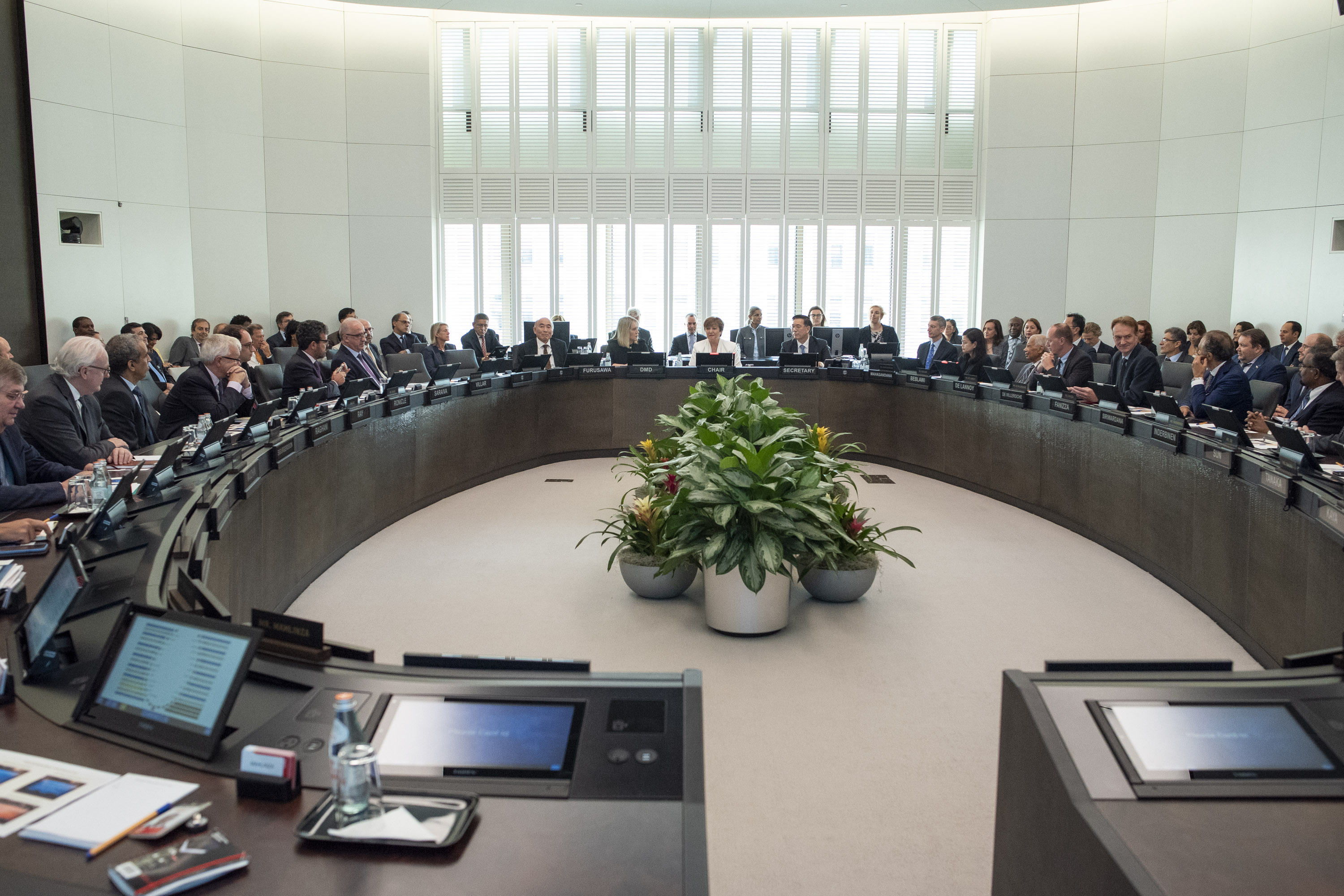
IMF Executive Board Approves US$1 billion ECF Arrangement for Uganda
IMF News, June 28, 2021
Source details
- Canonical URL
- IMF Executive Board Approves US$1 billion ECF Arrangement for Uganda
Other formats
Bibliographic details
- Published: June 28, 2021
Arrangement and Financing Details
- Approved a 36-month arrangement under the Extended Credit Facility (ECF) for Uganda equivalent to SDR722 million (200 percent of quota or about US$1 billion).
- Approval enables immediate disbursement of about US$258 million, usable for budget support.
- This follows Fund emergency support under the Rapid Credit Facility (RCF) in May 2020 of SDR361 million (100 percent of quota or US$491.5 million).
Economic impact of COVID-19 and Near-Term Outlook
- The COVID-19 pandemic reversed decade-long gains in poverty reduction, deteriorated fiscal balances, and put pressure on external buffers.
- A mild recovery is underway in some sectors.
- Economic growth in FY 21/22 is expected to reach 4.3 percent before returning to pre-pandemic rates of 6-7 percent in the medium term.
- The outlook remains highly uncertain, with risks tilted to the downside, including from a resurgence of tighter containment measures linked to higher COVID-19 positivity rates.
Program Focus and Structural Reforms
- The three-year financing package will:
- Support the short-term response to the COVID-19 crisis.
- Help sustain a post-crisis inclusive recovery.
- Reforms will focus on:
- Creating fiscal space for priority social spending.
- Preserving debt sustainability.
- Strengthening governance.
- Enhancing the monetary and financial sector framework.
- The authorities’ program, enshrined in the third National Development Plan (NDPIII), is built around:
- Private sector-led inclusive growth.
- Public sector reforms to strengthen governance and transparency.
- Multi-year fiscal consolidation while increasing priority and high-quality infrastructure spending.
- Specific program measures cited:
- Increase domestic revenue (Domestic Revenue Mobilization Strategy).
- Foster public sector efficiency and strengthen governance, including preparing the ground for sound management of oil revenues.
- Better management of public investment, control of domestic arrears and advances in cash management.
- Strengthen the monetary policy and financial sectors frameworks while fostering development, including through financial inclusion.
IMF Policy Guidance and Recommendations (from Mr. Tao Zhang)
- Fiscal policy:
- Fiscal consolidation in the first year should be appropriately based on both revenue and expenditure measures to stabilize the public debt ratio while increasing social spending, including for vaccines.
- Debt management:
- Prudent debt management is important to reduce vulnerabilities, given Uganda’s moderate risk of debt distress.
- Seek concessional financing and pursue relief under the Debt Service Suspension Initiative.
- Contingency plans should be in place to help mitigate risks.
- Monetary and financial sector policy:
- An accommodative monetary policy stance remains appropriate.
- The exchange rate should continue to function as a shock absorber.
- Efforts to increase central bank independence should be sustained.
- Consider flexible use of banks’ capital buffers to address COVID-19 uncertainties.
- Minimize financial stability risks through strict adherence to accounting and prudential standards, and modernize the banking resolution and emergency liquidity assistance frameworks.
- Governance and inclusion:
- Advance governance reforms to support transparency and private sector development.
- Further enhance the AML/CFT framework and strengthen the accountability of high-level officials.
- Promote human capital development and financial inclusion, including through wider credit bureau coverage and collateral requirements.
- Accelerate digitalization to enhance development and inclusion efforts.
Selected Key Statistics and Figures
- SDR722 million (200 percent of quota or about US$1 billion) — ECF arrangement amount.
- About US$258 million — immediate disbursement enabled by the ECF approval.
- SDR361 million (100 percent of quota or US$491.5 million) — RCF support in May 2020.
- 36-month — duration of the ECF arrangement.
- FY 21/22 growth expected to reach 4.3 percent.
- Medium-term growth expected to return to 6-7 percent.
IMF Press Release No. 21/197, June 28, 2021.