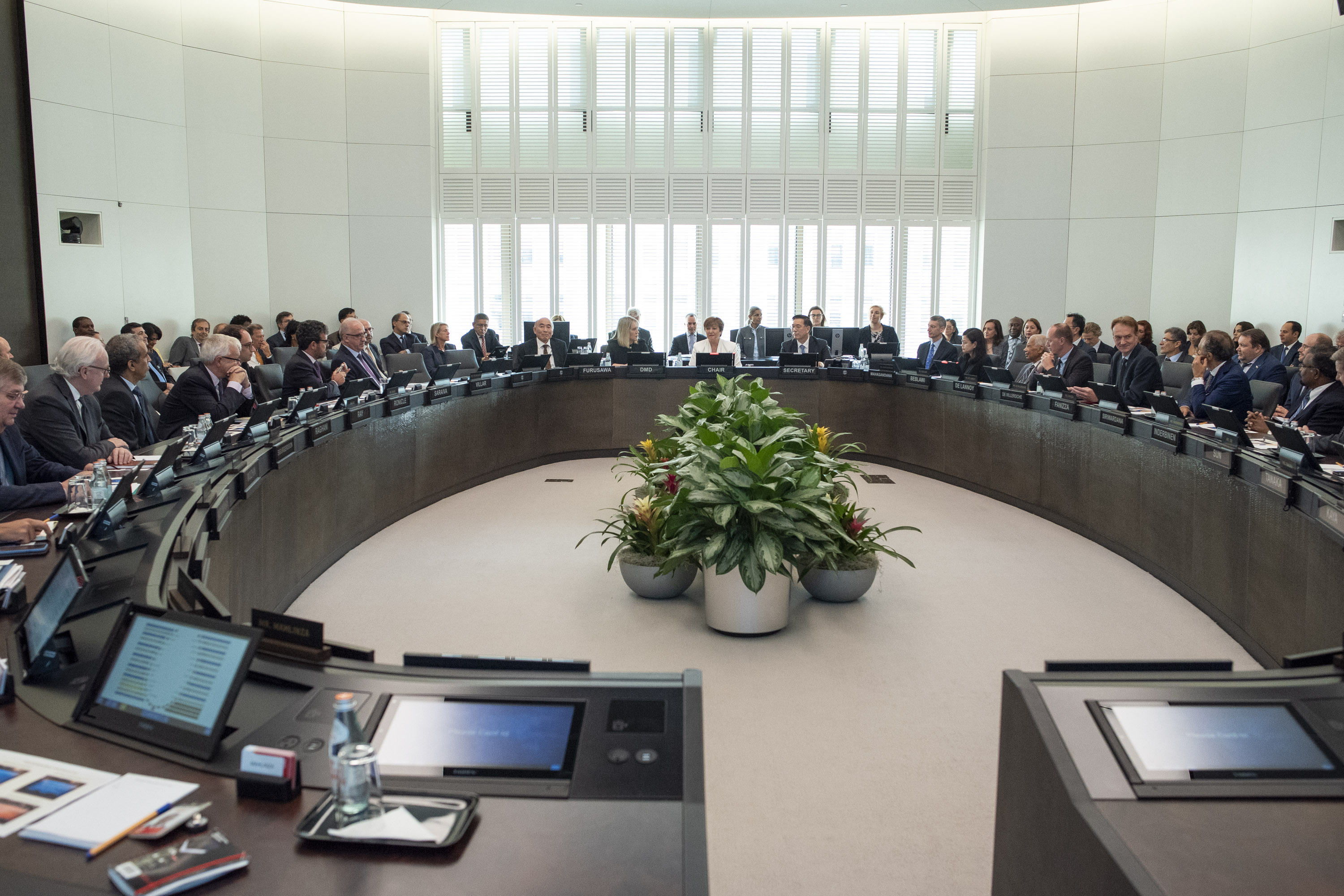
IMF Executive Board Concludes 2021 Article IV Consultation with St. Kitts and Nevis
IMF News, October 30, 2021
Source details
- Canonical URL
- IMF Executive Board Concludes 2021 Article IV Consultation with St. Kitts and Nevis
Other formats
Bibliographic details
- Published: October 30, 2021
Executive summary and context
- The Executive Board concluded the Article IV consultation with St. Kitts and Nevis on September 13.
- St. Kitts and Nevis entered the Covid-19 pandemic from a position of fiscal strength after nearly a decade of budget surpluses.
- A significant part of large CBI revenues was saved, reducing public debt below the regional debt target of 60 percent of GDP and supporting accumulation of large government deposits.
- Prompt government action contained public health impact: swift travel restrictions, a month-long national lockdown, procurement of protective and medical equipment, and reopening of borders at end-October 2020 with strict safety protocols.
- St. Kitts and Nevis had the lowest per capita case count in the Western Hemisphere and no mortalities in 2020.
Economic impact and near-term outlook
- Pandemic economic shock:
- Estimated annual decline in GDP of 14 percent in 2020.
- General government fiscal deficit of 4.7 percent of GDP in 2020—the first fiscal deficit since 2010—financed by drawing down sizeable deposit buffers.
- Staff projections:
- Real GDP (market prices): 2020 = -14.4; 2021 = -1.0; 2022 = 10.0; 2023 = 5.1; 2024 = 2.8 (annual percentage change).
- Small further decline in GDP of 1 percent in 2021, followed by 10 percent growth in 2022.
- Risks to the outlook:
- Further sustained disruptions to tourism recovery from the pandemic.
- Financial sector uncertainties.
- Natural disasters.
- Lower-than-expected CBI receipts.
Fiscal, monetary, and external positions (selected statistics)
- Public finance (percent of GDP):
- Total revenue and grants: 2018 = 36.8; 2019 = 35.5; 2020 = 31.3; 2021 = 33.2; 2022 = 30.6.
- Tax revenue: 2018 = 18.5; 2019 = 17.6; 2020 = 17.4; 2021 = 17.3; 2022 = 17.2.
- CBI fees: 2018 = 14.3; 2019 = 14.1; 2020 = 9.8; 2021 = 13.3; 2022 = 9.0.
- Total expenditure and net lending: 2018 = 35.7; 2019 = 35.3; 2020 = 36.0; 2021 = 35.0; 2022 = 30.1; 2023 = 28.8; 2024 = 28.7.
- Overall balance: 2018 = 0.3; 2019 = -4.7; 2020 = 0.5; 2021 = 1.9.
- Total public debt (end-of-period): 2018 = 55.2; 2019 = 51.7; 2020 = 61.1; 2021 = 60.8; 2022 = 54.4; 2023 = 51.4; 2024 = 49.5.
- General government deposits (percent of GDP): 2018 = 26.0; 2019 = 23.6; 2020 = 19.5; 2021 = 16.8; 2022 = 14.9; 2023 = 15.4; 2024 = 16.2.
- External sector (percent of GDP):
- External current account balance: 2018 = -5.4; 2019 = -4.8; 2020 = -14.5; 2021 = -11.3; 2022 = -7.3; 2023 = -6.2; 2024 = -5.7.
- Trade balance: 2018 = -30.4; 2019 = -28.3; 2020 = -24.7; 2021 = -21.8; 2022 = -21.5; 2023 = -23.5; 2024 = -26.3.
- Monetary and credit indicators:
- Broad money: 2018 = -1.2; 2019 = 5.6; 2020 = -8.1; 2021 = 3.3; 2022 = 6.9; 2023 = 4.0; 2024 = 4.5.
- Change in net foreign assets: 2018 = 6.5; 2019 = -0.4; 2020 = 5.9; 2021 = 7.0; 2022 = 6.0.
- Net credit to general government: 2018 = 10.2; 2019 = -9.5; 2020 = -18.4; 2021 = 2.5; 2022 = -0.2; 2023 = -1.7; 2024 = -1.8.
- Credit to private sector: 2018 = 1.6; 2019 = 1.5; 2020 = 1.1; 2021 = -2.0; 2022 = -0.7.
- Memorandum items:
- Net international reserves, end-of-period: 2018 = 15.8; 2019 = 17.8.
- Nominal GDP at market prices (in millions of EC$): 2018 = 2,912; 2019 = 3,145; 2020 = 2,648; 2021 = 2,636; 2022 = 2,948; 2023 = 3,125; 2024 = 3,266.
Executive Board assessment and policy advice
- Directors agreed with the thrust of staff appraisal and commended the authorities’ prompt and effective policy response.
- Near-term priorities emphasized by Directors:
- Containing the pandemic and supporting the economic recovery.
- Reaching herd immunity through vaccination as the chief priority to save lives and livelihoods.
- Keeping fiscal relief measures in place until the recovery firmly takes root.
- Maintaining robust levels of public investment to support economic activity.
- Medium-term fiscal guidance:
- Once recovery is firmly established, resume saving part of the CBI revenues to rebuild fiscal buffers and provide fiscal space to mitigate contingent and long-term fiscal pressures.
- Financial sector stability and reforms recommended:
- Build readiness to exit temporary support measures.
- Review and formalize crisis management plans.
- Contain risks in the systemic bank.
- Strengthen supervision of non-banks.
- Develop a more robust plan to divest unsold lands.
- Pursue reforms to facilitate asset recovery.
- Governance, integrity, and structural reforms:
- Continue efforts to promote financial integrity, secure correspondent banking relationships, establish CBI program safeguards, and bolster AML/CFT and tax cooperation frameworks.
- Encourage structural reforms to raise productivity growth, economic competitiveness, and human capital.
- Support authorities’ agenda to diversify energy sources and channel CBI revenues into sectors besides tourism and into infrastructure that protects against natural disasters.
Source: Press Release No. 21/317, IMF Communications Department, October 29, 2021.