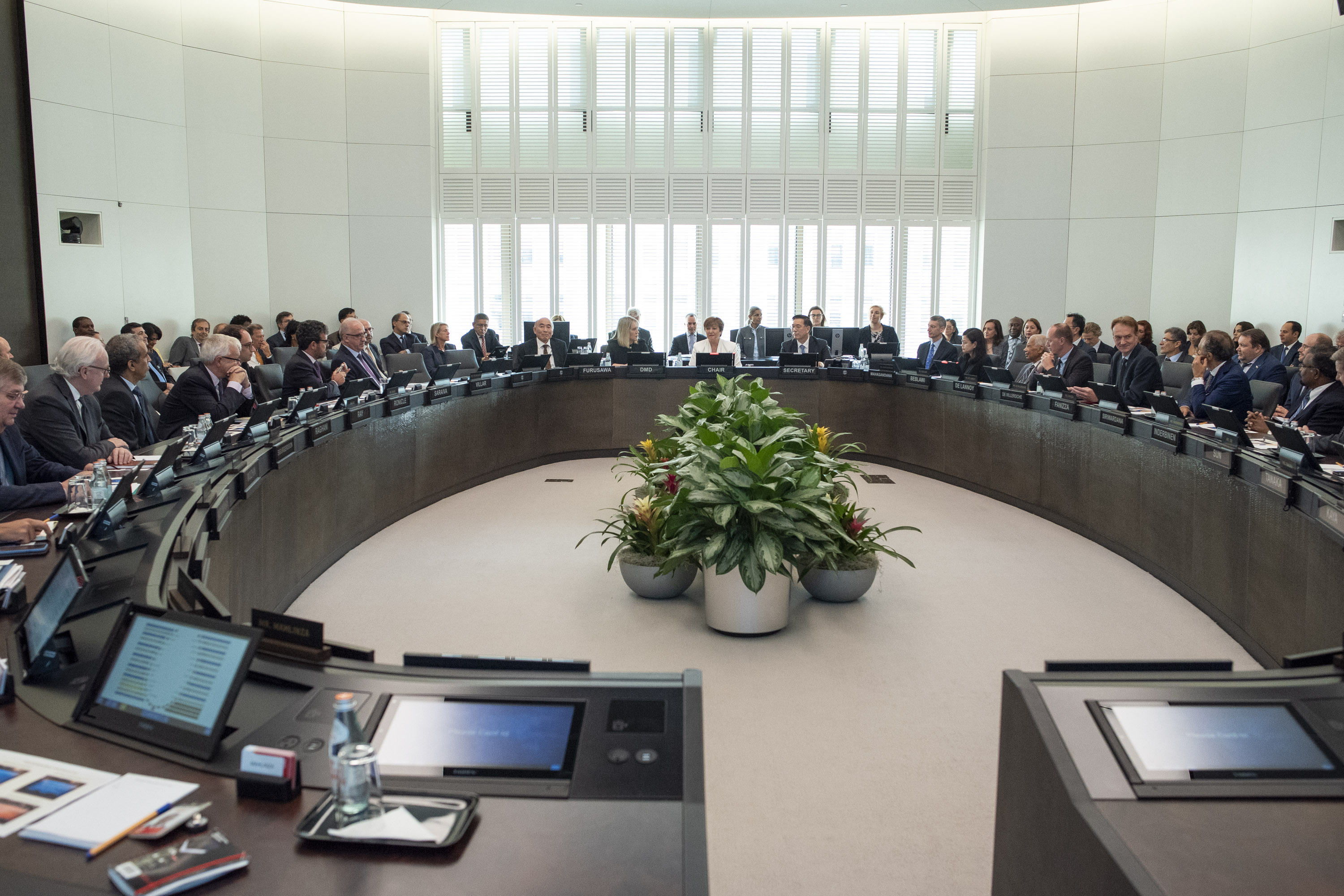
IMF Executive Board Concludes 2023 Article IV Consultation with Saudi Arabia
IMF News, September 6, 2023
Source details
- Canonical URL
- IMF Executive Board Concludes 2023 Article IV Consultation with Saudi Arabia
Other formats
Bibliographic details
- Published: September 6, 2023
Economic performance and growth
- Saudi Arabia was the fastest growing G20 economy in 2022.
- Overall growth reached 8.7 percent in 2022.
- Non-oil GDP growth in 2022 was 4.8 percent, driven by robust private consumption and non-oil private investment, including giga projects.
- Main drivers of non-oil growth: wholesale, retail trade, construction, and transport.
- The output gap is estimated to have closed during 2022, with non-oil growth momentum continuing in 2023.
- Real GDP growth projections:
- 2021: 3.9
- 2022: 8.7
- 2023: 1.9 (Proj.)
- 2024: 2.8 (Proj.)
- Non-oil real GDP growth:
- 2021: 5.7
- 2022: 4.8
- 2023: 4.9 (Proj.)
- 2024: 4.4 (Proj.)
Labor market and participation
- Total unemployment dropped to 4.8 percent by end-2022—from 9 percent during Covid.
- Increase in labor force participation accompanied the decline in unemployment.
- Composition: increase in Saudi workers in the private sector and expatriate workers (mostly in the construction and agricultural sectors) rising back above pre-Covid levels.
- Youth unemployment: halved to 16.8 percent in 2022 over the past two years.
- Female participation in the labor force reached 36 percent in 2022, exceeding the 30 percent target set under Vision 2030.
Prices and inflation
- Average CPI grew by 2.5 percent y-o-y in 2022, in part contained by domestic subsidies/price cap and a strong US dollar.
- Headline inflation: uptick to 3.4 percent y-o-y in early 2023; back at 2.8 percent y-o-y in May 2023.
- CPI Inflation (avg, %) table:
- 2021: 3.1
- 2022: 2.5
- 2023: 2.3 (Proj.)
Banking sector and financial conditions
- Banking system remains on a strong footing.
- Aggregate capital adequacy ratio is strong.
- Profitability—driven by net interest margins—is high and above pre-pandemic levels.
- NPL ratio is low and declining.
- Mortgage growth has recently moderated.
- Demand for project-related and consumer loans remains strong.
- Rising funding costs linked to higher interest rates and a greater share of time and saving deposits in banks’ liabilities have impacted profitability, offset by loan demand.
Fiscal position and public finances
- Favorable oil market dynamics strengthened the fiscal position, with a 2.5 percent of GDP surplus—the first since 2013.
- The surplus would have been higher if not for additional spending that was not initially budgeted for, mostly reflecting increases in goods and services and capital spending.
- About 2½ percent of GDP of additional expenditures were estimated to be one-off non-recurrent spending (about half in goods and services).
- Public debt at 23 percent of GDP is characterized as low and sustainable, with ample fiscal space available to address potential headwinds.
- Central government finances (percent of GDP):
- Revenue:
- 2021: 29.6
- 2022: 30.7
- 2023: 28.4 (Proj.)
- Expenditure:
- 2021: 31.9
- 2022: 28.2
- 2023: 29.7 (Proj.)
- 2024: 30.0 (Proj.)
- Fiscal balance:
- 2021: -2.3
- 2022: -1.2
- 2023: -1.6 (Proj.)
- Public debt:
- 2021: 28.8
- 2022: 23.8
- 2023: 25.1 (Proj.)
- 2024: 25.8 (Proj.)
- Non-exported oil primary balance (% Non-oil GDP):
- 2021: -27.2
- 2022: -29.6
- 2023: -23.7 (Proj.)
- 2024: -21.4 (Proj.)
External position and reserves
- Higher oil prices and stepped-up oil production improved the current account to a 10-year high surplus in 2022.
- Current account (% GDP):
- 2021: 5.1
- 2022: 13.6
- 2023: 6.5 (Proj.)
- 2024: 3.5 (Proj.)
- The 13.6 percent of GDP surplus in 2022 did not lead to a corresponding increase in official reserves due to large accumulation of assets abroad; official reserves remain at comfortable levels (almost 20-month import cover).
- Reserves (months imports):
- 2021: 20.3
- 2022: 19.4
- 2023: 17.5 (Proj.)
- 2024: 15.7 (Proj.)
- FDI (% GDP):
- 2021: 2.2
- 2022: 0.7
- 2023: 0.8 (Proj.)
- External debt (% GDP):
- 2021: 31.7
- 2022: 23.9
- 2023: 24.9 (Proj.)
- 2024: 26.1 (Proj.)
- REER (% change):
- 2021: 4.2
- 2022: 2.1
- 2023: … (For 2023, data is latest available.)
Risks to the outlook
- Upside risks:
- Higher oil prices—as expectations of strong oil demand for the rest of the year persist.
- Possible change in OPEC+ oil production cuts.
- Accelerated structural reforms and investment could spur growth.
- Downside risks:
- Too rapid a rise in non-oil investment could further raise domestic demand, adding pressure on prices and external accounts.
- Lower oil prices due to subdued global activity represent a key short-term risk.
- A quicker shift in demand for fossil fuel could hamper growth in the medium to long term.
Executive Board assessment and policy recommendations
- Directors agreed with the thrust of the staff appraisal and welcomed Saudi Arabia’s ongoing economic transformation supported by Vision 2030 reforms and higher oil prices.
- Observed outcomes: high growth, record low unemployment, contained inflation, and strong external and fiscal buffers while reducing reliance on oil.
- Contingency measures, such as tighter fiscal policy, should be considered if demand pressures materialize.
- Fiscal policy and revenue mobilization:
- Welcomed impressive non-oil revenue mobilization efforts that have doubled non-oil revenues since 2017.
- Called for additional fiscal adjustment over the medium term to maintain stronger buffers and meet intergenerational needs while mitigating risks from oil price volatility.
- Recommended additional non-oil revenue efforts, including by maintaining the VAT rate.
- Subsidy and energy pricing:
- Most Directors recommended faster increases in energy prices to reduce subsidies.
- A few Directors called for continuing the gradual implementation articulated in the Vision 2030 road map.
- Energy subsidy reforms should be accompanied by scaling up well-targeted social programs to limit the impact on the most vulnerable.
- Fiscal transparency and frameworks:
- Emphasized ongoing rollout of the Medium-Term Fiscal Framework and enhanced disclosure to support implementation of a fiscal rule and delink spending decisions from oil price fluctuations.
- Welcomed ongoing work on a Sovereign Asset Liability Management Framework and called for its quick completion.
- Monetary and exchange rate policy:
- Agreed that the exchange rate peg continues to serve the country well.
- Noted monetary policy framework should continue to use market-based instruments to align the interbank rate with the policy rate, which should continue to move in line with the Fed’s policy rate.
- Financial sector vigilance:
- Welcomed efforts to modernize regulatory and supervisory frameworks.
- Recommended maintaining vigilance and considering a gradual tightening in macroprudential guidelines/regulations and phasing out of fiscal incentives if credit growth remains persistently elevated.
- Structural reforms and investment policy:
- Welcomed progress on structural reforms, including marked improvement in female labor force participation and improvements in regulatory and business environment.
- Encouraged careful calibration of investment programs to ensure catalytic effects and avoid private sector crowding out.
- Agreed industrial policy should support structural reform efforts while minimizing associated risks.
- Welcomed progress to strengthen governance and called for accelerating ongoing actions.
- Climate and Green Initiative:
- Welcomed Saudi Arabia’s Green Initiative; implementation essential to meet net emissions reduction target with minimal losses.
- Staff assessment: even in a transition scenario where all countries implement their National Determined Contributions (NDC), the impact on the Saudi economy is expected to be limited.
- Directors looked forward to elaboration of specific programs and investments related to each goal.
- Data and international engagement:
- Commended enhancements in economic data and encouraged continuation.
- Directors looked forward to Saudi Arabia's continued leadership in addressing global challenges.
Selected background indicators
- Population: 32.2 million (2022)
- Quota: SDR 9,992.6 million (2.10% of total)
- Main products and exports: Oil and oil products (79.5%)
- Key export markets: Asia, U.S., and Europe
- Unemployment rate:
- Overall (% total labor force): 6.6 (2021), 5.6 (2022)
- Nationals (% total labor force): 11.3 (2021), 9.4 (2022)
IMF Press Release No. 23/302 — Executive Board conclusion of the 2023 Article IV consultation with Saudi Arabia.