IMF Conference
Global Financial Markets Confront the War in the Middle East and Amplification Risks
Organized by Korea's Ministry of Strategy and Finance, Bank of Korea, IMF, and Peterson Institute of International Economics
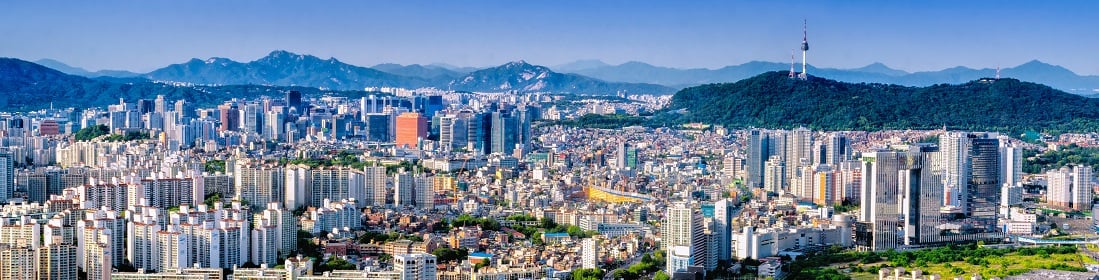
Seoul, Korea
September 7-8, 2017
Wednesday, September 6, 2017 |
|
7:00 p.m. - 9:00 p.m |
Welcome Reception |
Thursday, September 7, 2017 |
|
8:30 a.m. - 9:00 a.m. |
Registration |
9:00 a.m. - 9:30 a.m. |
Opening Session Welcoming remarks Hyoung-Kwon Ko, First Vice Minister, Ministry of Strategy and Finance Juyeol Lee, Governor, Bank of Korea Christine Lagarde, Managing Director, IMF "Asia and Pacific Region: Gearing Up for the Next Transformation" |
9:30 a.m. - 10:30 a.m. |
Session 1– Introduction Since the Global Financial Crisis, low economic growth has sometimes been recognized as the “new normal” or “new mediocre”, especially for advanced economies. Discussions on the new mediocre have focused on concerns about a lack of aggregate demand, impediments to self-correcting forces in the economy, and the slowdown in productivity growth. This session will lay out issues and examine their relevance in the Asian context. Today’s perspective on sustained low growth will also be complemented with a historical perspective. Sustained growth was largely absent through most of human history, and answers to the question of what factors led to the past transition from a stationary economic state to one of sustained growth might provide useful insights for the future. Session chair: Introduction, Laying out the Main Issues and Questions Adam Posen, President, Peterson Institute for International Economics Changyong Rhee, Director, IMF A historical perspective on the secular stagnation hypothesis and its relevance for Asia Joel Mokyr, Professor, Northwestern University |
10:30 a.m. - 10:50 a.m. |
Coffee Break |
10:50 a.m. - 12:50 p.m. |
Session 2– The New Normal and Asia: Conceptual Issues This session will consider the possible main drivers of low growth today and in the future, focusing on the three factors: demographic transition (population aging and declining population growth), productivity, and spillovers. What will be the likely macroeconomic impact of demographic transitions in a low interest rate environment? What countries will be most affected? With already high capital-labor ratios in some economies, and lower contributions to growth from labor supply, productivity would need to play a more prominent role in sustaining growth. Does Asia have the right institutional framework to foster innovation and productivity gains? Is Asia ready for the Fourth Industrial Revolution? Meanwhile, countries are highly interrelated in Asia, and it might be difficult for countries to insulate their economies from the spillovers of low growth elsewhere, in and outside the region. Session chair: Demographics Ranil Salgado, Assistant Director, IMF Discussant: Sang-Hyop Lee, Professor, University of Hawaii at Manoa Invention, productivity and the evolution of East Asia's innovation systems Lee Branstetter, Professor, Carnegie Mellon University Discussant: Jong-Wha Lee, Professor, Korea University International transmission and policy spillovers Olivier Jeanne, Professor, Johns Hopkins University & Senior Fellow, PIIE Discussants: Heenam Choi, Executive Director, IMF |
12:50 p.m. - 2:00 p.m. |
Luncheon |
2:00 p.m. - 3:40 p.m. |
Session 3– Country Case Studies I This session focuses on Japan and Korea. Low growth and inflation in Japan over the past two decades have motivated a broad literature on the zero lower bound on nominal interest rates and policies to escape the forces of stagnation. What are the lessons from the Japanese experience for other Asian countries? What has been the interaction between the labor market and low growth in Japan? Have institutional labor market features contributed to low growth? In Korea, lower growth over the past decade and prospects of an accelerated demographic transition have led to concerns about a low growth trend. How should policy makers respond? Session chair: Japanese lessons from the past 30 years Adam Posen, President, PIIE Discussant: Masahiro Kawai, Professor, University of Tokyo Japan Kyoji Fukao, Professor, Hitotsubashi University Discussant: Jonathan Woetzel, Director, McKinsey Global Institute Korea Dongchul Cho, Member of Monetary Policy Board, BOK Discussant: Tarhan Feyzioglu, Korea Mission Chief, IMF |
3:40 p.m. - 3:50 p.m |
Coffee Break |
3:50 p.m. - 5:30 p.m. |
Session 4– Country Case Studies II In contrast to Japan and Korea, China, India, and Indonesia have continued to enjoy rapid growth since the global financial crisis on the back of supportive macroeconomic policies and strong convergence dynamics. How have the three economies managed to avoid a strong impact of the spillovers from low growth in advanced economies, including through lower external demand? What are the risks of low growth in the future in these economies: impending demographic transitions, or possibly recent slowdowns in productivity growth? Are they more permanent than expected? Session chair: China Ma Jun, Chief Economist, People's Bank of China Discussant: Alfred Schipke, Senior Resident Representative for China, IMF India Prachi Mishra, Senior Economist, IMF Discussant: Kenneth Kang, Deputy Director, IMF Indonesia Mitali Das, Assistant to the Director, IMF Discussant: Muhamad Chatib Basri, President Commissioner of Indonesia Infrastructure Finance |
6:30 p.m. - 8:00 p.m |
Dinner Speech: Maurice Obstfeld, Chief Economist, IMF |
Friday, September 8, 2017 |
|
8:30 a.m. - 9:00 a.m. |
Coffee |
9:00 a.m. - 10:40 a.m. |
Session 5– Policies I: Monetary Policy This session will discuss the role of monetary policy in avoiding low inflation traps and the monetary instruments that can be used once nominal interest rates hit an effective lower bound. An important consideration will be the policy implications of the current global context of lower natural rates of interest and of asymmetric inflation risks in Session chair: Monetary policy Joseph Gagnon, Senior Fellow, PIIE Discussant: Seung-Cheol Jeon, Deputy Governor, BOK Monetary policy in the New Mediocre Douglas Laxton, Division Chief, IMF Discussant: Shigenori Shiratsuka, Director General, Bank of Japan |
10:40 a.m. - 11:00 a.m. |
Coffee Break |
11:00 a.m. - 12:40 p.m. |
Session 6– Policies II (Fiscal and Structural Policy) This session will discuss fiscal, trade and structural policies. What are the implications of low growth and low interest rates for fiscal policy frameworks and implementation? What structural and fiscal policy reforms are best suitable for long term potential growth? After several decades of trade growing faster than output, what can we expect from trade in the future? Is the recent slowdown in global trade growth fully explained by the slowdown in output growth, or is there any role of other factors, such as global rebalancing? Session chair: Fiscal policy Ana Corbacho, Division Chief, IMF Discussant: Junghun Kim, Vice President, Korea Institute of Public Finance Trade and investment Caroline Freund, Senior Fellow, PIIE Discussant: Davin Chor, Professor, National University of Singapore |
12:40 p.m. - 1:30 p.m. |
Luncheon |
1:30 p.m. - 3:00 p.m. |
Panel Discussion– Perspectives on the New Mediocre and Asia In the panel discussion, perspectives on the new mediocre, low economic growth, and its relevance to Asia will be discussed. Panelists will draw lessons from diverse country experiences across Asia. They will consider issues such as the risks of low growth in the future and how such risks can be mitigated. What does this mean for policy frameworks and strategies? Moderator: Panelists: Adam Posen, President, PIIE Hiroshi Nakaso, Deputy Governor, Bank of Japan Yoon Je Cho, Professor Emeritus, Sogang University Ma Jun (TBC), Chief Economist, People's Bank of China Subir Gokarn, Executive Director, IMF Muhamad Chatib Basri, Former Finance Minister of Indonesia |