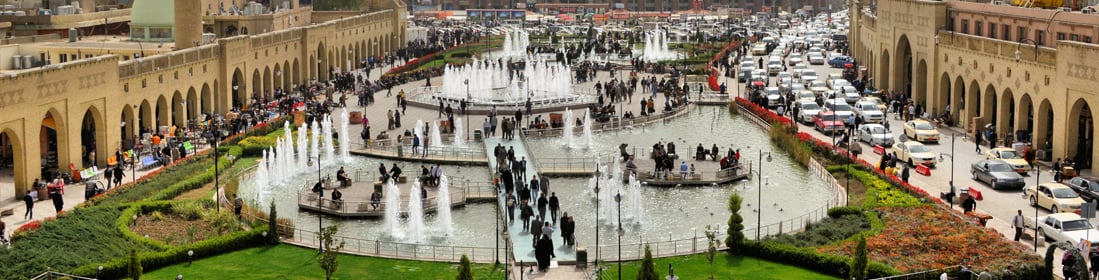
This web page presents information about the work of the IMF in Iraq, including the activities of the IMF Resident Representative Office. Additional information can be found on the Iraq and IMF, including IMF reports and Executive Board documents that deal with Iraq.
Iraq: At a Glance
- Current IMF membership: 191 countries
- Iraq joined the Fund on December 27, 1945; Article XIV
- Quota: SDR 1,188.40 million
Iraq and the IMF
No results found. Either there was an error with the web service or there is no data returned by the web service.
Office Activities
Resident Representative Visit to Baghdad
IMF Resident Representative Gazi Shbaikat concludes a visit to Baghdad where he held several high-level and technical meetings on key economic developments and enhance cooperation with the authorities including the Prime Minister, Governor of the Central Bank, and Minister of Finance among other key ministries and departments. Gazi Shbaikat also met with UN agencies, the World Bank, and IECG ambassadors, where he delivered an economic debrief and stressed the need for enhancing coordination among partners in key support and technical assistance areas.
March 30, 2023
Inflation and Conflict in Iraq: The Economics of Shortages Revisited
Containing inflation has turned out to be one of the most challenging aspects of economic management in Iraq. This paper posits that conventional as well as unconventional factors explain inflation dynamics in the recent past.
July 2, 2010
Technical Assistance Evaluation Program
Findings of Evaluations and Updated Program - Evaluation of the Technical Assistance Subaccount for Iraq
April 4, 2008
IMF Sees Global Imbalances Narrowing, but More to Be Done
Global Imbalances, Africa's Improved Debt Outlook, Nigerian Reform, Burkina Faso's Cotton Crisis, Ghana and Inflation Targeting, Iraq's Progress, Egypt's Reforms Spur Growth, Asian Trade, Baltics' High Growth Rate, News Briefs
March 31, 2008
Resident Representative Visit to Baghdad
IMF Resident Representative Gazi Shbaikat concludes a visit to Baghdad where he held several high-level and technical meetings on key economic developments and enhance cooperation with the authorities including the Prime Minister, Governor of the Central Bank, and Minister of Finance among other key ministries and departments. Gazi Shbaikat also met with UN agencies, the World Bank, and IECG ambassadors, where he delivered an economic debrief and stressed the need for enhancing coordination among partners in key support and technical assistance areas.
March 30, 2023
Inflation and Conflict in Iraq: The Economics of Shortages Revisited
Containing inflation has turned out to be one of the most challenging aspects of economic management in Iraq. This paper posits that conventional as well as unconventional factors explain inflation dynamics in the recent past.
July 2, 2010
Technical Assistance Evaluation Program
Findings of Evaluations and Updated Program - Evaluation of the Technical Assistance Subaccount for Iraq
April 4, 2008
IMF Sees Global Imbalances Narrowing, but More to Be Done
Global Imbalances, Africa's Improved Debt Outlook, Nigerian Reform, Burkina Faso's Cotton Crisis, Ghana and Inflation Targeting, Iraq's Progress, Egypt's Reforms Spur Growth, Asian Trade, Baltics' High Growth Rate, News Briefs
March 31, 2008
Resident Representative Visit to Baghdad
IMF Resident Representative Gazi Shbaikat concludes a visit to Baghdad where he held several high-level and technical meetings on key economic developments and enhance cooperation with the authorities including the Prime Minister, Governor of the Central Bank, and Minister of Finance among other key ministries and departments. Gazi Shbaikat also met with UN agencies, the World Bank, and IECG ambassadors, where he delivered an economic debrief and stressed the need for enhancing coordination among partners in key support and technical assistance areas.
March 30, 2023
Inflation and Conflict in Iraq: The Economics of Shortages Revisited
Containing inflation has turned out to be one of the most challenging aspects of economic management in Iraq. This paper posits that conventional as well as unconventional factors explain inflation dynamics in the recent past.
July 2, 2010
Technical Assistance Evaluation Program
Findings of Evaluations and Updated Program - Evaluation of the Technical Assistance Subaccount for Iraq
April 4, 2008
IMF Sees Global Imbalances Narrowing, but More to Be Done
Global Imbalances, Africa's Improved Debt Outlook, Nigerian Reform, Burkina Faso's Cotton Crisis, Ghana and Inflation Targeting, Iraq's Progress, Egypt's Reforms Spur Growth, Asian Trade, Baltics' High Growth Rate, News Briefs
March 31, 2008
Resident Representative Visit to Baghdad
IMF Resident Representative Gazi Shbaikat concludes a visit to Baghdad where he held several high-level and technical meetings on key economic developments and enhance cooperation with the authorities including the Prime Minister, Governor of the Central Bank, and Minister of Finance among other key ministries and departments. Gazi Shbaikat also met with UN agencies, the World Bank, and IECG ambassadors, where he delivered an economic debrief and stressed the need for enhancing coordination among partners in key support and technical assistance areas.
March 30, 2023
Inflation and Conflict in Iraq: The Economics of Shortages Revisited
Containing inflation has turned out to be one of the most challenging aspects of economic management in Iraq. This paper posits that conventional as well as unconventional factors explain inflation dynamics in the recent past.
July 2, 2010
Technical Assistance Evaluation Program
Findings of Evaluations and Updated Program - Evaluation of the Technical Assistance Subaccount for Iraq
April 4, 2008
IMF Sees Global Imbalances Narrowing, but More to Be Done
Global Imbalances, Africa's Improved Debt Outlook, Nigerian Reform, Burkina Faso's Cotton Crisis, Ghana and Inflation Targeting, Iraq's Progress, Egypt's Reforms Spur Growth, Asian Trade, Baltics' High Growth Rate, News Briefs
March 31, 2008
Regional Economic Outlook
October 21, 2025

Resilience amid Uncertainty: Will It Last?
Economic growth in the Middle East and Central Asia was resilient in 2025 despite global uncertainty. But maintaining momentum will require cautious macroeconomic policies, and long-term reforms.
Read the Report