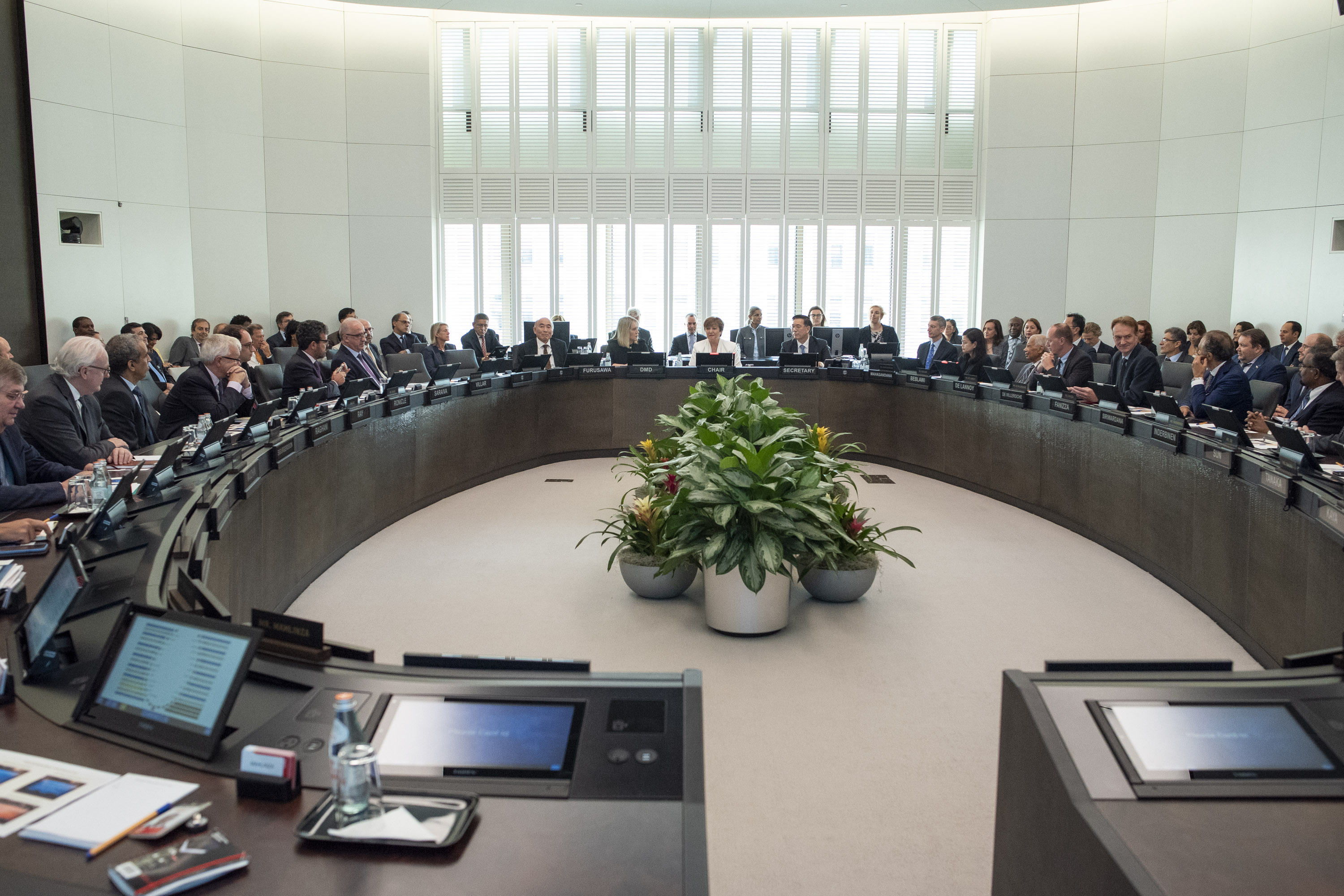
IMF Executive Board Concludes 2017 Article IV Consultation with Tunisia
IMF News, June 12, 2018
Source details
- Canonical URL
- IMF Executive Board Concludes 2017 Article IV Consultation with Tunisia
Other formats
Bibliographic details
- Published: June 12, 2018
Summary of recent developments
- On March 23, 2018, the Executive Board of the International Monetary Fund (IMF) concluded the Article IV Consultation with Tunisia.
- Economic growth almost doubled to 1.9 percent in 2017 from prior years, reflecting strengthened confidence from improved security and the unity government’s early policy and reform implementation.
- Growth is expected to reach 2.4 percent in 2018, helped by a good agricultural season and a pickup in manufacturing and tourism.
- Unemployment remains high at 15 percent, with youth, women, and interior regions especially affected.
- Inflation accelerated to an annualized 7.1 percent in February 2018, driven by dinar depreciation (10 percent real depreciation in 2017), wage hikes in the public and private sector, and increases in administrative prices.
- Authorities widened the interest rate corridor to 200 basis points in January and increased the policy interest rate by 75 basis points to 5.75 percent in March.
External sector and reserves
- The current account deficit deteriorated to a record 10.1 percent of GDP at the end of 2017.
- Exports remained sluggish while imports rose due to high domestic energy needs, strong consumption demand underpinned by rapid credit growth, and the impact of the dinar depreciation on import prices.
- Trade data for early 2018 show improved export performance and slowing import growth; this favorable trend is expected to continue supported by a more favorable real exchange rate.
- International reserves declined to 2.5 months of imports in March 2018, including due to higher-than-programmed central bank foreign exchange sales and delayed external financing.
- Directors recommended reducing foreign exchange interventions and increasing exchange rate flexibility to help improve the current account and rebuild international reserves.
Fiscal position, public and external debt
- Public debt reached 71 percent of GDP and external debt reached 80 percent of GDP at the end of 2017.
- These increases reflect high fiscal and current account deficits, the dinar depreciation, and lower-than-envisaged growth.
- Public and external debt are projected to reverse their upward trend starting in 2020, supported by a three-percent-of-GDP reduction in the fiscal deficit over 2018-20 and a sustained recovery of growth—conditional on strong implementation of fiscal plans.
- Authorities’ fiscal plans include:
- New tax measures worth 2.2 percent of GDP in 2018.
- Quarterly adjustments of fuel prices to contain growth of energy subsidies.
- Civil service reform based on voluntary separations and strict hiring limits.
- Pension reform.
- Development of a better targeted social safety net to protect the most vulnerable.
Monetary policy and inflation guidance
- The authorities widened the interest rate corridor to 200 basis points in January and raised the policy interest rate by 75 basis points to 5.75 percent in March.
- Directors welcomed the recent policy rate increase and underscored that further tightening will be necessary to reduce inflation.
Banking sector and financial stability
- The banking sector remains stable but faces structurally low liquidity as savings remain weak.
- Recent inspections of the seven largest private banks showed no major vulnerabilities.
- The banking sector’s foreign currency exposure remains low, credit risk is mitigated by the recovery in growth, and interest margins remain comfortable.
- Directors saw need for further financial sector reforms, urging acceleration of steps such as legislation to facilitate reduction of banks’ NPL portfolios and enhancements to the AML/CFT regime.
Structural reforms and governance
- Medium-term prospects project growth to reach 4 percent by 2022, contingent on sustained reforms.
- Priority reform areas identified:
- Improving governance and the business climate.
- Broadening access to finance.
- Modernizing fiscal institutions to improve service delivery and efficiency.
- Completing civil service reform and strengthening selection and efficiency of public investment projects.
- Improving management of SOEs and reforming the energy sector, including addressing subsidies.
- Recent progress supporting the agenda includes establishment of the High Anti-Corruption Authority, creation of the one-stop shop for investors, performance contracts for public banks and state-owned enterprises, and laws to facilitate banks’ NPL reduction.
Executive Board assessment and policy recommendations
- Directors noted economic and socio-political challenges, adverse shocks, policy slippages, and delays in structural reforms that have hindered recovery and increased vulnerabilities.
- Directors urged the authorities to strengthen commitment to the program and take urgent and decisive action to:
- Put public finances on a more sustainable path.
- Address rising inflation and falling reserves.
- Ensure macroeconomic stability.
- Directors generally agreed that moving to quarterly reviews would facilitate implementation of the Fund-supported program.
- Fiscal consolidation advice centered on:
- Focusing adjustment on increasing tax revenue and reigning in current spending to increase investment and social expenditure.
- Strengthening tax collection.
- Implementing voluntary separations for civil servants.
- Curtailing new wage increases unless growth surprises significantly.
- Enacting quarterly fuel price increases.
- Maintaining adequate social protection and pursuing equitable, sustainable pension reforms.
- Targeted programs for the most vulnerable.
Selected economic indicators (2013–2019)
- Population (2017): 11.5 million
- Per capita GDP: US$ 4232 (2012)
- Per-capita GDP: US$3,496 (2017)
- Quota: SDR 545.20 million
- Literacy rate (2014): 79%
- Main exports: textiles, electronic and mechanical goods, energy, tourism
- Poverty rate (2015, national poverty line): 15%
- Key export markets: France, Italy
- Real GDP growth (%): 2013: 2.4; 2014: 2.3; 2015: 1.1; 2016: 1.0; 2017: 1.9; 2018 Prel. Proj.: 2.9
- Unemployment (end of period, %): 2013: 15.3; 2014: 15.4; 2015: 15.5; 2016: 15.0; 2017: 14.8
- Inflation (eop, %): 2013: 5.7; 2014: 4.8; 2015: 4.1; 2016: 4.2; 2017: 6.4; 2018: 6.5; 2019: 5.9
- Total revenue (excl. grants, % of GDP): 2013: 25.0; 2014: 25.4; 2015: 23.2; 2016: 22.7; 2017: 24.0; 2018: 24.6; 2019: 25.7
- Total expenditure and net lending (% of GDP): 2013: 32.4; 2014: 29.8; 2015: 28.8; 2016: 28.7; 2017: 30.2; 2018: 30.1; 2019: 29.3
- Overall balance (incl. grants, % of GDP): 2013: -7.3; 2014: -3.7; 2015: -5.3; 2016: -5.9; 2017: -6.0; 2018: -5.2; 2019: -3.4
- Cyclically-adjusted structural balance: 2013: -6.4; 2014: -4.5; 2015: -4.7; 2016: -5.7; 2017: -6.7; 2018: -4.3; 2019: -3.1
- Gross public debt (% of GDP): 2013: 46.8; 2014: 51.6; 2015: 54.8; 2016: 61.2; 2017: 71.3; 2018: 73.1; 2019: 73.3
- Broad money (% change): 2013: 6.6; 2014: 7.8; 2015: 5.3; 2016: 8.1; 2017: 9.8; 2018: 7.4; 2019: 9.1
- Credit to the private sector (% change): 2013: 6.8; 2014: 9.4; 2015: 6.2; 2016: 9.7; 2017: 13.2; 2018: 9.0; 2019: 8.7
- Current account (% of GDP): 2013: -8.4; 2014: -9.1; 2015: -8.9; 2016: -8.8; 2017: -10.1; 2018: -9.2; 2019: -7.8
- Foreign direct investment (% of GDP): 2013: 2.2; 2014: 1.7; 2015: 1.8; 2016: 2.0; 2017: 2.5
- Reserve coverage (months of next year's imports of GNFS): 2013: 3.4; 2014: 3.2; 2015: 3.1; 2016: 3.7
- External debt (% of GDP): 2013: 57.0; 2014: 61.4; 2015: 64.9; 2016: 72.2; 2017: 80.1; 2018: 83.7; 2019: 85.5
- REER (% change, "-": depreciation): 2013: -1.9; 2014: -0.2; 2015: 5.1; 2016: -10.7; 2017: …
Press Release No. 18/232, June 12, 2018, IMF Communications Department.