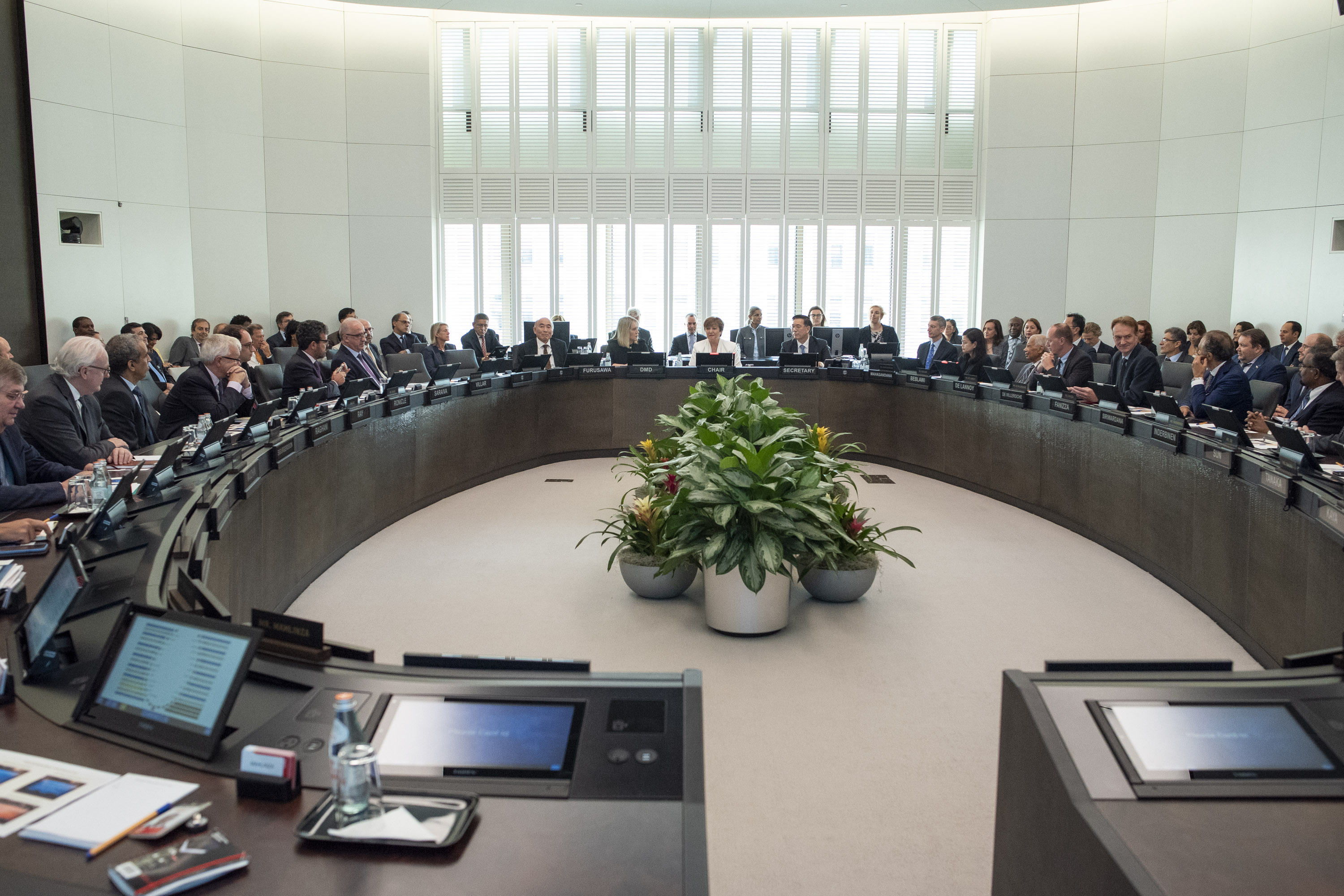
IMF Executive Board Approves US$ 83.7 Million in Emergency Support to Montenegro to Combat COVID-19 Pandemic
IMF News, June 24, 2020
Source details
- Canonical URL
- IMF Executive Board Approves US$ 83.7 Million in Emergency Support to Montenegro to Combat COVID-19 Pandemic
Other formats
Bibliographic details
- Published: June 24, 2020
Approval and financing instrument
- The Executive Board approved SDR 60.5 million (about $US 83.7 million or Euro 74 million, 100 percent of quota) in emergency assistance for Montenegro.
- The financing was provided under the Rapid Financing Instrument (RFI).
- The RFI provides rapid financial assistance to member countries facing urgent balance of payment needs without the need for a full-fledged economic program or reviews.
Economic outlook and impact of COVID-19
- The global outbreak of COVID-19 has weakened the outlook for Montenegro’s economy and created immediate financing needs.
- Tourism accounts for around a fifth of the economy.
- GDP is projected to decline by nearly 9 percent in 2020 (11.7 percentage points below the pre-virus baseline).
- GDP is expected to grow by 5.2 percent in 2021 and gradually converge to potential.
- Montenegro could experience the largest contraction since independence.
Immediate policy response by Montenegrin authorities
- Authorities are implementing a package of fiscal and financial sector measures to sustain economic activity, including:
- Measures to preserve employment.
- An extension of social benefits.
- Provision of liquidity to the economy.
- The immediate challenge is to mitigate the effects on the economy and households most affected by the crisis.
IMF assessment and policy recommendations (statement by Mr. Tao Zhang, Deputy Managing Director and Acting Chair)
- The COVID-19 shock has created urgent balance of payments and fiscal financing needs.
- Authorities implemented swift and decisive measures to contain and mitigate the spread of the pandemic, enabling a relatively speedy reopening of the economy.
- Given uncertainties around the recovery of tourism globally, the economy could take a few years to fully rebound to pre-pandemic GDP levels.
- Fiscal and financial sector policies have been accommodative in response to the pandemic.
- A sizable temporary increase in the fiscal deficit to accommodate higher public healthcare needs and targeted transfers to firms and households affected by the pandemic is appropriate.
- Starting next year, authorities need to:
- Restore fiscal space and steadily lower public debt by resuming their ambitious fiscal consolidation program started in 2017.
- Avoid large capital outlays — with particular restraint in launching and implementing large projects which could jeopardize debt sustainability.
- Financial sector policy guidance:
- Policy measures to ease the strain on borrowers should be continually recalibrated as circumstances evolve.
- Authorities should stand ready to take additional measures to preserve financial sector stability, if necessary.
- When conditions permit, authorities should resume their planned asset quality review of the banking system.
Role of IMF financing and external partners
- The IMF emergency assistance under the RFI will help provide resources to address urgent balance of payments needs and support essential healthcare expenditures.
- The support of other international financial institutions and development partners is expected to close remaining financing gaps, ease the adjustment burden, and preserve Montenegro’s long-term economic growth.
Contacts and additional resources
- IMF Communications Department — MEDIA RELATIONS
- PRESS OFFICER: Gediminas Vilkas
- Phone: +1 202 623-7100
- Email: MEDIA@IMF.org
- @IMFSpokesperson
- Related links provided on the original release include:
- IMF Lending Tracker (emergency financing request approved by the IMF Executive Board)
- Policy tracker: economic responses to COVID-19 by 193 countries
- IMF Executive Board calendar
Press Release No. 20/246 — June 24, 2020.
References
- https://www.imf.org/-/media/images/imf/bios/imfboard.jpg
- The Executive Board
- Montenegro and the IMF
- Press Releases
- PRESS CENTER
- Rapid Financing Instrument
- https://www.imf.org/en/Topics/imf-and-covid19/COVID-Lending-Tracker
- https://www.imf.org/en/Topics/imf-and-covid19/Policy-Responses-to-COVID-19
- https://www.imf.org/external/NP/SEC/bc/eng/index.aspx
- https://www.imf.org/en/home