Press Release No. 21/368

IMF Executive Board Concludes 2021 Article IV Consultation with Palau

December 9, 2021

    Washington, DC: On November 29, 2021, the Executive Board of the International Monetary Fund (IMF) concluded the Article IV consultation [1] with Palau.

    Palau entered the pandemic with some fiscal buffers, including a moderate public debt. While strict health measures and preemptive border closure have helped prevent local community spreads of COVID-19 to date, they have severely impacted the tourism-dependent economy. Real GDP contracted by 9.7 percent in FY2020 and is estimated to have further declined by 17.1 percent in FY2021. In contrast to the tourism sector, construction activities were resilient, reflecting progress on large infrastructure projects and strong housing construction. Inflation edged up, driven by a rise in food and energy prices, and the current account widened significantly on the back of a sharp decline in tourism receipts.

    The authorities adopted a comprehensive policy response with measures that appropriately aimed at strengthening healthcare and mitigating the economic and social hardship of the pandemic. Despite job losses in the tourism sector, employment support prevented a notable deterioration of overall labor market conditions. The economic fallout of the pandemic and the cost of the fiscal response have led to large fiscal deficits and a rapid increase in public debt. With about 90 percent of the total population fully vaccinated, Palau has started to gradually reopen its borders with some safety measures.

    The economic outlook remains challenging. Real GDP is projected rebound by 9.4 percent in FY2022 alongside a gradual recovery in tourist arrivals, which are expected to remain below pre-pandemic levels through FY2023. Inflation is expected to pick up on the back of elevated international fuel prices. The large fiscal and current account deficits are projected to narrow as tourism activities recover. The outlook is subject to high uncertainty, and risks are titled to the downside, including from a protracted pandemic, a domestic outbreak, and natural disasters. Palau’s graduation from the OECD’s list of countries eligible for official development assistance could lead to lower concessional financing, in particular grants.

    Executive Board Assessment [2]

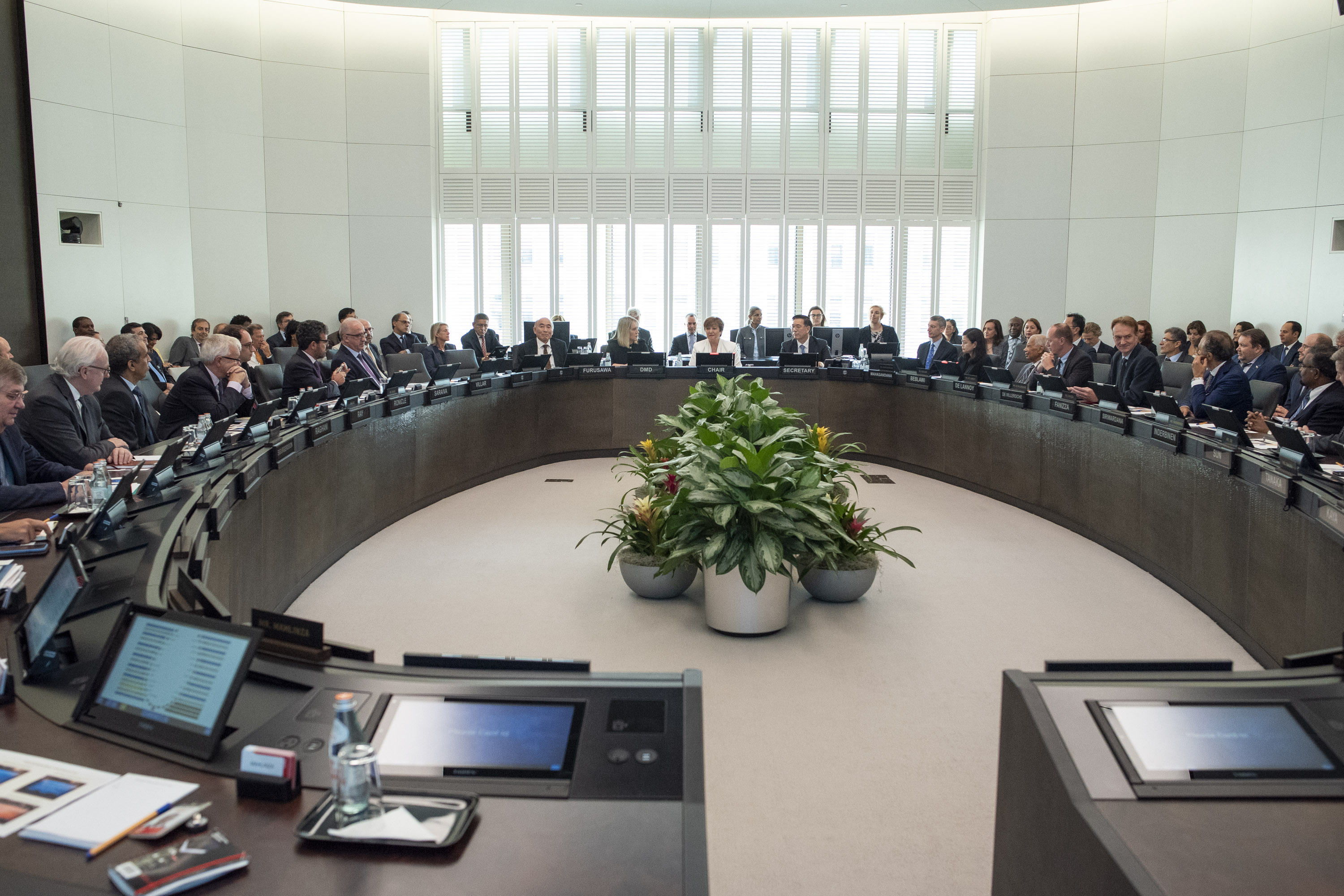
    Executive Directors welcomed the authorities’ comprehensive policy response to the pandemic which helped limit its health and economic impacts. They noted that an economic recovery is underway, supported by a high vaccination rate and a gradual resumption of tourism. However, the outlook remains clouded by elevated uncertainty and risks. While support to the economy should remain until the recovery is broadly entrenched, prudent policies are needed over the medium-term to support macroeconomic stability and promote sustainable, greener and inclusive growth.

    Directors welcomed the extension of measures to provide targeted fiscal support to still affected households and firms. They agreed that fiscal policy should continue to be the first line of defense in case downside risks materialize.

    Directors noted that fiscal risks over the medium-term have increased substantially and underscored the need for fiscal adjustment to rebuild fiscal resilience and preserve debt sustainability. They welcomed the approval of the comprehensive tax reform, which will contribute to fiscal adjustment while improving the efficiency of the tax system. Directors also concurred that additional revenue mobilization and expenditure rationalization efforts are needed to help accommodate higher climate spending, improve the external position, and provide buffers against potentially lower grants and concessional financing.

    Directors agreed that financial sector reforms should be accelerated to support financial deepening. They highlighted the need to enhance SMEs’ capacity to absorb credit and address the structural determinants of low credit creation. Risk-based supervision should be strengthened, including for non-bank financial institutions, and improving the AML/CFT framework should remain a high priority.

    Directors underscored that steadfast implementation of structural reforms should continue to support sustained growth post-pandemic. They welcomed efforts to pursue greater diversification of source markets for tourism. Going forward, Directors saw merit in streamlining processes for foreign investment, improving the business environment, and enhancing human capital to encourage private investment within and outside the tourism sector.

    Directors emphasized that strengthening resilience to climate change is essential for Palau’s sustainable development. In this regard, they called for a timely implementation of Palau’s climate change adaptation and mitigation strategy, including by tapping into climate risk financing, to enhance economic resilience.

    Directors agreed that pursuing capacity building efforts will enhance macroeconomic management.


    Table 1. Palau: Selected Economic Indicators, 2016/17-2025/26 1/

    Nominal GDP for FY2020: US$258 million

    Population (2019): 17,457

    GDP per capita for FY2020: US$14,784

    Quota: SDR 3.1 million

    2016/17

    2017/18

    2018/19

    2019/20

    2020/21

    2021/22

    2022/23

    2023/24

    2024/25

    2025/26

    Est.

    Proj.

    Real sector

    Nominal GDP (million US$)

    285.3

    284.7

    274.2

    257.7

    216.2

    242.7

    294.9

    305.5

    316.7

    327.7

    Real GDP growth (percent change)

    -3.3

    -0.1

    -1.9

    -9.7

    -17.1

    9.4

    18.3

    2.9

    2.9

    2.7

    GDP deflator (percent change)

    -1.1

    -0.1

    -1.8

    4.1

    1.2

    2.5

    2.8

    0.7

    0.7

    0.8

    Consumer prices (percent change; period average)

    0.9

    2.0

    0.6

    0.7

    1.2

    3.0

    2.8

    0.7

    0.7

    0.8

    Tourist arrivals (number of visitors)

    122,103

    115,997

    89,726

    41,674

    3,167

    24,708

    85,710

    89,996

    94,496

    99,220

    Expenditure per Tourist Arrival (US$)

    976

    984

    1,061

    1,257

    1,273

    1,312

    1,361

    1,384

    1,408

    1,432

    Public finance

    (In percent of GDP)

    Central government

    Revenue

    40.3

    44.5

    44.5

    47.4

    46.3

    41.2

    38.0

    39.0

    38.6

    38.9

    Taxes and other revenue

    27.2

    27.2

    27.8

    24.0

    22.1

    20.3

    22.9

    24.3

    24.8

    25.4

    Grants

    13.1

    17.3

    16.7

    23.4

    24.2

    21.0

    15.1

    14.7

    13.8

    13.6

    Expenditure

    35.5

    38.2

    44.1

    58.3

    65.8

    53.9

    41.1

    39.4

    38.4

    37.1

    Expense

    32.5

    35.9

    39.6

    52.3

    61.3

    48.9

    36.7

    35.3

    34.1

    32.3

    of which: grants to other government units

    5.1

    6.5

    11.1

    14.1

    18.3

    12.7

    7.4

    6.6

    6.1

    6.0

    Net acquisition of nonfinancial assets

    3.0

    2.3

    4.5

    6.1

    4.5

    5.0

    4.4

    4.2

    4.3

    4.8

    Current fiscal balance (excluding grants) 2/

    -5.3

    -8.8

    -11.8

    -28.3

    -39.2

    -28.6

    -13.8

    -11.0

    -9.2

    -6.9

    Current fiscal balance (including current grants) 3/

    5.6

    6.6

    -1.0

    -11.8

    -20.1

    -12.1

    -2.6

    0.0

    1.6

    3.7

    Net lending (+)/borrowing (–)

    4.8

    6.3

    0.4

    -10.9

    -19.5

    -12.6

    -3.2

    -0.5

    0.2

    1.9

    General government debt

    34.4

    37.0

    38.6

    62.1

    85.7

    90.3

    74.0

    71.1

    66.7

    62.1

    (In millions of U.S. dollars)

    Compact Trust Fund (CTF) balance

    219.5

    297.5

    281.9

    275.6

    330.3

    333.7

    337.3

    341.1

    345.1

    349.4

    Government cash and deposits 4/

    43.2

    42.9

    31.0

    60.7

    27.8

    32.2

    22.9

    21.5

    22.3

    28.4

    In percent of GDP

    15.1

    15.1

    11.3

    23.6

    12.9

    13.3

    7.8

    7.0

    7.0

    8.7

    Monetary sector

    Credit to private sector (in percent of GDP)

    12.1

    12.3

    11.6

    11.8

    ..

    ..

    ..

    ..

    ..

    ..

    Credit to private sector (percent change)

    15.4

    1.9

    -9.3

    -4.8

    ..

    ..

    ..

    ..

    ..

    ..

    Balance of payments 3/

    Trade balance

    -138.9

    -136.5

    -142.9

    -147.8

    -117.0

    -128.1

    -150.9

    -145.5

    -153.9

    -160.4

    Exports (f.o.b.)

    14.6

    15.5

    13.4

    6.1

    8.7

    10.1

    13.9

    14.1

    14.3

    14.6

    Imports (f.o.b.)

    153.5

    151.9

    156.4

    153.8

    125.7

    138.2

    164.8

    159.6

    168.3

    175.0

    Tourism receipts

    113.0

    104.8

    91.9

    50.9

    3.9

    31.3

    112.8

    120.5

    128.8

    137.6

    Current account balance

    Including grants

    -55.3

    -44.4

    -85.3

    -124.4

    -120.8

    -109.6

    -68.7

    -61.8

    -63.0

    -61.3

    Excluding grants

    -93.4

    -94.3

    -120.6

    -154.9

    -152.8

    -136.3

    -99.0

    -92.5

    -94.4

    -93.5

    International Investment Position

    -136.1

    -105.0

    -176.8

    -256.3

    -364.2

    -438.5

    -470.3

    -494.4

    -520.5

    -544.4

    Assets

    629.0

    715.2

    688.9

    736.9

    721.7

    734.6

    763.5

    801.4

    836.1

    874.6

    Liabilities

    765.1

    820.2

    865.7

    993.2

    1,085.9

    1,173.0

    1,233.7

    1,295.8

    1,356.5

    1,419.0

    Of which: External debt

    85.9

    91.8

    91.4

    150.1

    183.4

    217.9

    214.8

    210.8

    203.2

    194.8

    (In percent of GDP)

    Current account balance

    Including grants

    -19.4

    -15.6

    -31.1

    -48.3

    -55.9

    -45.2

    -23.3

    -20.2

    -19.9

    -18.7

    Excluding grants

    -32.7

    -33.1

    -44.0

    -60.1

    -70.7

    -56.2

    -33.6

    -30.3

    -29.8

    -28.5

    International Investment Position

    -47.7

    -36.9

    -64.5

    -99.4

    -168.4

    -180.7

    -159.5

    -161.8

    -164.3

    -166.1

    Of which: External debt

    30.1

    32.2

    33.3

    58.2

    84.8

    89.8

    72.8

    69.0

    64.2

    59.4

    Sources: Palau authorities; and Fund staff estimates and projections.

    1/ Fiscal year ending September 30.

    2/ Defined as tax and other revenue less expense.

    3/ Includes withdrawals from CTF and Funding for US Federal Programs (Post Office and Meteorological Service)

    4/ Includes unspent external loans.


    [1] Under Article IV of the IMF's Articles of Agreement, the IMF holds bilateral discussions with members, usually every year. A staff team visits the country, collects economic and financial information, and discusses with officials the country's economic developments and policies. On return to headquarters, the staff prepares a report, which forms the basis for discussion by the Executive Board.

    [2] At the conclusion of the discussion, the Managing Director, as Chairman of the Board, summarizes the views of Executive Directors, and this summary is transmitted to the country's authorities. An explanation of any qualifiers used in summings up can be found here: http://www.IMF.org/external/np/sec/misc/qualifiers.htm .

    IMF Communications Department
    MEDIA RELATIONS

    PRESS OFFICER: Brian Walker

    Phone: +1 202 623-7100Email: MEDIA@IMF.org

    @IMFSpokesperson