Loading component...

Street scene in Santa Ana, El Salvador. (Photo: iStock)
El Salvador's Comeback Constrained by Increased Risks
February 16, 2022
Global Financial Markets Confront the War in the Middle East and Amplification Risks


El Salvador’s increase in public debt will constrain medium-term growth prospects given the risks associated with high and growing financing needs.
In an interview with Country Focus, the IMF El Salvador team, led by Alina Carare, talks about the country’s rebound and challenges, and the decision to make Bitcoin legal tender.
After a sharp decline in 2020, we expect the economy to grow by around 10 percent of GDP in 2021, and 3.2 percent in 2022. This has a lot to do with the pick-up in external demand, and El Salvador’s response to the pandemic. Though it is one of the most densely populated countries in Latin America, El Salvador had one of the lowest reported rates of COVID-19 infections and fatalities in the region and has a relatively high vaccination rate.
US real GDP growth is also an important growth driver because of the large Salvadoran diaspora. About one-fifth of the population is living in the US. They contribute to the Salvadoran economy by sending remittances to support their families—more than 25 percent of GDP in 2021.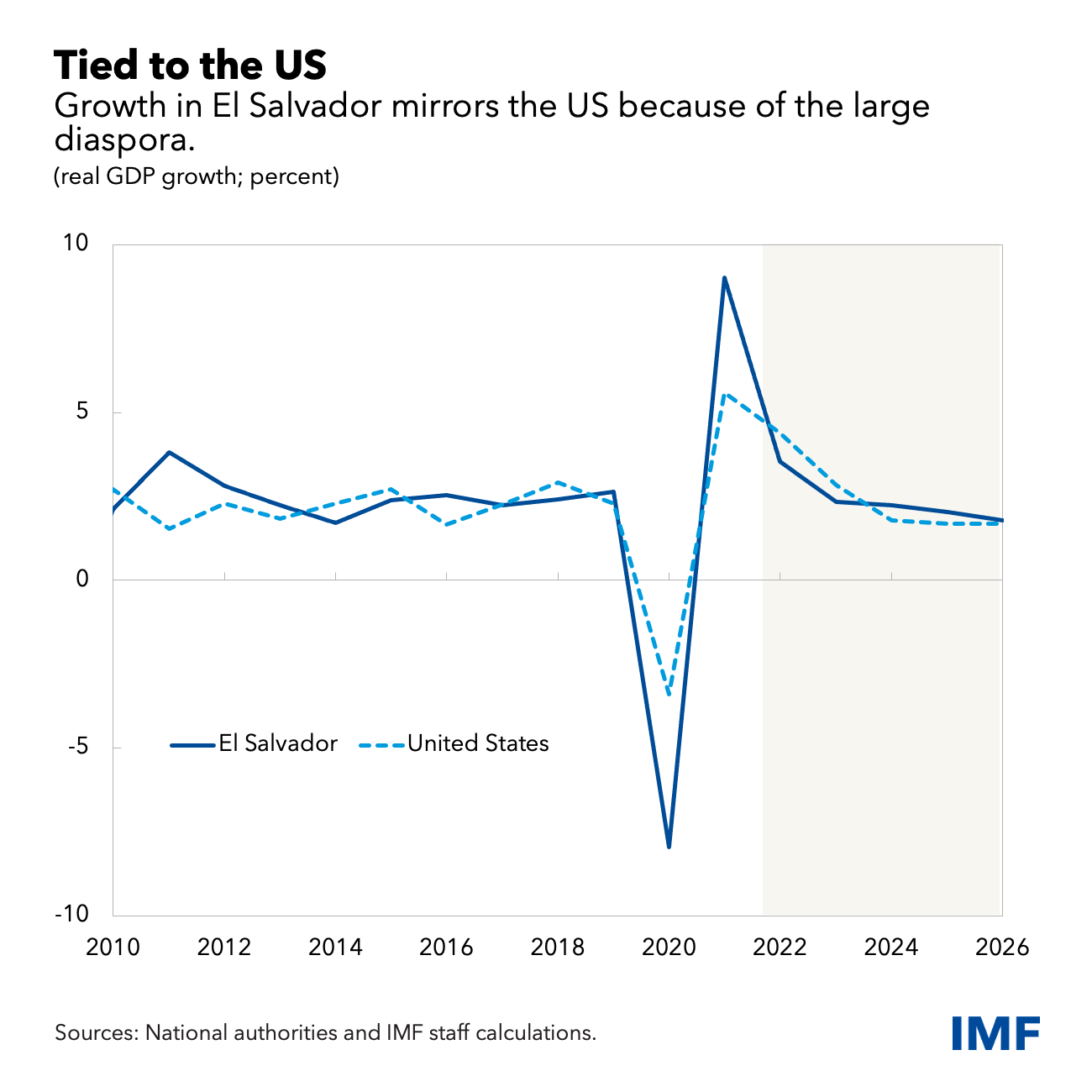
We expect medium-term growth rates in El Salvador to decline to around 2 percent as policy stimulus in the US wanes. This is below the historical average, and it is because of high public borrowing costs. Persistent budget deficits and continuous expansionary fiscal policies—despite the strong economy—have resulted in a rapidly growing public debt-to-GDP ratio. Unless decisive policy actions are taken, public debt will continue to grow, demanding more resources from the budget as borrowing costs increase. This situation is unsustainable—it crowds out private investment, and limits resources for social and infrastructure spending, all impediments to growth. To increase growth rates in the long term, more private investment is needed. Healthier public finances would help.
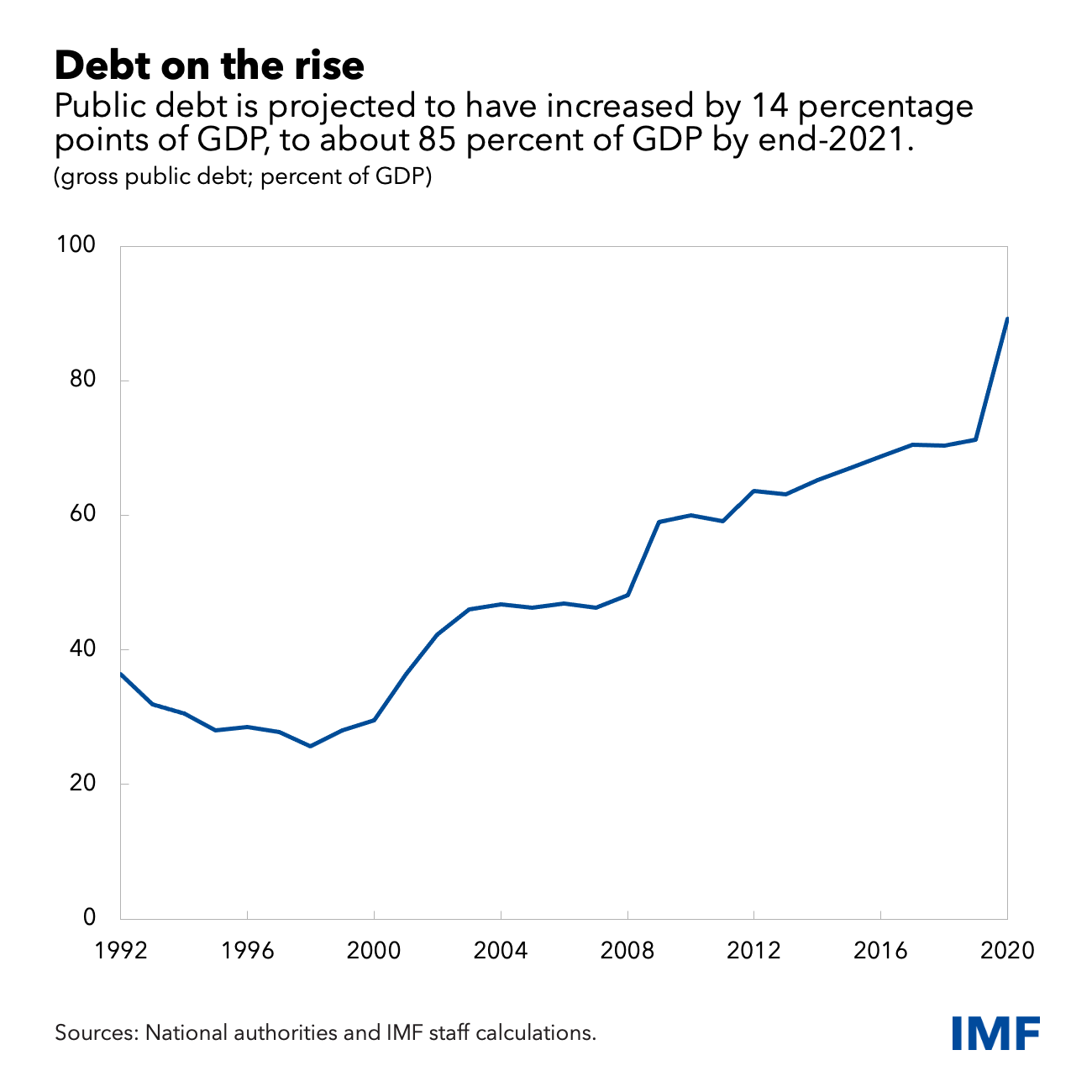
Because of this, we recommend a permanent reduction in the fiscal deficit (the difference between government revenue and spending), to be implemented over a 3-year period. This was agreed by the authorities and is in line with efforts made by other countries. It would put the debt-to-GDP ratio on a firm downward trend, creating the required fiscal space to implement the authorities’ ambitious social and inclusive growth agenda.
Measures to support the vulnerable together with improvements to governance frameworks and efforts to minimize risks from Bitcoin are critical to ensuring higher growth and macroeconomic stability. Failure to take prompt action would only complicate policy choices in the future and increase risks.
We have proposed policy options to restore the confidence of the market and ensure sufficient resources to service the country’s debt and finance its large development needs.
Digital means of payment such as Chivo (government e-wallet) have an important role to play in promoting financial inclusion, especially if used in US dollars. But as noted by our Executive Board, there are large risks associated with using Bitcoin as legal tender, especially given the high volatility of its price. We don’t recommend it. In the short-term, the costs and risks largely outweigh the benefits. These include risks to:
The El Salvador Country Team:
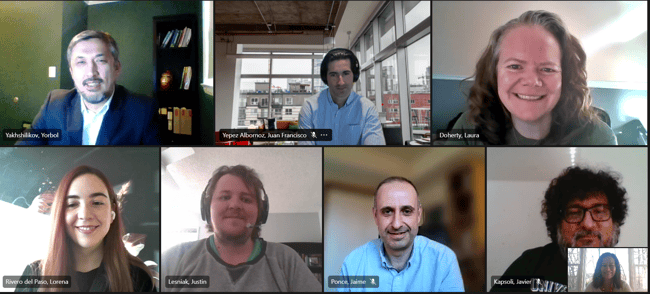
Alina Carare is Deputy Division Chief in the Western Hemisphere Department
Jaime Ponce is a Senior Financial Expert in the Monetary and Capital Markets Department
Javier Kapsoli is a Senior Economist in the Western Hemisphere Department
Juan Francisco Yépez is an Economist in the Western Hemisphere Department
Justin Lesniak is a Research Assistant in the Western Hemisphere Department
Laura Doherty is a Senior Economist in the Fiscal Affairs Department
Lorena Rivero del Paso is a Technical Assistance Advisor in the Fiscal Affairs Department
Yorbol Yakhshilikov is an Economist in the Western Hemisphere Department