IMF Executive Board Completes the Second Review under the Extended Credit Facility Arrangement for the Republic of Mozambique
IMF News, July 6, 2023
Source details
- Canonical URL
- IMF Executive Board Completes the Second Review under the Extended Credit Facility Arrangement for the Republic of Mozambique
Other formats
Bibliographic details
- Published: July 6, 2023
Review outcome and disbursement
- The Executive Board completed the Second Review under the three-year ECF arrangement for Mozambique.
- Immediate disbursement: SDR 45.44 million (about US$ 60.6 million), usable for budget support.
- Total disbursements under the ECF arrangement after this review: SDR 159.04 million (about US$ 212.09 million).
- Waivers of nonobservance approved for two performance criteria:
- Missed end-December 2022 performance criterion on domestic primary budget balance due to overruns in the implementation of the wage bill reform and revenue shortfalls.
- Missed continuous performance criterion on non-accumulation of public and publicly-guaranteed external arrears due to delays in debt service repayment by a SOE.
- Waivers were approved based on remedial actions taken by the authorities.
- The monetary policy consultation clause (MPCC) band was breached at the lower bound as inflation decelerated faster than expected; the monetary policy consultation with the Executive Board was completed.
- The Executive Board completed the financing assurances review and approved the authorities’ request for modification of conditionality.
Program objectives, performance, and conditionality
- Objective of the three-year ECF arrangement: support Mozambique’s economic recovery, reduce public debt and financing vulnerabilities, and foster higher and more inclusive growth through structural reforms.
- Program performance summary:
- Broadly favorable overall, with notable slippages in the fiscal area.
- Important program commitments in fiscal governance and anti-corruption were completed.
- Specific fiscal developments:
- Fiscal performance in 2022 was worse than expected, mainly due to slippage in the wage bill reform and revenue underperformance.
- Monetary policy stance:
- Characterized as tight and appropriate to contain inflation pressures.
Economic outlook and risks
- Growth:
- Projected to increase in 2023, driven by increasing liquified natural gas (LNG) production, agriculture, and services activities.
- Inflation:
- Returned to single digits, attributed to proactive monetary policy and favorable import prices for fuel and food.
- Inflation decelerated faster than expected (MPCC band breach at the lower bound).
- External sector:
- LNG investments are driving the current account deficit.
- Expected increase in LNG exports and moderation of food and energy imports is projected to improve the current account balance going forward.
- Risks:
- Primary downside risks: delays to LNG projects and deepening geo-economic fragmentation.
- Additional downside risks: inflation pressures from higher wages, natural disasters, and food insecurity.
- Upside risk: ramping up of LNG projects.
Policy recommendations and authorities’ actions (as highlighted by Mr. Bo Li, Deputy Managing Director and Acting Chair)
- Fiscal policy:
- Authorities are undertaking corrective measures to ensure fiscal discipline in 2023; continued fiscal consolidation efforts warranted over the medium term.
- Revenue side: broadening the VAT base to help mobilize revenues efficiently.
- Expenditure side: reducing the wage bill in line with regional peers to create fiscal space for high-priority spending.
- Continue strengthening the social safety net to address food insecurity and elevated poverty.
- Monetary policy and macroeconomic management:
- Monetary policy stance appropriate to contain inflationary pressures and rebuild reserves; continued caution warranted.
- Implement an appropriate and carefully calibrated policy mix between fiscal and monetary policy.
- Improve transmission of the policy rate by implementing an inflation targeting regime over the medium term to allow greater exchange rate flexibility to cope with external shocks.
- Structural and governance reforms:
- Continue progress on governance, anti-corruption, and fiscal structural agenda.
- Submit to Parliament the Sovereign Wealth Fund law to develop a transparent, accountable, and efficient framework for managing LNG receipts.
- Key reforms include improvements in revenue administration, public financial and debt management, and SOE transparency.
- Strengthen the AML/CFT framework and monitor vulnerabilities in the financial sector, including cybersecurity risks.
- Implement policies to enhance climate resilience given strong vulnerabilities to climate change.
- Program implementation:
- Continued program ownership by the authorities, complemented with capacity development efforts and donor support, remains essential for Mozambique to achieve its development objectives.
Key statistics (Table 1: Mozambique: Selected Economic Indicators, 2019–23)
- National Income and Prices
- Nominal GDP (MT billion): 2019: 963; 2020: 983; 2021: 1,053; 2022: 1,223; 2023: 1,414
- Real GDP growth (percentage change): 2019: 2.3; 2020: -1.2; 2021: 2.4; 2022: 4.2; 2023: 7.0
- Consumer price index (percentage change, end of period): 2019: 3.5; 2020: 6.7; 2021: 10.3; 2022: [not provided]
- Government Operations (percent of GDP)
- Total revenue: 2019: 29.0; 2020: 23.9; 2021: 25.3; 2022: 23.4; 2023: 23.5
- Total expenditure and net lending: 2019: 28.2; 2020: 32.9; 2021: 30.9; 2022: 32.3; 2023: 30.2
- Overall balance, after grants: 2019: 0.3; 2020: -5.7; 2021: -4.7; 2022: -4.9; 2023: -2.8
- Primary Balance after grants: 2019: -2.6; 2020: -2.0; 2021: 0.4; 2022: [not provided]
- Public sector debt: 2019: 99.0; 2020: 120.0; 2021: 104.9; 2022: 95.5; 2023: 89.7
- of which: external: 2019: 79.4; 2020: 97.8; 2021: 81.2; 2022: 71.1; 2023: 65.6
- Money and Credit
- Reserve money (percentage change): 2019: 19.1; 2020: 9.0; 2021: -14.3; 2022: 0.6; 2023: 85.9
- M3 (Broad Money) (percentage change): 2019: 13.4; 2020: 23.3; 2021: 1.9; 2022: 8.7; 2023: 5.2
- Credit to the economy (percentage change): 2019: 13.1; 2020: 4.0; 2021: 6.0; 2022: [not provided]
- Credit to the economy (percent of GDP): 2019: 23.8; 2020: 26.4; 2021: 25.9; 2022: 23.2; 2023: 21.2
- External Sector (percentage change)
- Merchandise exports: 2019: -10.2; 2020: -23.1; 2021: 55.6; 2022: 47.2; 2023: -1.9
- Merchandise exports, excluding megaprojects: 2019: 8.3; 2020: -22.0; 2021: 43.0; 2022: 31.9; 2023: 8.8
- Merchandise imports: 2019: 9.5; 2020: -12.9; 2021: 33.2; 2022: 70.2; 2023: -29.5
- Merchandise imports, excluding megaprojects: 2019: 9.3; 2020: -4.5; 2021: 37.8; 2022: 12.1; 2023: 7.9
- External current account, after grants (percent of GDP): 2019: -19.1; 2020: -27.6; 2021: -22.4; 2022: -32.9; 2023: -15.5
- Net international reserves (millions of U.S. dollars, end of period): 2019: 3,605; 2020: 3,493; 2021: 2,927; 2022: 2,333; 2023: …
- Gross international reserves (millions of U.S. dollars, end of period): 2019: 3,884; 2020: 4,070; 2021: 3,470; 2022: 2,888
IMF Executive Board Completes the Second Review under the Extended Credit Facility Arrangement for the Republic of Mozambique, July 6, 2023
References
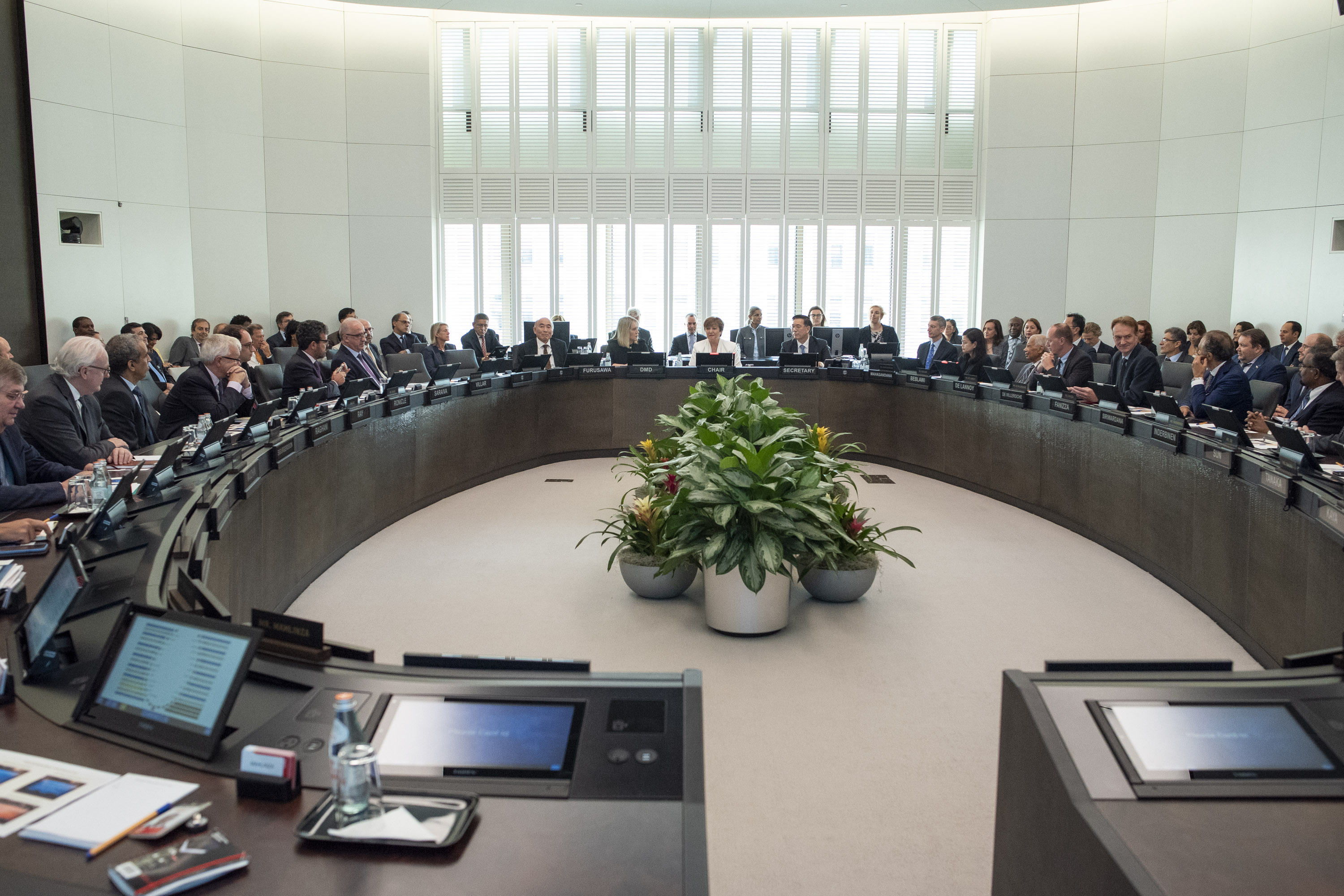
- https://www.imf.org/-/media/images/imf/bios/imfboard.jpg
- The Executive Board
- Republic of Mozambique and the IMF
- Special Drawing Rights (SDRs) -- A Factsheet
- Press Releases
- PRESS CENTER
- [Press
Release](https://www.imf.org/en/News/Articles/2022/05/09/pr22145-mozambique-article-iv-consultation-and-ecf)