


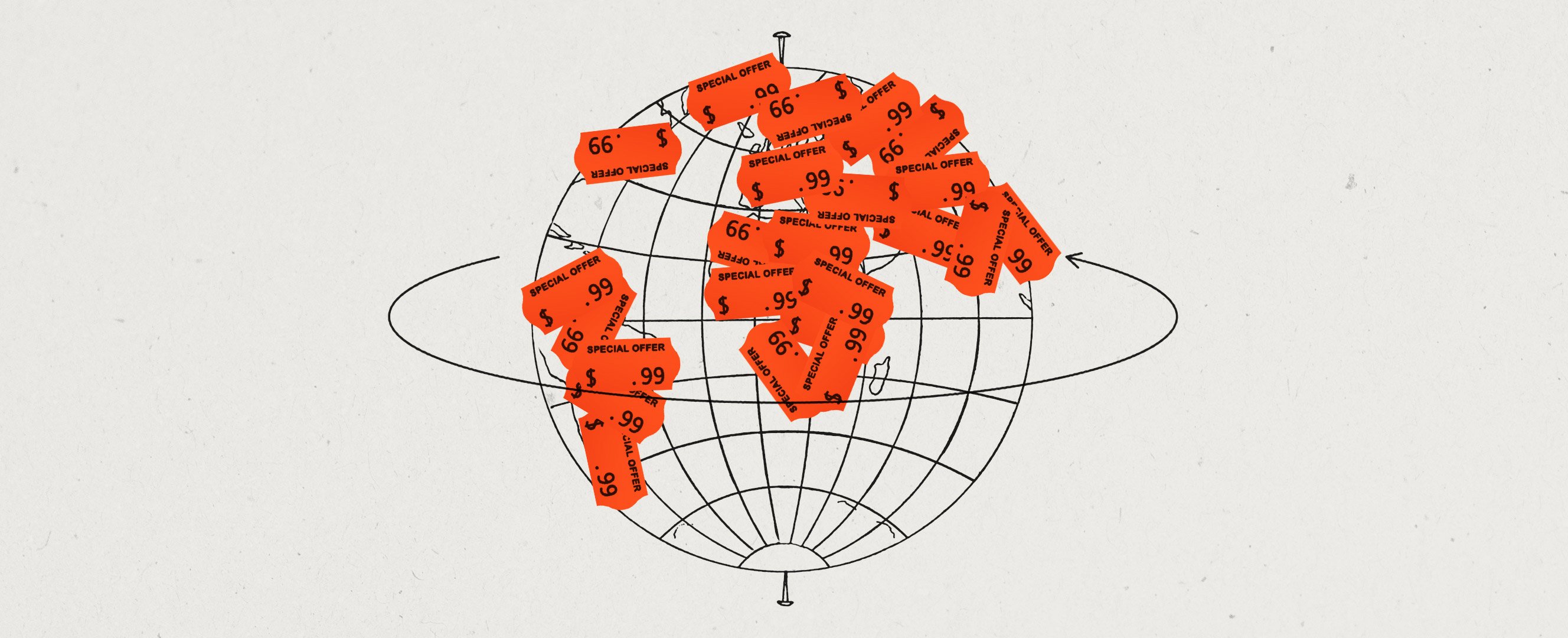
Price-tag policymaking doesn’t measure the things that matter to people
Rule by price has become fashionable, not only in economics but in public policy too. Putting a price tag on policies—by measuring in one unit the benefits for target groups and the costs others might bear—projects an aura of objectivity and transparency.
The aim is to enable policymakers to choose rationally among different ways to solve the same problem: compare different problems and their policy solutions simply according to their relative cost-effectiveness in dollars or some other currency. Once everything is measured and comparable, it’s almost possible to dispense with politics.
The messiness of politics, with the endless struggles to find common ground among inherently incommensurate objectives, can be turned into a simple spreadsheet from which to choose the most cost-effective option. Government is becoming governance by price tags.
Ideal-type markets, the kind found only in textbooks, serve as the model. The idea is that trading reveals the value of objects to buyers and sellers and that the price therefore holds all the relevant information. Of course, this is true only in efficient markets—markets without information costs and transaction costs, where no transaction is feasible that would benefit one person without making another worse off.
Pareto efficiency, as this state of equilibrium is known, is unachievable in the real world. This is why for most purposes it has been replaced with a simple net benefit analysis. As long as the net benefits exceed the net costs, a policy is worth pursuing. But measuring all costs and all benefits, and placing a price tag on each, is a tall order. For most activities and resources, prices do not exist or are not observable. They must be actively constructed based on assumptions that are necessarily incomplete, or biased in favor of ease of measurability, and that are often outright wrong.
False assumptions
Even financial markets, for which the efficiency paradigm was first developed, depend on an institutional infrastructure of disclosure rules, rating agencies, financial analysis, regulators, and supervisors to approximate informational efficiency. Still, all this public investment in financial stability has not prevented the frequent buildup of bubbles and the crises that follow them like night follows day.
Something as little as a new piece of information that was previously ignored can trigger a run for the exit by enough investors to set in motion a downward price spiral. As prices tumble, more investors sell, and as more sell, more prices tumble. This dynamic, in which prices are both cause and effect, can be stopped only by public intervention that sets a floor for prices by acting as a dealer or lender of last resort.
Loading component...
Even in the best circumstances, the price of financial assets contains only limited information about the underlying asset. As John Maynard Keynes noted long ago, the price of an asset reflects beliefs about what investors hope to sell it for in the future. It is like a beauty contest in which whoever predicts the person others will find most beautiful emerges as winner. It’s not about beauty as such or about the “fundamental value” of the economic undertaking that put the assets into circulation.
A business organization may be less complex than a nation, but it too is a complex undertaking that is difficult to measure on a single scale. Companies were once organized to produce goods or services for which there was some demand. Originally, corporations had to specify a purpose in order to obtain the privilege of incorporation—to operate as a separate legal person that owns its own assets, contracts in its own name, and can shield its shareholders from liability for its operations.
Today, corporations no longer commit to a specific purpose; instead, their purpose is to maximize shareholder value. As a result, corporations have become money mints in which firm assets are used as collateral, share-repurchase plans give shareholders liquidity on demand, and labor costs are cut—except compensation to directors and officers, whose incentives must align with those of shareholders for this model to work.
Corporate cash machines
Turning corporations into cash machines for investors has done strange things. Take Boeing Company, which made headlines several years ago when two of its 737 MAX airplanes crashed and again, more recently, when a door blew out midflight. After the earlier incidents that left hundreds of passengers dead, their relatives bereaved, and airplanes grounded for months for safety checks, shareholders sued the company’s directors. They sought hundreds of millions of dollars in compensation from the company for its failure to monitor product safety.
The litigation revealed that the board of directors had not monitored airplane safety. The board had an audit committee and a compensation committee, but no product safety committee. There was no information system to inform directors of engineers’ concerns about the planes’ safety.
In fact, the company had moved its headquarters from Seattle, its production base, to Chicago, its investor base, and then to the edge of Washington, DC, presumably its political cover base. The directors thought they had done nothing wrong. They did what they were told to do by their shareholder electorate: maximize shareholder value.
The Delaware Chancery Court, which had long endorsed shareholder value maximization, took them to task: a company that produces planes has a critical mission to ensure that the planes can fly. Failure to put in place an information and monitoring system that would alert them to safety issues amounted to a breach of their fiduciary duties.
(Asked for comment, Boeing said that since 2019 it has added board members with extensive engineering and safety experience, created a chief aerospace safety officer role, and established councils overseeing manufacturing and quality.)
Boeing is not a singular case. Other companies have also put customers at risk in pursuit of shareholder value. Yet the lessons about the danger of ruling by share price rather than purpose have been largely ignored. In fact, hedge funds and equity funds are having yet another go at extracting financial returns—the only value they recognize, whatever the costs to others. Worse, the price mechanism is turning politics and government into a pricing machine as well.
Standardizing, measuring, and the construction of prices are given primacy over deliberation, reasoning, and judgment. The stock market ticker and growth rates may say something about the economy but are silent about its effects on human well-being or the environment. They have even less to say about the health of the political system and social relations.
While investors seek safe havens for their money, caregiving remains mostly unpaid; the value of human creativity is determined at the box office; nature is reduced to yet another asset class that can be exploited for money; and what is left of community is harvested by profit-seeking digital platforms. These are the social costs of the price mechanism, which fails to incorporate almost anything that matters to people.

KATHARINA PISTOR is the Edwin B. Parker Professor of Comparative Law at Columbia Law School.
Opinions expressed in articles and other materials are those of the authors; they do not necessarily reflect IMF policy.


