IMF Executive Board Concludes Financial System Stability Assessment with Hong Kong SAR
IMF News, June 9, 2021
Source details
- Canonical URL
- IMF Executive Board Concludes Financial System Stability Assessment with Hong Kong SAR
Other formats
Bibliographic details
- Published: June 9, 2021
Key findings and macro-financial overview
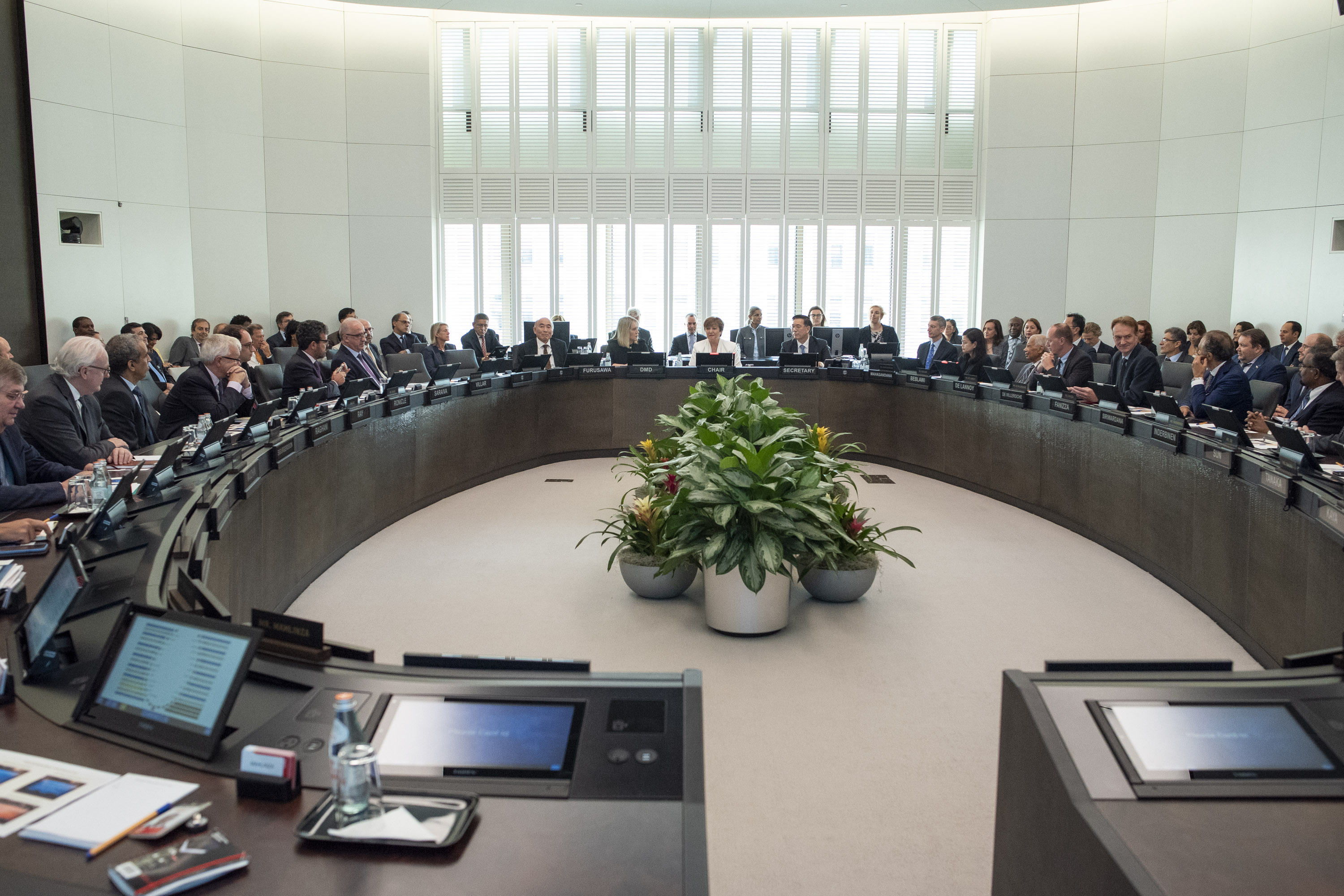
- The Executive Board concluded the Financial System Stability Assessment with Hong Kong SAR on May 21, 2021.
- Sound macroeconomic and prudential policies over the years have provided Hong Kong SAR with important buffers to cope with the current slowdown and future shocks.
- The banking sector remains well capitalized, profitable, and nonperforming loan ratios remain low.
- Hong Kong SAR’s exchange rate mechanism, the Linked Exchange Rate System (LERS), has continued to support financial stability and is underpinned by large foreign exchange reserves.
- In response to the COVID-19 pandemic, the authorities took a multi-pronged approach to support the economy and maintain financial stability.
Main macro-financial risks and stress-test outcomes
- The FSAP identified the following main macro-financial risks:
- Extensive linkages to Mainland China.
- Stretched real estate valuations.
- Exposure to shifts in global market and domestic risk sentiment, compounded by escalating U.S.‑China tensions.
- Stress tests conducted by the FSAP show:
- The financial system is resilient to severe macro-financial shocks.
- The banking system is resilient to liquidity stress.
- Pockets of vulnerabilities exist in foreign bank branches, investment funds, households, and nonfinancial corporates.
Regulatory, supervisory, and macroprudential framework
- The institutional framework for macroprudential policies is functioning well.
- Current policy stances on real estate and countercyclical capital buffers (CCyB) are appropriate.
- Banking supervision and regulation remain strong overall and with respect to cross-border linkages and housing risks, though continued attention and review are needed regarding competing priorities and the adequacy of supervisory resources.
- The establishment of the Insurance Authority has greatly strengthened insurance regulation and the supervision of both insurers and intermediaries.
- The regulatory and supervisory framework for securities trading systems has been strengthened since the 2014 FSAP, as also supervisory coordination with the Mainland.
- Recommendations include enhancing oversight over banking groups with both foreign branches and local subsidiaries in Hong Kong SAR and heightening monitoring of liquidity risk for banks operating with multiple group entities.
Crisis management, depositor protection, and resolution
- Crisis management arrangements were significantly strengthened by the introduction of a comprehensive resolution regime under the Financial Institutions Resolution Ordinance (FIRO) in 2017.
- Suggested updates to depositor protection to ensure full consistency with the FIRO include:
- Updating the scope of depositor preference.
- Updating the mandate of the Deposit Protection Board.
- Reviewing the size of the Deposit Protection Scheme fund.
Fintech, climate-related policies, and data/monitoring gaps
- The FSAP examined the authorities’ active role in promoting Fintech and recommended adopting a more proactive cross-sectoral approach as Fintech pervades across activities.
- The FSAP welcomes the authorities’ plan towards:
- Climate-related mandatory disclosures.
- The Common Ground Taxonomy.
- Risk assessments.
- Further scope exists for strengthening systemic risk monitoring, improving communication, and bringing non-bank mortgage lending within the regulatory ambit.
- To further strengthen resilience, monitoring households’ debt repayment capacity at a disaggregated level and strengthening data collection were recommended.
Executive Board assessment and policy implications
- Executive Directors broadly agreed with the thrust of the recommendations in the 2021 Financial System Stability Assessment (FSSA).
- Directors recognized the resilience of Hong Kong SAR’s financial sector, underpinned by sound policies, ample buffers, and strong oversight.
- Directors reiterated that the main macro-financial vulnerabilities relate to stretched real estate valuations and exposure to shifts in global market and domestic risk sentiment.
- Many Directors highlighted:
- Risks associated with extensive linkages with Mainland China, while a few Directors highlighted long-term benefits from such linkages.
- The importance of continuing to strengthen regulation and preserving the rule of law to maintain competitiveness as an international financial center.
- Support for providing de jure operational independence to the Hong Kong Monetary Authority.
- Encouragement for continued coordinated efforts among regulators to guide a proactive and consistent cross-sectoral fintech approach.
- Encouragement to continue improving the solid AML/CFT regime.
Recommendations (summary)
- Enhance oversight of banking groups with both foreign branches and local subsidiaries.
- Heighten monitoring of liquidity risk for banks operating with multiple group entities.
- Ensure internal risk models to monitor lending to Mainland China are sufficiently forward looking.
- Strengthen systemic risk monitoring and improve communication of macroprudential assessments.
- Bring non-bank mortgage lending within the regulatory framework.
- Review depositor protection arrangements to ensure consistency with FIRO.
- Adopt a proactive cross-sectoral approach to Fintech regulation.
- Advance climate-related mandatory disclosures, the Common Ground Taxonomy, and climate risk assessments.
- Monitor household debt repayment capacity at a disaggregated level and strengthen data collection.
Source: IMF Executive Board Concludes Financial System Stability Assessment with Hong Kong SAR (Press Release No. 21/163, June 8, 2021).