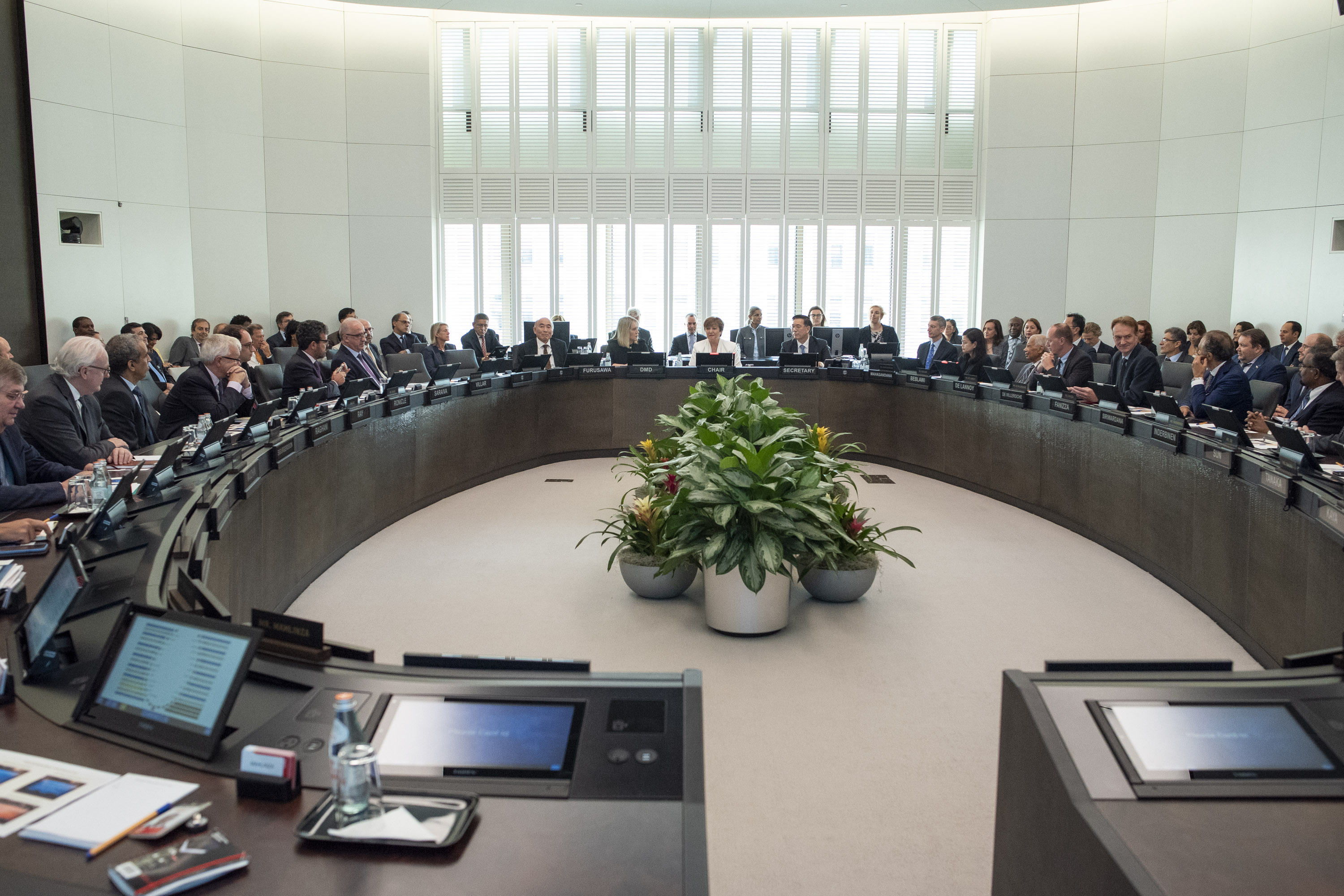
IMF Executive Board Concludes Second Review Under the Extended Credit Facility Arrangement for the Republic of Congo and Approves $US87 million disbursement
IMF News, February 7, 2023
Source details
- Canonical URL
- IMF Executive Board Concludes Second Review Under the Extended Credit Facility Arrangement for the Republic of Congo and Approves $US87 million disbursement
Other formats
Bibliographic details
- Published: February 7, 2023
Summary
- The Executive Board concluded the second review of the Republic of Congo’s SDR 324.0 million arrangement under the Extended Credit Facility (ECF), which was approved on January 21, 2022.
- This conclusion allows for the immediate disbursement of SDR 64.80 million (about US$ 87 million).
- The financing aims to help the authorities implement development policies, maintain macroeconomic stability, and strengthen economic recovery amid high food inflation and an uncertain global environment.
- Press Release No. 23/32; date reported as February 6, 2023.
Macroeconomic outlook and risks
- Economic recovery is expected to further strengthen in 2023, supported by improved oil production and government spending on development.
- Over the medium-term, the role of the non-oil private sector is projected to grow along with jobs and income levels.
- Food inflation is anticipated to decelerate towards the CEMAC inflation targets as international food prices decline.
- Key risks identified:
- Lower oil prices and production.
- Weak reform implementation.
- Intensification of spillovers from the war in Ukraine.
- Climate shocks.
Fiscal policy stance and priorities
- Fiscal policy will focus on reducing fragilities while maintaining debt sustainability.
- Development spending and payment of domestic arrears will be accelerated owing to the resources freed from reduced fuel subsidies in line with gradual fuel price deregulation.
- Measures will be coupled with targeted social assistance to protect the vulnerable.
- Fiscal consolidation will be supported by revenue mobilization, including reducing exemptions received by oil-related state-owned enterprises.
Program implementation, performance criteria, and corrective actions
- Structural reforms under the authorities’ program are advancing, especially in procurement, management of public finances and debt, and publication of a decree on conflict of interests.
- However, four out of five performance criteria related to the fiscal position and debt were not observed, some substantially, but corrective measures have been taken to address these breaches.
- Specific breaches and context:
- End-June performance criteria on the non-oil primary balance and net domestic financing were missed due to increased fuel subsidies which were not offset by oil-related dividend advances.
- The zero-ceiling performance criterion on new non-concessional external debt was substantially breached as, in the process of regularizing arrears, local-currency debt was converted into U.S. dollars.
- Recent strong corrective actions include a reduction in fuel subsidies.
Structural reform priorities and governance
- Sustained structural reform implementation is needed to build on recent advances.
- Priorities include:
- Improved management of public finances, especially public investment and procurement, to facilitate larger, more effective, and higher quality development spending.
- Improved debt management to end accumulation of arrears to domestic and external creditors.
- Broader governance reforms encompassing anti-corruption and transparency to improve the business environment.
- Energy sector reforms are highlighted as particularly essential.
- Operationalizing the new anti-corruption architecture, addressing gaps in the AML/CFT framework, raising financial inclusiveness, and stepping up state-owned enterprise and energy sector reforms to support economic diversification and private investment.
Expected program impact and regional implications
- Policies under this ECF-supported program are expected to help reduce fragilities and place the Republic of Congo onto a path of higher, more resilient, and inclusive growth.
- The program will also contribute to the regional effort to preserve external stability for the Central African Economic and Monetary Union (CEMAC).
Key statements from the Acting Chair (Mr. Bo Li)
- The Republic of Congo’s recovery has strengthened, though substantial risks remain amid an uncertain global environment and the spillovers from Russia’s war in Ukraine, which aggravated Congo’s already high food insecurity.
- Inflation is expected to decelerate in line with international food prices and regional monetary policy tightening.
- Sound program implementation in the period ahead remains important to ensure economic resilience and support the country’s social and developmental objectives.
- The authorities remain committed to pursuing higher, more resilient, and inclusive growth while maintaining macroeconomic stability and debt sustainability.
Press Release No. 23/32 — IMF Executive Board Concludes Second Review Under the Extended Credit Facility Arrangement for the Republic of Congo and Approves US$87 million disbursement (February 6, 2023).