December 13, 2013
|
|
8:30-9:00
|
Registration and Morning Coffee
|
|
9:00-9:15
|
Opening remarks
-
Ardo Hansson, Governor, Eesti Pank
-
 Ardo Hansson is the Governor of Eesti Pank and
a Member of the Governing Council of the European Central Bank. Ardo Hansson is the Governor of Eesti Pank and
a Member of the Governing Council of the European Central Bank.
Before taking on his current position in June 2012, Ardo Hansson worked for the
World Bank, where he served as the Lead Economist of the World Bank’s Economics
Unit in China from 2008. He joined the World Bank in 1998 and before going to China
he worked on several countries in Eastern Europe and the Western Balkans.
Between 1991 and 1997, he held several senior positions in the Republic of Estonia,
including Economic Advisor to the Estonian Prime Minister in 1992-1995 and in 1997,
and advisor to the Minister of Foreign Affairs in 1991-1992. Hansson was also a
member of the Monetary Reform Committee, and a member of the Supervisory Board of
the Bank of Estonia in 1993-1998. During the 1990s, he was engaged on short-term
consulting assignments for the governments of Mongolia, Poland, Slovenia and Ukraine.
Ardo Hansson was born in Chicago, in 1958. He graduated with first class honours
from the University of British Columbia in 1980 and earned a Ph.D. in economics
from Harvard University in 1987. Since completing his studies, he has held faculty
and research positions at several well-known universities in Canada, Finland and
Sweden and published numerous articles on economic policy.
Ardo Hansson is married and is the father of two sons.
|
|
9:15-10:45
|
Session 1: Nordic-Baltic financial integration
In this session, speakers will set out the key characteristics of the Nordic-Baltic
financial landscape. By looking at historical and recent developments, the details
presented will provide inputs to the discussions in the later sessions on regulation
and supervision.
-
Moderator: Pauls Raudseps, Commentator, Weekly magazine
"Ir"
-
 Pauls Raudseps is one of Latvia's leading journalists and commentators.
He writes on a wide variety of topics, including economics, politics, international
affairs, and history. Born in the United States, Mr. Raudseps received a degree
in Russian and Soviet Studies from Harvard University. In 1990 he moved to Latvia
to work for the Popular Front, the organization that led the fight for Latvian independence.
He was one of the founders of Diena, which for many years was Latvia's leading daily
newspaper. Having worked for almost 19 years at the newspaper as managing editor
and editorial page editor, he left Diena in October, 2009, to found the weekly news
magazine and website "Ir", where he is both a commentator and chairman of the supervisory
council.
Pauls Raudseps is one of Latvia's leading journalists and commentators.
He writes on a wide variety of topics, including economics, politics, international
affairs, and history. Born in the United States, Mr. Raudseps received a degree
in Russian and Soviet Studies from Harvard University. In 1990 he moved to Latvia
to work for the Popular Front, the organization that led the fight for Latvian independence.
He was one of the founders of Diena, which for many years was Latvia's leading daily
newspaper. Having worked for almost 19 years at the newspaper as managing editor
and editorial page editor, he left Diena in October, 2009, to found the weekly news
magazine and website "Ir", where he is both a commentator and chairman of the supervisory
council.
Financial linkages and economic integration across the Nordic-Baltic
region
-
Speaker: Mahmood Pradhan, Deputy Director, European
Department, IMF
-
 Mahmood Pradhan is a Deputy Director in the European Department
at the International Monetary Fund (IMF) and mission chief for the Euro Area. He
was earlier a Senior Advisor in the IMF’s Asia Pacific Department and mission
chief for Japan.
Mahmood Pradhan is a Deputy Director in the European Department
at the International Monetary Fund (IMF) and mission chief for the Euro Area. He
was earlier a Senior Advisor in the IMF’s Asia Pacific Department and mission
chief for Japan.
Prior to joining the Fund in 2007, Mr. Pradhan was Chief Emerging Markets Strategist
at Tudor Investment Corporation and subsequently an Emerging Markets Portfolio Manager
at Wadhwani Asset Management, a macro hedge fund in London.
In his early career, Mr. Pradhan was an economist at the Bank of England and at
the IMF, as the senior desk economist on Indonesia during the Asian crisis in the
late 1990s.
The sovereign-bank nexus and macroeconomic policy
-
Speaker: Erik Nielsen, Global Chief Economist, Unicredit
Research
-
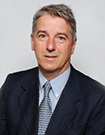 Erik F. Nielsen Erik F. Nielsen is Global Chief Economist and Head
of Economics & Fixed Income/Currency, Commodity and Asset Allocation Research
at Unicredit Bank. In this role Erik is responsible for forming and communicating
the overall macroeconomic and policy views of UniCredit Group.
Erik F. Nielsen Erik F. Nielsen is Global Chief Economist and Head
of Economics & Fixed Income/Currency, Commodity and Asset Allocation Research
at Unicredit Bank. In this role Erik is responsible for forming and communicating
the overall macroeconomic and policy views of UniCredit Group.
Prior to joining UniCredit in September 2011, Erik worked for more than 15 years
as an economist at Goldman Sachs in New York and London, where his most recent role
was Chief European Economist overseeing the European and CEE economics teams. Before
joining Goldman he spent about ten years in Washington DC working as an economist
for the IMF and World Bank in various capacities, including as country economist
for Russia and Turkey, and as a debt expert working on sovereign debt workouts around
the world.
Erik started his career as an economist at the Danish Central Bank in Copenhagen,
where he worked mostly on European economic and exchange rate issues. He also taught
for two years at the Copenhagen Business School. Erik holds a graduate degree in
Economics from the University of Copenhagen. Erik is one of the most frequently
quoted economists in the financial media with frequent appearances, including as
guest host, on CNBC, Bloomberg TV and other channels. He lives in Chiswick, London.
Managing capital flows in a financially integrated area; The role
of intra-regional and international capital flows.
-
Speaker: Már Guðmundsson Governor, Seðlabanki
Íslands
-
 Már Guðmundsson received a BA in economics
from the University of Essex and studied economics and mathematics at the University
of Gothenburg. He has a M.Ph. degree in economics from Cambridge University, where
pursued doctoral study as well. Már Guðmundsson received a BA in economics
from the University of Essex and studied economics and mathematics at the University
of Gothenburg. He has a M.Ph. degree in economics from Cambridge University, where
pursued doctoral study as well.
Since 2004, Már Guðmundsson has served as Deputy Head of the Monetary
and Economic Department of the Bank for International Settlements in Basel, Switzerland.
Prior to that, he was employed by the Seðlabanki Íslands for some two
decades, including over ten years as Chief Economist. Már Guðmundsson
served as economic advisor to the Minister of Finance from 1988-1991. He has written
a number of papers and articles on monetary and exchange rate affairs and related
topics.
|
|
10:45-11:15
|
Coffee break
|
|
11:15-12:45
|
Session 2: Regulatory and supervisory challenges in the Nordic-Baltic region
This session will set out the paradigms for regulation and supervision across the
Nordic- Baltic region and discuss the broader European agenda. In addition, speakers
will explore the implications of European Union (EU) and euro area (EA) financial
regulatory reforms for Nordic-Baltic home-host supervisory arrangements, including
crisis management and resolution.
-
Moderator: Svein Gjedrem, Secretary General, Ministry
of Finance, Norway
-
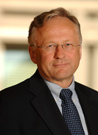 Svein Gjedrem is a Norwegian economist. He is Secretary General
of the Norwegian Ministry of Finance and former Governor of the Central Bank of
Norway.
Svein Gjedrem is a Norwegian economist. He is Secretary General
of the Norwegian Ministry of Finance and former Governor of the Central Bank of
Norway.
He graduated in economy from the University of Oslo in 1975, worked as a consultant
in the Central Bank of Norway from 1975-1979 and in the Ministry of Finance from
1979 to 1998. He served two terms as Central Bank Governor from 1999-2010. In June
2011, Gjedrem got his position as Secretary General of the Ministry of Finance back.
Banking supervision: The Nordic-Baltic cross-border collaboration
model and the EU model
-
Speaker: Jukka Vesala, Deputy Director, Finanssivalvonta,
Finland
-
 Jukka Vesala is, since October 2004, Deputy Director General in
the Finnish Financial Supervisory Authority (the Finnish Financial Supervision Authority
until December 2008).
Jukka Vesala is, since October 2004, Deputy Director General in
the Finnish Financial Supervisory Authority (the Finnish Financial Supervision Authority
until December 2008).
He is in charge of the Prudential Supervision Department, whose tasks include the
on and off-site monitoring of banks', insurance companies’ and investment
firms' financial condition, risks and capital adequacy and analysis of financial
industry developments. He is also a member of the Executive Board of the Authority
and the member of the Board of Supervisors of the European Banking Authority (EBA).
He used to be also the member of the Members Board of the EBA.
As his other affiliations he is an Advisory Member of the Audit Committee of the
European Investment Bank (EIB). Recently he has also been involved in SSM preparations
extensively. He was previously employed as a Principal Expert in the Financial Stability
Division of the European Central Bank. His tasks included, inter alia, the development
of the financial stability analysis for the euro area and EU financial sector.
He was also the Secretary of the ESCB Banking Supervision Committee (June 2003 –
September 2004). Previous to his employment at the ECB (1998-2004), he was employed
as research economist at the Bank of Finland (1992-1998) and as lecturer in banking
and monetary economics (Helsinki School of Economics).
He holds a doctoral degree (economics) from Helsinki School of Economics.
The new European reforms and their impact
-
Speaker: Mauro Grande, Advisor to the Executive Board,
European Central Bank
-
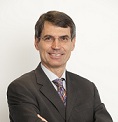 Mauro Grande is Advisor to the Executive Board of the European
Central Bank (ECB).
Mauro Grande is Advisor to the Executive Board of the European
Central Bank (ECB).
Since 1998 he has been working for the ECB in the area of prudential supervision
and financial stability as Head of Division, Director and Director General.
Prior to the ECB, he worked for the Banca d’Italia (Banking Supervision Department),
was seconded to the European Commission (Securities Markets Unit) and then to the
European Monetary Institute (Banking Supervisory Sub-Committee).
Complementarity between EU banking reforms, the euro area banking
union and the Nordic-Baltic supervisory arrangements
-
Speaker: Kristian Vie Madsen, Deputy Director General,
Finanstilsynet, Denmark
-
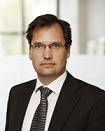 Kristian Vie Madsen has been Deputy Director General of the Danish
Financial Supervisory Authority (Finanstilsynet) since mid-2011.
Kristian Vie Madsen has been Deputy Director General of the Danish
Financial Supervisory Authority (Finanstilsynet) since mid-2011.
He is responsible for supervision of banks, mortgage banks and investment firms
and Finanstilsynet’s analyses of the financial sector.
Kristian Vie Madsen joined Finanstilsynet in 2007 and was before that Head of Division
at the Ministry of Economic and Business Affairs.
|
|
12:45-14:15
|
Lunch
Keynote address: Adopting the euro while managing Nordic-Baltic
financial integration: The Latvian perspective.
-
Speaker: Ilmars Rimsevics, Governor, Latvijas Banka
-
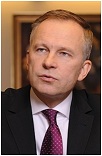 Ilmars Rimsevics was born on 30 April 1965 in
Riga. Ilmars Rimsevics was born on 30 April 1965 in
Riga.
In 1990 he graduated from the Riga Technical University (1983-1990) with BA in economics
and international trade relations.
From 1988 to 1989 Mr. Rimsevics studied at St. Lawrence University (USA), receiving
an honours degree.
In 1992 he graduated from Clarkson University, USA (1991-1992), receiving an MBA
degree.
Mr. Rimsevics has been Deputy Chairman of the Economics Committee of the Popular
Front of Latvia (1989-1990).
Manager of Foreign Operations Department and Head of Securities Department at the
commercial bank Latvijas Zemes Banka (1990-1992).
On 2 July 1992 the Supreme Council of the Republic of Latvia appointed Mr. Rimsevics
Deputy Governor of the Bank of Latvia.
On 27 August 1992 the Council of the Bank of Latvia appointed Mr. Rimsevics Chairman
of the Board of the Bank of Latvia.
On 12 February 1998 the Saeima appointed Mr. Rimsevics Deputy Governor for a second
term of six years.
On 20 December 2001 Mr. Rimsevics was appointed Governor of the Bank of Latvia.
On 1 November 2007 the Saeima of the Republic of Latvia appointed Ilmars Rimsevics
Governor of the Bank of Latvia for a second term of six years.
On 31 October 2013 he was re-appointed Governor of the Bank of Latvia for a third
six-year term.
Ilmars Rimsevics has been a member of the General Council of the European Central
Bank since 2005.
|
|
14:15-15:15
|
Session 3: Market Perspectives on challenges and opportunities for the financial
sector in the Nordic-Baltic region
Speakers will provide market perspectives on the recent developments in the Nordic-Baltic
financial sector, as well as discuss the expected impact of EU and EA regulations
on the banks and capital markets in the region.
-
Moderator: Uldis Cerps, Executive Director, Banks,
Finansinspektionen, Sweden
-
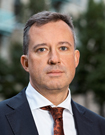 Uldis Cerps is Executing Director for banking supervision of the
Swedish Financial Services Authority. Uldis joined the Swedish FSA in early 2008
as head of prudential supervision department. He is a member of Basel Committee
since April 2012 and alternate member of the Board of Supervisors of the European
Banking Authority. From 2011 to 2012 Uldis chaired the Anti-Money Laundering Task
force of the Joint Committee of the EBA, ESMA and EIOPA.
Uldis Cerps is Executing Director for banking supervision of the
Swedish Financial Services Authority. Uldis joined the Swedish FSA in early 2008
as head of prudential supervision department. He is a member of Basel Committee
since April 2012 and alternate member of the Board of Supervisors of the European
Banking Authority. From 2011 to 2012 Uldis chaired the Anti-Money Laundering Task
force of the Joint Committee of the EBA, ESMA and EIOPA.
Prior to joining the Swedish FSA, from 2001 to 2008 Uldis Cerps held the post of
Chairman of the Board of the Financial and Capital Market Commission in Latvia.
He was much involved in the capital markets related issues and actively participated
in the work of CESR (predecessor to ESMA). From 2007 to 2008 Uldis Cerps chaired
CESR Transparency Expert Group.
His private sector experience includes serving as a chairman of the management board
of the Riga Stock Exchange (now a part of Nasdaq OMX) from 1996 to 2000 and a member
of supervisory board of Central Securities Depository in Latvia from 1997 to 2000.
He has been shortly employed by the Bank of Latvia during the build-up phase of
the supervisory authority from October 2000 to mid-2001.
Uldis Cerps holds a university degree in mass communication from University of Latvia.
In 1996 he started his PhD studies at the University of Umeå, Sweden, writing
his dissertation on institutional factors affecting securities market development
in Central and Eastern Europe.
Impact of European banking reforms on the Nordic-Baltic financial
sector
-
Speaker: Rodney Alfvén, Head of Investor Relations,
Nordea
-
 Rodney Alfvén has been Head of Investor Relations at Nordea
since November 2009.
Rodney Alfvén has been Head of Investor Relations at Nordea
since November 2009.
Prior to that, he was head of the Stockholm Office for investment banking company
Cheuvreux.
Mr Alfvén has also been an Equity Analyst at Alfred Berg and Swedbank.
Experiences and Challenges within the Nordic-Baltic financial sector:
the case of Swedbank
-
Speaker: Jonas Erikson, Head of Group Treasury, Swedbank
-
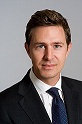 Jonas Erikson,Head of Group Treasury. Born 1974.
In Swedbank as
Head of Group Treasury
Member, General Executive Commtiee
Employment experience
2009 - current, Swedbank
2007 - 2009 Brummer and Partners, equity analyst
2005 - 2007 JP Morgan, equity analyst, country manager equities Nordics
2003 - 2005 Credit Suisse, equity analyst
2002 - 2003 Cheuvreux, equity analyst
2000 - 2002 Swedbank Markets, equity analyst
|
|
15:15-15:30
|
Coffee break
|
|
15:30-16:50
|
Panel discussion: Reflections on the future of the Nordic-Baltic financial sector
The panel will reflect on the key issues for the Nordic-Baltic financial sector
raised during the earlier sessions. Specifically, the panel will follow a Q&A
format with the moderator posing questions to the panel based on the earlier presentations.
At the end, the moderator will ask for final thoughts from the panel members and
provide a summary of the outcomes from the conference.
-
Moderator: Andres Sutt, Head of Banking, European
Stability Mechanism
-
 Andres Sutt (46), a national of Estonia, has been Head of Banking
at the European Stability Mechanism (ESM) since January 2013. He joined the ESM’s
predecessor European Financial Stability Facility (EFSF) as Senior Advisor to the
CEO of the EFSF in June 2012.
Andres Sutt (46), a national of Estonia, has been Head of Banking
at the European Stability Mechanism (ESM) since January 2013. He joined the ESM’s
predecessor European Financial Stability Facility (EFSF) as Senior Advisor to the
CEO of the EFSF in June 2012.
Before joining the ESM, Mr Sutt was Senior Advisor to Executive Director and member
of the Executive Board of the International Monetary Fund. Prior to that Mr Sutt
had a long career at the Bank of Estonia, where he held various positions and was
Deputy Governor responsible for financial stability in 2001-2009.
He has extensive experience in bank restructuring and crisis management and played
a key role in Estonia in coordinating cross-border crisis response measures with
Sweden during the financial crisis in 2008-2009.
Mr Sutt has also served as a member of the supervisory board of the Estonian Financial
Supervisory Authority. He was also a member of the Banking Supervision Committee
of the ECB and a member of several economic and financial sector policy committees
of Nordic-Baltic countries. Mr Sutt has also worked as consultant for the OECD and
USAID. He is also executive coach and mentor.
He has master’s degree in economics (cum laude) from Tartu University, Estonia
and has studied management in INSEAD, France.
Panelists:
-
Nemat Shafik, Deputy Managing Director, IMF
-
 Nemat Shafik is the Deputy Managing Director of
the International Monetary Fund since April 2011 Nemat Shafik is the Deputy Managing Director of
the International Monetary Fund since April 2011
A national of Egypt, the U.K., and the U.S., Ms. Shafik is a global citizen with
a global reputation in fields ranging from emerging markets, international development,
the Middle East and Africa, to the financial sector. She has a wealth of experience
in policy-making, management, and academia.
She was the youngest-ever Vice President at the World Bank, where she was responsible
for a private sector and infrastructure portfolio of investments, and was part of
the senior management team of the International Finance Corporation. She was the
Permanent Secretary of the U.K. Department for International Development (DFID).
Prior to serving at the World Bank and DFID, she worked in Cairo as a consultant
on development issues.
After graduating from high school in Alexandria, Egypt, and attending the American
University in Cairo, Ms. Shafik earned degrees from the University of Massachusetts—Amherst,
and the London School of Economics, and a Ph.D. in Economics from Oxford University.
She was a member of the Middle East Advisory Group to the Fund. She has published
widely, especially on the Middle East and North Africa, and has taught at the Wharton
School of Business and Georgetown University. She speaks Arabic, English, and French.
-
Francesco Mazzaferro, Head, Secretariat of the European
Systemic Risk Board
-
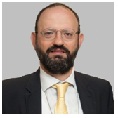 Francesco Mazzaferro has been the Head of the
Secretariat of the European Systemic Risk Board (ESRB) since January 2011. Prior
to that he was the Project Manager of the ESRB Preparatory Secretariat, which started
work in March 2010. Francesco Mazzaferro has been the Head of the
Secretariat of the European Systemic Risk Board (ESRB) since January 2011. Prior
to that he was the Project Manager of the ESRB Preparatory Secretariat, which started
work in March 2010.
He began his career in financial research in the Research Department of the Istituto
Bancario San Paolo di Torino (today part of Intesa Sanpaolo) in Turin, Italy, in
1987. He joined the European Commission in Brussels, Belgium, in 1992, starting
his international career in the Directorate General for Economic and Financial Affairs,
where his work focused on the European Currency Unit and preparations for the introduction
of the single currency.
In 1995 Mazzaferro joined the European Monetary Institute – which later became
the European Central Bank – in Frankfurt am Main, Germany, as the Officer
of Policy Planning. In 1998 he became the Senior European Relations Officer in the
European Relations Division.
From 2000 he worked as Principal in the EU Neighbouring Regions Division, becoming
the Head of Division in 2003.
-
Ardo Hansson, Governor, Eesti Pank
-
Ardo Hansson is the Governor of Eesti Pank and a Member of the
Governing Council of the European Central Bank.
Before taking on his current position in June 2012, Ardo Hansson worked for the
World Bank, where he served as the Lead Economist of the World Bank’s Economics
Unit in China from 2008. He joined the World Bank in 1998 and before going to China
he worked on several countries in Eastern Europe and the Western Balkans.
Between 1991 and 1997, he held several senior positions in the Republic of Estonia,
including Economic Advisor to the Estonian Prime Minister in 1992-1995 and in 1997,
and advisor to the Minister of Foreign Affairs in 1991-1992. Hansson was also a
member of the Monetary Reform Committee, and a member of the Supervisory Board of
the Bank of Estonia in 1993-1998. During the 1990s, he was engaged on short-term
consulting assignments for the governments of Mongolia, Poland, Slovenia and Ukraine.
Ardo Hansson was born in Chicago, in 1958. He graduated with first class honours
from the University of British Columbia in 1980 and earned a Ph.D. in economics
from Harvard University in 1987. Since completing his studies, he has held faculty
and research positions at several well-known universities in Canada, Finland and
Sweden and published numerous articles on economic policy.
Ardo Hansson is married and is the father of two sons.
-
Kerstin af Jochnick, First Deputy Governor, Sveriges
Riksbank
-
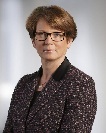 Kerstin af Jochnick has been First Deputy Governor at the Riksbank
since January 2012. Before joining the Riksbank Board, she was the Managing Director
of the Swedish Bankers’ Association for two years.
Kerstin af Jochnick has been First Deputy Governor at the Riksbank
since January 2012. Before joining the Riksbank Board, she was the Managing Director
of the Swedish Bankers’ Association for two years.
Previously, Ms. af Jochnick chaired the Committee of European Banking Supervisors
(CEBS), and has also held the position of Head of Department at Finansinspektionen
(the Swedish financial supervisory authority), responsible for banking and financial
stability supervision.
-
Vitas Vasiliauskas, Chairman, Lietuvos Bankas
-
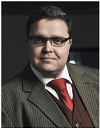 Vitas Vasiliauskas , appointed on 16 April 2011, is the fourteenth
Governor of the Central Bank of the Republic of Lithuania. Before his appointment,
Mr Vitas Vasiliauskas was a lawyer, specializing in financial law, and an associate
partner at the law firm LAWIN Lideika, Petrauskas, Valiunas ir partneriai (2004–2011).
Vitas Vasiliauskas , appointed on 16 April 2011, is the fourteenth
Governor of the Central Bank of the Republic of Lithuania. Before his appointment,
Mr Vitas Vasiliauskas was a lawyer, specializing in financial law, and an associate
partner at the law firm LAWIN Lideika, Petrauskas, Valiunas ir partneriai (2004–2011).
Prior to this, he was the Vice Minister of Finance of the Republic of Lithuania
for 3 years (2001–2004), after being promoted from the position of Director
of the Tax Department, Ministry of Finance (1998–2001). Mr Vitas Vasiliauskas
started his career in the public sector as a Lawyer and Head of the Tax Recovery
Division of the State Tax Inspectorate (1995–1998).
He completed his law studies at Vilnius University in 1996 and received his Ph.D.
in social sciences (Law) in 2004. He has remained active in the academic world throughout
his entire career and, currently, he is a Lecturer of the Chair of Public Law of
Vilnius University Faculty of Law (since 2010). Previously he was a Lecturer of
the Chair of Constitutional and Administrative Law of Vilnius University Faculty
of Law (2004–2010) and an assistant of the Chair of State and Law Theory and
History of Vilnius University Faculty of Law (1997–2004).
|
|
16:50-17:00
|
Presentation of Eesti Pank research awards
|
|
17:00
|
Closing
|