Loading component...
Presentation by IMF's Deputy Managing Director Shinohara at the Public Lecture hosted jointly by the Lee Kuan Yew School of Public Policy & Monetary Authority of Singapore
June 9, 2010


| Download the presentation (765 kb PDF) |
1. Good morning. It is a great honor for me to be here today. I would like to extend my gratitude to our hosts, the Lee Kuan Yew School and the Monetary Authority of Singapore, for inviting me to give this address.
2. For economic policymakers, these are challenging times. But challenges bring opportunities. And, so it is crucial—to borrow some words from Minister Mentor Lee Kuan Yew—to have:
……decision makers who have got foresight, good minds, who are open to ideas, who can seize opportunities……
3. After nearly two years of global economic and financial upheaval—the worst in 60 years—shockwaves are still being felt, as we have seen with recent developments in Europe and the resulting financial market volatility.
4. Three clear messages are emerging from this experience.
5. The lessons learned from the crisis need to be used to forge a better balanced and more inclusive global economy in the future. Asia is positioned well to set the standard for economic performance, policies, and collaboration in the years ahead, and to ensure this is achieved.
6. In my address today, I will discuss the economic outlook, particularly here in Asia, and some of the policy challenges we face in building the foundations for a more robust and stable economic and financial framework. As I see it, the policy challenges are two-fold. First, what policy actions are needed to support the global recovery and achieve a more sustainable and balanced growth path? Second, how might we strengthen the international monetary system to reduce the risk of a crisis—such as we have just seen—happening again?
The Economic Outlook: Asian Strength in an Uncertain World
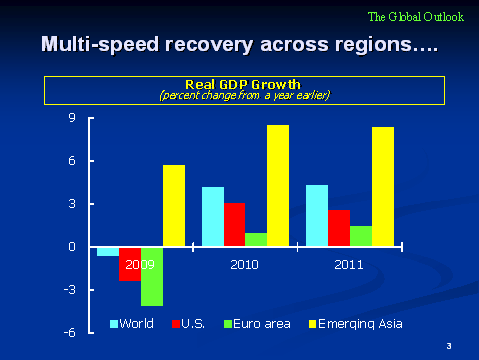
7. The global recovery is proceeding, in large part as we had expected. What we are seeing is a multi-speed recovery. Growth is uneven across—and even within—regions. And, recent developments in Europe, and the associated financial market volatility, have reminded us all that the recovery is fragile, and still subject to considerable risks and we are not yet out of the “woods.”
8. Most advanced economies are experiencing a subdued recovery given the size of the decline in activity that preceded it. The United States is off to a better start than Europe, where concerns about fiscal vulnerabilities in a number of countries have come to the fore. In Japan, a strong rebound in trade is helping the modest recovery.
9. The outlook is much brighter for many emerging and developing economies—and Asia is leading the way.
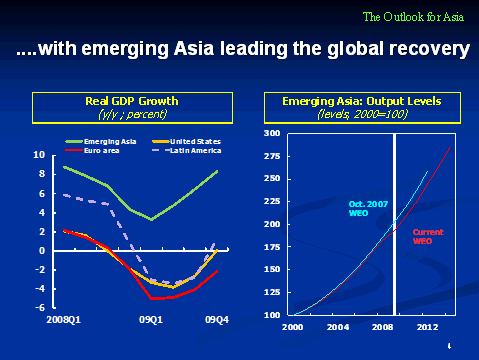
Growth in Asia has rebounded swiftly and output in most of Asia—including here in Singapore—is now well above its pre-crisis levels. In Singapore, growth in 2010 is projected to reach around 10 percent compared to minus 1.3 percent in 2009. Other sub-regions in Asia, such as the ASEAN-5 countries (Indonesia, Malaysia, Philippines, Thailand and Vietnam) are expected to post a strong rebound of about 5½ percent in both 2010 and 2011.
10. For the first time, Asia’s contribution to a global recovery is outstripping that of other regions. But, this recovery marks a sea change in two other important respects.

11. This is a testament to Asia’s resilient regional economy and the improvements in the economic framework that have been put in place over the past decade.
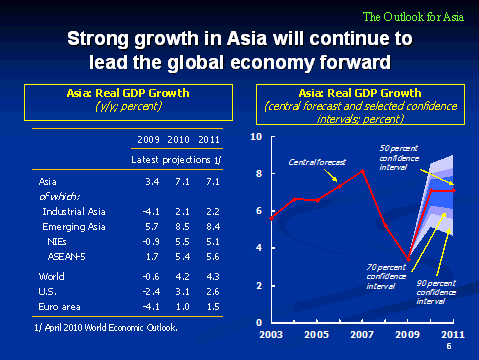
12. Asia will continue leading the global economy forward. Buoyed by strong recoveries in China, India, and other countries, Asia is expected to grow by 7 percent this year, although the pace of recovery will vary across the region.
Risks to the Outlook: Increased Uncertainty
13. But, as I noted earlier, the global outlook remains unusually uncertain and downside risks have risen significantly.
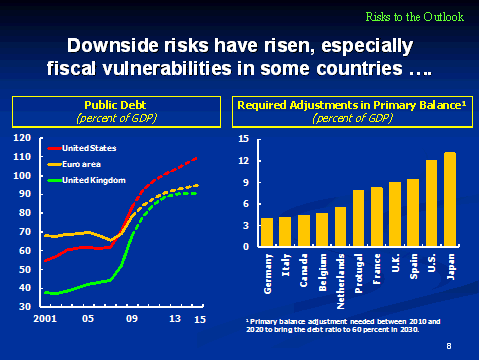
Chief among these risks are fiscal vulnerabilities in many advanced economies. A key concern is that the room for continued policy support has become much more limited and has, in some cases, been exhausted.
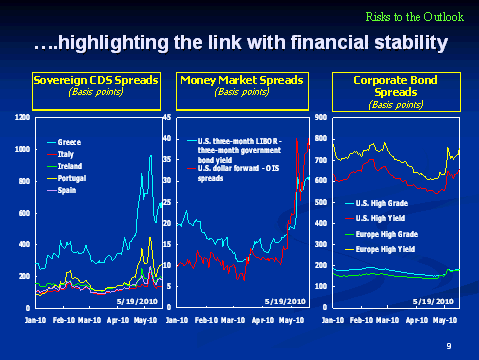
Developments in financial markets pose a major downside risk to the global economy. They could have negative effects on private and sovereign funding rates, bank balance sheets and credit conditions, and capital flows and portfolio allocations. The ability of banking sectors to withstand funding shocks is of particular concern. This risk is heightened by market doubts about political effectiveness and the ability of governments to deliver on needed policy measures.
14. Beyond these global risks and the risk of heightened aversion to “risky” assets affecting stock and bond markets, there are two issues of particular interest for Asia.
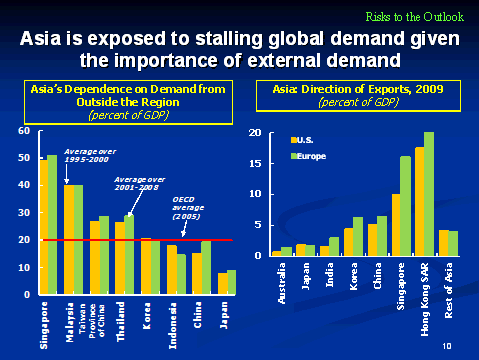
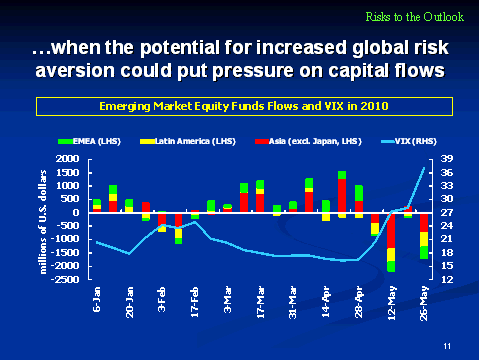
15. Nevertheless, while Asia is not immune from developments elsewhere in the world, the region is in a very strong position to tackle these risks, should they be realized. The key will be for policymakers to keep an eye on the bigger picture and be ready to act swiftly as developments unfold. With Asia’s economic muscle growing, the policy choices made in this region will have an important impact on the global economy.
Policy Priorities for Securing a Durable Recovery 
16. And, so, what actions should policymakers take to mitigate these risks, to reduce our susceptibility to crises, and to secure a sustainable post-crisis recovery? 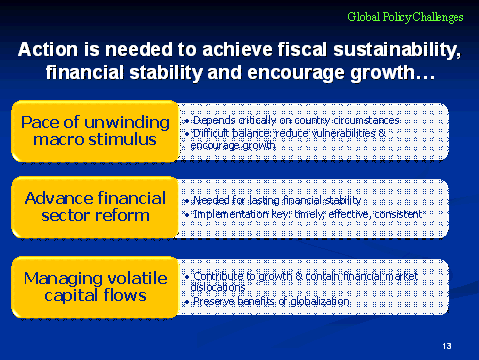
I would like to focus on three policy priorities: the pace of unwinding macroeconomic stimulus; financial sector reforms; and managing volatile capital flows.
17. First among them is judging the appropriate pace for unwinding macroeconomic stimulus and financial sector support put in place during the crisis. Here, there is a difficult balance to strike. Reassuring markets is critical to preserve the recovery. Too little action to reduce sovereign vulnerabilities could result in continued financial market volatility and that would adversely affect growth. However, tightening fiscal policy too much or too quickly could have the same effect. The right balance will depend on country circumstances.
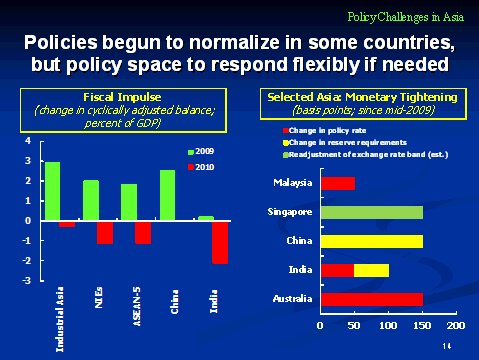
18. Indeed, Singapore is a leading example of how macroeconomic policy management has transitioned smoothly out of crisis-mode. Here, exceptional policy support—fiscal, monetary, and financial—has already been rolled back as Singapore’s economy rebounded strongly from the global recession. Both monetary and fiscal policies have returned to a largely neutral stance, and plans to remove crisis-related support in the financial sector (such as the blanket deposit guarantee) are on track.
19. Another part of the story is the need to rebalance global demand to secure sustained high global growth. The common challenge for many Asian economies will be to nurture private domestic demand as an “engine of growth”. Here too, financial sector reform and growth-enhancing structural policies will help, as will a more flexible exchange rate.
20. This brings me to the second policy priority—financial sector reforms are needed for lasting financial stability. But I fully appreciate that policymakers have a difficult balance to strike, between promoting the safety of the financial system, while also keeping it innovative and efficient.
21. Before the crisis, regulation was inadequate, but so too was supervision. There is broad agreement on the key principles for reform—widening the regulatory perimeter to include all systemically important institutions, improving the measurement and regulation of systemic risk, bolstering supervision, and strengthening crisis resolution mechanisms.
22. Financial systems in Asia have proved very resilient during the current crisis.
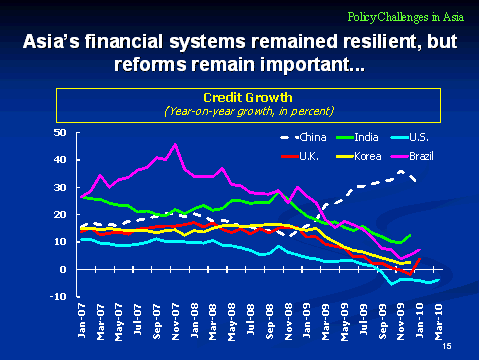
This owes much to the extensive financial reforms following the Asian crisis of the 1990s, as well as the role of traditional virtues—maintaining adequate capital, avoiding excessive reliance on short-term funding, ensuring proper loan underwriting, and following sound risk management.
23. However, Asia’s banking systems must continue to work to stay ahead of the curve. Indeed, banks and regulators in Asia have already grasped the benefits of introducing some of the proposals being discussed globally. For example, Korean banks are now required to gradually raise their long-term (more than one year) foreign currency borrowing to 100 percent of their long-term lending from the previous 80 percent.
24. These financial sector reforms will also help in tackling the third policy priority—managing volatile capital flows
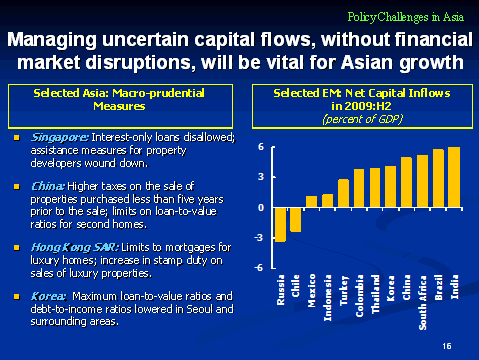
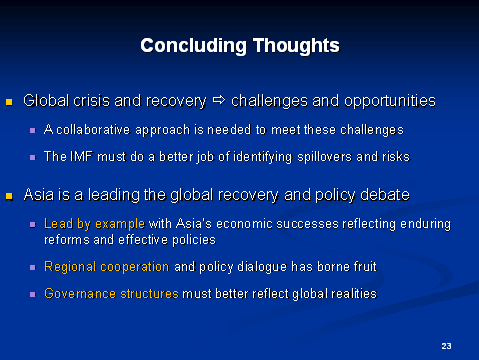
25. A common theme across these policy challenges is that a collaborative approach is needed at both the regional and global level. In today’s world, policies in one country often have far-reaching effects on others. This is particularly true with the need for many advanced countries to consolidate their fiscal positions in the coming years. Offsetting demand will need to come from elsewhere in the global economy, including Asia, where meeting the growing need for modern infrastructure is a clear policy priority. Another example is regulatory reform. Regulatory changes need to move in step to ensure a consistent set of policies are in place and to reduce the opportunity for financial firms to exploit differences in national regulatory requirements.
26. In this environment, the IMF must do a better job of highlighting the spillovers that one country’s policies have on others, and to point out risks as they emerge in a clearer and more forceful way. We are responding to this challenge. We are sharpening the tools we use for multilateral surveillance and assessing vulnerabilities.
27. With Asia’s economic power set to rise further, policymakers in the region have an important opportunity—and obligation—to lead this collaborative policy approach. Even as domestic demand plays a growing role in Asia’s economies, the region will increasingly become integrated in the global economy. But, integration raises the potential for spillovers: both positive and negative. Singapore is a good example of the benefits that openness can bring. To take advantage of these potential benefits, and minimize the potential for negative spillovers, a multilateral approach to policymaking will be essential for Asia too. The world needs Asian leadership to sustain global growth and to develop policy mechanisms to contend with the new global realities.
Reform of the International Monetary System
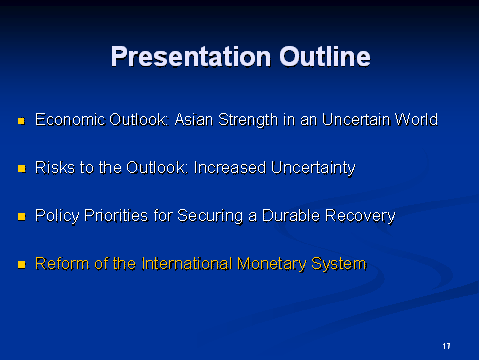
28. Let me now turn to the broader reform of the international monetary system.
29. The recent crisis had its epicenter in the U.S. financial system, but it quickly became a truly global crisis, highlighting a number of “imperfections” in the international monetary system.
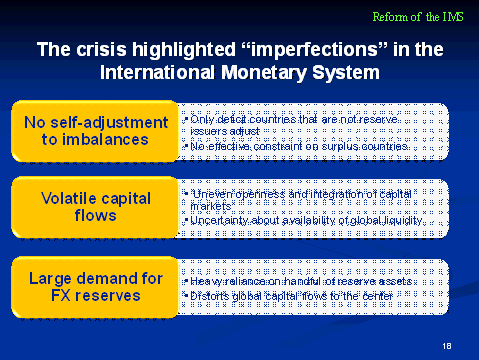
First among these were the global economic imbalances that built up for many years before the crisis. Without an automatic or smooth adjustment mechanism, these imbalances were prone to disruptive corrections. At the same time, volatility in capital flows created uncertainty about the availability of liquidity and we witnessed a flight to safety during the crisis. And, given the heavy reliance on a handful of reserve assets, these shocks were transmitted rapidly from the “core” to the rest of the world.
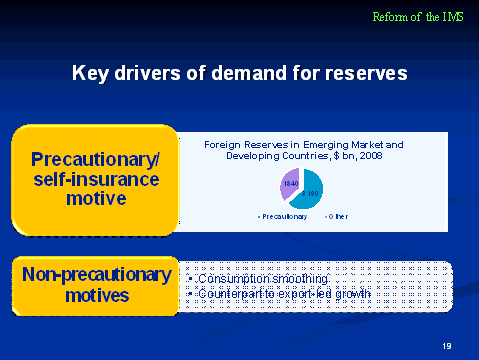
30. These imperfections also partly explain the rapid buildup of foreign exchange reserves across many emerging market countries. Reserves have been accumulated for precautionary, or self-insurance, and for non-precautionary reasons.
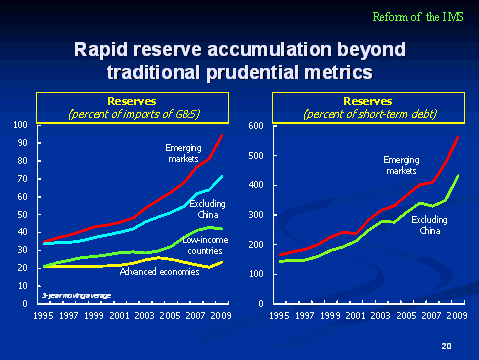
There has been a three-fold increase in reserves compared to 10 years ago. And, for most emerging markets, reserves reached nearly 5 times short-term external debt before the crisis—well in excess of traditional norms.
Also, reserves are concentrated in just a handful of countries, most of which are in Asia.
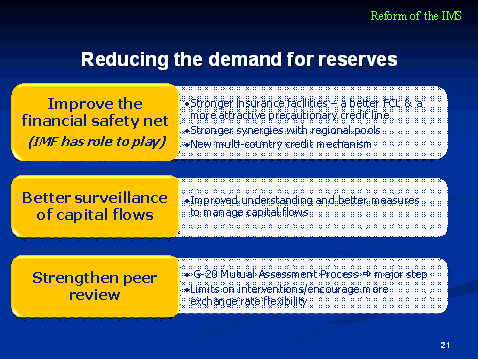
31. Addressing the issues that affect the “demand side” and the “supply side” for reserves will help in the reform of the international monetary system. Here, I will mention a few options.
32. There are several areas where reforms could reduce the demand for reserves .
33. On the supply side, greater diversification of reserve assets would reduce exposure—for the system and individual countries—to risks stemming from any single country.
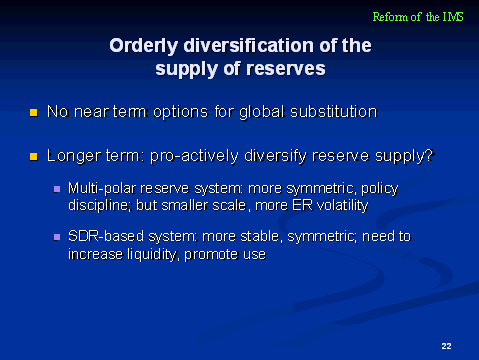
While a multi-polar reserve system may not enjoy the benefits of broad use of a single reserve asset, the presence of alternatives provides a safety valve from unsound policies of any single reserve issuer. A more multi-polar system may develop over time, but in the near term there are no clear contenders to match the depth and liquidity of the U.S. dollar markets. The more widespread use of alternative reserve assets will happen only if countries see benefits from this. And, with any transition to a more diversified system, reserve holders would need to adjust their portfolios gradually. Mechanisms for collaboration would also be essential to bolstering the stability of the adjustment process.
34. Another option could be to seek a greater role for the IMF currency, the Special Drawing Right or SDR. As a basket, the SDR diversifies the currency and interest rate risks of its constituent parts. Thus, it has a more stable store of value and unit of account attributes. Moving to a more SDR-based system, however, would require: (i) increased supply; (ii) greater liquidity; and (iii) transparent, automatic rules for determining the currency composition of the SDR basket. Again, this is not something that will happen in the near term.
Closing Remarks
35. Let me conclude with a few thoughts.
36. The range and magnitude of the policy challenges we face—for countries, for regions, and for the system as a whole—are indicative of the depth and lingering effects of the global financial crisis. But, with that, there is an enormous opportunity. An opportunity to secure a stronger and more inclusive global financial order. And, in turn, sustain global growth and financial stability. To do so, international cooperation will be more important than ever before.
37. Asia is a leading force in reshaping the global economy. Asia’s voice through its economic success and policy leadership is louder than ever before.
38. Today’s event, and others in the months ahead, are an opportunity to exchange views with Asia. I am especially excited to be returning to the region in July for the high-level international conference co-hosted by the Government of Korea and the IMF. Given the enormity of the challenges facing the global economy, the conference will offer a great opportunity to share Asia’s successes and vision in managing these challenges.
39. Of one thing there is no doubt, the world needs a strong Asia and Asia needs a strong world.
40. Thank you very much.
| Public Affairs | Media Relations | |||
|---|---|---|---|---|
| E-mail: | publicaffairs@imf.org | E-mail: | media@imf.org | |
| Fax: | 202-623-6220 | Phone: | 202-623-7100 | |