Loading component...
East AFRITAC Inauguration Ceremony, Keynote Speech by Eduardo Aninat, Deputy Managing Director, IMF
October 24, 2002
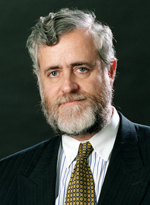 |
| Eduardo Aninat |


Your Excellency President Mkapa, Honorable Ministers, Ladies and Gentlemen:
1. This is an important day for Africa, the International Monetary Fund, the international community, and for all who truly care about Africa and her future. After so many months of relentless work by so many of you, we have finally arrived here, at the beautiful city of Dar es Salaam, for the opening day of the IMF's first regional capacity-building center in Africa, the East AFRITAC. I am honored to be here and proud of what has already been accomplished. Moreover, on behalf of the entire management of the IMF, I would like to express my sincere appreciation for all that has been accomplished in such a short time. I would also like to thank you, Your Excellency President Mkapa, and, through you, government and the people of Tanzania for agreeing to host this center, and for organizing this opening ceremony.
2. Indeed, the very fact that we can celebrate today the opening of the first AFRITAC is a tribute to a very close collaboration of many partners. First of all, that of the governments of the participating East AFRITAC countries: Tanzania, which hosts the center; Kenya, which provides facilities for the center's training activities; Eritrea; Ethiopia; Rwanda; and Uganda. The officials of these countries have worked very closely with Fund staff, donor partners, the African Development Bank, the African Capacity Building Foundation, NEPAD, and the World Bank. Since the IMF Executive Board's approval of this project in May 2002, the countries have prepared their own needs assessment plans, and discussed and prioritized them with partners at meetings in Nairobi, Paris, and recently in Washington D.C. Just yesterday, the steering committee, which is the center's guiding body, met for the first time, finalized the main rules of its operation, and laid out the work plan for the center.
3. On the occasion of this joyous day, I would like to share with you my thoughts on three issues:
Strong domestic institutions are needed more than ever
4. Let me start with the first question: why is capacity building important, particularly in Africa? My answer is that strong domestic institutions are needed more than ever. I am deeply convinced that strong domestic human and institutional capacity is both a precondition to economic development and an "insurance policy" in cases of external shocks. First, as argued by the school of institutionalists, strong institutions are crucial in lengthening the economic agents' planning horizon and, therefore, the development of markets. In other words, without solid institutions, the future is less predictable and long-term planning therefore is very difficult. In countries where political instability is recurrent, or even in countries with political stability but short election cycles, strong institutions help governments resist steering off the path of good economic policies for the sake of short-term gains. The resulting more predictable policies help the development of smoothly functioning markets. Economists would say that strong institutions help solve the policymaker's time inconsistency problem.
5. Recent experiences, for example in Latin America, my home continent, have also taught us that strong institutions can be critical for a country to weather external shocks. It appears that Chile and Mexico have been able to withstand or at least limit the spillover of the Argentine crisis and Brazil's difficulties in no small measure thanks to their strong and independent institutions. They help guide policymakers toward adopting appropriate policies and contribute to maintaining private sector confidence—two key policy elements when facing external shocks.
6. Turning to Africa, I would highlight that here, strong domestic institutions are needed not simply to consistently implement good economic policies, but first of all, for countries to be able to design their own, homegrown, good economic policies. If the countries' policy frameworks are drawn up by others—and we have seen this happen often in the past—even the best of plans can fail if they are not internalized domestically. Therefore, domestic capacity building is an indispensable element for the formulation and implementation of a coherent government program, and, as a consequence, for the successful development of the country.
What can the IMF offer under its Africa Capacity Building Initiative?
7. I would like now to turn to the second question: What can the IMF offer to assist countries in their capacity-building endeavors. First, I would like to stress that our philosophy is to provide capacity-building assistance to develop the needed domestic stock of know-how, and not to substitute for the lack of local expertise. This is very important—we are breaking away from any residue of gap-filling technical assistance, as the latter has proved insufficient for the longer term, and may have created perverse incentives for both recipients and providers of technical assistance. We are convinced that there is a critical role for the IMF to play in developing such know-how and in supporting knowledge networking in areas where we have comparative advantages: the design of macroeconomic policies, financial sector development and strengthening, fiscal revenue policy and administration, expenditure management, public debt management, and macroeconomic statistics.
8. The IMF's capacity-building initiative consists of two main elements: first, we are increasing our support for, and are deepening our collaboration and coordination with, already existing capacity building institutions and activities in Africa; and second, we are setting up regional capacity-building centers, the AFRITACs. Let me first speak about our deepening collaboration with existing capacity-building activities. As part of this initiative, we have joined the World Bank's Partnership for Capacity Building in Africa (PACT) and its Africa-led implementing agency, the African Capacity Building Foundation (ACBF). It was my distinct honor to sign the Memorandum of Understanding with Dr. Sako, the ACBF's Executive Secretary last month in Washington, in the presence of Dr. Botchwey, Chairman of the ACBF. We are also strengthening our support for NEPAD; in fact we consider this initiative to be a major component of our support for the capacity-building and good economic governance program of NEPAD.
9. This enhanced collaboration with in-field efforts is built on the premise that there are already ongoing capacity-building efforts in a number of areas, which have started to show results. Indeed, we can take the good example of Tanzania, the host of the first AFRITAC center. Here, strengthening public expenditure management has long been a focus of the government's reform program: the capacity of the accountant general's office was built up; a computerized integrated financial management system was created with on-line linkages to most spending ministries; a quarterly budget execution report is being published by the central government; local governments will soon begin to do the same; and annual expenditure review consultations are being held with stakeholder groups. Capacity building in all these aspects of expenditure management has clearly enhanced the effectiveness of government actions in the overall poverty reduction strategy.
10. Turning to other countries in the region, good progress has been made in Kenya in the monetary sector, for example. The Kenya School of Monetary Studies provides practically-oriented training to meet the human capacity requirements for sound economic management and stability in the financial sector. We are grateful that the Government and the Central Bank of Kenya have offered this excellent facility for the training courses of the East AFRITAC. Other countries such as Uganda and Ethiopia also have made important advances. In Uganda, the government has emphasized capacity building in public service management at both the central and local government levels, including, inter alia, budget preparation in the context of the Medium-Term Expenditure Framework (MTEF). Moreover, both in Uganda and Tanzania, the authorities have been discussing with development partners a comprehensive capacity-building program within the PRSP framework. In Ethiopia, the authorities have set up a separate ministry on capacity building, signaling their clear policy focus on such reforms. These experiences can be usefully shared within the membership of the East AFRITAC through the use of local experts. This would be particularly valuable for the post-conflict members of this group, Rwanda and Eritrea, for which capacity building, in their circumstances, poses added challenges.
What can make the AFRITAC work?
11. I would like now to turn to the second component of the initiative, the setting up of the AFRITACs. Initially, we are opening two centers, which will provide assistance to some 16 sub-Saharan African countries. The East AFRITAC, which we are opening today, will serve Eritrea, Ethiopia, Kenya, Rwanda, Tanzania, and Uganda, and the West AFRITAC will serve some ten West African French-speaking countries. With the two centers we are aiming to increase the volume of technical assistance to the African continent, while squarely refocusing such assistance on capacity building. The main objective is to help African governments to address their capacity-building needs with an instrument that locates assistance in the vicinity of those needs, providing for a flexible and effective tool for capacity building. Resident experts, whose skills reflect the demand identified by the centers' member countries, will be in a unique position to support the capacity-building component of the PRSP process, to provide hands-on assistance promptly, and to monitor more effectively ongoing technical assistance projects. These experts' work will be complemented and supported by short-term experts and missions from IMF headquarters, as needed.
12. Let me now elaborate on the third question: what can make an AFRITAC work? I can see six important factors of success. They are all mutually reinforcing and interdependent, and each of them is critical to achieve the center's objectives. Let me discuss these factors briefly.
Conclusion
13. Your Excellency President Mkapa, ladies and gentlemen. I started out saying that today was an important day for Africa. I would like to correct myself and say that today can be a glorious day for Africa, if we, working together, can make this initiative and the East AFRITAC succeed. If the center is successful, we plan to ultimately establish five centers to cover all of sub-Saharan Africa, with the help of the international community. This center, my African friends, is your vision, whose goals you determine yourselves. It is under your guidance and your ultimate responsibility. Our responsibility, together with that of donor partners, is to help and assist you to achieve those goals. On behalf of the IMF, I am pledging here our continued commitment to, and support for, the success of this project.
Thank you.
| Public Affairs | Media Relations | |||
|---|---|---|---|---|
| E-mail: | publicaffairs@imf.org | E-mail: | media@imf.org | |
| Fax: | 202-623-6278 | Phone: | 202-623-7100 | |