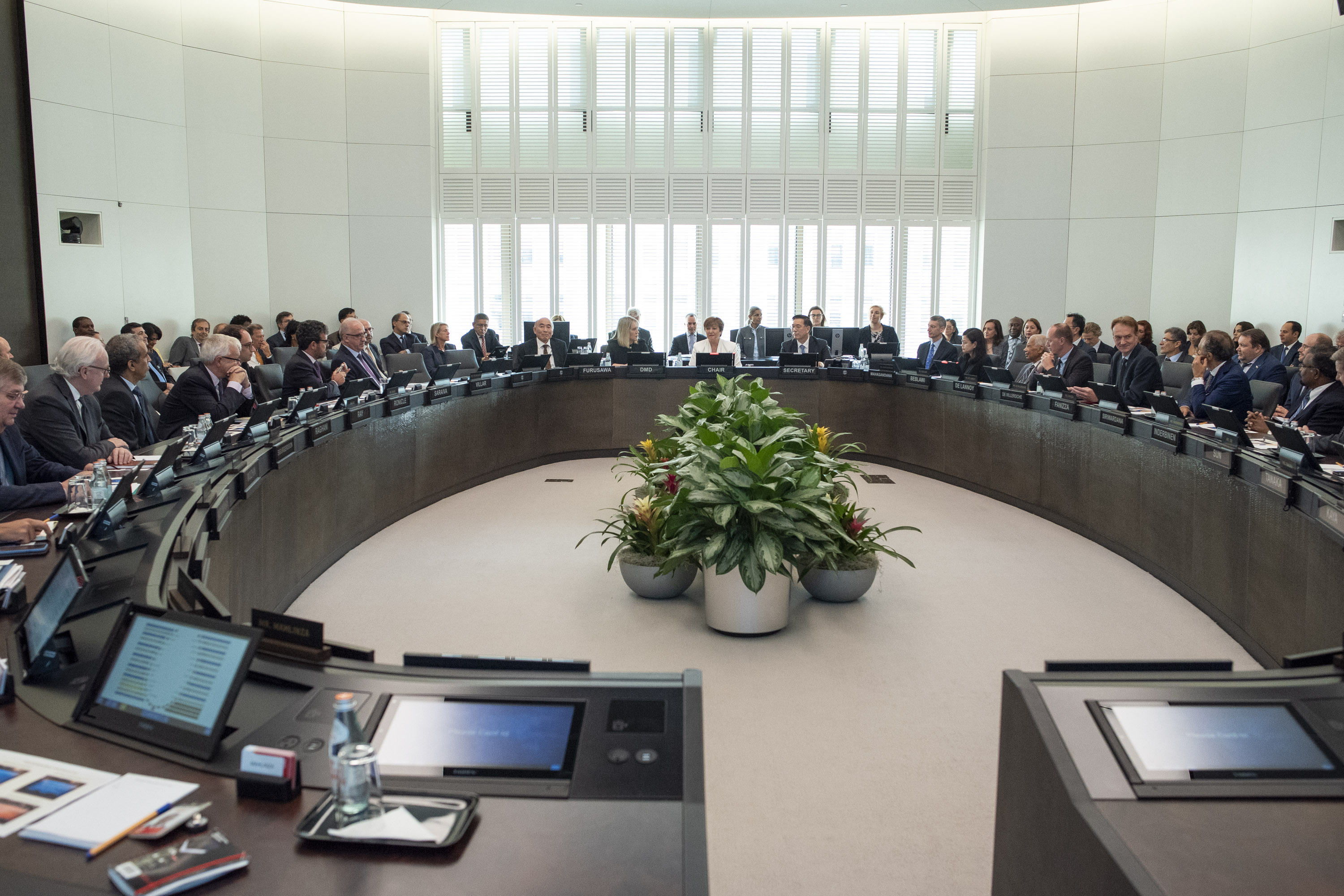
IMF Executive Board Concludes 2021 Article IV Consultation with The Kingdom of Bahrain
IMF News, March 22, 2021
Source details
- Canonical URL
- IMF Executive Board Concludes 2021 Article IV Consultation with The Kingdom of Bahrain
Other formats
Bibliographic details
- Published: March 22, 2021
Pandemic response and immediate assessment
- Bahrain "moved quickly to address the health, social, and economic effects of the COVID-19 pandemic, protecting lives and livelihoods."
- Swift and well-coordinated policy responses helped:
- limit the spread of the virus,
- deliver rapid and widespread access to vaccinations,
- target income and liquidity support to those most in need.
2020 outcomes and near-term outlook
- Growth in 2020 is estimated at -5.4 percent.
- Non-oil growth contracted by -7 percent in 2020, driven by marked contractions in high contact and job-rich services sectors.
- Staff’s baseline scenario projects the twin deficit to persist over the medium-term, with public debt increasing to 155 percent of GDP by 2026.
- Risks to the baseline are tilted to the downside and stem from:
- insufficient fiscal adjustment to contain the twin deficit,
- a tightening in global financial conditions,
- further declines in oil prices.
Fiscal developments and public debt
- With the plunge in oil prices and the contraction in nominal GDP:
- overall fiscal deficit increased to 18.2 percent of GDP in 2020,
- public debt reached 133 percent of GDP in 2020.
- Authorities remain committed to the Fiscal Balance Program's objectives: gradually rebuilding policy buffers and reversing the rise in public debt, while maintaining essential social spending.
- Executive Directors called for “urgent fiscal reforms to address the large imbalances, lower public debt, and restore macroeconomic sustainability.”
- Directors recommended an “ambitious, credible and growth-friendly fiscal adjustment plan” over the medium-term, focusing on:
- domestic revenue mobilization,
- expenditure rationalization,
- protecting the most vulnerable.
- Directors noted that additional consolidation measures beyond the current budget are needed to put debt on a firm downward path and reduce revenue dependence on hydrocarbon prices.
- Further steps to improve fiscal governance and transparency were urged to reduce risks and enhance credibility of the fiscal plan.
External sector, reserves, and exchange rate
- The current account deficit widened to 9.6 percent of GDP in 2020.
- International reserves declined to about 1.4 months of prospective non-oil imports in 2020.
- Executive Directors agreed that the exchange rate peg “continues to serve Bahrain well.”
- Directors emphasized that recommended fiscal adjustment should lead to a gradual unwinding of central bank lending to the government to rebuild external buffers and support the peg.
Banking sector and financial stability
- Banks remained well capitalized and liquid in 2020, though vulnerabilities may emerge:
- related to asset quality,
- and low profitability stemming from the crisis.
- Directors welcomed substantial policy support to the banking system and urged:
- maintaining forward-looking analysis of bank credit portfolios and provisioning levels,
- careful management of sovereign-bank interlinkages.
Structural reform and diversification
- Directors welcomed the authorities’ structural reform agenda.
- They called for continued efforts to minimize scarring and encourage economic diversification and private sector-led growth and employment.
Key statistics (selected indicators from Table 1)
- Real GDP (annual percentage change): 2018: 1.7; 2019: 2.0; 2020: -5.4; 2021 (proj): 3.3; 2022 (proj): 3.1.
- Hydrocarbon (real annual percentage change): 2018: -1.3; 2019: 2.2; 2020: 0.7.
- Non-hydrocarbon (real annual percentage change): 2018: 2.4; 2019: -7.0; 2020: 3.9; 2021 (proj): 3.7.
- Consumer Price Index (period average): 2018: 2.1; 2019: 1.0; 2020: -2.3; 2021 (proj): 1.5.
- Nominal GDP (BD millions): 2018: 14,158; 2019: 14,466; 2020: 12,748; 2021 (proj): 14,101; 2022 (proj): 14,635.
- Revenue (percent of GDP): 2018: 21.9; 2019: 23.8; 2020: 17.8; 2021 (proj): 22.5; 2022 (proj): 21.0.
- o/w Hydrocarbon revenue (percent of GDP): 2018: 16.3; 2019: 14.6; 2020: 9.8; 2021 (proj): 13.1; 2022 (proj): 11.9.
- Expense (percent of GDP): 2018: 29.3; 2019: 28.8; 2020: 32.1; 2021 (proj): 27.5; 2022 (proj): 26.6.
- Expenditure 1 (percent of GDP): 2018: 33.7; 2019: 32.8; 2020: 36.1; 2021 (proj): 31.7; 2022 (proj): 30.4.
- Net lending (+) / Net borrowing (-) (percent of GDP): 2018: -11.8; 2019: -9.0; 2020: -18.3; 2021 (proj): -9.1; 2022 (proj): -9.4.
- Government gross debt (percent of GDP): 2018: 95; 2019: 102; 2020: 133; 2021 (proj): 129; 2022 (proj): 134.
- Goods Exports (US$ billion): 2018: 18.0; 2019: 18.1; 2020: 14.1; 2021 (proj): 18.6; 2022 (proj): 18.7.
- of which : Hydrocarbon (US$ billion): 2018: 10.6; 2019: 9.9; 2020: 6.0; 2021 (proj): 9.2; 2022 (proj): 8.9.
- Goods Imports (US$ billion): 2018: 19.1; 2019: 17.3; 2020: 17.2; 2021 (proj): 17.5.
- Current account balance (US$ billion): 2018: -2.4; 2019: -0.8; 2020: -3.3; 2021 (proj): -1.5; 2022 (proj): -1.7.
- Current account (percent of GDP): 2018: -6.5; 2019: -2.1; 2020: -9.6; 2021 (proj): -4.0; 2022 (proj): -4.2.
- Official reserve assets 2 (in months of prospective non-oil imports): 2018: 2.5; 2019: 2.7; 2020: 1.3; 2021 (proj): 2.3; 2022 (proj): 1.4.
- Broad money (annual percentage change): 2018: 11.1; 2019: 6.5; 2020: 2.8.
- Real effective exchange rate: 2018: -3.4; 2019: ...
IMF Communications Department — Press Release No. 21/75; March 22, 2021.