Loading component...
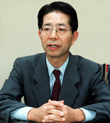
Workshop on East Timor -- Remarks by Shigemitsu Sugisaki
September 24, 2000


Ladies and Gentlemen: It is my pleasure to welcome you to this workshop. A very special welcome to our friends from East Timor, Messrs. Ramos-Horta and Alkatiri, and the representatives of the United Nations Transitional Authority for East Timor. This forum should give us the opportunity to reflect on the impact that international cooperation and assistance, particularly that provided by the Bank and the Fund, has had so far in helping to rebuild East Timor and to explore how such cooperation and assistance could be made even more effective in the future.
A little over a year has now passed since the events that followed the overwhelming vote for independence by the people of East Timor. In this time, the international community has provided considerable assistance to rebuild East Timor. The World Bank took the lead in assessing reconstruction needs and in designing the development program. The IMF staff and experts helped to develop a basic macroeconomic and institutional framework, with special emphasis on the immediate steps needed to ensure stability and create an enabling environment for economic recovery. Both institutions have cooperated closely with other multilaterals, various UN bodies, as well as bilateral agencies and NGOs.
In an historic endeavor of the sort being undertaken in East Timor, it is not surprising that there have—at times—been some frustrations. However, we should all take pride in the far reaching accomplishments that are already at hand. Let me mention just a few:
It should not be surprising to anyone, however, that despite the progress achieved, the tasks ahead remain monumental. As the reconstruction effort gains momentum with generous external financial support, the system of economic management must be developed further to help preserve macroeconomic stability and provide assurances that the resources made available to East Timor are being effectively used. Sound economic management will also be important to ensure that East Timor's own resources are being properly allocated and efficiently utilized. It is also urgent to build up an indigenous managerial capacity. All this takes time, and means that further technical assistance and training of East Timorese staff will be required for a number of years. The Fund and, I am sure, the other IFIs too stand ready to provide additional assistance and training in coordination with other providers of technical assistance.
While security has been re-established in most of the territory, the recent intensification of problems at the border and the refugee situation remain of serious concern. I am sure I echo the sentiments of the entire international community when I urge that these problems be addressed quickly and forcefully, thereby removing the threat they present to economic and political stability. There is no doubt that resolute regional and international cooperation will be needed to settle these issues in a lasting way.
In closing, let me say that there is no doubt in our minds that the success of the reconstruction effort will be critically dependent upon the full participation of the East Timorese leadership and population in all stages of rehabilitation and reconstruction. Indeed, such full participation by the East Timorese people will also help prepare the territory for independence and, we would hope, early subsequent membership in the IMF and the World Bank.
| Public Affairs | Media Relations | |||
|---|---|---|---|---|
| E-mail: | publicaffairs@imf.org | E-mail: | media@imf.org | |
| Fax: | 202-623-6278 | Phone: | 202-623-7100 | |